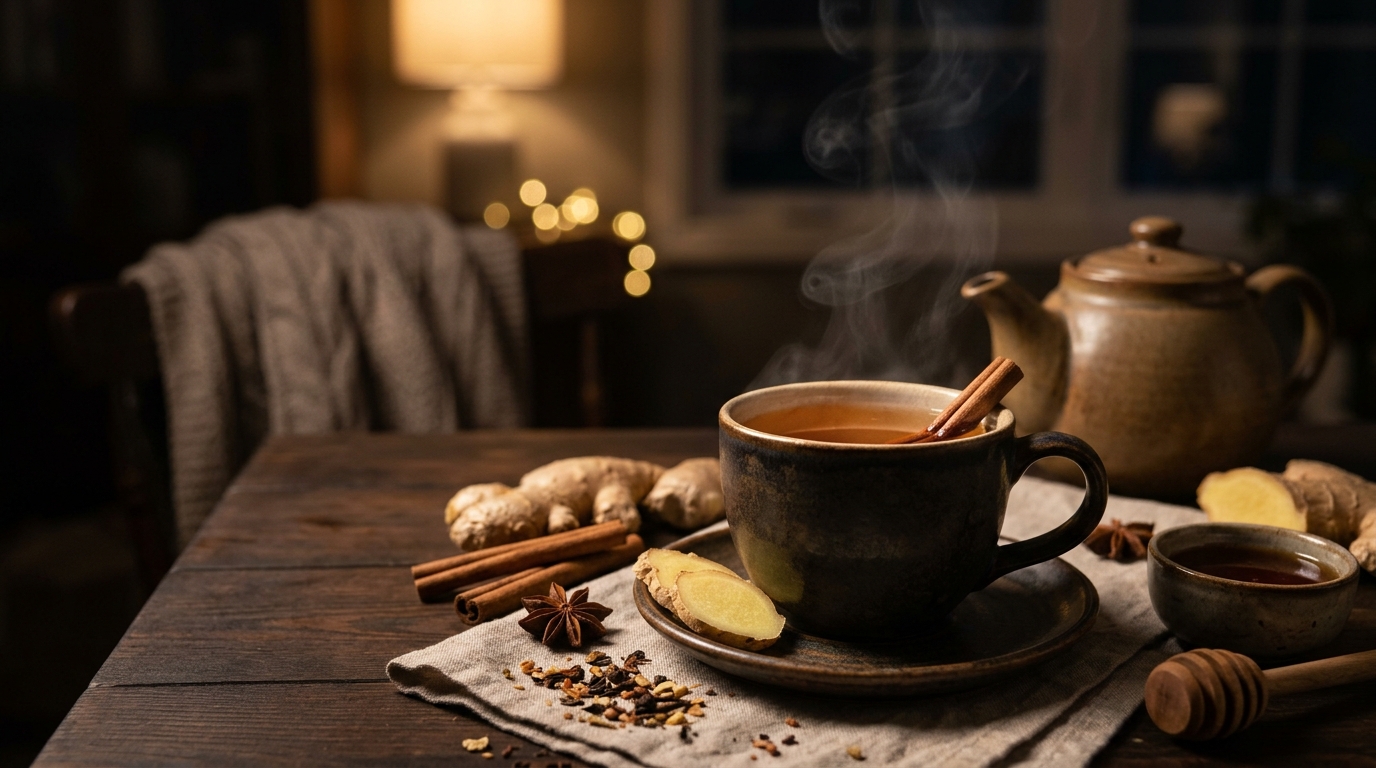
Few plants have traveled as far or been valued as highly as ginger and cinnamon. Ginger has been cultivated in South and Southeast Asia for thousands of years, and it appears in ancient Chinese, Indian and Greek medical texts as a remedy for chills, nausea and respiratory complaints. In traditional Chinese medicine it is classified as a warming herb that disperses cold from the body, while Ayurveda calls it vishwabheshaj, the universal medicine. Cinnamon, the dried inner bark of trees in the Cinnamomum genus, was once so prized that Egyptians used it in embalming and Roman merchants guarded its origins as a trade secret.
When the two are brewed together, something wonderful happens. Ginger brings a bright, peppery heat that tingles on the tongue and stimulates circulation, while cinnamon rounds it out with a honeyed, woody sweetness that softens the sharp edges. Both herbs have long been reached for at the first sign of a scratchy throat or a seasonal chill, and the pairing shows up in folk traditions from Kerala kitchens to Moroccan homes to Appalachian remedy cupboards.
Drinking this tea in the evening turns an old remedy into a gentle ritual. The steam opens the sinuses, the warmth relaxes tense shoulders, and the aromatic compounds signal to the body that the day is winding down. It is caffeine-free, naturally sweet-spiced, and a lovely way to support your body’s defenses while you rest.
2
cups
Ingredients
- 2 tbspfresh ginger root, thinly sliced or grated
- 1 stickCeylon cinnamon bark (about 7 cm / 3 inches)
- 480 mlfiltered water
- 1 tspfresh lemon juice (added after brewing)
- —raw honey to taste (optional)
- —1 to 2 whole cloves (optional, for extra warmth)
How to Brew
Click on an item below to shop for the recommended items for this recipe on Amazon.
As an Amazon Associate, we earn from qualifying purchases.
- Wash the ginger root and slice it into thin coins, about 2 mm thick, leaving the skin on if the root is organic. Thinner slices expose more surface area and release their gingerols more readily.
- Break the cinnamon stick into two or three pieces to expose the inner bark, and place it with the ginger in a teapot or heatproof mug.
- Bring the filtered water to a full boil, then pour it over the ginger and cinnamon. Cover immediately with a lid or saucer to keep the aromatic steam from escaping.
- Steep for 10 to 12 minutes. The longer the steep, the spicier and more robust the tea will become, so adjust to your preference.
- Strain into mugs, stir in the lemon juice and a spoonful of raw honey once the tea has cooled slightly below 60°C (140°F) to preserve the honey’s enzymes.
- Sip slowly and warm, ideally 30 to 60 minutes before bed.
- Slice the ginger into thin coins and lightly bruise them with the flat of a knife to help release flavor into cold water, since heat is not there to do the work.
- Place the ginger and a broken cinnamon stick into a clean glass jar or pitcher, using about 1.5 times the amount of ginger as in the hot brew.
- Pour 480 ml of cold filtered water over the herbs, seal the jar and give it a gentle shake.
- Refrigerate for 8 to 12 hours, or overnight. Avoid steeping beyond 12 hours, as the cinnamon can turn slightly bitter.
- Strain out the ginger and cinnamon, then taste. Add lemon juice and honey if desired, stirring well so the honey dissolves in the cool liquid.
- Serve over ice or gently rewarm in a saucepan just until steaming, without boiling, for a mellower evening cup.
- Grate or finely chop 3 tablespoons of fresh ginger and place it in a small saucepan with the cinnamon stick, a pinch of black peppercorns if you like extra heat, and 600 ml of cold water.
- Bring the water slowly to a boil over medium heat, then immediately reduce to the lowest heat for a gentle, steady simmer.
- Partially cover the pot and simmer for 15 to 20 minutes, until the water has reduced by about a quarter and turned a deep amber color.
- Remove the pan from the heat, cover fully and let it rest for 5 minutes so the flavors can meld.
- Strain through a fine mesh sieve into mugs, pressing the ginger gently to extract the remaining liquid.
- Finish with lemon juice and honey, or stir in a splash of warm oat or almond milk for a creamier, golden-latte style evening drink.
Health Benefits
Gingerols, shogaols and cinnamaldehyde show antimicrobial and immunomodulating activity in laboratory studies, and traditional use has long favored this pairing during cold season. Human evidence is still developing, but the compounds are well characterized.
The warming steam helps loosen mucus and open nasal passages, while ginger’s anti-inflammatory compounds may soothe irritated throat tissue. Adding honey provides an additional demulcent, coating effect.
Ginger is a traditional circulatory stimulant and may promote mild vasodilation, which helps explain the pleasant sensation of warmth after drinking it. This is especially welcome on cold evenings.
Ginger has strong clinical support for easing nausea and promoting gastric motility, making it helpful after a heavy dinner. Cinnamon adds carminative properties that may reduce bloating.
Some clinical trials suggest cinnamon may modestly improve insulin sensitivity, and ginger has shown similar promise in small studies. An unsweetened evening cup is a gentle way to enjoy these effects.
🧪 Key Bioactive Compounds
The Science Behind Ginger
The warming effect of ginger comes largely from its gingerols, a family of phenolic compounds that activate TRPV1 receptors, the same heat-sensing channels triggered by capsaicin in chili peppers. This is why fresh ginger feels hot on the tongue and why drinking it can produce a genuine sensation of warmth. When ginger is heated or simmered, gingerols convert into shogaols, which are even more pungent and have shown stronger antioxidant and anti-inflammatory activity in laboratory research. This chemistry is one reason a simmered decoction can feel more potent than a quick steep.
Cinnamon’s signature compound, cinnamaldehyde, is responsible for its sweet, spicy fragrance and much of its biological activity. In vitro studies show it can inhibit the growth of a range of bacteria and fungi, and it appears to modulate inflammatory pathways in the body. Eugenol, present in smaller amounts, contributes to cinnamon’s mild numbing and antiseptic qualities, which may explain its traditional use for sore throats.
It is important to be honest about the evidence: much of the immune-related research on ginger and cinnamon comes from cell and animal studies, and large human trials on cold and flu prevention are limited. The strongest clinical evidence supports ginger for nausea and digestive comfort. Still, the combination of anti-inflammatory compounds, soothing warmth and hydration makes this tea a sensible, pleasant supportive ritual, particularly when paired with good sleep, nutritious food and rest.
Brewing Tips
- Choose Ceylon (true) cinnamon over cassia for daily drinking, since it contains far less coumarin and has a more delicate, complex flavor.
- Freeze a knob of fresh ginger and grate it straight from the freezer. It is easier to grate, produces fine pulp that infuses quickly, and keeps for months.
- Add honey and lemon only after the tea has cooled slightly, as very hot water can degrade honey’s delicate enzymes and dull the lemon’s brightness.
- Make a double batch of the decoction and store it in the refrigerator for up to 3 days. Simply rewarm gently on the stove for an effortless evening cup.