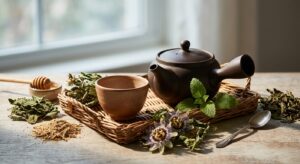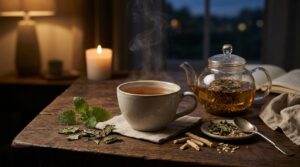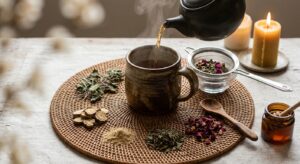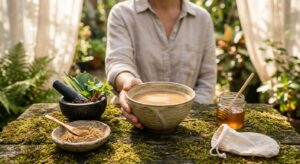
Few herbs carry as much history as valerian. Its root was prescribed by Hippocrates, praised by Galen as a remedy for insomnia, and used across medieval Europe for nervous complaints. The name comes from the Latin valere, meaning “to be strong” or “to be well.” Cats famously adore it, and so do generations of herbalists who turned to the pungent, earthy root whenever restless nights set in.
Holy basil, known as tulsi in India, comes from a very different tradition. In Ayurveda it is called the “Queen of Herbs” and the “Incomparable One,” and it is grown in courtyards and temples as a sacred plant. Tulsi is classified as an adaptogen, a plant believed to help the body adapt to physical and emotional stress. Traditionally it is taken to clear the mind, lift the mood, and bring a sense of calm clarity rather than heavy sedation.
Brought together, these two herbs form a bridge between traditions. Valerian supplies the deep, grounding sedative quality that Western herbalism prizes, while tulsi softens the edges with its warm, spicy-sweet aroma and its stress-modulating character. The result is an evening cup that is both ritual and remedy, earthy and a little exotic, well suited to the last hour before bed.
2
cups
Ingredients
- 1 tspdried valerian root, coarsely chopped
- 2 tspdried holy basil (tulsi) leaves
- 1 tspdried lemon balm (optional, to soften the flavor)
- 480 mlwater (95°C / 203°F)
- —raw honey or a slice of fresh ginger to taste (optional)
How to Brew
Click on an item below to shop for the recommended items for this recipe on Amazon.
As an Amazon Associate, we earn from qualifying purchases.
- Measure 1 teaspoon of chopped valerian root and 2 teaspoons of dried tulsi leaves into a teapot or large mug. Add the lemon balm now if you are using it.
- Bring fresh, filtered water to a boil, then let it rest for about 30 seconds so it settles near 95°C (203°F). Valerian root tolerates hot water well, and tulsi leaves release their aromatics best with near-boiling water.
- Pour the hot water over the herbs, then immediately cover the pot or mug with a saucer or lid to hold in the volatile oils.
- Steep for 10 to 12 minutes. A longer steep gives a stronger, more sedative cup, but it will also taste earthier and more pungent.
- Strain into two cups, pressing gently on the root pieces to release any remaining liquid. Stir in honey or add a thin slice of ginger if you want to round out valerian’s strong flavor.
- Sip slowly about 30 to 45 minutes before bed, in dim light and away from screens.
- Combine 2 teaspoons of chopped valerian root and 4 teaspoons of dried tulsi leaves in a clean glass jar. Add 1 teaspoon of dried lemon balm if you like.
- Pour 1 liter of cool, filtered water over the herbs. Stir once with a long spoon so all the plant material is submerged.
- Seal the jar and leave it on the counter for about 1 hour, then move it to the refrigerator to steep for 8 to 10 hours or overnight.
- Strain through a fine mesh sieve or a coffee filter into a clean bottle or pitcher, discarding the herbs.
- Serve over ice or drink it straight from the fridge. A few thin slices of fresh ginger or a squeeze of lemon brightens the flavor.
- Store covered in the refrigerator and drink within 48 hours.
- Place 1 tablespoon of chopped valerian root in a small saucepan with 500 ml of cold water. Starting with cold water helps draw out the root’s compounds gradually.
- Bring to a gentle simmer over medium-low heat, then reduce the heat so the water barely bubbles. Partially cover the pan and simmer for 15 minutes.
- Remove the pan from the heat and stir in 2 teaspoons of dried tulsi leaves and 1 teaspoon of lemon balm. Cover tightly and steep for another 5 minutes.
- Strain through a fine sieve into a warmed mug, pressing the root pieces to extract every bit of liquid.
- Sweeten with honey or add a pinch of cinnamon or a few cardamom pods during the simmer for a spiced, Ayurvedic-style evening drink.
- Drink warm, about 30 to 45 minutes before bed.
Health Benefits
Valerian root has been studied for its ability to shorten the time it takes to fall asleep and improve perceived sleep quality, likely via GABA-related pathways. Evidence is mixed but modestly positive, and effects often build over several nights of use.
Holy basil is a well-studied adaptogen, and small clinical trials suggest it can reduce subjective stress, anxiety, and associated fatigue. Valerian adds a calming, muscle-relaxing quality that complements tulsi’s gentler mood-balancing action.
Tulsi’s compounds are thought to influence cortisol and other stress hormones, supporting a more balanced response to daily pressures. Lowering evening tension can make it easier for the body to shift into rest mode.
Traditionally, valerian has been used as an antispasmodic for tension held in the body and for nervous digestive upset. A warm cup also offers the soothing comfort of a bedtime ritual, which itself cues the body to wind down.
Tulsi and lemon balm are rich in phenolic compounds such as rosmarinic acid and eugenol, which help neutralize free radicals. This is a supportive benefit rather than a treatment, but it adds to the tea’s overall value.
🧪 Key Bioactive Compounds
The Science Behind Valerian
Valerian’s sedative reputation rests largely on its effect on GABA, the brain’s main inhibitory neurotransmitter. Compounds such as valerenic acid appear to bind to GABA-A receptors and may reduce the enzymatic breakdown of GABA, which leads to a calmer, less excitable nervous system. Valepotriates and other constituents likely contribute as well, and it is probably the whole-root synergy rather than any single molecule that produces the effect. Clinical results vary, partly because preparations differ so widely in potency, which is one reason a consistently brewed tea can be a practical way to use the root.
Holy basil works through a different set of mechanisms. Its leaves contain eugenol, ursolic acid, rosmarinic acid, and a range of flavonoids that show antioxidant, anti-inflammatory, and adaptogenic activity in laboratory and early human studies. Research suggests tulsi may help moderate cortisol output and support a more balanced stress response, though larger and longer trials are still needed to confirm these effects.
The pairing is a thoughtful one. Valerian addresses the deeper physiological side of rest, while tulsi works on the mental chatter and accumulated stress that often keep people awake. Adding a little lemon balm contributes its own rosmarinic acid and citral, which have mild anxiolytic properties. While no tea is a substitute for medical care when sleep problems are chronic, this blend draws on both traditions to create a genuinely calming nightly ritual.
Brewing Tips
- Use coarsely chopped or cut valerian root rather than fine powder, which clouds the cup and tastes harsher.
- Do not be alarmed by valerian’s strong, cheesy or earthy smell; it comes from valerenic and isovaleric acids and fades once the tea is brewed and sweetened.
- Valerian works best with consistent use over several evenings, so try the tea nightly for a week or two before judging its effect.
- Store dried valerian root in an airtight, lightproof container, as its active compounds degrade with air and age.
- Make the ritual part of the remedy by dimming lights, silencing your phone, and sipping slowly rather than drinking in a rush.