Chasteberry has been used for over two thousand years. Ancient Greek and Roman writers, including Hippocrates and Dioscorides, mention the peppery little berries of Vitex agnus-castus, and medieval monks reportedly chewed them to curb desire, which earned the shrub its nickname “monk’s pepper.” In modern herbal practice, chasteberry is best known as a women’s herb, traditionally used to support regular cycles and ease premenstrual discomfort.
Red clover is a familiar sight in meadows across Europe and North America, its rose-pink flower heads humming with bees all summer. Herbalists have long brewed the blossoms into nourishing infusions, valued as a gentle tonic. The flowers are rich in isoflavones, plant compounds with a structure similar to estrogen, which is why red clover is so often turned to during perimenopause and menopause.
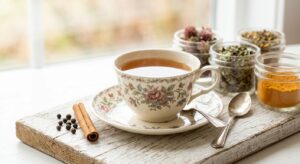
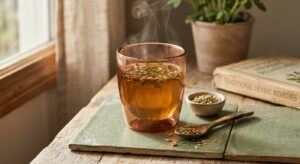
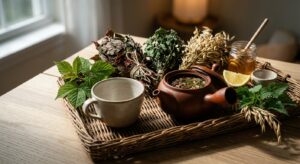
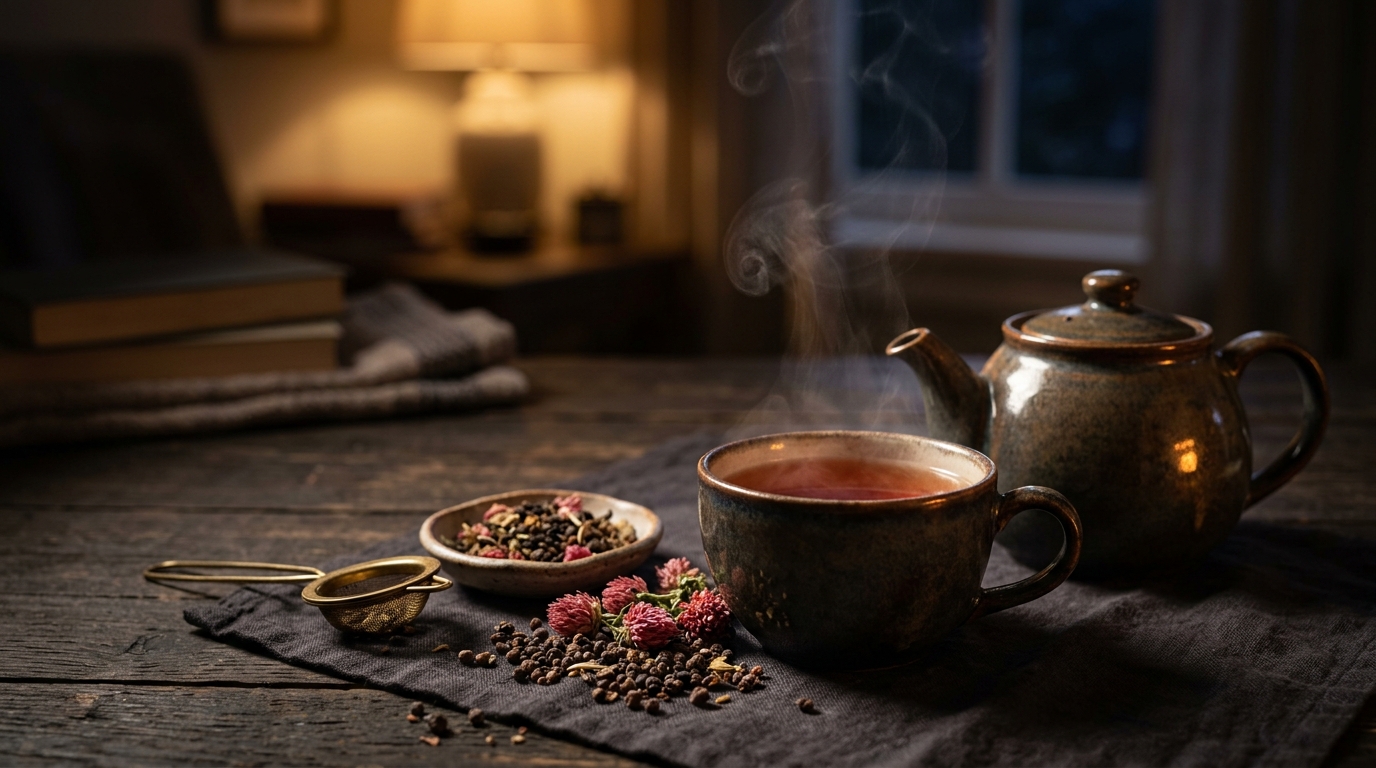
Brewed together as an evening tea, these two herbs make a calming, grounding ritual. Chasteberry works slowly and is traditionally taken consistently over weeks or months, so a nightly cup is a natural way to build the habit. The blend tastes pleasantly earthy and lightly sweet, with a faint peppery warmth from the berries, and it needs little more than a spoonful of honey to round it out.
2
cups
Ingredients
- 1 tspdried chasteberry (Vitex), lightly crushed
- 2 tspdried red clover blossoms
- 1 tspdried lemon balm leaves
- 480 mlwater (95°C / 203°F)
- —raw honey to taste (optional)
- —a thin slice of fresh ginger (optional)
How to Brew
Click on an item below to shop for the recommended items for this recipe on Amazon.
As an Amazon Associate, we earn from qualifying purchases.
- Measure the chasteberry, red clover, and lemon balm into a small bowl. Press the chasteberries gently with the back of a spoon or give them one or two quick pulses in a mortar so the seed coat cracks slightly. This helps the water reach the aromatic compounds inside.
- Bring fresh water to a full boil in a kettle, then let it rest for about 30 seconds so it settles near 95°C (203°F). Water straight from a rolling boil can dull the delicate clover blossoms.
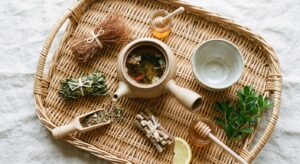
- Place the herb blend in a teapot or large infuser and pour the hot water over it. Cover immediately with a lid or saucer to trap the aromatic steam.
- Steep for 10 to 15 minutes. Chasteberry is dense and needs the longer time to give up its flavor, while red clover and lemon balm add their sweetness and floral notes along the way.
- Strain into two mugs, pressing the herbs lightly against the strainer to extract the last of the liquid. Stir in raw honey if you like, and sip slowly about an hour before bed.
- Combine 1.5 teaspoons of crushed chasteberry, 3 teaspoons of red clover blossoms, and 1.5 teaspoons of lemon balm in a clean glass jar. Crushing the berries matters even more here, since cold water has less power to penetrate the seed coat.
- Pour 500 ml of cool, filtered water over the herbs. Stir once, seal the jar, and shake gently to wet all the plant material.
- Refrigerate for 8 to 12 hours, or overnight. Shake the jar once or twice if you happen to open the fridge.
- Strain through a fine mesh sieve or a cloth-lined strainer into a clean jar or glass, discarding the herbs.
- Serve chilled over ice, or pour into a mug and warm gently on the stove without boiling. Enjoy within 24 hours, as cold-brewed herbal teas do not keep as long as you might expect.
- Place the crushed chasteberries and the optional ginger slice in a small saucepan with 500 ml of cold water. Starting with cold water allows the berries to release their compounds gradually.
- Bring the pot to a gentle simmer over medium-low heat, then reduce the heat so only small bubbles break the surface. Cover and simmer for 15 minutes.
- Turn off the heat and add the red clover blossoms and lemon balm directly to the hot liquid. Flowers and leaves are delicate and should only be steeped, never simmered, to preserve their flavor.
- Cover and let everything steep for a further 5 minutes.
- Strain through a fine mesh sieve into mugs. Sweeten with honey if desired and drink while warm. The decoction has a deeper, spicier character than the other methods.
Health Benefits
Chasteberry is thought to act on the pituitary gland through dopamine pathways, helping moderate prolactin levels. Several clinical trials suggest it may reduce premenstrual symptoms, though effects usually take two to three months of consistent use.
Randomized trials have found chasteberry extracts can reduce breast tenderness, irritability, and mood changes associated with PMS. Results come mostly from standardized extracts, so a tea is a milder approach.
Red clover isoflavones are widely studied for hot flashes, with mixed results. Some trials show modest improvement, while others show little difference from placebo, so it is best seen as a gentle, supportive option.
Isoflavones in red clover have been investigated for effects on bone density and blood vessel function in postmenopausal women. Evidence is preliminary but promising.
The lemon balm in this blend contains rosmarinic acid, which has traditionally been used to calm the nervous system. A warm cup at night also works as a simple wind-down ritual that supports restful sleep.
🧪 Key Bioactive Compounds
The Science Behind Chasteberry
Chasteberry’s effects are thought to come mainly from compounds that interact with the brain’s dopamine system. Diterpenoids in the fruit appear to bind to dopamine D2 receptors in the pituitary gland, which in turn lowers the release of prolactin. Elevated prolactin can disrupt the balance of estrogen and progesterone, so moderating it may help explain why chasteberry has been linked with reduced PMS symptoms and more regular cycles. Because the action is indirect and gradual, benefits are typically reported after several cycles rather than days.
Red clover works differently. Its isoflavones, including biochanin A, formononetin, genistein, and daidzein, are classed as phytoestrogens. They can bind to estrogen receptors, particularly the beta type, but with much weaker activity than the body’s own estrogen. In theory this lets them gently fill in when natural estrogen declines, as in menopause, without acting as strongly as a hormone therapy. Clinical results for hot flashes have been inconsistent, which likely reflects differences in extract strength, study design, and individual gut bacteria that convert isoflavones into more active forms.
It is worth remembering that most research uses concentrated, standardized extracts rather than a cup of tea. A brewed infusion delivers a far lower and more variable dose, so the tea is best viewed as a gentle, supportive daily ritual rather than a substitute for medical treatment. Pairing the two herbs reflects traditional herbal practice, where chasteberry supports the cycle-regulating side and red clover provides isoflavones, while lemon balm adds calming rosmarinic acid for the evening.
Brewing Tips
- Be patient and consistent. Chasteberry is a slow-acting herb, and most traditional guidance suggests drinking it daily for at least two to three months before judging its effect.
- Crush the chasteberries lightly before brewing. The seed coat is tough, and cracking it open noticeably improves both flavor and extraction.
- Buy organic, whole dried herbs from a reputable supplier and store them in airtight glass jars away from light. Red clover blossoms lose their color and potency quickly, so use within a year.
- Drink the tea about an hour before bed, and keep the rest of your evening routine calm. Dim lights and a screen-free wind-down make the ritual far more effective.