Lemon balm (Melissa officinalis) has been cherished for more than two thousand years. Greek and Roman physicians prized it, and medieval monks grew it in monastery gardens as a remedy for melancholy and a restless heart. The Swiss physician Paracelsus called it the ‘elixir of life,’ and the 17th-century herbalist Nicholas Culpeper wrote that it ’causeth the mind and heart to become merry.’ Its name comes from the Greek word for honeybee, because bees are drawn to its small, nectar-rich flowers.
Lavender (Lavandula angustifolia) carries an equally rich heritage. The Romans scented their baths with it, which gave the plant its name from the Latin lavare, to wash. Across Europe, lavender sachets were tucked beneath pillows to invite sleep and chase away anxious dreams, a folk practice that survives to this day. Its purple blooms are among the most recognizable aromas in all of herbalism.
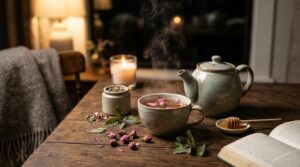
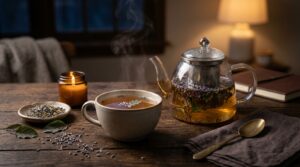
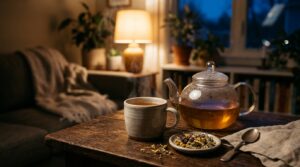
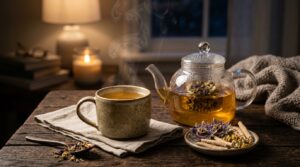
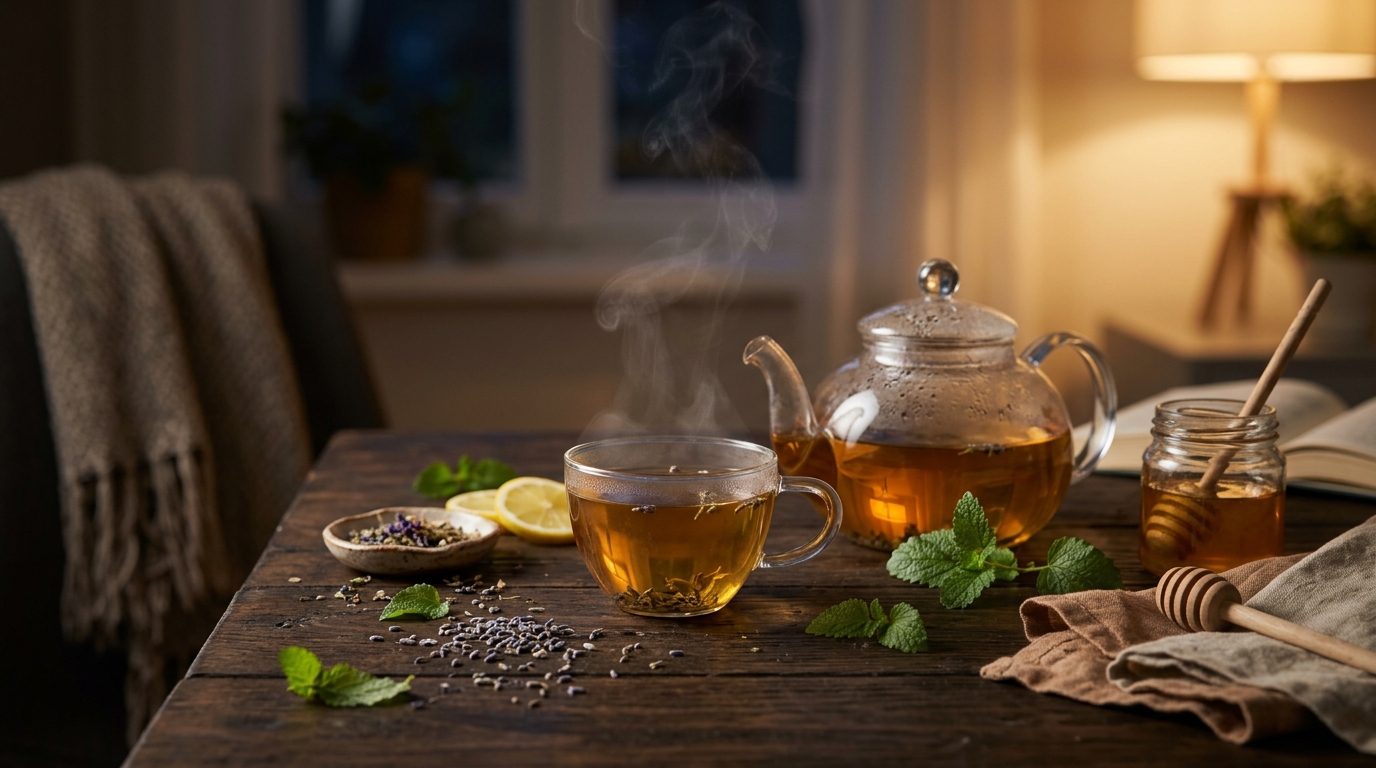
Brewed together, the two plants make a beautifully balanced evening tea. Lemon balm brings a gentle citrus brightness and a calming, mood-lifting quality, while lavender adds a soft floral depth and a deeply relaxing aroma. This is the cup to reach for when the day has been long, your shoulders are tight, and you need a quiet ritual to help you set it all down.
2
cups
Ingredients
- 2 tbspdried lemon balm leaves
- 1 tspdried culinary lavender buds
- 480 mlwater (95°C / 203°F)
- —raw honey to taste (optional)
- —a thin lemon slice for serving (optional)
How to Brew
Click on an item below to shop for the recommended items for this recipe on Amazon.
As an Amazon Associate, we earn from qualifying purchases.
- Bring fresh water to a full boil, then let it rest for about 60 seconds so it cools slightly to roughly 95°C (203°F). Boiling water can scorch the delicate lavender and mute the lemon balm’s citrus notes.
- Add the dried lemon balm and lavender buds to a teapot or directly into a large mug fitted with a tea infuser. Gently crush the leaves between your fingers first to wake up their aromatic oils.
- Pour the hot water over the herbs and immediately cover with a lid or small saucer to trap the volatile oils.
- Steep for 5 to 8 minutes. Closer to 5 minutes gives a light, lemony cup; closer to 8 minutes yields a deeper, more floral and relaxing brew. Avoid going much longer, as lavender turns soapy when over-steeped.
- Remove the infuser or strain the tea into your cup. Stir in raw honey if you like, add a thin slice of lemon, and sip slowly while it is still warm.
- Combine 3 tablespoons of dried lemon balm and 1 teaspoon of dried lavender buds in a clean glass jar or pitcher.
- Pour 1 liter of cold, filtered water over the herbs and stir gently with a spoon to make sure everything is submerged.
- Cover the jar with a lid and place it in the refrigerator. Let the herbs infuse slowly for 8 to 12 hours, or overnight.
- Strain through a fine-mesh sieve or a cloth-lined strainer, pressing lightly on the herbs to release the last of the liquid.
- Serve chilled over ice, or pour a glass and let it come to cool room temperature. Keep any extra in a sealed jar in the refrigerator and drink within 2 days.
- Bring 240 ml of water to about 95°C (203°F) and pour it over 3 tablespoons of dried lemon balm and 1 teaspoon of dried lavender buds. This is double the usual strength so the tea stays flavorful once chilled.
- Cover and steep for 10 minutes, then strain out the herbs and stir in a teaspoon of honey or simple syrup while the tea is still warm so it dissolves fully.
- Fill two tall glasses with ice and pour the warm concentrate over it. The ice will chill and dilute the tea to the perfect strength.
- Top each glass with a splash of sparkling water for a gentle fizz, and stir once.
- Garnish with a lemon wheel and a fresh lemon balm leaf or sprig of lavender, and serve right away.
Health Benefits
Small clinical studies have found that lemon balm extract can improve calmness and reduce anxious feelings, while the linalool in lavender has well-documented anxiolytic effects in both aromatherapy and oral use.
Both herbs have a long traditional use as sleep aids, and trials combining lemon balm with other calming herbs have shown improvements in sleep quality and in how quickly people fall asleep.
Lemon balm is a traditional carminative and antispasmodic, helping relieve stress-related stomach tension, bloating, and cramping that often show up after a tense day.
Research suggests lemon balm may support mood and cognitive performance under stress, with some studies reporting improved calmness and alertness after a moderate dose.
Lavender’s relaxing compounds and its traditional use as a gentle muscle and nerve relaxant make this tea a pleasant ally when stress settles in the neck, jaw, and shoulders.
🧪 Key Bioactive Compounds
The Science Behind Lemon Balm
The calming reputation of lemon balm is increasingly supported by laboratory and clinical research. Its leaves are rich in rosmarinic acid, a phenolic compound that appears to inhibit GABA transaminase, the enzyme that breaks down gamma-aminobutyric acid (GABA). Because GABA is the brain’s main inhibitory neurotransmitter, preserving it helps quiet neural activity and promotes feelings of calm. Lemon balm’s volatile oils, including citronellal and citral, add to the herb’s gentle sedative and antispasmodic character.
Lavender works through a complementary route. Its key aromatic compounds, linalool and linalyl acetate, have been shown in human and animal studies to modulate the nervous system, with linalool in particular interacting with receptors involved in anxiety and stress responses. Most research on lavender has examined aromatherapy and standardized oral oil preparations, so the effects of a tea are likely milder, yet the aroma rising from a warm cup still contributes meaningfully to the relaxing experience.
It is worth being honest about the evidence. Many studies on these herbs are small, short in duration, or use concentrated extracts rather than tea, so results should be viewed as encouraging rather than definitive. As a daily evening ritual, however, this blend offers a safe, pleasant way to combine plant chemistry with the proven calming power of slowing down and sipping something warm.
Brewing Tips
- Use dried culinary lavender, not floral or craft lavender, which may be treated or sold for fragrance. Start with a small amount, since too much lavender quickly tastes soapy.
- If you grow your own lemon balm, use about three times as much fresh leaf as dried, and bruise the leaves lightly before brewing to release their oils.
- Store dried lemon balm and lavender in airtight glass jars away from light and heat, and use within a year for the freshest flavor and scent.
- Make this tea part of a consistent evening ritual, drinking it about 30 to 60 minutes before bed, so your body begins to associate the aroma with winding down.