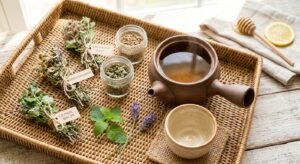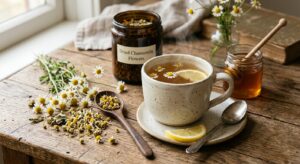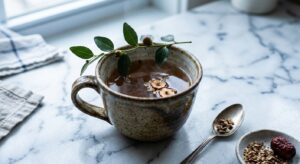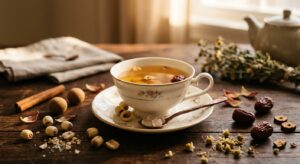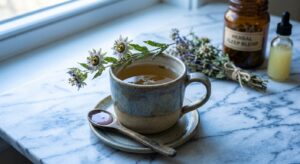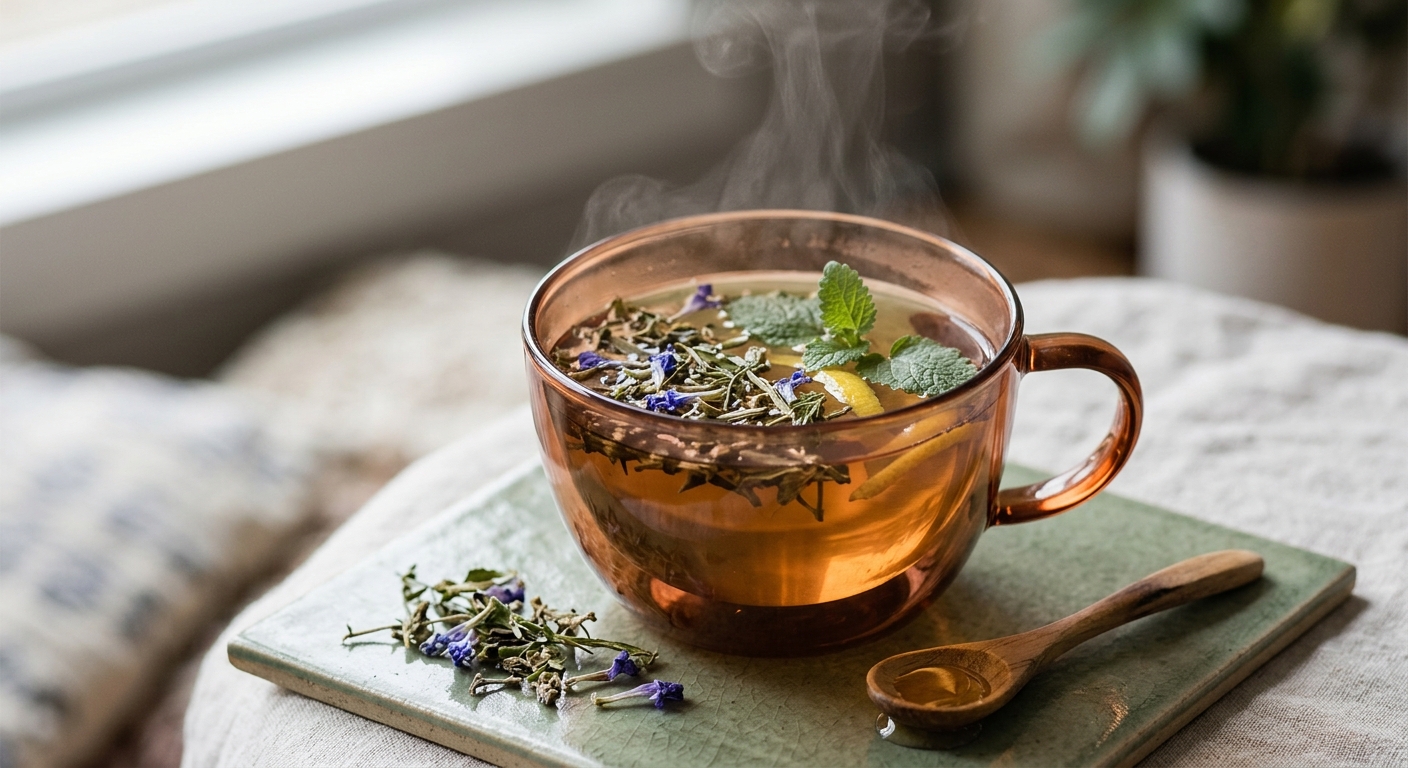
Long before synthetic sedatives lined pharmacy shelves, Indigenous peoples of eastern North America were reaching for skullcap. The Cherokee used Scutellaria lateriflora in ceremonial contexts and as a remedy for nervous agitation, while early American Eclectic physicians in the 19th century prescribed it so widely for conditions they called ‘nervous exhaustion’ and ‘hysteria’ that it earned a reputation as one of the most reliable botanical tranquilizers in the Western herbal tradition. Its common name is thought to derive from the shape of its small blue flowers, which resemble the visored caps worn by European soldiers, though some herbalists believe the name alludes to its role in ‘capping’ or quieting the overactive mind.
What sets skullcap apart from heavier sleep herbs like valerian is its subtlety. Rather than inducing a sedated, groggy feeling, skullcap seems to work with the nervous system rather than against it, softening the mental chatter and physical tension that prevent sleep without leaving you foggy the next morning. Experienced herbalists describe it as a ‘trophorestorative,’ meaning it not only calms the nervous system acutely but appears to nourish and rebuild it over time with consistent use. This makes it particularly valued for people dealing with chronic stress, nervous exhaustion, or the restless kind of insomnia where the body is tired but the mind refuses to quiet down.
The flavor of skullcap tea is earthy, mildly bitter, and faintly herbaceous, with a clean finish that some compare to green tea without the grassy brightness. It is not the most glamorous cup in the herbal pantry, but a small amount of honey or a pairing with complementary herbs like lemon balm or passionflower transforms it into something genuinely enjoyable. Quality matters enormously with skullcap: look for organically grown Scutellaria lateriflora specifically, as adulteration with germander (Teucrium species) has been documented historically and can pose liver risks. Sourcing from a reputable supplier is the single most important step before brewing your first cup.
2
cups
Ingredients
- 2 tspdried skullcap herb (Scutellaria lateriflora)
- 480 mlwater (85°C / 185°F)
- —raw honey or maple syrup to taste (optional)
- —fresh lemon balm or a strip of lemon peel (optional)
How to Brew
Click on an item below to shop for the recommended items for this recipe on Amazon.
As an Amazon Associate, we earn from qualifying purchases.
- Heat filtered water to 85 to 90°C (185 to 194°F). If you do not have a temperature-controlled kettle, bring water to a full boil then allow it to rest for 3 to 4 minutes before pouring.
- Measure 1 teaspoon of dried skullcap herb per 240 ml of water and place it into a tea infuser or empty tea bag set inside your warmed mug.
- Pour the hot water directly over the herb, ensuring all the plant material is submerged. Cover the mug with a small saucer or lid to trap volatile aromatic compounds and prevent heat from escaping.
- Steep for 10 to 15 minutes. A longer steep draws out more of the bitter but therapeutically active compounds. Start with 10 minutes if you are sensitive to bitterness.
- Remove the infuser and press it gently against the side of the mug with a spoon to extract the remaining liquid. Discard the spent herb.
- Add raw honey, maple syrup, or a squeeze of lemon to taste. Drink warm, ideally 30 to 60 minutes before bed or during an evening wind-down routine.
- Measure 2 teaspoons of dried skullcap per 480 ml of cold, filtered water. Use a slightly higher ratio than hot brew to compensate for the slower, less complete extraction at low temperatures.
- Combine the herb and water in a clean glass jar. Stir gently to ensure the herb is fully wetted and not floating in a dry clump at the surface.
- Seal the jar with a lid and leave it at room temperature for 1 hour to begin the extraction, then transfer it to the refrigerator.
- Steep in the refrigerator for 8 to 12 hours, or overnight. Resist the urge to shake the jar, as this can introduce air and affect the flavor.
- Strain the infusion through a fine mesh strainer or a piece of muslin cloth into a clean glass, pressing the herb lightly to extract remaining liquid.
- Serve over ice or chilled. Add a thin slice of cucumber, a sprig of fresh mint, or a few drops of liquid honey stirred in to brighten the flavor. Cold brew skullcap keeps refrigerated for up to 48 hours.
- Combine 3 teaspoons of dried skullcap, 1 teaspoon of dried passionflower, and 1 teaspoon of dried lemon balm in a small saucepan or heat-resistant glass measuring jug. This blend creates a synergistic nervine trio.
- Heat 300 ml of filtered water to 85°C (185°F). Pour it over the combined herbs and cover the vessel immediately with a plate or lid to prevent aromatic compounds from escaping as steam.
- Allow the herbs to steep for 20 to 25 minutes. The extended steep time and blended herbs create a darker, more potent liquid than a standard single-herb infusion.
- Strain the concentrate carefully through a fine mesh strainer lined with cheesecloth, pressing firmly on the spent herb to extract every drop. You should have approximately 200 to 240 ml of dark concentrate.
- Pour 60 to 80 ml of the concentrate into a mug. Top with 160 ml of warm water, warm oat milk, or a freshly brewed mild chamomile tea, diluting to taste and preferred strength.
- Sweeten with a generous teaspoon of raw honey if desired and drink 30 to 45 minutes before sleep. Store any unused concentrate in a sealed glass jar in the refrigerator for up to 3 days.
Health Benefits
Skullcap’s flavonoids, particularly baicalin and wogonin, modulate GABA-A receptor activity, the same pathway targeted by anti-anxiety pharmaceuticals. A 2014 double-blind crossover trial published in Alternative Therapies in Health and Medicine found that skullcap significantly enhanced global mood without reducing energy or cognition, supporting its traditional role as a daytime nervine.
By reducing the mental hyperarousal and physical tension that delay sleep onset, skullcap is particularly effective for the type of insomnia characterized by an overactive, racing mind. Its GABAergic compounds promote a calm neurological state conducive to falling asleep naturally without the grogginess associated with stronger sedative herbs.
Unlike valerian or hops, which tend to produce noticeable sedation, skullcap works at lower doses as an anxiolytic that allows functional calm. This makes it suitable for daytime anxiety management, especially during periods of chronic stress or nervous exhaustion, when maintaining mental clarity is still important.
Baicalin and scutellarein have demonstrated neuroprotective properties in laboratory studies, showing the ability to reduce oxidative stress and inflammation in neural tissue. While clinical evidence in humans is still emerging, these findings align with the traditional herbalist concept of skullcap as a long-term trophorestorative for the nervous system.
Skullcap has a long traditional history of use for tension-type headaches and the physical manifestations of nervous stress, including muscle tightness and spasm. Its antispasmodic and mild analgesic properties, partly attributed to its iridoid content, make it a useful evening herb for people whose anxiety is held physically in the body.
🧪 Key Bioactive Compounds
The Science Behind Skullcap
The most studied active constituents in Scutellaria lateriflora are its flavonoids, particularly baicalin, baicalein, scutellarein, and wogonin. These compounds have attracted significant scientific interest because of their demonstrated affinity for gamma-aminobutyric acid type A (GABA-A) receptors, which are the primary inhibitory neurotransmitter receptors in the mammalian central nervous system. By binding to specific sites on these receptors, skullcap’s flavonoids can enhance the effect of GABA without fully activating the receptor themselves, a mechanism sometimes described as positive allosteric modulation. This is the same general pathway exploited by benzodiazepine drugs, though skullcap operates with far less potency and, critically, without the same risks of tolerance, dependence, or respiratory depression that make pharmaceutical benzodiazepines potentially dangerous.
A notable 2014 randomized, double-blind, crossover clinical trial evaluated the acute effects of skullcap on mood and cognitive function in healthy volunteers. The results showed that skullcap significantly increased global mood scores and reduced anxiety without impairing mental performance or energy levels, a finding that aligns precisely with the traditional herbalist description of skullcap as a non-sedating anxiolytic nervine. Baicalin has also been studied for neuroprotective properties in cell and animal models, demonstrating the ability to reduce neuroinflammation and oxidative damage in neural tissue, which may underlie the traditional concept of skullcap as a restorative herb for long-term nervous system health rather than merely an acute sedative.
Wogonin, another flavonoid found in the plant, has been specifically investigated for its sedative and anti-anxiety properties in rodent models. Research published in the journal Pharmacology Biochemistry and Behavior found that wogonin produced anxiolytic effects at low doses by acting on benzodiazepine binding sites on GABA-A receptors, and importantly, did not produce tolerance with repeated dosing in the animal models tested. While these preclinical findings cannot be directly extrapolated to humans, they provide a plausible biochemical rationale for skullcap’s centuries-long reputation as a reliable, gentle, and non-habit-forming nervine, and support the ongoing interest in this North American wildflower as a subject of neurological and psychopharmacological research.
Brewing Tips
- Always cover your mug or steeping vessel with a saucer or small plate during the entire steep time. Skullcap’s most therapeutically active volatile compounds can escape as steam, and covering the vessel ensures they condense back into your tea rather than dissipating into the air.
- Harvest or purchase skullcap that is visibly green and not yellow or brown. Yellowed skullcap herb has typically been improperly dried or stored and will have significantly diminished potency. Smell it before you brew: fresh, high-quality dried skullcap should have a clean, faintly grassy aroma.
- If you are new to skullcap, start with a shorter steep of 8 to 10 minutes and a single teaspoon per cup to assess your sensitivity before moving to longer, stronger preparations. Some people find even modest doses quite relaxing and prefer a lighter brew for daytime use.