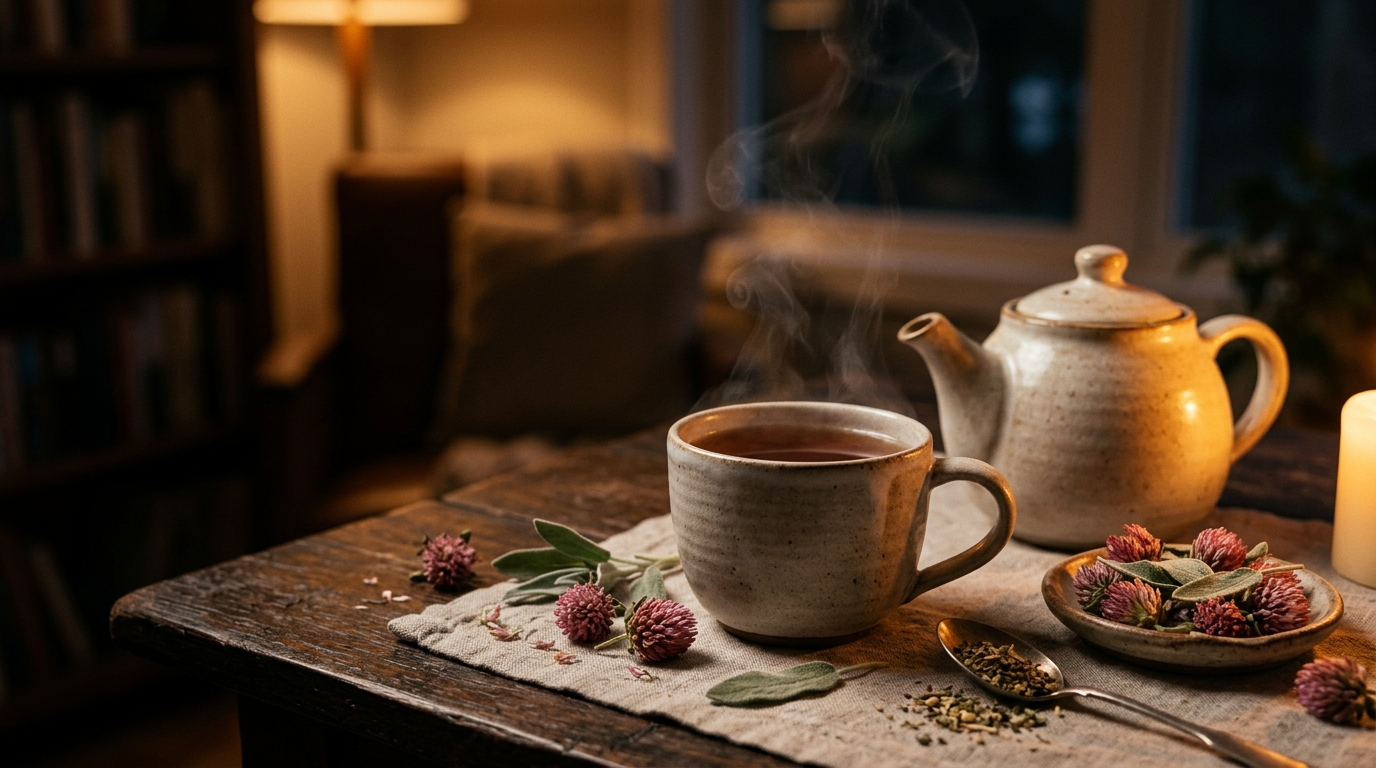
Red clover (Trifolium pratense) has grown across European meadows for centuries, and its magenta blossoms were a staple of folk medicine long before anyone could name the compounds inside them. Traditional herbalists brewed the flowers as a blood-cleansing tonic and a remedy for coughs and skin complaints. In the twentieth century, researchers noticed that red clover is unusually rich in isoflavones, plant compounds that resemble estrogen, and the herb found a new role in the conversation about women’s midlife health.
Sage (Salvia officinalis) has an even longer record. Its Latin name comes from salvere, meaning to save or to heal, and medieval gardens kept it close to the kitchen door. Old English herbals praised sage for its ability to dry excessive perspiration, and generations of women have reached for a cup of it when night sweats arrive. Modern clinical interest has followed that folk use, with small trials suggesting sage may reduce the frequency and intensity of hot flashes.
Brewed together, the two herbs balance each other beautifully. Red clover brings a gentle, honeyed sweetness and a soft hay-like warmth, while sage adds a savory, resinous backbone that keeps the cup from tasting flat. It is a calming ritual for the end of the day, and one that has been paired in herbal practice for good reason.
2
cups
Ingredients
- 2 tbspdried red clover blossoms
- 1 tspdried sage leaves
- 480 mlwater (95°C / 203°F)
- —raw honey to taste (optional)
- —thin strip of lemon peel (optional)
How to Brew
Click on an item below to shop for the recommended items for this recipe on Amazon.
As an Amazon Associate, we earn from qualifying purchases.
- Bring fresh water to a full boil, then let it rest for about 30 seconds so it settles near 95°C (203°F).
- Place the red clover blossoms and sage leaves in a teapot or large mug, crumbling the sage lightly between your fingers to release its oils.
- Pour the hot water over the herbs and cover immediately with a lid or saucer to trap the volatile aromatics.
- Steep for 10 to 15 minutes. Red clover needs this longer time to release its isoflavones, while the sage stays balanced because the quantity is small.
- Strain into two cups, sweeten with a little raw honey if you like, and add a thin strip of lemon peel for brightness.
- Sip slowly about an hour before bed as part of a wind-down routine.
- Add the red clover blossoms and sage leaves to a clean glass jar. Use slightly more herb than the hot method: 3 tablespoons of red clover and 1½ teaspoons of sage for 480 ml.
- Pour cold filtered water over the herbs and stir gently to submerge the blossoms.
- Seal the jar and refrigerate for 8 to 10 hours, or overnight. The slow, cool extraction pulls out the floral sweetness and leaves most of the bitter tannins behind.
- Strain through a fine-mesh sieve or cheesecloth, pressing lightly on the herbs.
- Serve over ice with a slice of lemon, or pour over a single large cube for a cooling evening drink.
- Keep refrigerated and drink within 24 hours for the best flavor and freshness.
- Make a concentrated brew by steeping 3 tablespoons of red clover and 1½ teaspoons of sage in 360 ml of 95°C (203°F) water for 10 minutes.
- Strain out the herbs and stir in honey while the tea is still warm so it dissolves completely.
- Let the concentrate cool at room temperature for 20 minutes, then pour in 120 ml of cold water to bring it to full strength.
- Refrigerate for 1 to 2 hours until thoroughly chilled.
- Fill tall glasses with ice, pour the tea over, and garnish with a lemon slice and a fresh sage leaf if you have one.
- Stir before drinking, since the honey and the herbal flavors can settle slightly.
Health Benefits
Red clover isoflavones act as mild phytoestrogens, and some trials show modest reductions in hot flash frequency, though results across studies are mixed. Sage has also shown promise for reducing both frequency and severity in small clinical studies.
Sage has a long traditional use as an anhidrotic, meaning it reduces perspiration. Its astringent compounds are thought to calm overactive sweat glands, which is why it is a classic evening choice for menopausal women.
Isoflavones in red clover have been studied for their potential to slow bone loss in perimenopausal and postmenopausal women. The evidence is encouraging but not conclusive, so the tea is best viewed as a supportive habit.
The warm ritual itself is soothing, and sage’s rosmarinic acid may gently support mood and relaxation. Easing night sweats also tends to improve sleep continuity.
Both herbs contain polyphenols such as carnosic acid, rosmarinic acid, and flavonoids that help neutralize free radicals and may support overall cellular health.
🧪 Key Bioactive Compounds
The Science Behind Red Clover
The most studied compounds in red clover are its isoflavones, chiefly biochanin A, formononetin, genistein, and daidzein. These molecules are structurally similar to estradiol and can bind to estrogen receptors, particularly the beta type, with a much weaker effect than the body’s own estrogen. This is why they are called phytoestrogens. During menopause, when natural estrogen declines, this mild receptor activity is thought to help buffer the thermoregulatory swings behind hot flashes, though clinical trials have returned inconsistent results, likely because individual gut bacteria influence how well isoflavones are converted into active forms.
Sage works through a different pathway. Its leaves are rich in phenolic acids such as rosmarinic acid and in diterpenes like carnosic acid, along with volatile oils containing thujone, camphor, and 1,8-cineole. Researchers believe these compounds may influence neurotransmitter activity and temperature regulation in the hypothalamus, and their astringent tannins directly reduce sweat gland secretion. A few small trials using sage extracts have reported meaningful drops in hot flash frequency over eight to twelve weeks.
It is worth keeping expectations realistic. Tea delivers a lower and more variable dose than concentrated extracts used in studies, so the cup is best seen as a gentle, supportive practice rather than a replacement for medical care. The combination offers a complementary approach, with red clover addressing hormonal signaling and sage addressing sweating and mood, along with the calming benefit of a consistent evening ritual.
Brewing Tips
- Use dried herbs from a reputable supplier and store them in airtight, opaque containers away from heat and light to preserve the isoflavones and volatile oils.
- Cover the cup or pot while steeping so the aromatic sage oils stay in the tea instead of drifting away as steam.
- Start with one cup in the evening and see how your body responds before increasing, and take a break every few weeks rather than drinking it continuously for months.
- If sage tastes too strong, reduce it to half a teaspoon or swap in a little extra red clover and a slice of lemon.