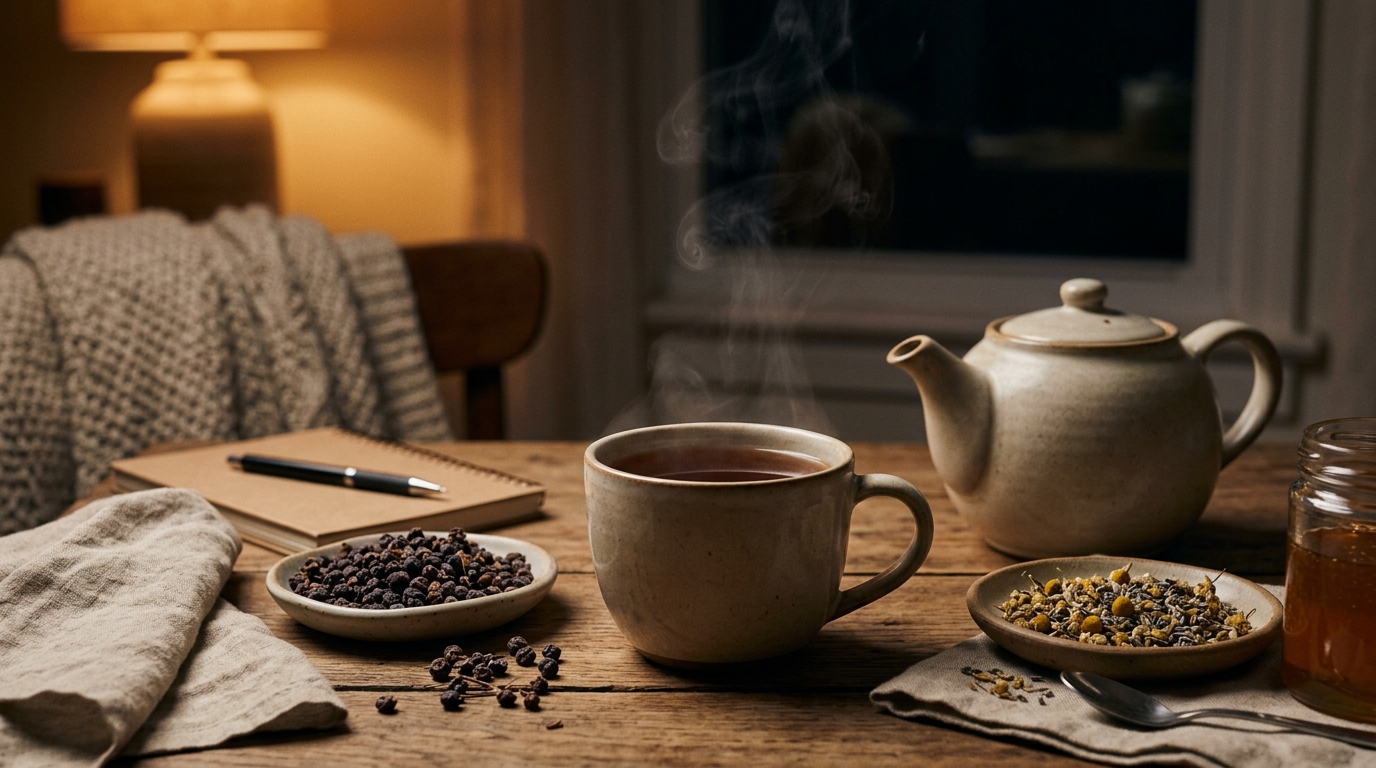
Chasteberry, also called vitex, comes from the small, aromatic fruit of Vitex agnus-castus, a shrub native to the Mediterranean and Central Asia. Its name carries a long history. Ancient Greek and Roman writers, including Dioscorides and Pliny, described the plant in connection with women’s reproductive health, and monastic traditions in medieval Europe used the berries to calm desire, which gave rise to the common name ‘monk’s pepper.’ Across many centuries, herbalists returned to this berry as a trusted ally for the female cycle.
In modern herbal practice, chasteberry is most often chosen for cycle irregularity, premenstrual symptoms such as breast tenderness and mood swings, and general hormonal support. It is thought to work not by supplying hormones, but by gently influencing the pituitary gland, the body’s signaling hub. Because its effects build slowly, it is traditionally taken consistently over several months, which makes a nightly tea ritual a natural fit.
As a tea, chasteberry is earthy, slightly bitter, and pleasantly peppery, with a warm resinous finish. It is not a dessert-style tea, but it blends beautifully with softer herbs, and the act of brewing a quiet cup each evening becomes a small anchor of self-care. Think of it as a steady, patient companion rather than a quick fix.
2
cups
Ingredients
- 2 tspdried chasteberry (vitex), lightly crushed
- 480 mlwater (95°C / 203°F)
- —a small strip of orange peel or a pinch of dried lemon balm (optional, to soften the bitterness)
- —raw honey to taste (optional)
How to Brew
Click on an item below to shop for the recommended items for this recipe on Amazon.
As an Amazon Associate, we earn from qualifying purchases.
- Measure the dried chasteberries into a mortar or onto a cutting board and crush them lightly with a pestle or the flat of a knife. You only want to crack the outer skin, not grind them to powder.
- Place the crushed berries into a tea infuser or directly into a teapot. If you are adding orange peel or lemon balm, add it now.
- Bring fresh water to a full boil, then let it rest for about 30 seconds so it sits near 95°C (203°F).
- Pour the hot water over the berries, cover the vessel to trap the aromatic oils, and set a timer for 10 to 15 minutes.
- Strain into your favorite mug, stir in a little honey if you like, and sip slowly about an hour before bed.
- Lightly crush 2 tsp of chasteberries to crack the skins, then add them to a clean glass jar.
- Pour 480 ml of cool, filtered water over the berries and stir once to make sure all the berries are submerged.
- Seal the jar and leave it on the counter for about 30 minutes, then transfer it to the refrigerator.
- Steep in the refrigerator for 8 to 10 hours, or overnight, giving the jar a gentle swirl once or twice if you remember.
- Strain through a fine mesh sieve into a clean glass. Drink cold, or pour a portion into a mug and warm it gently on the stove without boiling.
- Lightly crush 2 tsp of chasteberries and place them in a small saucepan with 480 ml of cold water.
- Bring the water slowly to a gentle simmer over medium-low heat. Avoid a rolling boil, which can drive off the delicate aromatic oils.
- Reduce the heat, cover the pan with a lid, and simmer gently for 15 minutes.
- Remove the pan from the heat, keep it covered, and let it rest for another 10 minutes so the flavors settle and mellow.
- Strain through a fine sieve into a mug, discarding the berries. Add honey or a citrus peel if desired, and enjoy warm.
Health Benefits
Clinical trials, mostly using standardized extracts, have found chasteberry may reduce PMS symptoms such as breast tenderness, irritability, and mood changes. These results come from extracts rather than tea, so effects from a daily cup are likely milder.
Chasteberry appears to act on the pituitary gland and may help balance the signals that govern ovulation and progesterone levels. Some studies in women with cycle irregularity or luteal phase issues show improvement, though results vary and consistency over several months matters.
Agnuside and related compounds appear to have dopamine-like activity, which can reduce excess prolactin secretion. This is one of the better-supported mechanisms behind its traditional use for breast tenderness and cycle disruption.
While chasteberry is not a sedative, its aromatic compounds and the slow, mindful routine of brewing a warm cup can encourage relaxation. Pairing it with lemon balm or chamomile may enhance the soothing effect.
🧪 Key Bioactive Compounds
The Science Behind Chasteberry
Chasteberry’s reputation rests largely on how it appears to interact with the hypothalamic-pituitary axis rather than with hormones directly. Compounds such as agnuside and related diterpenes seem to bind to dopamine D2 receptors in the pituitary, which can reduce the release of prolactin. Elevated prolactin is linked to shortened luteal phases, irregular ovulation, and premenstrual breast tenderness, so modulating it may help restore a more regular rhythm.
Beyond this central mechanism, the berry contains a range of flavonoids, including casticin and vitexin, along with iridoid glycosides like aucubin. These compounds show antioxidant and anti-inflammatory activity in laboratory studies, which may contribute to the herb’s overall effects on mood and physical comfort. The volatile oils, such as linalool and cineole, give the tea its distinctive aroma and may add a mild calming influence.
It is worth being honest about the limits of the evidence. Most human trials use standardized, concentrated extracts taken for three or more cycles, not tea. A cup of chasteberry tea delivers a lower and more variable dose, so it is best viewed as a gentle, supportive ritual rather than a substitute for medical care. Its benefits, when they appear, tend to build slowly with consistent use over several months.
Brewing Tips
- Be patient and consistent. Chasteberry works gradually, so give it at least three months of nightly use before judging its effects.
- Crush the berries lightly before brewing to expose more surface area, since whole berries release their compounds slowly.
- Drink it in the evening, ideally at the same time each night, to build a steady ritual and keep your routine consistent.
- Keep a simple cycle journal alongside your tea so you can notice patterns in your cycle length, mood, and symptoms.
- Store dried chasteberries in an airtight, dark container away from heat and light to preserve their aromatic oils.