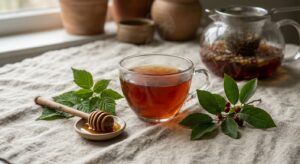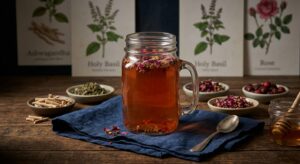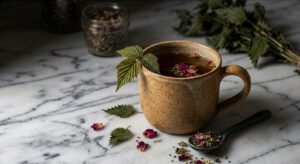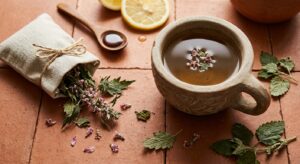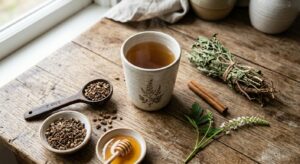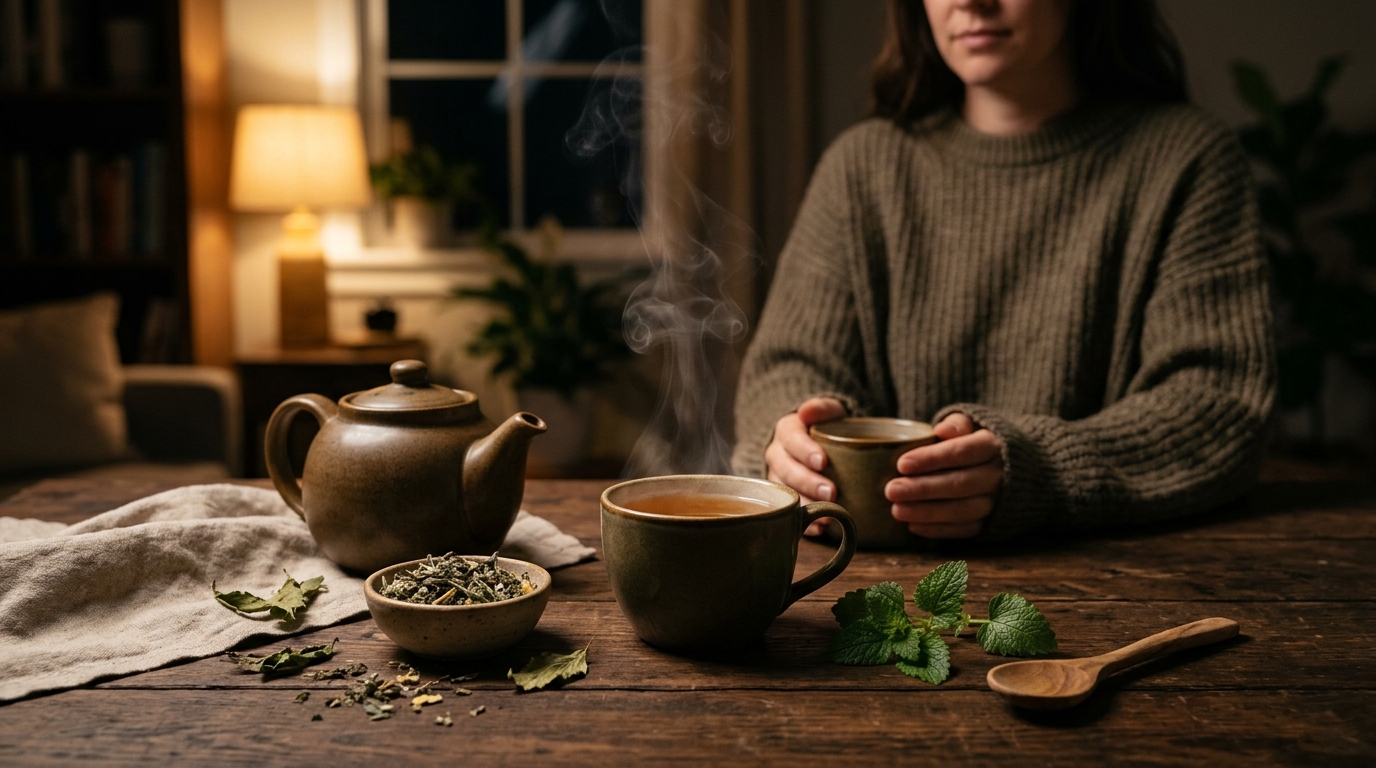
Motherwort (Leonurus cardiaca) has been tucked into women’s herbal medicine chests for centuries. Its genus name, Leonurus, means “lion’s tail,” a nod to the shape of its leaves, while cardiaca points to its long use for a fluttering, anxious heart. European herbalists, from Culpeper in the 1600s to the Eclectic physicians of the 1800s, prescribed it for nervous palpitations, tension, and the restless sleeplessness that often shadows times of hormonal change. The common name says it all: “mother” wort, an herb that mothers the mothers.
Lemon balm (Melissa officinalis) is its natural companion. Medieval monks grew it in cloister gardens, and the Swiss physician Paracelsus praised it as an elixir of life. Carmelite nuns even distilled it into a famous tonic water. Where motherwort is bitter, green, and deeply grounding, lemon balm is bright, citrusy, and uplifting, softening motherwort’s edge while adding its own gentle sedative quality.
Brewed together in the evening, the pair makes a tea that feels like an exhale. It suits women facing the stress of full days, the restlessness of perimenopause, or the tightness that settles in the chest and shoulders before bed. Think of it as a warm, fragrant signal to the nervous system that the day is done.
2
cups
Ingredients
- 1 tbspdried motherwort (leaf and flowering tops)
- 1 tbspdried lemon balm leaf
- 480 mlwater (95°C / 203°F)
- —raw honey to taste (helps balance motherwort’s bitterness)
- —a thin strip of lemon peel or a few dried rose petals (optional)
How to Brew
Click on an item below to shop for the recommended items for this recipe on Amazon.
As an Amazon Associate, we earn from qualifying purchases.
- Measure 1 tablespoon each of dried motherwort and dried lemon balm into a teapot or large mug fitted with an infuser. Gently crush the lemon balm leaves between your fingers first to release their oils.
- Bring fresh water to a boil, then let it rest for about 30 seconds so it settles near 95°C (203°F). Water that is too violently boiling can dull lemon balm’s delicate flavor.
- Pour the water over the herbs, then immediately cover the pot or place a saucer over the mug to trap the aromatic steam.
- Steep for 7 to 10 minutes. Begin tasting at 7 minutes; motherwort grows more bitter the longer it sits, so stop when the flavor suits you.
- Strain out the herbs, stir in a small spoonful of honey if desired, and sip slowly about 30 to 60 minutes before bed.
- Combine 2 tablespoons each of dried motherwort and dried lemon balm in a clean 1-liter glass jar. Use a slightly higher herb-to-water ratio than hot brewing since cold water extracts more slowly.
- Pour 1 liter of cool filtered water over the herbs and stir gently with a long spoon to fully wet the leaves.
- Seal the jar and place it in the refrigerator for 8 to 12 hours. Avoid leaving it at room temperature for long stretches, as herbs steeped in warm conditions can spoil.
- Strain through a fine mesh sieve or muslin cloth, pressing lightly on the herbs to release the last of the liquid.
- Serve over ice with a lemon wheel, or pour a glass and let it come to cool room temperature. Drink within 24 hours and keep refrigerated.
- Place 3 tablespoons of dried motherwort and 3 tablespoons of dried lemon balm into a clean 1-liter jar. This is roughly triple the amount used for a standard cup.
- Pour 1 liter of freshly boiled water over the herbs, filling the jar to the top to minimize air space and keep aromatic oils from escaping.
- Cap the jar tightly and let it sit on the counter, allowing it to cool gradually. Steep for at least 4 hours, or up to 8 hours overnight.
- Strain thoroughly through a fine sieve or cloth, squeezing the herbs gently to extract the remaining liquid.
- Drink 1 cup (about 240 ml) gently rewarmed or at room temperature in the evening. Refrigerate the rest and use within 24 hours.
Health Benefits
Lemon balm has been studied in small human trials for reducing stress and improving calmness, likely through its effects on GABA signaling. Motherwort’s traditional use as a nervine is supported by its long history, though clinical research remains limited.
Lemon balm combined with other calming herbs has shown improvements in sleep quality and reduced restlessness in preliminary studies. The soothing ritual of a warm evening tea also helps cue the body for rest.
Motherwort has a long traditional reputation for calming nervous palpitations, and early research suggests mild effects on heart rhythm and blood pressure. Anyone with a heart condition should consult a healthcare provider before relying on it.
Herbalists have long used motherwort for hot flashes, irritability, and sleeplessness during the menopausal transition. While rigorous trials are scarce, its calming and circulation-supporting properties fit this traditional use.
Motherwort is traditionally used as an antispasmodic for tension-related cramping, and lemon balm has carminative properties that ease gas and bloating, making the blend soothing for stress-related stomach tightness.
🧪 Key Bioactive Compounds
The Science Behind Motherwort
The calming reputation of this pairing is rooted in both herbs’ interactions with the nervous system. Lemon balm’s standout compound, rosmarinic acid, appears to inhibit GABA transaminase, the enzyme that breaks down gamma-aminobutyric acid. GABA is the brain’s principal inhibitory neurotransmitter, so preserving it can translate into a quieter, less reactive mental state. Small clinical studies using lemon balm extract have reported improved mood, reduced anxiety, and greater calmness under stress, while its citral and citronellal oils may add a mild aromatic relaxation effect.
Motherwort’s chemistry is different but complementary. The alkaloids leonurine and stachydrine, along with bitter iridoids and flavonoids, are thought to contribute to its traditional action on the heart and nervous system. Preliminary and animal research suggests mild sedative, antispasmodic, and cardiotonic effects, with some data pointing to reduced heart rate and blood pressure. Human clinical trials are limited, so much of motherwort’s reputation still rests on centuries of herbal practice rather than robust modern evidence.
It is worth being honest about this gap. Lemon balm has the stronger scientific support for anxiety and sleep, while motherwort’s benefits for women, especially around menopause and cramping, are largely traditional. Together they offer a gentle, low-risk way for most non-pregnant adults to unwind, but they are a supportive ritual rather than a treatment for any medical condition.
Brewing Tips
- Start with a weaker brew and a shorter steep. Motherwort is distinctly bitter, and most newcomers prefer a 5 to 7 minute steep with a little honey before building up.
- Cover your cup while steeping. Lemon balm’s calming oils evaporate with the steam, and a lid or saucer keeps them in your tea.
- Use fresh-smelling, vividly green lemon balm. If your dried leaves smell dusty or faded, they have lost much of their potency and should be replaced.
- Brew your evening cup about 30 to 60 minutes before bed so the calming effects and the warm ritual can settle you gradually.
- Store dried herbs in airtight glass jars away from light and heat, and use them within a year for the best flavor and strength.