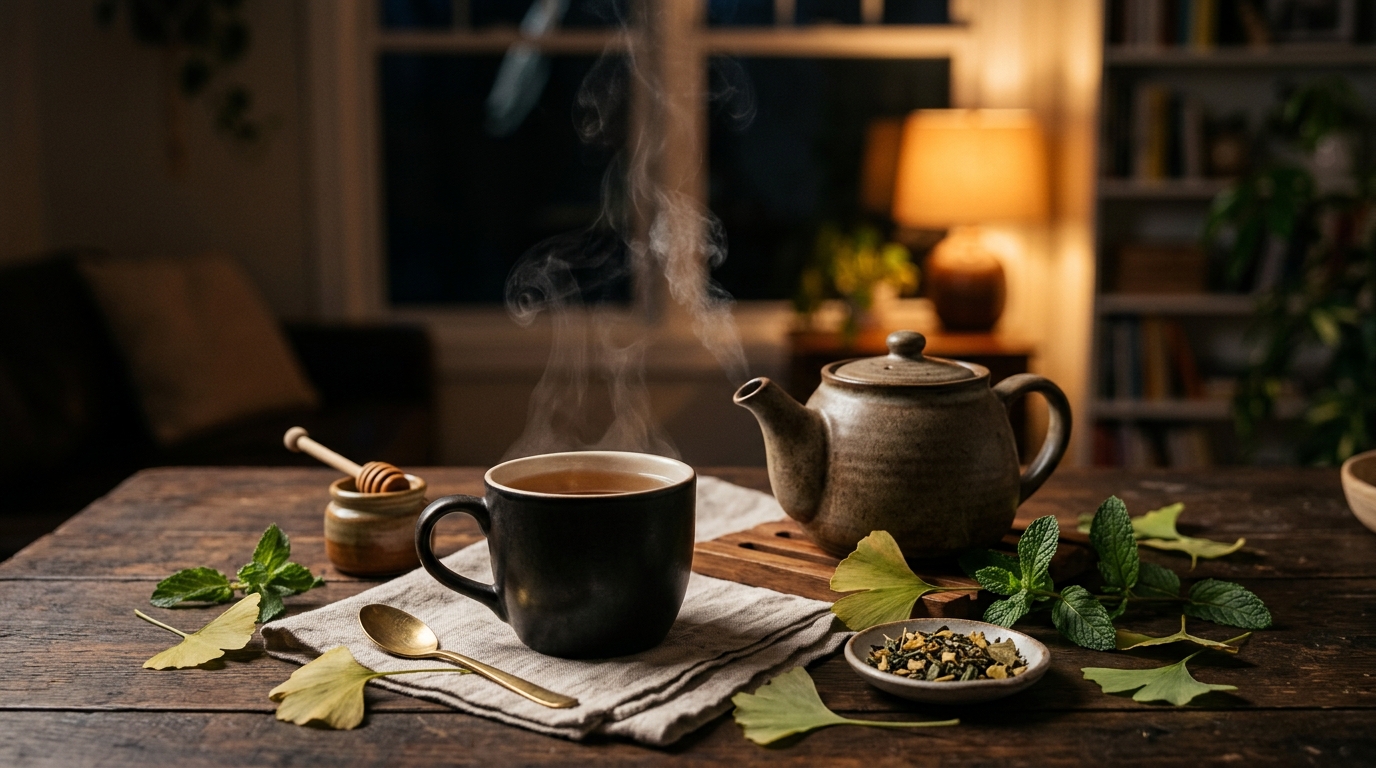
Ginkgo biloba is one of the oldest living tree species on Earth, a botanical survivor whose fan-shaped leaves appear in fossils over 200 million years old. Chinese herbalists have long used the seeds and leaves, and in the modern era the standardized leaf has become one of the most studied botanicals in Europe, where it is commonly explored for circulation and cognitive support. Brewed as a simple leaf tea, ginkgo offers a mild, woody, slightly bitter cup that rewards patient sipping.
Peppermint, a natural hybrid of watermint and spearmint, has been prized since ancient Egypt, Greece, and Rome. Dried mint leaves have been found in Egyptian tombs dating to around 1000 BCE, and the Greeks scattered it over banquet tables as a refreshing, clarifying herb. Its high menthol content gives it that unmistakable cooling lift, and traditional herbalists have long reached for it to ease digestion, open the senses, and brighten a sluggish mind.
Together, the two herbs make a balanced evening partnership. Peppermint brings a crisp, aromatic freshness that softens ginkgo’s earthy bitterness, while ginkgo adds depth and a traditional association with healthy blood flow. The result is a tea made for the quiet hours after dinner, when you want to remain alert and focused without the jitters or sleep disruption that caffeine can bring.
2
cups
Ingredients
- 2 tspdried peppermint leaf
- 1 tspdried ginkgo biloba leaf
- 480 mlwater (95°C / 203°F)
- —a thin slice of fresh lemon or a drizzle of raw honey (optional)
How to Brew
Click on an item below to shop for the recommended items for this recipe on Amazon.
As an Amazon Associate, we earn from qualifying purchases.
- Bring fresh water to a near boil, then let it rest for about 30 seconds so it settles at roughly 95°C (203°F). Fully boiling water can drive off too much of the peppermint’s aromatic menthol.
- Add the dried ginkgo leaf to your teapot or infuser first. Gently crush the leaf between your fingers as you add it to help release its flavor.
- Pour the hot water over the ginkgo and let it steep, covered, for 3 minutes to begin extracting its earthy compounds.
- Add the dried peppermint leaf, replace the lid, and continue steeping for another 4 to 7 minutes. Peppermint infuses quickly, so adding it second prevents the tea from turning overly sharp.
- Strain into two mugs, then add a thin lemon slice or a little honey if you like. Sip slowly while the aroma is at its brightest.
- Combine 2 tsp dried peppermint leaf and 1 tsp dried ginkgo leaf in a clean glass jar. Lightly bruise the leaves with a spoon to expose more surface area.
- Pour in 480 ml of cool, filtered water. Stir gently until all of the leaves are submerged.
- Seal the jar and refrigerate for 8 to 12 hours. A full 12 hours gives ginkgo enough time to contribute its woody character in cold water.
- Strain through a fine mesh sieve or a coffee filter to remove all leaf fragments, since ginkgo can leave small bits behind.
- Serve over ice in tall glasses, or pour a measure into a mug and warm it gently for a mellow evening cup. Keep leftovers refrigerated and drink within 24 hours.
- Prepare a double-strength brew: steep 4 tsp dried peppermint and 2 tsp dried ginkgo in 240 ml of 95°C (203°F) water, covered, for 10 minutes.
- Strain the concentrated tea into a heatproof jug, pressing the leaves lightly to extract the last of the liquid.
- Fill two tall glasses generously with ice, then pour half of the hot concentrate into each glass so it chills on contact and the ice absorbs the dilution.
- Top each glass with 100 to 120 ml of cold sparkling water and stir once, gently, to keep the bubbles lively.
- Garnish with a fresh mint sprig and a lemon wheel, and sweeten lightly with honey or maple syrup if desired.
Health Benefits
Ginkgo’s terpene lactones and flavonoids have been studied for their ability to support blood vessel function and peripheral blood flow, which is the basis for its long traditional use as a circulatory herb.
Peppermint’s aroma and menthol have been shown in small studies to improve alertness and perceived focus, while ginkgo is researched for supporting memory and attention, making this a caffeine-free option for evening concentration.
Menthol relaxes the smooth muscle of the gastrointestinal tract, and peppermint is one of the best-supported herbs for easing bloating and digestive discomfort after a meal.
Rosmarinic acid from peppermint and the flavonoid glycosides in ginkgo both help neutralize free radicals, contributing to the tea’s overall protective, anti-inflammatory profile.
The act of preparing and slowly sipping a warm, aromatic tea can lower stress and create a mindful transition into evening, which supports concentration for reading, journaling, or quiet work.
🧪 Key Bioactive Compounds
The Science Behind Peppermint
Ginkgo leaf contains two main classes of active constituents: flavonoid glycosides, such as quercetin, kaempferol, and isorhamnetin, and unique terpene lactones, namely the ginkgolides and bilobalide. These terpene lactones are found almost exclusively in ginkgo. Ginkgolide B in particular is a recognized antagonist of platelet-activating factor, a signaling molecule involved in clotting and inflammation, which is why ginkgo is studied for its effects on circulation. Clinical research on standardized ginkgo extracts has been mixed, with some trials suggesting modest benefits for cognitive function and blood flow and others showing little effect, so it is best viewed as a supportive herb rather than a cure.
It is worth noting that most clinical studies use concentrated, standardized extracts, not a simple leaf tea. A home-brewed cup delivers a much milder dose of these compounds, so the effect is gentler and more suited to everyday ritual than to therapeutic treatment. Ginkgo leaf tea also contains lower levels of ginkgolic acids than raw leaf extracts, a group of compounds that can be allergenic, which is one reason to use quality dried leaf from a reputable source.
Peppermint’s effects are better characterized. Menthol binds to TRPM8 receptors, the same receptors that detect cold, which creates its cooling sensation and may account for its reputation as an invigorating aroma. Studies on peppermint aromatherapy and oral intake have suggested improvements in alertness and reduced mental fatigue, while its antispasmodic action on gut smooth muscle is supported by trials in people with irritable bowel syndrome. Because the blend contains no caffeine, it can sharpen the senses and support focus without interfering with the body’s natural wind-down toward sleep.
Brewing Tips
- Choose organic, dried ginkgo leaf from a reputable supplier, and look for leaf that is green to yellow-green rather than brown, which indicates older, less potent material.
- Steep peppermint covered, since its volatile oils evaporate easily; a lid on your mug or teapot noticeably improves aroma and effect.
- Start with a single cup in the early evening to see how your body responds, and avoid drinking it right before bed if peppermint tends to make you feel too alert or aggravates reflux.