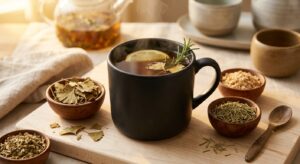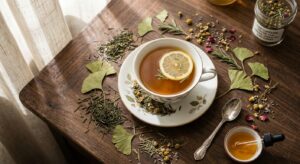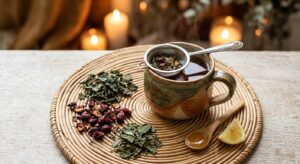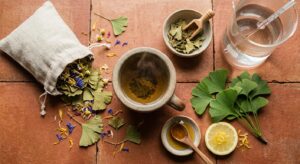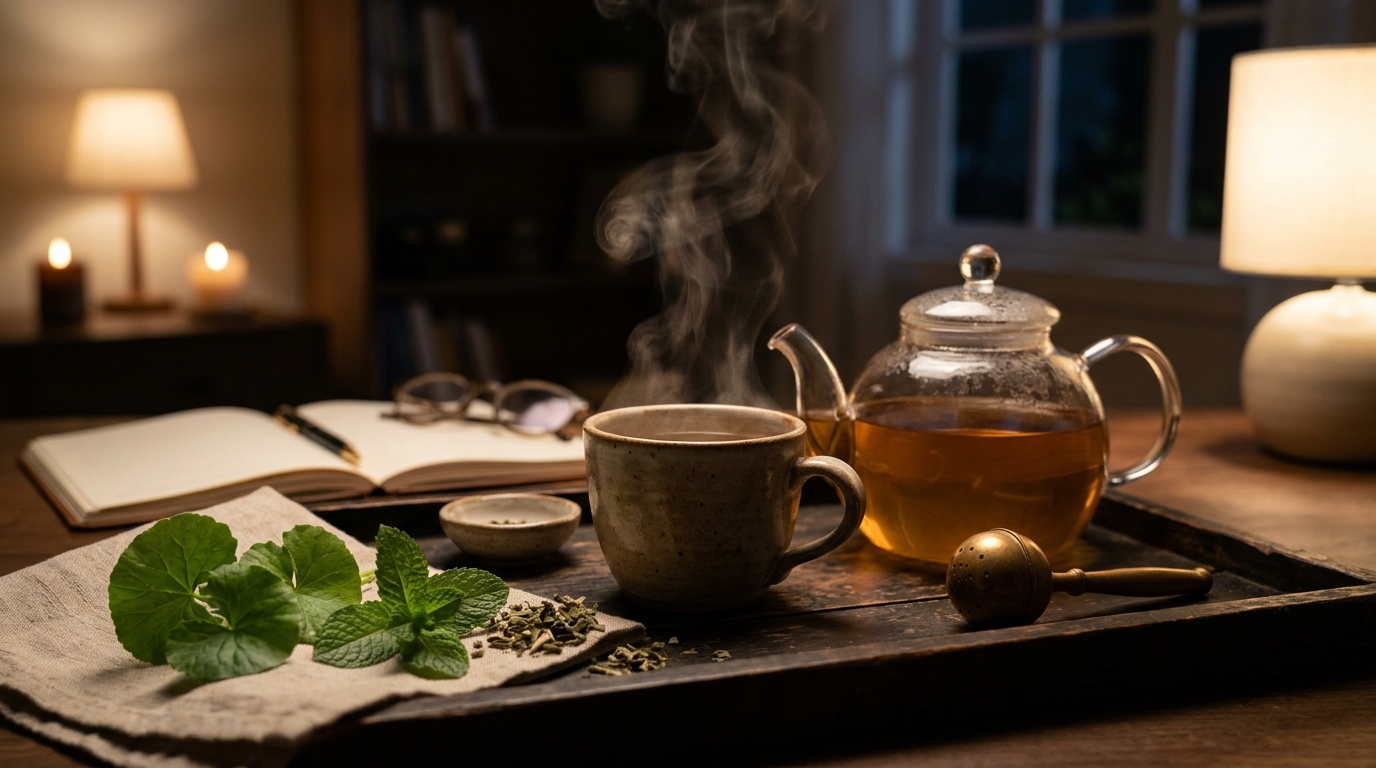
Gotu kola (Centella asiatica) has been prized for centuries across Ayurvedic, Chinese, and Southeast Asian healing traditions. In India it is known as mandukaparni and has long been classified as a medhya rasayana, a herb said to nourish the mind and support memory and learning. Folklore in Sri Lanka tells of elephants, famed for their long memories, grazing on the leaves, and a well-known proverb credits the plant with long life. Whatever its legend, the small, fan-shaped leaves have earned their reputation as a gentle, grounding herb for the mind.
Peppermint (Mentha x piperita) brings a very different energy. Cultivated since ancient Egypt and Greece, it was used to freshen the breath, calm the stomach, and awaken the senses. Its bright, cooling aroma delivers an almost immediate feeling of alertness, even though it contains no caffeine. Where gotu kola works quietly in the background, peppermint announces itself with every sip.
Together they make a thoughtful companion for the night owl. The blend offers a clear, steady focus without the jittery edge or sleep disruption of coffee or black tea. Gotu kola contributes a mild, grassy, slightly bitter depth, while peppermint lifts and brightens the cup. This ritual suits late study sessions, evening writing, creative projects, or any quiet hours when you want your mind sharp but your nervous system settled.
2
cups
Ingredients
- 2 tspdried gotu kola leaf
- 2 tspdried peppermint leaf
- 480 mlwater (95°C / 203°F)
- —fresh lemon slice (optional)
- —raw honey to taste (optional)
How to Brew
Click on an item below to shop for the recommended items for this recipe on Amazon.
As an Amazon Associate, we earn from qualifying purchases.
- Measure 2 teaspoons of dried gotu kola leaf and 2 teaspoons of dried peppermint leaf into a teapot or large infuser. This ratio keeps the gotu kola present without letting the peppermint overwhelm it.
- Bring fresh water to a boil, then let it rest for about 30 seconds so it sits near 95°C (203°F). Gotu kola tolerates hot water well, but a brief rest prevents scorching the delicate mint.
- Pour the water over the herbs, cover immediately, and steep for 7 to 10 minutes. Closer to 7 gives a lighter, minty cup; closer to 10 draws out more of gotu kola’s green, earthy character.
- Strain into two mugs. Stir in a thin slice of lemon or a small spoonful of raw honey if you like.
- Sip slowly over the course of your work session, inhaling the steam before each sip to enjoy the peppermint aroma.
- Add 2 tablespoons of dried gotu kola leaf and 2 tablespoons of dried peppermint leaf to a clean glass jar. Cold extraction is gentler, so this ratio is higher than for hot brew.
- Pour in 1 liter of cold filtered water and stir briefly to wet all of the leaves.
- Seal the jar and refrigerate for 8 to 12 hours. Avoid going much beyond 12 hours, as the gotu kola can turn flat and overly grassy.
- Strain through a fine mesh sieve or cheesecloth into a clean pitcher, pressing the leaves lightly to release the last of the liquid.
- Serve over ice or straight from the fridge. Garnish with a fresh mint sprig or cucumber slice for extra cooling effect.
- Combine 3 teaspoons of dried gotu kola leaf and 3 teaspoons of dried peppermint leaf in a heatproof pitcher. This doubled-up ratio compensates for the dilution that ice will cause.
- Pour 360 ml of near-boiling water (95°C / 203°F) over the herbs, cover, and steep for 5 minutes. A shorter steep keeps bitterness in check.
- Strain the hot concentrate into a second pitcher or jug, discarding the leaves.
- Fill two tall glasses with plenty of ice and pour the hot concentrate directly over it. The ice melts and dilutes the tea to the right strength while chilling it instantly.
- Stir, add a squeeze of lemon or a touch of honey dissolved in a splash of warm water, and garnish with a fresh mint leaf.
Health Benefits
Peppermint aroma has been shown in small human studies to improve alertness and certain memory tasks, while gotu kola’s triterpenoids are traditionally used to support cognition. Evidence for gotu kola is promising but still preliminary.
Gotu kola has been studied for mild anxiolytic effects, and a small clinical trial found reduced startle response in participants after supplementation. This may help explain the calm yet attentive state many drinkers describe.
Menthol relaxes smooth muscle in the gut, which is why peppermint is widely used for bloating and indigestion. This makes the tea a comfortable choice for late-night snacking or working past dinner.
Gotu kola’s triterpenoids have been studied for improving microcirculation and vein health, which may be helpful if you sit for long stretches at a desk.
Both herbs contain polyphenols and phenolic acids that help neutralize free radicals, offering general cellular support in a caffeine-free cup.
🧪 Key Bioactive Compounds
The Science Behind Gotu Kola
Gotu kola’s reputation for supporting the mind centers on its triterpenoid saponins, mainly asiaticoside, madecassoside, and their aglycones, asiatic and madecassic acid. In laboratory and animal studies these compounds have shown neuroprotective activity, including support for neurite outgrowth, reduced oxidative stress in brain cells, and modulation of inflammatory signaling. Some animal research also suggests they may influence neurotransmitter systems related to mood and learning. Human data remains limited, but small trials have reported improvements in mood and certain cognitive measures in older adults, as well as reduced anxiety responses.
Peppermint works through a different pathway. Menthol binds to TRPM8 receptors, the same sensors that detect cold, which produces the familiar icy sensation and can create a subjective feeling of heightened freshness and alertness. Studies on peppermint aroma have reported improved performance on attention and memory tasks, though results vary and effects are usually modest. Its menthol and menthone also act as smooth muscle relaxants, which explains its long track record for easing digestive spasms.
Combining the two gives a complementary profile: peppermint offers a quick, sensory lift, while gotu kola contributes slower, more sustained support for calm cognition. Because neither herb contains caffeine, the blend will not interfere with the sleep-wake cycle the way coffee or black tea can, making it well suited to evening use. As always, herbal teas provide gentle support rather than dramatic effects, and consistency over days and weeks tends to matter more than any single cup.
Brewing Tips
- Use gotu kola leaf that is green and fragrant rather than dull brown, which signals age and lost potency. Store it in an airtight, opaque container away from light.
- If you find gotu kola too bitter, reduce it to 1 teaspoon or choose the cold brew method, which noticeably softens its edge.
- Make a double batch of the hot brew and pour half into a thermos so you can sip warm tea throughout a long night session without re-steeping.
- Start with one cup in the evening to see how your body responds before making it a nightly habit, especially if you are sensitive to herbs.