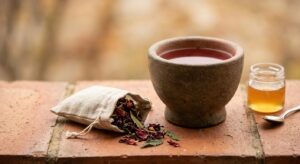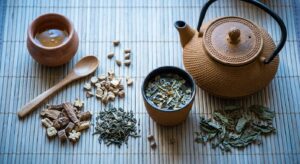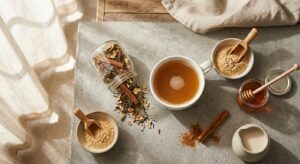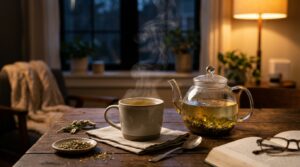
Lemon verbena arrived in Europe in the late 1700s, carried home by Spanish and Portuguese explorers from the Andean regions of Argentina, Chile, and Peru. It spread quickly through the gardens of Spain and France, where it became known as verveine and hierba luisa, a name said to honor Maria Luisa, a Spanish princess. In French homes, a cup of verveine after dinner remains a beloved tradition, valued for settling the stomach and easing the mind at the end of the day.
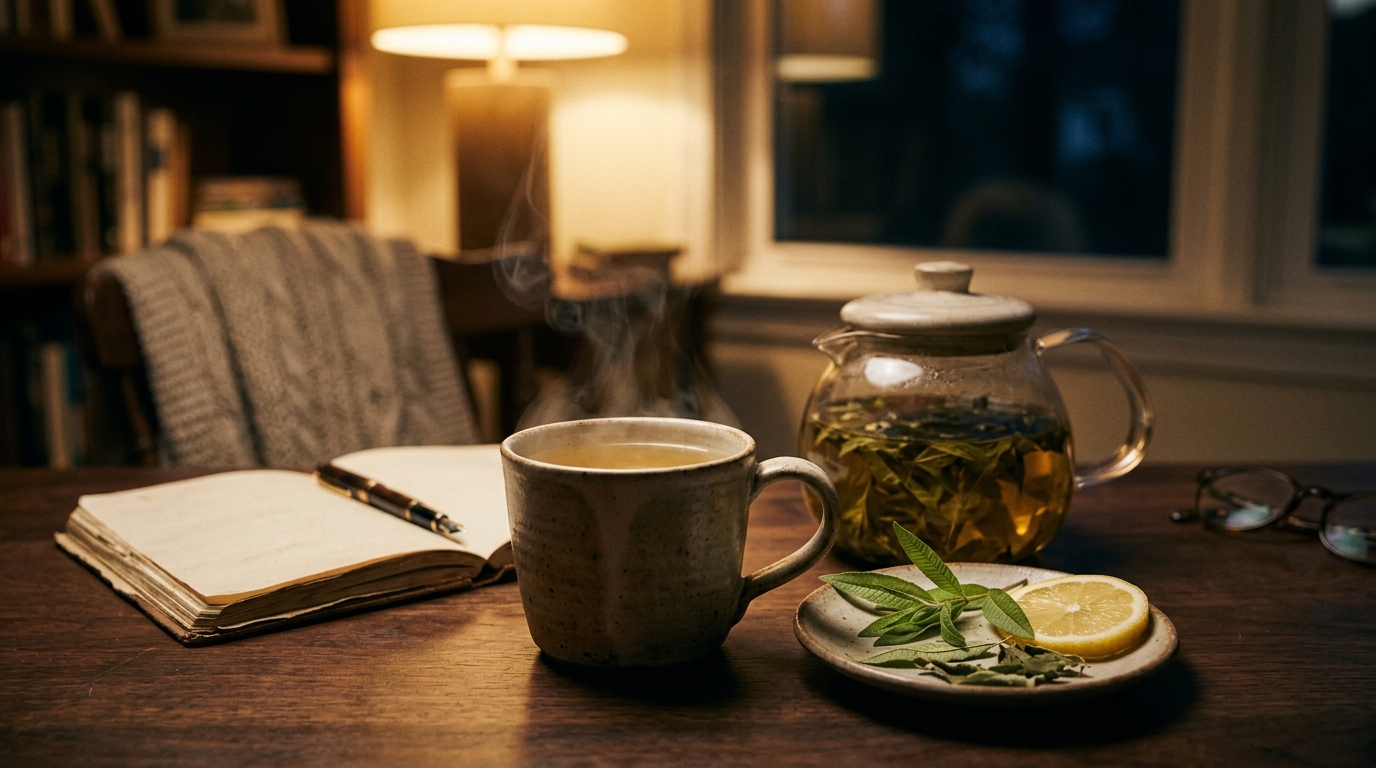
Traditionally, the leaves have been used as a digestive aid, a gentle nervine, and a remedy for tension and restlessness. Folk herbalists reached for lemon verbena after heavy meals and during stressful spells, trusting it to soothe without sedating. Unlike many calming herbs that leave you heavy-lidded, lemon verbena tends to leave the mind clear and the body relaxed, which is why it suits an evening focus ritual such as journaling, reading, planning tomorrow, or quiet creative work.
What makes it truly special is the aroma. Lemon verbena smells brighter and sweeter than lemon peel itself, with floral, almost candy-like top notes and none of the sharp acidity of the fruit. Rub a fresh leaf between your fingers and you will understand why perfumers, pastry chefs, and tea lovers have prized it for over two centuries. It is naturally caffeine-free, so it fits perfectly into an evening routine.
2
cups
Ingredients
- 2 tbspdried lemon verbena leaves (or 4 tbsp fresh leaves)
- 480 mlfiltered water (90°C / 194°F)
- —thin strip of lemon peel (optional)
- —raw honey to taste (optional)
How to Brew
Click on an item below to shop for the recommended items for this recipe on Amazon.
As an Amazon Associate, we earn from qualifying purchases.
- Heat filtered water until it just begins to steam and small bubbles form, around 90°C (194°F). Avoid a full rolling boil, which can flatten the delicate citrus notes.
- Add 1 tablespoon of dried leaves (or 2 tablespoons of fresh, gently bruised leaves) to your infuser or directly into a warmed teapot for each 240 ml of water.
- Pour the hot water over the leaves and cover immediately with a lid or saucer to keep the aromatic oils from escaping.
- Steep for 5 to 7 minutes. Five minutes gives a lighter, brighter cup; seven gives a rounder, more floral one.
- Remove the leaves, give the tea a gentle stir, and sip slowly. Add a strip of lemon peel or a little honey if you like, but try it plain first.
- Place 3 tablespoons of dried lemon verbena leaves (or a generous handful of fresh leaves) into a clean glass jar.
- Add 1 liter of cold filtered water, making sure all the leaves are fully submerged. Stir once.
- Seal the jar and refrigerate for 8 to 12 hours. Overnight works perfectly, so you can prepare it the evening before.
- Strain through a fine mesh sieve into a clean pitcher, pressing the leaves lightly to release the last of the liquid.
- Serve over ice with a lemon wheel or a sprig of fresh mint. Keep refrigerated and drink within 2 days.
- Bring 240 ml of filtered water to about 95°C (203°F) and pour it over 3 tablespoons of dried lemon verbena leaves in a heatproof jug.
- Cover and steep for 10 minutes to create a strong concentrate, roughly double the strength of a regular cup.
- Strain out the leaves and stir in honey or a little simple syrup while the concentrate is still warm, if you want it sweetened.
- Let the concentrate cool to room temperature, then refrigerate for at least 1 hour until thoroughly chilled.
- Fill two tall glasses with ice, pour in the chilled concentrate until each is one-third full, and top with cold sparkling water.
- Garnish with a fresh lemon verbena leaf and a thin lemon slice. Serve immediately for the best fizz.
Health Benefits
Traditional use as a gentle nervine is supported by early research suggesting lemon verbena extracts can reduce stress-related markers. The aroma compounds, especially citral and limonene, are linked to a relaxed but alert state.
A small randomized trial found that a lemon verbena extract improved sleep quality and duration in adults with mild insomnia. Its calming effect without caffeine or heavy sedation makes it a sensible evening choice.
Lemon verbena has long been taken after meals to ease bloating, gas, and stomach cramps. Its volatile oils are thought to relax smooth muscle in the digestive tract.
Verbascoside and other polyphenols in the leaves show strong free-radical scavenging activity in laboratory studies. Research on active adults suggests lemon verbena extract may help reduce exercise-related muscle damage.
🧪 Key Bioactive Compounds
The Science Behind Lemon Verbena
Lemon verbena’s aroma and activity come largely from its essential oil, which is rich in citral, limonene, geraniol, and 1,8-cineole. Citral is the same compound that gives lemongrass and lemon peel their scent, and it has been studied for antimicrobial and mild anxiolytic properties. Because these compounds are highly volatile, covering your cup while steeping makes a real difference to how much ends up in the drink.
The leaves also contain a notable amount of phenolic compounds, particularly verbascoside, which is the dominant polyphenol in many extracts. Laboratory and small human studies suggest verbascoside acts as a strong antioxidant and may reduce markers of inflammation and oxidative stress. In one trial, participants taking a standardized lemon verbena extract reported improved sleep and lower perceived stress, though sample sizes were small and more research is needed.
It is worth being honest about the limits of the evidence. Most clinical work uses concentrated extracts rather than tea, so a cup of infusion likely delivers a milder effect. Still, the combination of a calming ritual, warm liquid, and an uplifting aroma contributes meaningfully to the experience, and the traditional record of safe use over centuries is reassuring.
Brewing Tips
- Buy dried leaves that are still pale green and smell strongly of lemon; brown, dusty leaves have lost most of their oils.
- If you grow your own, harvest in the morning after the dew dries, when the essential oil content is at its peak.
- Store dried leaves in an airtight, opaque container away from heat and light, and use within 12 months for the brightest flavor.
- Gently bruise or crumble the leaves just before steeping to release more aroma without crushing them to powder.