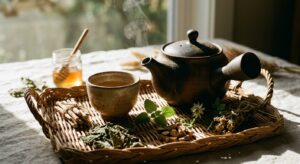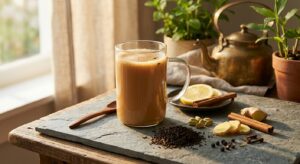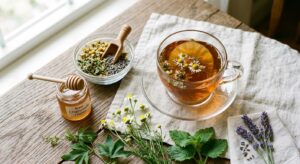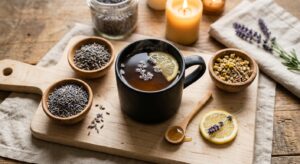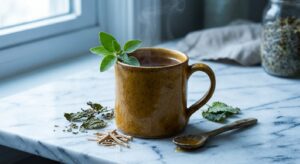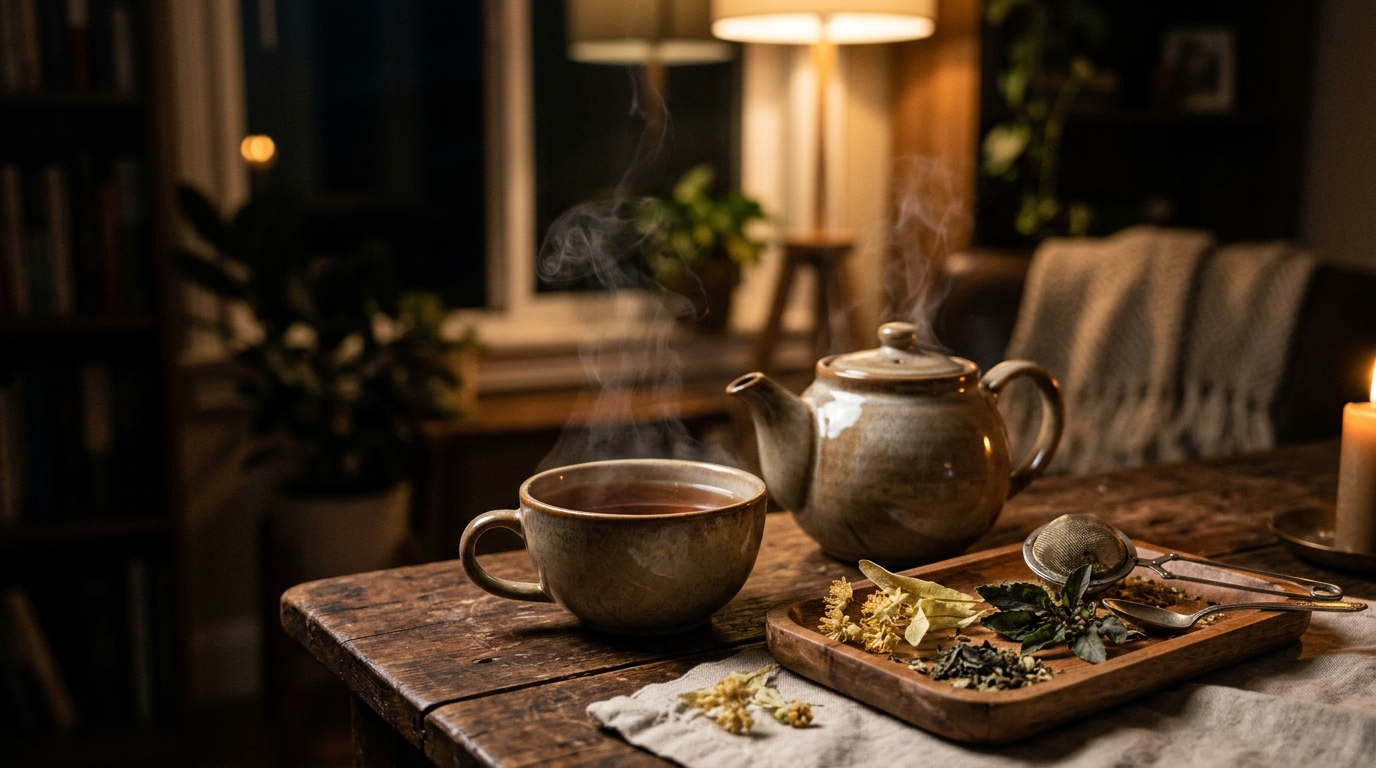
Two traditions, separated by thousands of miles, arrived at remarkably similar conclusions about how to calm a restless mind. In India, Tulsi (Ocimum tenuiflorum) has been grown in courtyards and temple gardens for millennia, revered as the “Queen of Herbs” and used in Ayurveda as a rasayana, a tonic believed to support resilience, clarity, and long life. Households traditionally brewed it daily, and the plant itself was treated as a living presence in the home.
Meanwhile, across Europe, linden trees (Tilia cordata and Tilia platyphyllos) lined village squares and monastery gardens. Each early summer, families gathered the pale, fragrant blossoms and pale green bracts to dry for winter. In France, tilleul is the classic evening infusion, offered to anxious children, frazzled adults, and anyone struggling to sleep. German, Hungarian, and Polish folk medicine all prize linden for easing tension, soothing colds, and inducing a gentle sweat during fevers.
Combined, the two herbs complement each other beautifully. Tulsi brings warm, peppery, clove-like depth and its reputation as an adaptogen, while linden adds a soft, honeyed floral sweetness and a gently relaxing quality. The result is a tea that feels both grounding and uplifting, a small ritual that bridges Eastern and Western herbal wisdom in a single steaming cup.
2
cups
Ingredients
- 2 tspdried holy basil (tulsi) leaves
- 2 tspdried linden blossoms and bracts
- 480 mlwater (95°C / 203°F)
- —raw honey to taste (optional)
- —a thin slice of fresh lemon (optional)
How to Brew
Click on an item below to shop for the recommended items for this recipe on Amazon.
As an Amazon Associate, we earn from qualifying purchases.
- Bring fresh, filtered water to a near boil, then let it rest for about 30 seconds so it settles at roughly 95°C (203°F). Fully boiling water can flatten the delicate floral notes of linden.
- Combine the tulsi leaves and linden blossoms in a teapot or large mug with an infuser. Gently crush the dried tulsi between your fingers as you add it to release its oils.
- Pour the hot water over the herbs, then immediately cover with a lid or saucer to trap the aromatic steam.
- Steep for 7 to 10 minutes. Closer to 7 yields a lighter, floral cup; closer to 10 draws out more of tulsi’s spicy depth and linden’s soothing mucilage.
- Strain thoroughly, pressing the herbs lightly against the strainer to extract the last of the liquid.
- Sweeten with raw honey if desired, and sip slowly in a quiet, dimly lit space about an hour before bed.
- In a large glass jar, combine 4 tablespoons of dried tulsi and 4 tablespoons of dried linden with 1 liter of cold, filtered water.
- Stir gently with a spoon to make sure all the herbs are submerged and moistened.
- Seal the jar and refrigerate for 8 to 12 hours, ideally overnight. Do not leave it at room temperature for the full steeping time, as herbal infusions can spoil.
- Strain through a fine mesh sieve or cheesecloth into a clean pitcher, discarding the spent herbs.
- Serve over ice with a lemon slice, or drink straight from the fridge. Consume within 48 hours for the best flavor and freshness.
- Heat 240 ml of water to 95°C (203°F). Use only half the usual water so the tea brews at double strength.
- Place 3 teaspoons of dried tulsi and 3 teaspoons of dried linden in a heatproof glass measuring jug or teapot.
- Pour the hot water over the herbs, cover, and steep for 10 minutes to build a robust concentrate.
- Fill two tall glasses generously with ice, and add a few torn fresh mint leaves and a lemon slice to each.
- Strain the hot concentrate directly over the ice, dividing it between the glasses. The ice will chill and dilute it instantly.
- Stir with a long spoon, taste, and add a touch of honey while the tea is still warm enough to dissolve it if you like.
Health Benefits
Tulsi is classified as an adaptogen, and small human trials have reported reductions in self-reported stress, forgetfulness, and exhaustion with regular use. The research is promising but still limited in size and scope.
Linden blossom has a long European tradition as a mild nervine, and its flavonoids and aromatic compounds are thought to contribute to a calming effect. Much of the support is traditional, with some preclinical evidence of anxiolytic activity.
Both herbs have traditionally been used to settle a stressed stomach. Tulsi’s carminative compounds and linden’s soothing mucilage may help calm cramping and bloating linked to nervous tension.
Rosmarinic acid, quercetin, and kaempferol give this blend meaningful antioxidant capacity, which may help the body manage the oxidative load that accompanies chronic stress.
Linden’s mucilage has long been used to coat irritated throats, while tulsi has a traditional role in respiratory wellness, making this a comforting tea during seasonal colds.
🧪 Key Bioactive Compounds
The Science Behind Holy Basil
The appeal of this blend lies in how its compounds target stress from different angles. Tulsi is rich in phenolic compounds such as rosmarinic acid and eugenol, along with triterpenoids like ursolic acid. Studies on tulsi extracts suggest they may influence the hypothalamic-pituitary-adrenal (HPA) axis, the body’s central stress-response system, and may help moderate cortisol output. In a few small randomized trials, participants taking tulsi reported lower perceived stress and improved sleep quality, though larger and longer studies are still needed.
Linden blossom contributes a different set of actives. Its flavonoids, including quercetin and kaempferol, along with aromatic compounds like farnesol, are associated with mild sedative and anxiolytic effects in preclinical research. Linden also contains mucilage, a soothing polysaccharide that coats mucous membranes, which helps explain its traditional use for sore throats and irritated digestion. Its reputation as a calming nervine in European herbalism is centuries old, even if modern clinical evidence remains modest.
It is worth being honest about the state of the science: much of the support for this pairing comes from traditional use and early-stage research rather than large clinical trials. That said, both herbs are generally well tolerated, and the act of preparing and sipping a warm, fragrant tea is itself a proven relaxation cue. The ritual and the plants work hand in hand.
Brewing Tips
- Gently crush dried tulsi leaves between your palms before brewing to release more of their aromatic oils and deepen the flavor.
- Look for linden that includes the pale bracts as well as the blossoms, since the bracts carry much of the mucilage and gentle sweetness.
- Store both herbs in airtight, opaque containers away from heat and light, and use within a year for the best aroma and potency.
- Make this tea part of a consistent evening routine, as the calming effect of a ritual builds over time alongside the herbs’ benefits.
- If you find tulsi too peppery, increase the linden slightly or switch to cold brew for a rounder, sweeter cup.