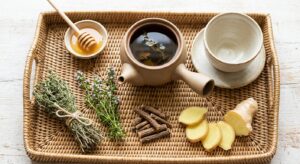
The botanical name Salvia comes from the Latin salvere, meaning to save or to heal, and few herbs have earned their name as thoroughly as common sage. Ancient Romans considered it a sacred plant, gathered with ceremony and a special knife. Medieval European monasteries grew it in physic gardens, and a well-known proverb of the period asked how a man could die while sage grew in his garden. Across cultures, from Greek physicians like Dioscorides to Traditional Chinese Medicine’s related Salvia species, sage was reached for whenever the mouth, throat, or voice needed care.
The throat-soothing reputation of sage is not just folklore. Gargles and teas made from sage leaf were a staple of European household medicine for sore throats, hoarseness, and inflamed gums, and the herb is still approved for this use by the German Commission E and the European Medicines Agency. Its leaves are rich in aromatic oils and polyphenols that give the tea a gently astringent quality, the slightly drying, tightening sensation that coats the throat and calms irritation.
Pairing sage with raw honey turns a medicinal infusion into an evening ritual. Honey softens sage’s bold, camphorous edge and adds its own soothing, demulcent coating, which is why it is one of the best-studied folk remedies for nighttime cough and throat discomfort. Sip it slowly in the hour before bed, and the warmth, the aroma, and the sweetness work together to help you wind down while your throat gets the care it needs.
2
cups
Ingredients
- 2 tspdried sage leaves (Salvia officinalis), or 6 to 8 fresh leaves
- 480 mlwater (95°C / 203°F)
- 2 tspraw honey, plus more to taste
- 2 tspfresh lemon juice (optional)
- —a thin slice of fresh ginger (optional, for extra warmth)
How to Brew
Click on an item below to shop for the recommended items for this recipe on Amazon.
As an Amazon Associate, we earn from qualifying purchases.
- Bring fresh water to a boil, then let it rest for about 30 seconds so it settles near 95°C. Sage is a sturdy leaf, but fully rolling water can pull out harsh, bitter tannins.
- Place the dried sage leaves in a mug or teapot. If using fresh leaves, bruise them lightly between your fingers first to release their oils.
- Pour the hot water over the sage and cover the vessel immediately with a saucer or lid to trap the aromatic vapors.
- Steep for 5 to 7 minutes. Closer to 5 gives a lighter, sweeter cup. Closer to 7 gives a stronger, more astringent tea better suited to a sore throat.
- Strain out the leaves, then let the tea cool for a minute or two until comfortably warm. Stir in the honey only once the tea is no longer scalding, which helps preserve the character of raw honey.
- Add lemon juice if you like, and sip slowly about 30 to 60 minutes before bed.
- Add 2 tablespoons of dried sage leaves (or about 12 fresh leaves, lightly bruised) to a clean glass jar. Cold brew needs a higher leaf-to-water ratio because cold water extracts more slowly.
- Pour 720 ml of cold, filtered water over the leaves, then stir once to submerge them all.
- Seal the jar and refrigerate for 8 to 12 hours, or overnight. Avoid leaving it longer than 12 hours, as the flavor can turn grassy and flat.
- Strain the tea through a fine mesh strainer into a clean jar or pitcher, pressing the leaves gently to release the last of the liquid.
- Stir raw honey into a small amount of room temperature water until fully dissolved, then mix it into the tea. Honey dissolves poorly in cold liquid, so this step prevents it from sinking to the bottom.
- Serve chilled over ice, or pour a cup and warm it gently on the stove without boiling. Keep refrigerated and drink within 2 days.
- Place 1 tablespoon of dried sage leaves in a heatproof cup or small teapot. This is roughly double the strength of the standard hot brew.
- Pour 240 ml of freshly boiled water over the leaves, cover tightly, and steep for 10 to 15 minutes. The longer steep extracts more of the astringent polyphenols that tighten and soothe irritated throat tissue.
- Strain well and divide the infusion into two portions: about one third for gargling and the rest for drinking.
- Let the gargle portion cool until comfortably warm, never hot. Gargle for 20 to 30 seconds with your head tilted back, then spit it out. Repeat two or three times.
- Stir 1 to 2 teaspoons of honey into the remaining infusion while it is still warm, add a squeeze of lemon if desired, and sip slowly.
- Repeat up to three times a day during a sore throat, finishing with a final cup at bedtime.
Health Benefits
Sage’s tannins and polyphenols have an astringent effect that tightens irritated mucous membranes, and clinical research on sage-containing sprays and lozenges has shown measurable relief of throat pain. Honey adds a protective, coating layer.
Rosmarinic acid, carnosic acid, and the essential oils in sage show antibacterial and antiviral activity in laboratory studies, which helps explain its long use during colds. Human evidence for the tea specifically is limited, so it is best viewed as supportive care.
Honey has been shown in clinical trials to reduce the frequency and severity of nighttime cough in children over one year old and adults, in some studies performing comparably to common over-the-counter cough suppressants.
Flavonoids and phenolic acids in sage reduce inflammatory signaling in laboratory and animal studies, which may contribute to its traditional use for inflamed gums, mouth, and throat.
Sage has a traditional reputation as a calming herb, and early research suggests it may support mood and cognitive function. The warm, slow ritual of sipping a soothing tea is itself a recognized aid for winding down.
🧪 Key Bioactive Compounds
The Science Behind Sage
Sage’s reputation as a throat herb rests largely on two groups of compounds: phenolic acids like rosmarinic and carnosic acid, and the volatile essential oil fraction rich in 1,8-cineole, camphor, and thujone. The phenolic compounds act as antioxidants and have been shown in laboratory studies to dampen inflammatory pathways, while also exhibiting activity against several bacteria and viruses commonly associated with respiratory infections. Their tannin content gives the tea its characteristic astringency, which temporarily tightens and protects irritated mucosal tissue.
Clinical evidence for sage and sore throat is encouraging, though much of it studies concentrated sprays and lozenges rather than tea. In randomized trials, a sage-containing throat spray reduced throat pain faster than placebo, supporting the German Commission E’s approval of sage for inflammation of the mouth and throat. A tea delivers a lower dose than these extracts, which is why the stronger gargle infusion in this guide is steeped longer and used in a more concentrated form.
Honey brings its own well-documented benefits to the cup. Its viscous texture coats the throat, and its natural osmotic and antimicrobial properties may help soothe irritation. A Cochrane review concluded that honey is likely more effective than no treatment, and possibly comparable to some conventional cough remedies, for acute cough in children. Because heat can degrade some of raw honey’s delicate enzymes and aromatic compounds, stirring it into tea that has cooled slightly preserves more of its character while still delivering its soothing effect.
Brewing Tips
- Use a dried leaf that is still fragrant and greenish-gray. If it smells dusty or faint, it has lost much of its essential oil and will make a weak, flat tea.
- Cover your cup while steeping to keep the aromatic oils in the tea. A saucer works perfectly and makes a noticeable difference in flavor and potency.
- Let the tea cool to warm before adding raw honey. Very hot water can dull honey’s flavor, while a comfortably warm cup keeps its floral notes intact.
- Drink the tea slowly in small sips so the warm liquid has time to coat the throat, rather than gulping it down.
- Buy culinary-grade Salvia officinalis (common garden sage) for tea, and avoid decorative or ornamental salvia varieties, which are not intended for drinking.