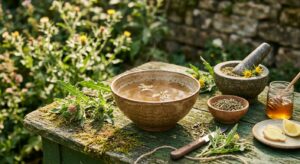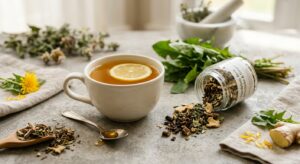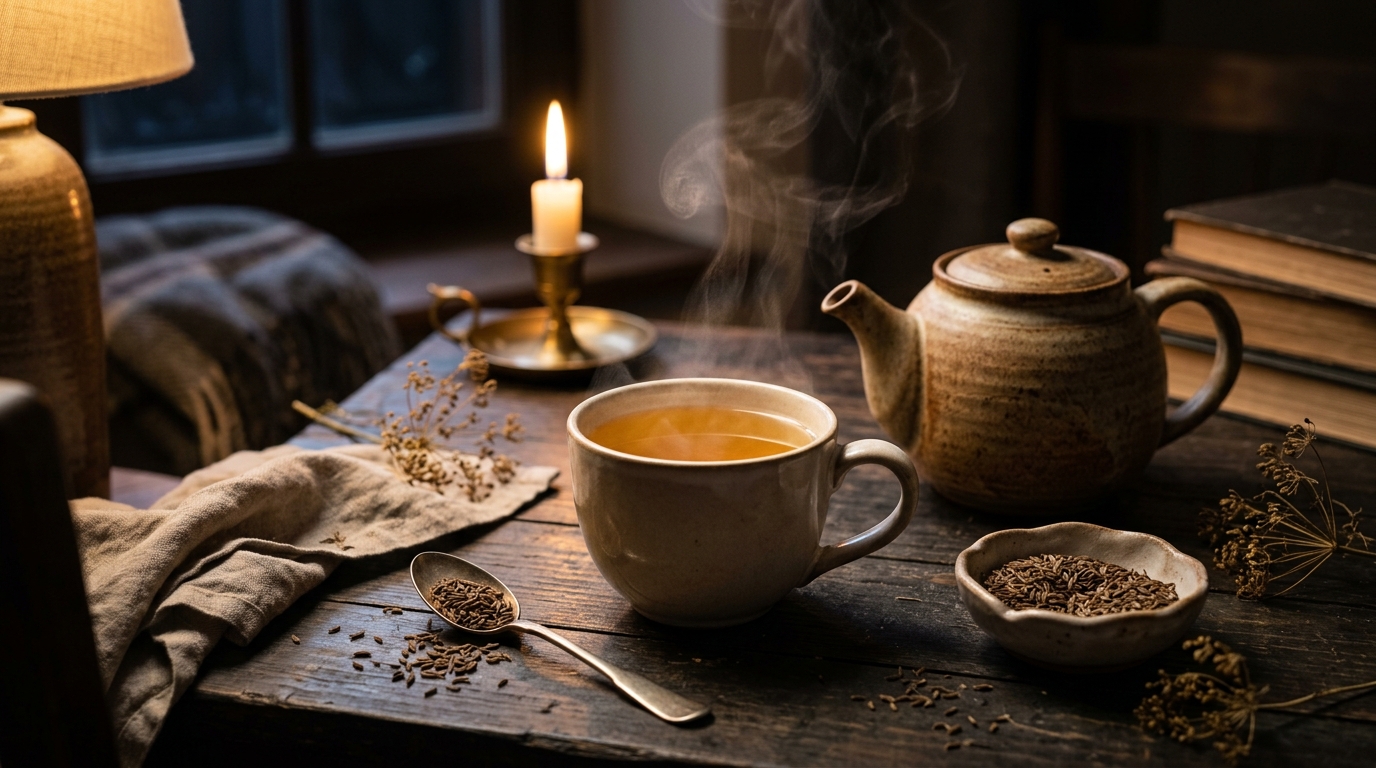
Long before the modern pharmacy aisle, the caraway plant (Carum carvi) was already one of the most trusted kitchen remedies in Europe. Archaeological finds suggest people have been using the seeds for thousands of years, and by the Middle Ages caraway turned up in everything from rye bread to cabbage dishes to the sweet comfits handed round at the end of a feast. The pairing was no accident. Cooks across Germany, Austria, Hungary, and Scandinavia learned that caraway made rich, fatty, and gas-forming foods easier to bear.
Herbalists have long classed caraway as a carminative, a plant that eases gas and soothes an unsettled stomach. Old German herbals recommend a cup of crushed seed tea for infant colic and adult indigestion alike, and in many Central European homes a small pot of caraway tea still follows a heavy Sunday roast. The tradition travelled widely: the seeds appear in Middle Eastern spice blends, in Moroccan harissa, and in the Egyptian dessert drink meghli.
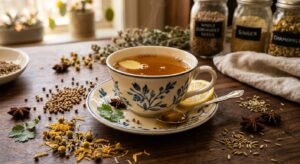
In the cup, caraway is surprisingly comforting. The flavor sits somewhere between anise, dill, and rye bread, with a gentle warmth and a faint citrus lift. It is naturally caffeine-free, which makes it an ideal evening tea, and it pairs beautifully with the slow, unhurried ritual of winding down after dinner.
2
cups
Ingredients
- 2 tspwhole caraway seeds
- 480 mlwater (95°C / 203°F)
- —raw honey to taste (optional)
- —a strip of lemon peel (optional)
How to Brew
Click on an item below to shop for the recommended items for this recipe on Amazon.
As an Amazon Associate, we earn from qualifying purchases.
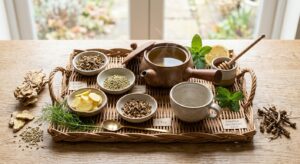
- Measure 2 teaspoons of whole caraway seeds into a mortar, or onto a cutting board. Crush them lightly with a pestle or the back of a spoon until they crack open and release their fragrance. Do not grind to a powder, just break the seed coat.
- Place the crushed seeds in a teapot or a large mug with a lid or saucer. If you like, add a small strip of lemon peel for brightness.
- Bring fresh water to a boil, then let it rest for about 30 seconds to reach roughly 95°C (203°F). Pour it over the seeds.
- Cover immediately and steep for 10 to 12 minutes. The long, covered steep is what draws out the carvone-rich essential oil.
- Strain through a fine mesh strainer into your cup, pressing the seeds gently. Sweeten with a little raw honey if desired, and sip slowly while still warm.
- Lightly crush 1 tablespoon of caraway seeds in a mortar. This breaks the seed coat so the cold water can reach the oil glands inside.
- Add the crushed seeds to a glass jar with 500 ml of cold, filtered water. Add a few thin slices of fresh apple or a strip of orange peel if you want extra sweetness.
- Seal the jar tightly, shake gently for a few seconds, and refrigerate for 8 to 10 hours, or overnight.
- Strain the tea through a fine mesh strainer or a coffee filter to remove all the seed fragments, which can turn harsh if left in.
- Serve chilled over a few ice cubes, or let it come to cool room temperature. Drink within 48 hours and keep refrigerated.
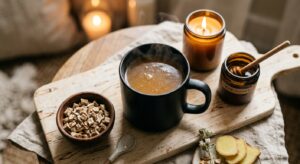
- Add 1 tablespoon of lightly crushed caraway seeds and 1 small slice of fresh ginger, about 2 cm, to a small saucepan with 500 ml of cold water.
- Set the pan over medium heat, cover with a tight-fitting lid, and bring just to a gentle simmer. Avoid a rolling boil, which drives off the aromatic oils.
- Reduce the heat to low and simmer, still covered, for 8 minutes. The liquid will deepen to a golden amber.
- Remove from the heat and let the pot rest, covered, for 5 minutes so the oils settle back into the water.
- Strain into a warmed mug, discard the solids, and sweeten with honey if you like. This version is robust and warming, a good choice after a very heavy meal.
Health Benefits
Carvone and limonene relax the smooth muscle of the gut and help gas pass more comfortably. Clinical studies of caraway oil, usually combined with peppermint oil, show meaningful relief of functional dyspepsia symptoms.
As a classic carminative, caraway supports comfortable digestion after rich or fatty meals. Modern trials on caraway-peppermint preparations report reduced upper abdominal pain and heaviness.
Laboratory research shows caraway’s volatile oils have an antispasmodic effect on intestinal muscle. This is the likely basis for its long traditional use for colic and cramps.
The bitter-aromatic quality of caraway traditionally stimulates the digestive juices, which is why it was served as an after-dinner digestif and baked into heavy breads.
Caraway oil has shown activity against certain bacteria and yeasts in lab studies. While this is not a treatment, it may help explain the herb’s historical role in food preservation and gut care.
🧪 Key Bioactive Compounds
The Science Behind Caraway
Caraway’s digestive reputation rests largely on its essential oil, which makes up roughly 3 to 7 percent of the dried seed. Carvone, the dominant molecule, typically accounts for half or more of that oil, with limonene making up most of the rest. These compounds are lipophilic, which is why a covered, sufficiently long steep matters: the oils are only partly water-soluble and escape easily with steam.
Research suggests carvone and limonene act as spasmolytics, reducing the tone and contractions of intestinal smooth muscle. In animal and tissue studies, caraway extracts calm gut contractions in a way that resembles the action of calcium channel modulation. This offers a plausible mechanism for why caraway can ease the cramping and trapped-gas discomfort that often follow a large meal.
In human research, the strongest evidence involves a fixed combination of caraway oil and peppermint oil taken in enteric-coated capsules for functional dyspepsia, where trials have shown improvements in pain, pressure, and fullness. It is worth being honest that a home-brewed seed tea delivers a much lower and less standardized dose than these capsules, and most evidence for tea itself is traditional rather than clinical. Even so, the tea offers a gentle, pleasant, and low-risk way to support digestion, and the warmth of the drink itself adds to the soothing effect.
Brewing Tips
- Crush the seeds just before brewing. Whole seeds keep their oils sealed inside, and pre-ground caraway loses its aroma quickly.
- Always cover your cup or pot while steeping so the volatile oils condense back into the tea rather than drifting away as steam.
- Buy whole seeds from a store with high turnover and keep them in an airtight jar away from light. Fresh caraway smells strongly of anise and rye, and stale seeds smell dusty.
- Drink the tea warm, about 20 to 30 minutes after eating, rather than with the meal itself, so it can work on digestion as the food settles.