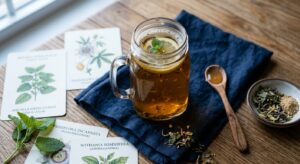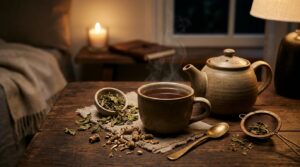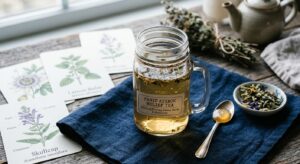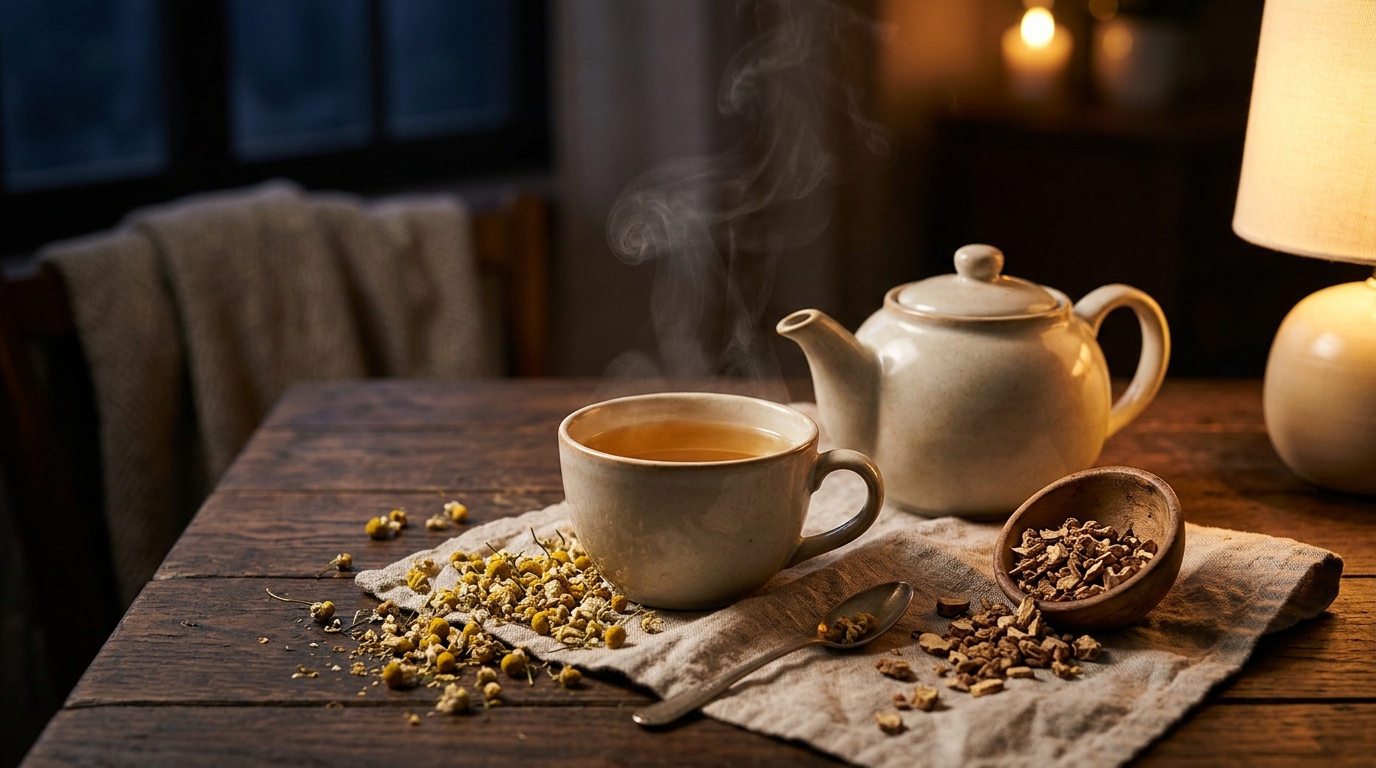
Chamomile has been steeped in cups for thousands of years. Ancient Egyptians dedicated it to their sun gods, Greek physicians such as Dioscorides recorded its use for fevers and digestive complaints, and generations of grandmothers across Europe have handed a warm mug of it to anyone who could not sleep. Its small, daisy-like flowers carry a honeyed, apple-like fragrance (the name comes from the Greek khamaimelon, meaning ‘ground apple’) that has become shorthand for comfort itself.
Rhodiola rosea, by contrast, grows in the cold, rocky highlands of Scandinavia, Siberia, and the Arctic. Vikings reportedly used the root for strength and endurance, and Russian and Scandinavian folk medicine valued it as a tonic for surviving harsh winters and demanding labor. In the twentieth century, Soviet researchers studied it as an adaptogen, a class of herbs believed to help the body adapt to physical and mental stress.
Together, these two plants make an unusual and thoughtful pairing. Chamomile quiets the evening, softening racing thoughts and tight shoulders, while a small amount of rhodiola root lends an earthy, slightly rosy depth and supports your capacity to handle stress over time. The result is a tea that is relaxing yet grounding, ideal for the hours when you want to unwind without switching off entirely.
2
cups
Ingredients
- 2 tbspdried chamomile flowers
- 1 tspdried rhodiola root, chopped or cut and sifted
- 480 mlfiltered water
- —raw honey to taste (optional)
- —a thin slice of lemon or a small strip of orange peel (optional)
How to Brew
Click on an item below to shop for the recommended items for this recipe on Amazon.
As an Amazon Associate, we earn from qualifying purchases.
- Bring filtered water to a boil, then let it rest for about 1 minute so it settles to roughly 90 to 95°C. Water that is fully boiling can make chamomile taste flat and slightly bitter.
- Measure the chamomile flowers and chopped rhodiola root into a tea infuser or directly into a teapot. Give the rhodiola a quick crush with the back of a spoon to help release its compounds.
- Pour the hot water over the herbs, then immediately cover with a lid or saucer to trap the aromatic oils.
- Steep for 6 to 8 minutes. Closer to 6 minutes gives a lighter, floral cup, while 8 minutes brings out the rhodiola’s earthy depth.
- Remove the infuser or strain the tea into mugs, pressing gently on the herbs to extract the last of the liquid.
- Sweeten with a little raw honey and add a slice of lemon or orange peel if you like, then sip slowly about an hour before bed.
- Add the dried chamomile flowers and chopped rhodiola root to a clean glass jar or pitcher, scaling up the amounts to match your volume (about 3 tbsp chamomile and 1.5 tsp rhodiola per 700 ml works well for a stronger cold-brew ratio).
- Pour cold filtered water over the herbs, stir gently once with a long spoon to wet everything, and seal the jar with a lid.
- Place the jar in the refrigerator and let it infuse for 8 to 12 hours, or overnight. Avoid leaving it at room temperature for long periods.
- Strain through a fine mesh sieve or a coffee filter to remove all plant material, discarding the herbs.
- Serve over ice or straight from the jar, with an optional drizzle of honey and a slice of lemon. Drink within 24 to 48 hours for best flavor and freshness.
- Place the chopped rhodiola root and 480 ml of filtered water in a small saucepan. Bring to a gentle boil, then reduce the heat to a low simmer.
- Simmer uncovered for about 10 minutes, until the water takes on a pale amber color and a faint rosy, earthy scent. Do not boil hard, which can drive off aromatic compounds.
- Remove the pan from the heat and immediately add the dried chamomile flowers. Stir once, then cover the pan with a lid.
- Let the chamomile steep in the hot rhodiola liquid for 5 minutes, which is enough to extract its flavor without turning it bitter.
- Strain through a fine mesh sieve into a warmed teapot or mugs, pressing lightly on the herbs.
- Add honey and a citrus peel to taste. This method yields a fuller, more robust cup, well suited to a quiet, cool evening.
Health Benefits
Chamomile’s apigenin interacts with GABA signaling, and clinical trials of chamomile extract have shown reductions in symptoms of mild to moderate generalized anxiety. A warm cup also offers a calming ritual that lowers perceived stress.
Chamomile has a long traditional use as a bedtime herb, and small studies suggest it can modestly improve sleep quality, particularly in people under stress. It tends to help you wind down rather than act as a strong sedative.
Rhodiola is classed as an adaptogen, and trials suggest it may reduce fatigue and burnout-related symptoms during prolonged stress. Evidence is promising but still developing, and effects usually appear with consistent use over weeks.
Chamomile’s bisabolol and flavonoids have antispasmodic and anti-inflammatory actions that can relax the gut, which often tightens up when we are anxious.
Rhodiola’s salidroside and rosavin have been studied for improving attention and lowering mental exhaustion under demanding conditions, helping you feel calm yet clear rather than sluggish.
🧪 Key Bioactive Compounds
The Science Behind Chamomile
Chamomile’s calming reputation has a plausible biochemical basis. The flavonoid apigenin, abundant in the flowers, has been shown to bind to benzodiazepine-like sites on GABA-A receptors, the same general system targeted by anti-anxiety medications, though far more gently. Human trials using standardized chamomile extract have reported meaningful reductions in anxiety scores, and smaller studies on sleep suggest modest improvements in sleep quality. Because a tea is less concentrated than an extract, its effects are subtler and are likely helped by the warmth and ritual of drinking it.
Rhodiola rosea is one of the most studied adaptogens. Its signature compounds, salidroside and rosavin, are thought to modulate the body’s stress-response system, including the hypothalamic-pituitary-adrenal (HPA) axis, and to influence neurotransmitters such as serotonin and dopamine. Randomized trials have reported reduced fatigue and improved concentration in people experiencing stress-related burnout, although study quality varies and results depend heavily on the extract and dose used.
The pairing is complementary rather than redundant. Chamomile acts as the soothing, relaxing agent, while rhodiola contributes a longer-term resilience-building effect. Because rhodiola can be mildly activating for some, using a modest amount in the evening alongside a generous portion of chamomile helps keep the overall effect calming. As with most herbal remedies, consistency matters more than intensity, and individual responses vary.
Brewing Tips
- Choose whole, vibrant yellow-and-white chamomile flowers rather than dusty, brown tea-bag fannings, as freshness strongly affects both aroma and potency.
- Look for rhodiola labeled Rhodiola rosea and, where possible, from suppliers that test for rosavin and salidroside to avoid adulterated or mislabeled roots.
- Start with half the rhodiola (about half a teaspoon) for the first few evenings to see how your body responds before increasing the amount.
- Drink this tea 60 to 90 minutes before bed so the rhodiola has time to settle and you are not woken by a full bladder.
- Store dried herbs in airtight, opaque containers away from light and heat, and use within 6 to 12 months for best flavor.