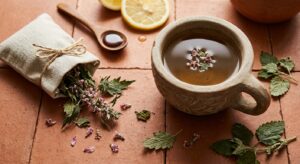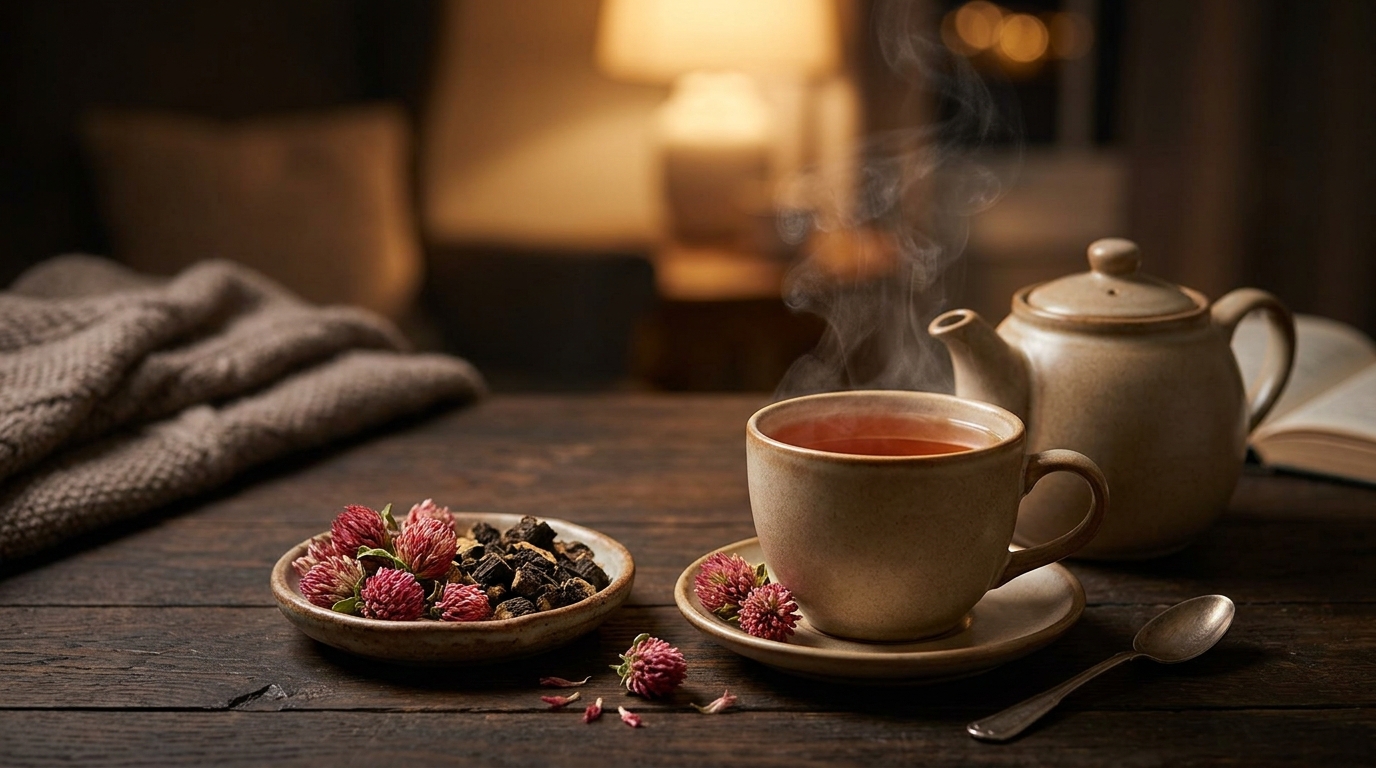
Black cohosh (Actaea racemosa, formerly Cimicifuga racemosa) is a woodland perennial native to eastern North America, where Indigenous peoples including the Cherokee, Iroquois, and Algonquin valued its dark, knotty rhizome for women’s complaints, rheumatic aches, and fevers. Settlers adopted it in the 1800s, and it became a staple of Eclectic medicine, eventually appearing in popular tonics sold to women of the era. The name ‘cohosh’ comes from an Algonquian word, and the plant has also been called black snakeroot and bugbane, since its tall, feathery flower spikes were once used to repel insects.
Red clover (Trifolium pratense) is a very different character: a cheerful meadow plant with rosy-purple blossoms, long used in European and North American folk medicine as a ‘blood purifier’ and skin tonic. Its flowers are rich in isoflavones, plant compounds that resemble estrogen in structure, which is why red clover earned its place in modern menopause-support traditions. Where black cohosh brings a deep, resinous bitterness, red clover brings honeyed, hay-like sweetness.
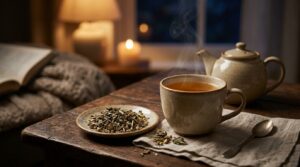
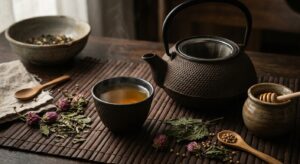
Brewed together, they make an evening cup that is both ritual and remedy. The blend is warming without being stimulating, caffeine-free, and pleasantly balanced between earthy root and floral blossom. Many women enjoy it as a wind-down nightcap during perimenopause and menopause, when evening hot flushes and disrupted sleep can make the end of the day feel anything but restful.
2
cups
Ingredients
- 1 tspdried black cohosh root, coarsely cut
- 2 tspdried red clover blossoms
- 1 tspdried lemon balm leaf (optional, for calm and flavor)
- 480 mlwater (95°C / 203°F)
- —raw honey or a slice of orange peel to taste (optional)
How to Brew
Click on an item below to shop for the recommended items for this recipe on Amazon.
As an Amazon Associate, we earn from qualifying purchases.
- Bring fresh water to a full boil, then let it rest for about 30 seconds so it settles near 95°C (203°F).
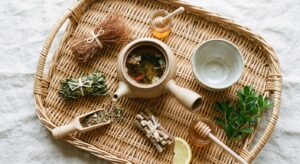
- Measure the black cohosh root, red clover blossoms, and lemon balm (if using) into a teapot or a large mug fitted with a fine-mesh infuser. Crush the root pieces lightly with a spoon to expose more surface area.
- Pour the hot water over the herbs, cover immediately with a lid or saucer, and set a timer for 10 to 15 minutes.
- Strain thoroughly, pressing the herbs gently against the infuser to release the last of the liquid.
- Sweeten with a little raw honey if the root’s bitterness feels strong, and sip slowly about an hour before bed.
- Combine 1 tsp black cohosh root and 2 tsp red clover blossoms in a clean glass jar. Skip the lemon balm or add it with the others if you prefer a lighter, brighter taste.
- Pour in 480 ml of cool, filtered water and stir once to wet all the herbs. Seal the jar.
- Leave the jar on the counter for 1 hour, then transfer it to the refrigerator to steep for 8 to 10 hours or overnight.
- Strain through a fine-mesh sieve or a coffee filter to remove all the root fragments, which can turn gritty after a long soak.
- Serve cool over a few ice cubes in the evening, or let it come up to room temperature if you want a gentler sip.
- Add 1 tsp coarsely cut black cohosh root to a small saucepan with 480 ml of cold water.
- Bring the water slowly to a gentle simmer over medium-low heat, then reduce the heat, cover, and simmer for 15 minutes. Avoid a rolling boil, which can make the brew harsh.
- Turn off the heat, add 2 tsp red clover blossoms and the optional lemon balm, replace the lid, and steep for a further 10 minutes.
- Strain through a fine-mesh sieve into a warmed mug, discarding the spent root and flowers.
- Stir in a little honey or a twist of orange peel, then drink warm. This version has a deeper, more medicinal body than the standard hot brew.
Health Benefits
Black cohosh is among the most studied herbs for menopausal vasomotor symptoms, and several trials report modest reductions in hot flush frequency and severity, though results across studies are mixed. Its action appears to involve serotonin and other neurotransmitter pathways rather than direct estrogen replacement.
Night sweats and hormonal shifts are common causes of fragmented sleep in midlife. By easing these symptoms, the blend may indirectly improve sleep quality, and the warm evening ritual itself supports relaxation.
Red clover isoflavones such as biochanin A and formononetin have weak estrogen-like activity. Clinical evidence for red clover is mixed, with some trials showing small benefits for hot flushes and others showing little difference from placebo.
Isoflavones from red clover have been studied for their effects on bone density and arterial flexibility in postmenopausal women. Findings are promising but not conclusive, so this tea is best seen as a complement to, not a replacement for, medical care.
Black cohosh has been explored for its effect on menopausal mood changes and irritability, and the optional lemon balm adds traditional calming support. Evidence is preliminary, but many women report feeling more settled with a consistent evening routine.
🧪 Key Bioactive Compounds
The Science Behind Black Cohosh
Black cohosh has been widely studied, and the scientific story has changed over the decades. Early researchers assumed it acted like estrogen, but more recent work suggests it does not strongly bind to estrogen receptors or consistently raise estrogen levels. Instead, its triterpene glycosides, such as actein, appear to influence serotonin receptors and other neuromodulatory pathways involved in temperature regulation, which may explain why it can help hot flushes without acting as a classic hormone replacement. Clinical trials have produced mixed results, with some showing meaningful symptom relief and others showing no difference from placebo, partly because preparations and doses vary widely.
Red clover offers a different mechanism. Its blossoms are among the richest plant sources of isoflavones, including formononetin, biochanin A, genistein, and daidzein. These compounds are structurally similar to human estradiol and bind weakly to estrogen receptors, with a preference for the beta subtype found in bone, blood vessels, and brain tissue. This selectivity is one reason researchers have explored red clover for bone and cardiovascular outcomes as well as hot flushes. Gut bacteria play a role too, since the conversion of isoflavones into more active forms varies from person to person, which may help explain why responses differ.
It is worth noting that a cup of herbal tea delivers a smaller and more variable dose than the standardized extracts used in most clinical trials. A tea should therefore be viewed as supportive and ritual-based rather than as a precise therapeutic dose. Its great strengths are gentleness, consistency, and the calming effect of a warm evening routine, all of which can matter as much as any single compound when sleep and stress are part of the picture.
Brewing Tips
- Use coarsely cut or cracked black cohosh root rather than fine powder, which clouds the cup and extracts too much bitterness.
- Give the tea time to work: most traditional use and research suggests consistent use over several weeks rather than expecting a result from a single cup.
- Drink the tea about an hour before bed so you have time to wind down, and keep the room cool to help prevent night sweats.
- Buy from a reputable supplier that identifies the species as Actaea racemosa, since adulteration with other cohosh species has been reported.
- Keep a simple symptom diary for the first month so you can see whether the blend is helping and share it with your healthcare provider.