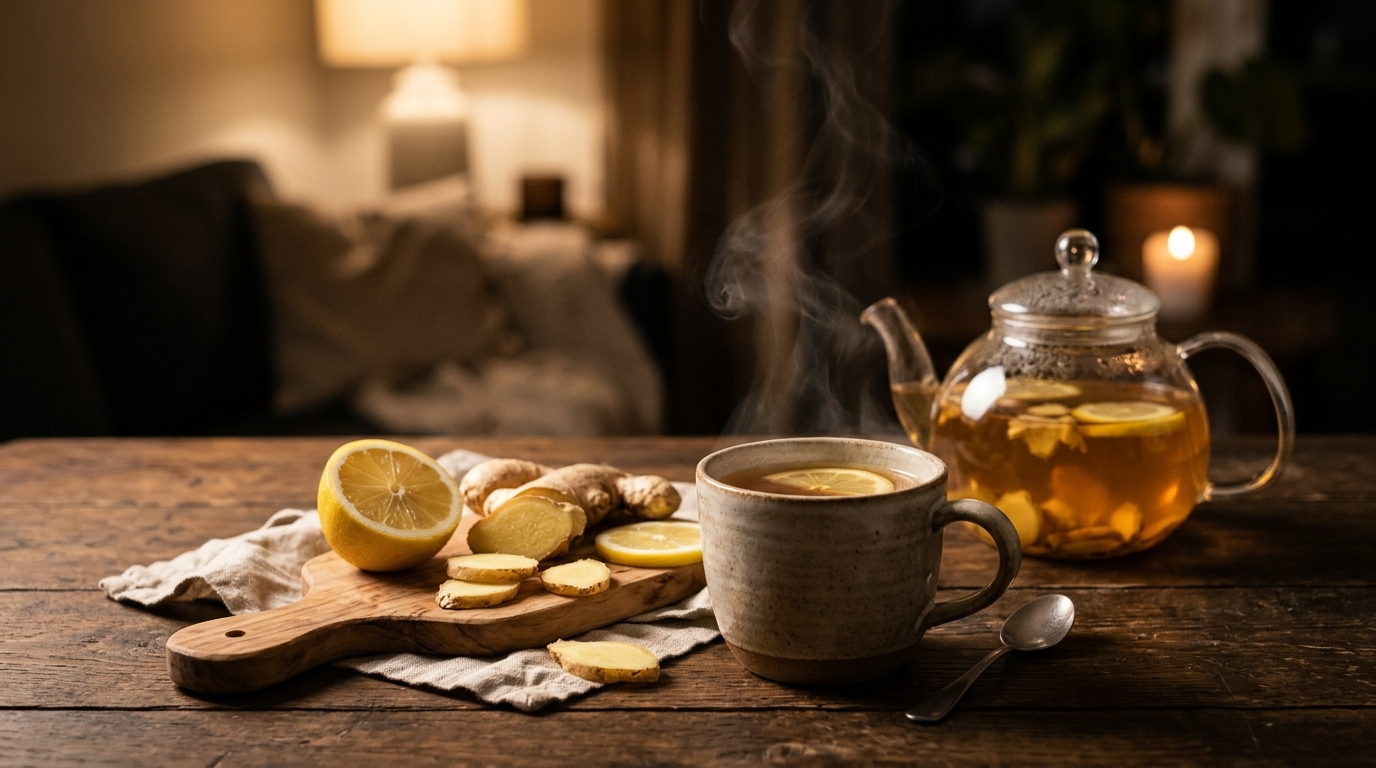
Ginger (Zingiber officinale) has been sipped, chewed, and simmered for well over two thousand years. Ancient Chinese physicians recorded it in herbal texts as a remedy for nausea and stomach discomfort, while Ayurvedic practitioners called it vishwabheshaj, the universal medicine, and prescribed it to stoke digestive fire. Roman traders carried the root across the spice routes, and medieval European households kept it close for settling heavy feasts. Few plants have such a consistent reputation across so many cultures for calming the belly.
Lemon joins ginger in this evening cup for good reason. The citrus adds a clean, bright acidity that lifts ginger’s earthy heat, and lemon peel contributes aromatic oils that many traditions associate with gentle digestive stimulation. Together they create a tea that tastes like a deep exhale after a long meal: sharp at first, then warm and rounded, with a lingering tingle on the tongue.
Making this tea an after-dinner ritual is as much about the pause as the plant. Sitting quietly with a hot mug signals the body to shift into rest-and-digest mode, and the steam, warmth, and aroma all support that transition. Whether you are recovering from a rich holiday dinner or simply want a calming end to an ordinary evening, ginger lemon tea is one of the most accessible and rewarding herbal habits you can build.
2
cups
Ingredients
- 20 gfresh ginger root, thinly sliced (about a 4 cm / 1.5 inch piece)
- 1 wholeorganic lemon (half sliced, half juiced)
- 480 mlfiltered water
- —raw honey to taste (optional)
- —a pinch of black pepper (optional, to enhance warmth)
How to Brew
Click on an item below to shop for the recommended items for this recipe on Amazon.
As an Amazon Associate, we earn from qualifying purchases.
- Wash the ginger root well and slice it into thin coins, about 2 to 3 mm thick. Leave the skin on if the root is organic, since the skin holds beneficial compounds. Thinner slices expose more surface area and release more flavor.
- Bring the filtered water to a full rolling boil, then let it rest for 30 seconds. Ginger is a tough root and tolerates hotter water than delicate flowers or leaves.
- Place the ginger slices and two or three thin lemon slices in a teapot or heatproof pitcher. Pour the hot water over them, cover with a lid, and steep for 10 to 12 minutes. Covering keeps the volatile aromatic oils from escaping with the steam.
- Strain the tea into two mugs. Stir in the juice of half the lemon, adding it after steeping so the heat does not dull its freshness.
- Sweeten with a small spoonful of raw honey if desired, waiting until the tea has cooled slightly so the honey keeps its delicate properties. Sip slowly, ideally 20 to 30 minutes after finishing your meal.
- Wash the ginger and slice it into thin coins. For cold brewing, use slightly more ginger, about 25 g per 480 ml of water, since cold water extracts more slowly.
- Add the ginger slices and half a sliced lemon to a clean glass jar. Pour in 480 ml of cold filtered water, seal the lid, and gently shake once to mix.
- Refrigerate for 8 to 12 hours, or overnight. Do not exceed 12 hours, as the lemon peel can turn bitter and the flavor becomes harsh.
- Strain out the ginger and lemon slices through a fine mesh strainer. Stir in fresh lemon juice and honey if desired.
- Serve over a few ice cubes or at cool room temperature in the evening. The tea keeps in the refrigerator for up to 48 hours.
- Slice the ginger into thin coins or grate it coarsely. Grating increases surface area dramatically and yields a much stronger tea, so use about 15 g if grating.
- Combine the ginger and 480 ml of cold water in a small saucepan. Starting with cold water allows the compounds to draw out gradually as the temperature rises.
- Bring to a boil over medium heat, then immediately reduce to the lowest simmer. Cover the pan and cook gently for 15 to 20 minutes. The liquid will darken to a rich golden amber and the aroma will turn noticeably spicy.
- Remove from the heat and add two thin lemon slices to the hot liquid. Let them steep for 2 to 3 minutes, which is enough to capture the peel’s aroma without extracting bitterness.
- Strain into mugs, squeeze in fresh lemon juice, and add honey and a pinch of black pepper if desired. Drink warm.
Health Benefits
Ginger acts as a carminative, helping move gas through the digestive tract and relaxing intestinal muscle spasms. Its gingerols also encourage the stomach to empty at a healthy pace, easing that overly full feeling.
Several clinical studies, including trials in people with functional dyspepsia, found that ginger accelerated stomach emptying and reduced post-meal fullness. This is the most direct scientific support for an after-dinner ginger habit.
Ginger is among the best-studied natural antinausea remedies, with evidence for pregnancy-related nausea, motion sickness, and post-operative queasiness. The effect appears to involve both the gut and serotonin receptors.
Gingerols and shogaols inhibit inflammatory pathways, including COX enzymes and certain cytokines. This may help calm low-grade gut irritation, though most research is on concentrated extracts rather than tea.
The warmth of the drink and the ritual of slowing down after a meal help activate the parasympathetic nervous system, which supports digestion. Pairing ginger with a caffeine-free evening routine also makes it easy to wind down.
🧪 Key Bioactive Compounds
The Science Behind Ginger
The digestive benefits of ginger trace largely to its gingerols and shogaols, a family of phenolic compounds that give the root its heat. Fresh ginger is richest in gingerols, particularly 6-gingerol. When ginger is heated, as in a simmered decoction, or dried, gingerols dehydrate into shogaols, which are even more pungent and in some studies show stronger anti-inflammatory activity. This is why the preparation method subtly changes both the flavor and the effect of your tea.
In the gut, these compounds appear to work on several fronts. They stimulate gastric motility, meaning they help the stomach and small intestine move their contents along more efficiently. A number of small human trials have found that ginger speeds gastric emptying and reduces symptoms of indigestion and fullness. Ginger also exerts antispasmodic effects on smooth muscle, which may explain why it eases cramping and trapped gas. Its action on serotonin receptors in the gut is thought to underlie its well-documented antinausea properties.
The lemon in this tea is more than a flavoring. Lemon peel oil is rich in limonene, which contributes antioxidant activity and a bright aroma that can stimulate appetite and digestive secretions before and after meals. While much of the research uses concentrated extracts rather than a cup of tea, the traditional use and the plausible mechanisms are consistent, and the habit of a warm, unhurried drink after dinner has its own well-recognized value for digestion.
Brewing Tips
- Use fresh ginger rather than powder for the brightest flavor and the highest gingerol content. Choose firm, smooth roots with taut skin.
- Freeze a whole ginger root and grate it straight from the freezer. It grates into fine, fluffy shreds with almost no effort and keeps for months.
- Add lemon juice after steeping rather than during, since prolonged heat dulls its fresh flavor and can make the peel bitter.
- Drink the tea slowly, about 20 to 30 minutes after eating, rather than during the meal, to support digestion without diluting stomach acid.