Long before anyone wrote a digestive wellness column, cooks and healers around the world were reaching for the same two plants at the end of a big meal. In India, restaurants still bring a small dish of roasted fennel seeds to the table as a breath freshener and digestive aid, a custom known as mukhwas. In ancient Greece, fennel was called marathon, and the famous battlefield is said to have been named for the fields of fennel that grew there. Meanwhile, ginger has been cultivated for more than 5,000 years, valued in Ayurvedic, Chinese, and Greek medicine as a warming remedy for sluggish digestion and queasy stomachs.
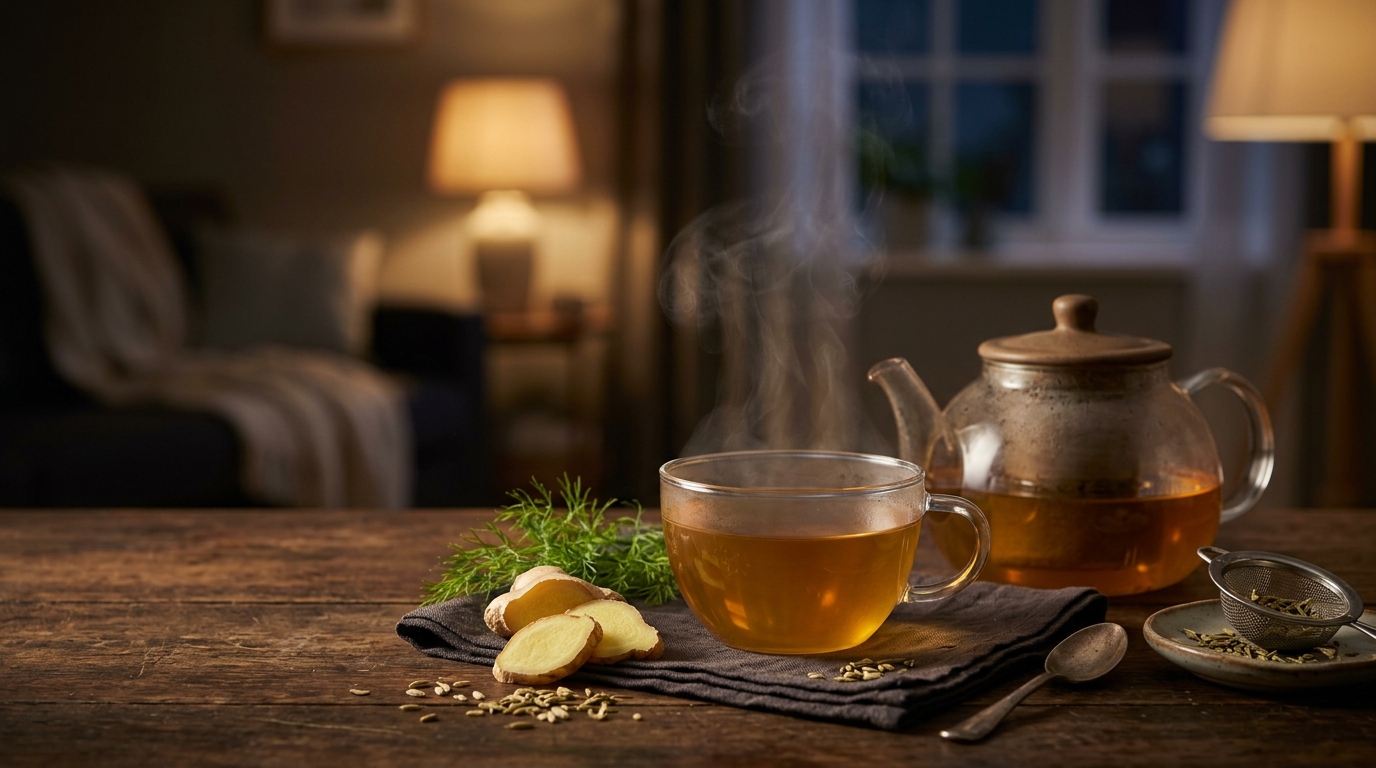
Put them in one cup and something lovely happens. Fennel seed brings a gentle sweetness and a cooling, licorice-like aroma, while fresh ginger adds a bright, peppery warmth that lingers pleasantly at the back of the throat. Fennel has a long traditional reputation as a carminative, meaning it helps the body release trapped gas, and ginger is traditionally used to encourage the stomach to move its contents along. The two balance each other: fennel softens ginger’s heat, and ginger gives fennel’s sweetness a little backbone.
This is the kind of tea you can make without thinking, with ingredients that live happily in a pantry and a fridge for weeks. It is caffeine-free, naturally sweet, and calming enough for the evening, which makes it a dependable standby whenever dinner runs rich, late, or large.
2
cups
Ingredients
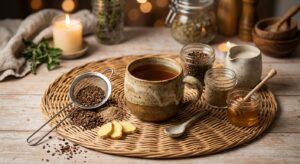
- 2 tspfennel seeds, lightly crushed
- 2 tspfresh ginger root, thinly sliced or grated (about 10 g)
- 480 mlwater (95°C / 203°F)
- —raw honey to taste (optional)
- —a thin slice of lemon (optional)
How to Brew
Click on an item below to shop for the recommended items for this recipe on Amazon.
As an Amazon Associate, we earn from qualifying purchases.
- Measure the fennel seeds into a mortar or onto a cutting board and crush them lightly with a pestle or the flat of a knife. You only want to crack the seeds, not pulverize them. This breaks the surface and releases the aromatic oils, especially anethole, which gives fennel its sweet scent.
- Peel the ginger if the skin looks thick or dry, then slice it into thin coins or grate it. Thinner pieces and grated ginger release more flavor in a short steep, so choose grated ginger if you like a stronger, spicier cup.
- Bring fresh water to a boil, then let it rest for about a minute so it settles near 95°C (203°F). Place the crushed fennel and ginger in a teapot or directly in two mugs.
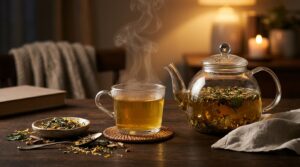
- Pour the hot water over the herbs and cover immediately with a lid or saucer. Covering matters here because fennel’s aromatic compounds are volatile and will escape with the steam if the cup is left open.
- Steep for 10 to 12 minutes. Fennel seeds are dense and need the longer time to give up their flavor, so resist the urge to pull the strainer early.
- Strain into cups, then stir in honey or add a slice of lemon if you like. Sip slowly, ideally 20 to 30 minutes after eating.
- Lightly crush the fennel seeds and slice the ginger into thin coins, leaving the slices a little thicker than you would for a hot brew since there is no heat to speed extraction.
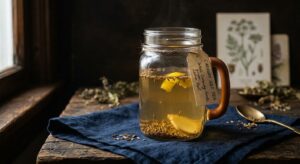
- Place the fennel and ginger in a clean glass jar. Add 480 ml of cool filtered water and stir once to wet everything evenly.
- Seal the jar and refrigerate for 8 to 12 hours, or overnight. Gently swirl the jar once or twice if you pass it, but do not shake it hard.
- Strain through a fine mesh sieve into a pitcher or fresh jar, pressing the ginger lightly to release any remaining liquid.
- Serve over ice or straight from the fridge. Cold brew keeps well for up to 48 hours when stored in a sealed container in the refrigerator.
- Crush the fennel seeds lightly and slice or coarsely chop the ginger. For a decoction you can use slightly larger ginger pieces, about 15 g, because the simmer will do the work.
- Combine the fennel, ginger, and 500 ml of cold water in a small saucepan. Starting with cold water helps draw flavor out of the root gradually.
- Bring to a boil over medium heat, then immediately reduce to the lowest simmer. Cover the pan with a lid, slightly ajar, and simmer for 10 minutes.
- Remove from the heat and let the pan rest, covered, for 5 minutes so the fennel’s delicate aromatics can infuse without boiling off.
- Strain into mugs, pressing the ginger against the sieve to extract the last of the liquid. Sweeten with honey if desired. The concentrated flavor also dilutes well with a splash of hot water if it is too strong.
Health Benefits
Fennel’s anethole and related oils have a long traditional use as a carminative, and small clinical studies suggest fennel can relax intestinal smooth muscle, helping trapped gas pass more comfortably.
Ginger is one of the best-studied herbs for nausea, with research on pregnancy-related, motion, and post-operative nausea suggesting that gingerols act on both the stomach and the brain’s nausea pathways.
Several small human studies have found that ginger can speed gastric emptying, which may reduce the lingering fullness and heaviness people feel after a rich meal.
Fennel has been traditionally used as an antispasmodic, and its volatile oils appear to relax gut muscle, which may take the edge off mild cramping and post-meal discomfort.
Ginger’s gingerols and shogaols inhibit inflammatory signaling pathways in laboratory and some human studies, and fennel contains flavonoids with antioxidant activity, though more research in people is needed.
🧪 Key Bioactive Compounds
The Science Behind Fennel
The effects of this tea come largely from two groups of plant compounds working in different parts of the digestive tract. Fennel seed is rich in essential oils, and anethole makes up the majority of them. Laboratory studies on isolated gut tissue show that fennel extracts can relax smooth muscle and reduce spasms, which fits with the traditional use of fennel for colic, cramping, and gas. Fennel also contains flavonoids and phenolic acids that act as antioxidants, although the amounts in a single cup of tea are modest.
Ginger’s activity centers on gingerols and shogaols, the pungent compounds that give the root its bite. Gingerols are most abundant in fresh ginger, and they convert to shogaols with heat or drying, which is one reason a simmered decoction tastes sharper than a quick steep. Randomized trials have found that ginger can speed gastric emptying and reduce nausea, and researchers believe it works partly by interacting with serotonin and other receptors in the gut. This is why a ginger-forward cup is often the first thing people reach for when their stomach feels unsettled.
It is worth being honest about the limits of the evidence. Many studies on fennel use concentrated extracts or small groups of participants, and most trials on ginger use measured capsule doses instead of tea. A cup of fennel and ginger tea delivers smaller amounts, so it is best understood as a comforting, low-risk habit that supports digestion alongside good eating habits, not a treatment for a medical condition. Persistent digestive symptoms deserve a conversation with a healthcare provider.
Brewing Tips
- Crush the fennel seeds just before brewing. Whole seeds release flavor slowly, but freshly cracked seeds give a much more fragrant cup.
- Fresh ginger gives a brighter, cleaner flavor than powdered ginger, which can turn the tea cloudy and harsh. Keep a knob in the freezer and grate it straight from frozen.
- Always cover your cup while steeping. Fennel’s best aromas are volatile and escape quickly with the steam.
- For a stronger after-dinner cup, simmer rather than steep, and dilute with hot water if the first sip is too spicy.
- Make a double batch of the cold brew and keep it in the fridge for two days. It makes an easy, refreshing digestive drink on warm evenings.