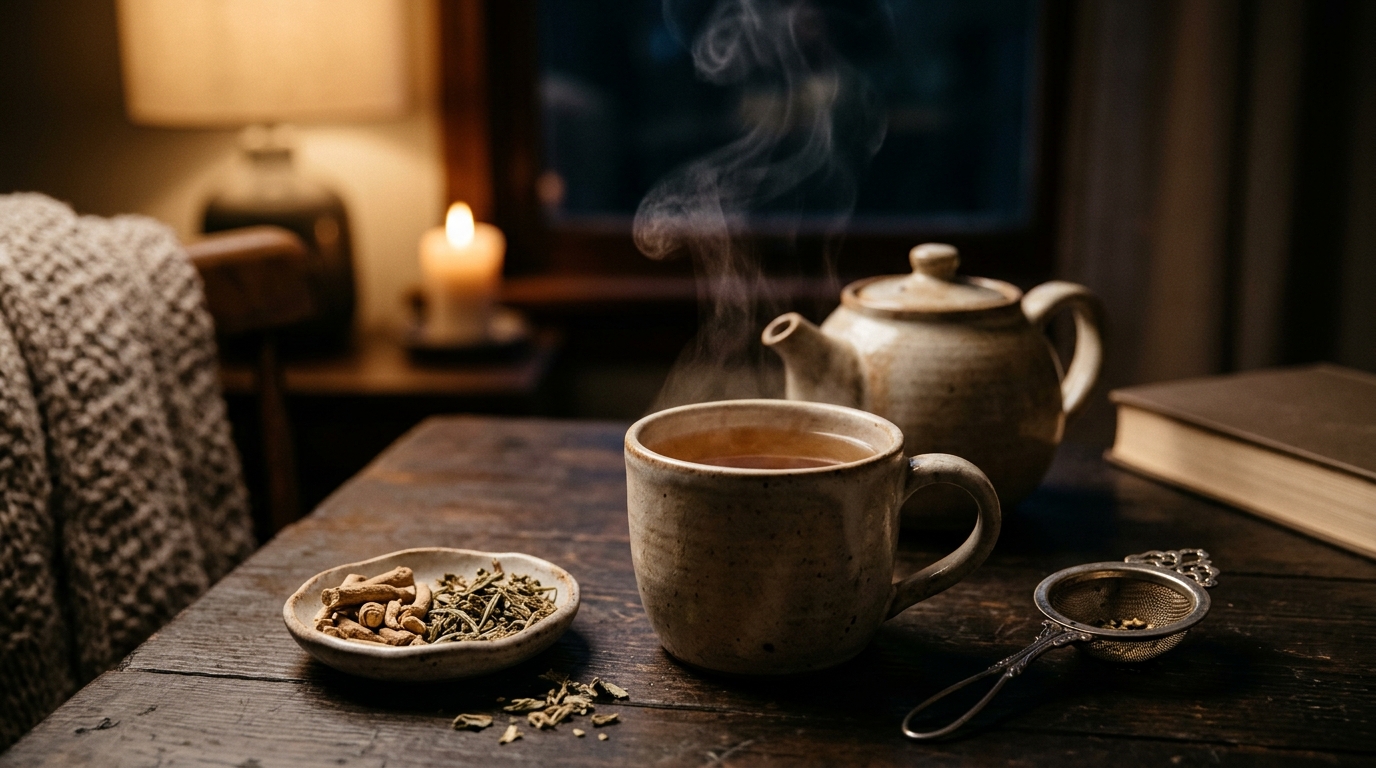
Ashwagandha (Withania somnifera) has been a cornerstone of Ayurvedic medicine for more than 3,000 years. Its Sanskrit name translates roughly to “smell of the horse,” a nod to both the root’s pungent, earthy aroma and the traditional belief that it imparts the strength and vitality of a stallion. Classified as a rasayana, or rejuvenating tonic, it was traditionally given to those who were depleted, anxious, or struggling to sleep.
Skullcap (Scutellaria lateriflora), the American species, carries a very different heritage. Native American healers and later the Eclectic physicians of the 19th century used it as a nervine, an herb that calms and nourishes an overtaxed nervous system. It earned the folk name “mad-dog skullcap” because it was once, rather optimistically, prescribed for rabies, but its real reputation rests on its gentle effect on restlessness, tension, and a mind that will not switch off.
Combined, these two herbs form a thoughtful pairing. Ashwagandha works on the deeper, slower layer of stress physiology, while skullcap offers a more immediate softening of mental chatter and muscular tension. The result is a warm, grounding cup with a mellow, malty depth, ideal for the hour before bed.
2
cups
Ingredients
- 2 tspdried ashwagandha root, coarsely cut
- 2 tspdried skullcap leaf and flowering tops
- 480 mlfiltered water
- 1 tspdried lemon balm (optional, for brightness)
- —raw honey or maple syrup to taste (optional)
- —a small pinch of cinnamon or a slice of fresh ginger (optional)
How to Brew
Click on an item below to shop for the recommended items for this recipe on Amazon.
As an Amazon Associate, we earn from qualifying purchases.
- Measure 2 teaspoons of coarsely cut ashwagandha root and 2 teaspoons of skullcap into a large infuser basket or directly into a teapot. If you are adding lemon balm, include it now.
- Bring 480 ml of filtered water to a full boil, then let it rest for about 30 seconds so it settles near 95°C (203°F). Ashwagandha tolerates hot water well, and the heat helps extract its withanolides.
- Pour the hot water over the herbs, cover the pot or cup with a saucer or lid, and steep for 10 to 15 minutes. Longer steeping gives a stronger, more medicinal cup with more earthy depth.
- Strain the tea through a fine mesh strainer to remove the root particles, pressing gently on the herbs to release the last of the liquid.
- Stir in honey or maple syrup if desired, then sip slowly in a quiet, dimly lit space about 30 to 60 minutes before bed.
- Combine 3 tablespoons of coarsely cut ashwagandha root and 3 tablespoons of skullcap in a large glass jar. The ratio is higher than the hot method because cold water extracts more slowly.
- Add 1 liter of cold, filtered water and stir well so all the herbs are fully submerged. Seal the jar with a lid.
- Refrigerate for 8 to 12 hours, ideally overnight. Give the jar a gentle shake once or twice if you remember.
- Strain through a fine mesh sieve lined with muslin or a coffee filter to catch the fine root sediment.
- Serve over ice or at room temperature, with a squeeze of lemon and a drizzle of honey. Drink within 48 hours and keep refrigerated.
- Place 2 tablespoons of coarsely cut ashwagandha root in a small saucepan with 480 ml of cold filtered water. Starting with cold water allows the root to release its compounds gradually.
- Bring the water to a boil, then immediately reduce the heat to a low, gentle simmer. Partially cover the pan and simmer for 15 to 20 minutes, until the liquid has reduced by about a quarter and turned a deep amber.
- Remove the pan from the heat and stir in 2 teaspoons of skullcap leaf. Cover and let it steep for 5 minutes. Adding skullcap at this stage preserves its delicate flavonoids and prevents excess bitterness.
- Strain through a fine mesh strainer into a mug, pressing the root pieces to extract every drop.
- For a traditional touch, stir in a splash of warm oat or almond milk, a pinch of cinnamon, and a little honey. This creamy variation is especially comforting on cold evenings.
Health Benefits
Several randomized controlled trials have found that standardized ashwagandha extract significantly reduces perceived stress and serum cortisol compared with placebo. Tea contains lower and less standardized amounts than extracts, so effects are likely milder.
Ashwagandha leaf and root have been associated with improved sleep onset and quality in human trials, and its traditional name somnifera means “sleep-inducing.” Skullcap’s GABA-modulating flavonoids may add to the relaxing effect.
Skullcap has a long history as a nervine for racing thoughts and physical tension. Small human studies and preclinical research suggest it may reduce anxiety without causing noticeable sedation.
Both herbs are rich in polyphenols and flavonoids that neutralize free radicals, which may help protect nerve cells from oxidative stress linked to chronic anxiety.
The act of preparing and slowly sipping a warm herbal drink is itself a recognized cue for the body to downshift, reinforcing the herbs’ pharmacological effects.
🧪 Key Bioactive Compounds
The Science Behind Ashwagandha
Ashwagandha’s reputation as an adaptogen rests largely on its withanolides, a family of steroidal lactones concentrated in the root. Clinical trials using standardized root extracts have reported reductions in serum cortisol and in scores on validated stress and anxiety scales over 8 to 12 weeks. The proposed mechanism involves modulation of the hypothalamic-pituitary-adrenal (HPA) axis, the body’s central stress-response system, which tempers the output of stress hormones. It is worth noting that most of this evidence comes from concentrated extracts, so a cup of tea should be seen as a gentle, supportive practice rather than a clinical dose.
Skullcap’s calming effect is attributed mainly to its flavonoids, including baicalin, wogonin, and scutellarin. Laboratory and animal studies suggest these compounds interact with GABA-A receptors, the same inhibitory pathway targeted by many anti-anxiety medications, though at a far milder level. A small human pilot study using American skullcap reported improved mood without significant sedation, but larger, high-quality trials are still lacking, so skullcap’s benefits remain supported chiefly by centuries of traditional use and promising preliminary research.
The two herbs complement each other through different routes: ashwagandha acts on the longer-term regulation of stress hormones, while skullcap acts on the more immediate neurochemistry of relaxation. This is a traditional rationale for pairing them, not a proven clinical synergy, but many people find the combination more balanced than either herb alone.
Brewing Tips
- Choose coarsely cut ashwagandha root rather than fine powder for tea. Powder leaves a gritty sediment, while cut root strains cleanly and releases flavor more evenly.
- Drink this tea consistently for two to four weeks to judge its effects. Adaptogens work cumulatively and are not a quick sedative.
- Buy skullcap from a trusted organic supplier that identifies the species as Scutellaria lateriflora to avoid adulteration with germander.
- Add a splash of warm oat milk and a pinch of cinnamon to turn the decoction into a soothing, golden-milk-style nightcap.
- Store dried herbs in airtight glass jars away from light and heat, and use within 12 months for the best flavor and potency.