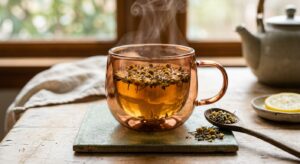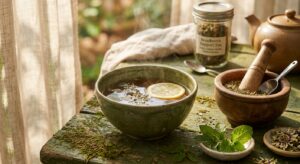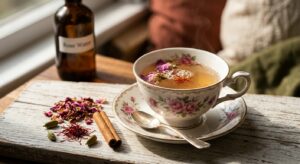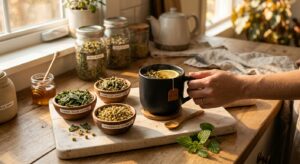
Relationship stress is one of the most persistent and emotionally draining forms of tension we carry. Whether it comes from a difficult conversation, unresolved conflict, longing, or the quiet ache of feeling disconnected from someone you love, the body holds it all: tight shoulders, a heavy chest, a mind that will not settle. Herbalists have long recognised that certain plants speak directly to the heart, offering not numbness but a gentle softening that allows us to return to ourselves. This blend brings together three such plants, each with centuries of traditional use in emotional and nervous system care.
Rose petals have been central to love rituals, grief ceremonies, and heart-healing traditions across Persia, China, Greece, and the Arab world for thousands of years. Avicenna, the medieval Persian physician, wrote extensively about rose water as a remedy for sorrow and palpitations of the heart. Lemon balm, cherished by Carmelite nuns in 14th-century Europe as the key ingredient in their famed Eau de Carmes tonic, has been used to lift melancholy, ease nervousness, and restore a sense of lightness when life feels heavy. Passionflower was adopted by Spanish explorers from Indigenous North and South American healing traditions, where it was used to quiet an overactive mind and encourage restful sleep during times of upheaval.
What makes this blend so well suited to relationship stress specifically is the way each herb targets a different dimension of that experience. Rose gently addresses grief, longing, and the raw tenderness of an open heart. Lemon balm steadies the nervous system and quiets the spiral of anxious thought. Passionflower reaches into the deeper layers of tension, slowing the internal chatter and easing the physical manifestations of emotional overwhelm. Together, they create a tea that feels like a conversation with someone who truly understands.
2
cups
Ingredients
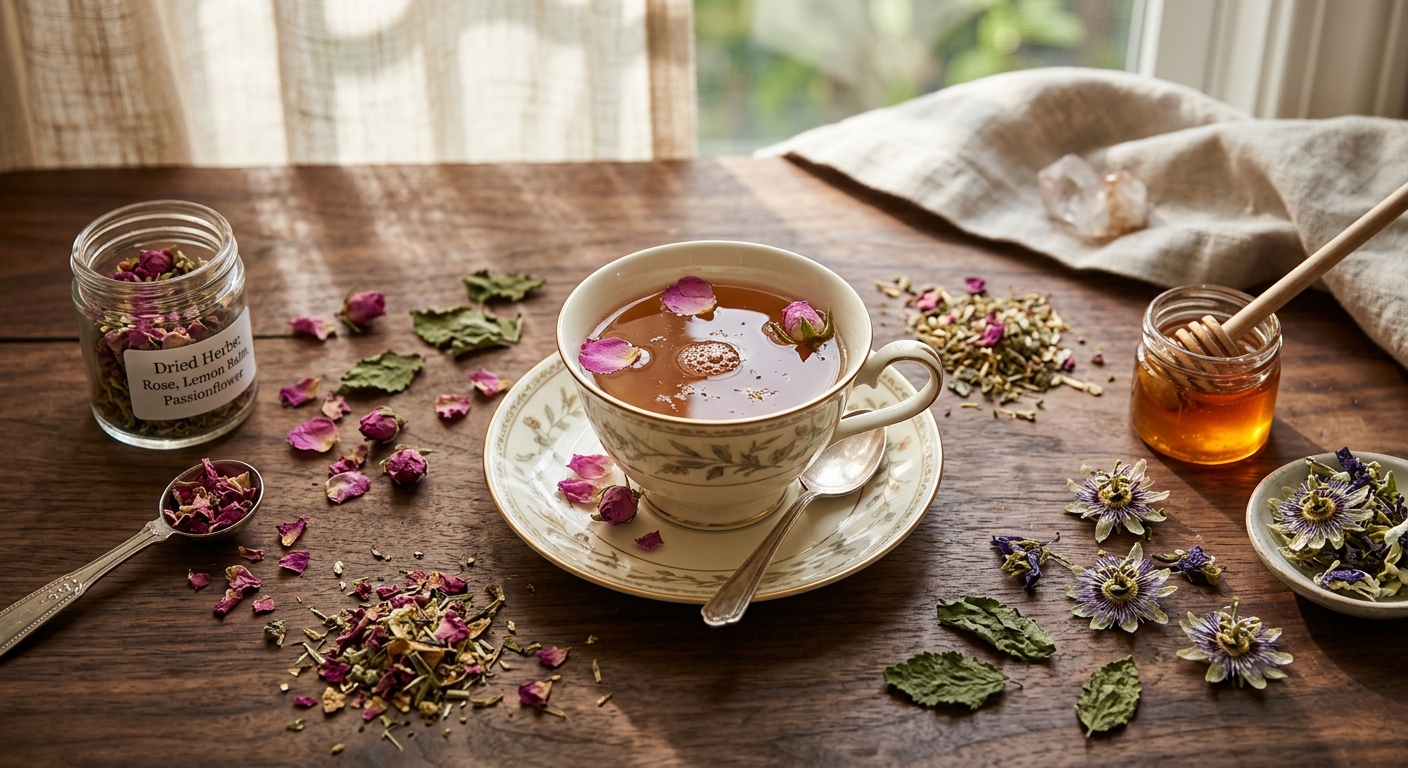
- 2 tspdried rose petals
- 2 tspdried lemon balm leaves
- 1 tspdried passionflower herb
- 480 mlwater (90°C / 194°F)
- —raw honey or rose syrup to taste (optional)
- —a few fresh rose petals to garnish (optional)
How to Brew
Click on an item below to shop for the recommended items for this recipe on Amazon.
As an Amazon Associate, we earn from qualifying purchases.
- Heat filtered water to 90°C (194°F). If you do not have a temperature-controlled kettle, bring water to a full boil and allow it to rest for 2 to 3 minutes before using.
- Combine 2 teaspoons dried rose petals, 2 teaspoons dried lemon balm, and 1 teaspoon dried passionflower in a tea infuser or strainer placed in your teapot or mug.
- Pour the hot water over the herbs, ensuring all plant material is fully submerged. Cover the mug or pot with a lid or small saucer to trap the aromatic steam and prevent the volatile oils from escaping.
- Steep for 7 to 10 minutes. For a more emotionally grounding, slightly stronger effect, steep closer to 10 minutes. For a lighter, more uplifting cup, aim for 7 minutes.
- Remove the infuser and gently press the herbs with a spoon to release any remaining liquid.
- Sweeten with raw honey or rose syrup if desired. Hold the warm mug in both hands, breathe in the steam, and sip slowly before or after a difficult conversation.
- Measure 3 teaspoons dried rose petals, 3 teaspoons dried lemon balm, and 1.5 teaspoons dried passionflower into a clean glass jar. Cold brewing extracts more slowly, so a slightly higher ratio of herbs to water produces the best results.
- Pour 480 ml of cold, filtered water over the herbs. Stir gently to ensure all plant material is moistened and in contact with the water.
- Seal the jar with a lid and leave it at room temperature for 30 minutes to allow the initial extraction to begin, then transfer to the refrigerator.
- Allow the herbs to cold brew for 8 to 12 hours, or overnight. The longer steep at low temperature coaxes out the delicate aromatic compounds without the bitterness that can come from prolonged hot steeping.
- Strain through a fine mesh sieve or cheesecloth into a glass or pitcher, pressing the herbs gently to extract all the liquid.
- Serve over ice, garnished with a fresh rose petal or a thin lemon slice. Stir in rose syrup or a drizzle of honey if desired. Store any remaining cold brew in the refrigerator for up to 48 hours.
- In a large clear glass jar, combine 4 teaspoons dried rose petals, 4 teaspoons dried lemon balm, and 2 teaspoons dried passionflower. The larger volume of herbs compensates for the gentler extraction temperature of solar brewing.
- Fill the jar with 720 ml of cold, filtered water. Stir briefly, then seal with a lid. If you wish to set an intention for the tea, this is the moment to do so quietly.
- Place the sealed jar in a spot that receives direct sunlight for at least 3 to 4 hours. A sunny windowsill, garden step, or porch works well. The warmth of the sun gently encourages the herbs to release their compounds over time.
- After 3 to 4 hours, check the color. The tea should be a warm blush pink with a clear, luminous quality. If you prefer a deeper infusion, allow one additional hour in the sun.
- Bring the jar indoors and strain the tea through a fine mesh sieve into a pitcher or large jug. Discard or compost the spent herbs.
- Serve immediately over ice with a small sprig of fresh lemon balm and a drizzle of honey, or refrigerate for up to 24 hours. Note that sun tea should not be stored as long as cold brew, as the warmer extraction temperature can encourage microbial activity if left too long.
Health Benefits
The combined action of rosmarinic acid in lemon balm and chrysin in passionflower supports GABA activity in the brain, the same neurotransmitter pathway targeted by conventional anti-anxiety medications, producing a calming effect that is gentle, non-habit-forming, and well-tolerated.
Rose petals have a long history of use in treating what traditional herbalists call heart qi stagnation, a concept describing the physical tightness and emotional heaviness that accompanies grief, longing, or unresolved conflict. Modern aromatherapy research supports that rose’s volatile compounds activate limbic brain regions associated with emotional memory and regulation.
Passionflower has been studied in randomised controlled trials showing significant improvements in sleep quality, including reduced waking and longer sleep duration, making it particularly valuable when relationship stress is disrupting nighttime rest.
Lemon balm has demonstrated the ability to reduce cortisol levels and lower measurable physiological markers of stress, including heart rate and blood pressure, in multiple human clinical trials, making it effective for the physical symptoms that accompany emotional difficulty.
Both rose and lemon balm have traditional and emerging clinical support for mild antidepressant effects. A 2014 study found lemon balm supplementation significantly improved mood, calmness, and memory in healthy adults, while rose extracts have shown serotonin-modulating activity in preclinical research.
🧪 Key Bioactive Compounds
The Science Behind Rose Petals
The calming power of this blend is rooted in its collective action on the GABAergic system, the brain’s primary inhibitory pathway. Lemon balm (Melissa officinalis) contains high concentrations of rosmarinic acid, a polyphenol shown in multiple studies to inhibit GABA transaminase, the enzyme responsible for breaking down gamma-aminobutyric acid. By slowing this degradation, lemon balm effectively raises available GABA levels in the brain, producing an anxiolytic effect comparable in mechanism, though much gentler in magnitude, to pharmaceutical GABA modulators. A 2014 double-blind, placebo-controlled study published in Nutrients found that participants given a standardised lemon balm extract reported significant reductions in anxiety and insomnia, and improvements in mood and cognitive performance, after just a single dose.
Passionflower (Passiflora incarnata) contributes the flavonoids chrysin and apigenin, both of which have demonstrated affinity for benzodiazepine receptor sites on the GABA-A receptor complex in vitro and in animal models. A noteworthy randomised controlled trial published in Phytotherapy Research compared passionflower extract to the pharmaceutical anxiolytic oxazepam in patients with generalised anxiety disorder. The extract performed comparably in reducing anxiety scores, with fewer side effects related to job performance, suggesting a clinically meaningful effect. For relationship stress specifically, passionflower’s additional benefit of improving sleep quality means the blend continues to support recovery even after the difficult day has ended.
Rose petals (Rosa damascena and related species) contribute their benefit through a different but complementary pathway. Their volatile aromatic compounds, including geraniol, citronellol, and rose oxide, act via the olfactory-limbic connection, the direct neural highway between scent receptors and the amygdala, the brain region most involved in processing fear and emotional pain. Inhalation of rose aroma has been shown to reduce salivary cortisol levels and lower sympathetic nervous system activity in several small human trials. Additionally, quercetin and other flavonoids in rose petals exert antioxidant effects that help mitigate the oxidative stress load that accumulates during periods of chronic emotional difficulty, protecting cellular health at the same time as they soothe the heart.
Brewing Tips
- Use food-grade, pesticide-free dried rose petals, as roses are among the most heavily sprayed flowers commercially. Look for certified organic sources or dry your own from an untreated garden.
- If you are new to passionflower, start with half a teaspoon per cup and observe how your body responds before increasing the amount, as some people find it quite strongly sedating.
- Make this blend in a covered vessel during steeping. Rose petals and lemon balm both carry volatile aromatic oils that evaporate quickly in steam, and covering the cup preserves both the therapeutic compounds and the beautiful fragrance.
- For an acute moment of tension such as during or just after a difficult conversation, let the steam rise to your face as you hold the covered cup. This inhalation of aromatic compounds begins to activate the calming response even before the first sip.
- Store your dried herb blend in an airtight amber glass jar away from light and heat. Pre-blending a larger batch ensures the tea is ready to prepare quickly during stressful moments when you most need it.