Few herbs command as much respect in the world of plant medicine as gentian root. Derived from Gentiana lutea, a striking alpine perennial native to the mountains of central and southern Europe, gentian has been used as a digestive remedy for over 3,000 years. The ancient Greeks attributed its discovery to King Gentius of Illyria, who reportedly used it to treat plague and digestive ailments among his troops, giving the plant its enduring name. By the medieval period, gentian root had become a cornerstone of European apothecary practice, appearing in formulas for sluggish digestion, loss of appetite, and liver complaints.
What makes gentian root extraordinary is its extraordinary bitterness. It ranks among the most bitter substances found in nature, measurable at concentrations as low as one part per 12,000. This is not merely a culinary curiosity. The intense bitter taste triggers a cascade of physiological responses the moment it touches the tongue, stimulating bitter receptors that signal the entire digestive system to prepare for action. Saliva production increases, gastric acid secretion rises, bile flow accelerates, and digestive enzymes flood the gut. Traditional herbalists called plants with this property bitters, and gentian is their undisputed king.
Today, gentian root remains a key ingredient in classic European digestive bitters liqueurs like Angostura and Suze, as well as in standardized herbal preparations for dyspepsia and appetite loss approved in several European countries. As a tea, it offers a direct and unfiltered encounter with one of nature’s most potent digestive catalysts. Brewed carefully and sipped intentionally, a small cup of gentian root tea before or after a meal can be a transformative ritual for anyone seeking to support their gut health through time-tested herbal tradition.
2
cups
Ingredients
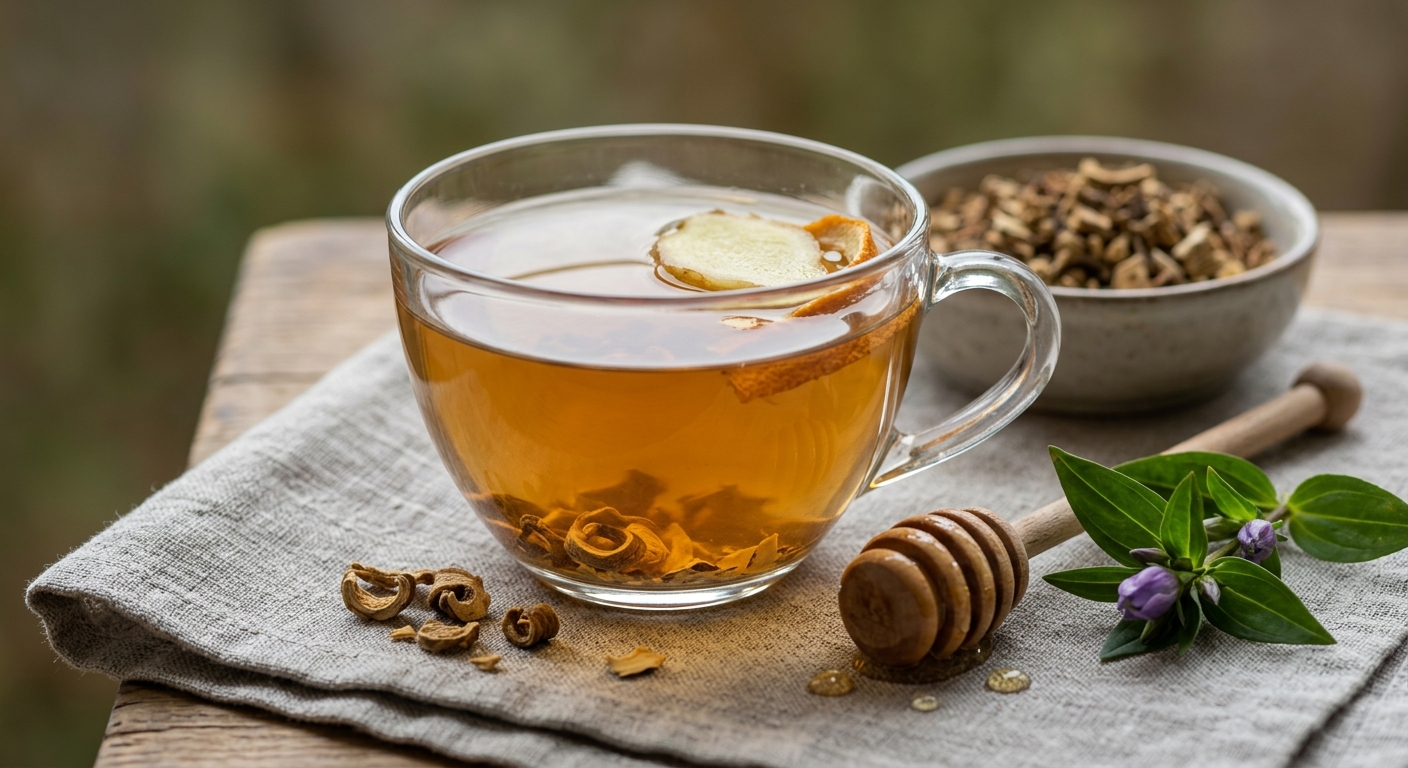
- 1 tspdried gentian root (chopped or coarsely ground)
- 480 mlwater (90°C / 194°F)
- —a thin slice of fresh ginger (optional, to complement bitterness)
- —a small strip of orange peel (optional, to brighten flavor)
How to Brew
Click on an item below to shop for the recommended items for this recipe on Amazon.
As an Amazon Associate, we earn from qualifying purchases.
- Measure 1 teaspoon of dried, chopped gentian root per cup. If using a coarser cut root, you may lightly crush the pieces in a mortar and pestle to increase surface area and extraction.
- Heat your water to 90 to 95°C (194 to 203°F). If boiling, allow it to rest for 60 to 90 seconds off the heat before pouring.
- Place the gentian root in a tea infuser or small mesh strainer set over your mug. Pour the hot water directly over the root and cover the mug with a small plate or lid to trap volatile aromatic compounds.
- Steep for 5 minutes for a milder cup or up to 10 minutes for full bitterness intensity. If adding ginger or orange peel, include them during the steeping phase.
- Remove the infuser and discard the spent root. Sip slowly in small amounts, ideally 15 to 30 minutes before a meal to maximize the digestive priming effect. Do not sweeten if your goal is digestive stimulation, as sweetness blunts the bitter receptor response.
- Add 1 teaspoon of dried chopped gentian root per cup of cold filtered water to a clean glass jar. For two servings, use 2 teaspoons of root and 480 ml of water.
- Stir briefly to ensure the root is fully submerged. Optionally, add a small strip of orange peel or a few cardamom pods to the jar to introduce complementary aromatics that balance the bitterness.
- Seal the jar and leave it at room temperature for the first 2 hours to begin extraction, then transfer to the refrigerator and allow it to steep for a further 6 to 12 hours, for a total of 8 to 14 hours.
- Strain the liquid through a fine mesh strainer or cheesecloth into a clean glass or pitcher. Press gently on the root pieces to extract remaining liquid.
- Serve cold over ice or at room temperature. Sip slowly, ideally before meals. The cold brew concentrate can be stored in the refrigerator for up to 48 hours, though bitterness intensifies slightly over time.
- Combine 1 to 1.5 teaspoons of dried chopped gentian root per cup with cold filtered water in a small saucepan. For two servings, use up to 2 teaspoons of root in 600 ml of water to account for evaporation during simmering.
- Bring the water to a full boil over medium heat, then immediately reduce the heat to a gentle simmer. The surface should show small steady bubbles, not a vigorous rolling boil.
- Simmer uncovered for 15 to 20 minutes, keeping watch to ensure the liquid does not reduce below your desired serving volume. If needed, add a small splash of water to maintain volume.
- Remove from heat and allow the decoction to cool slightly for 3 to 5 minutes. Strain through a fine mesh strainer into a heatproof mug or small pitcher, pressing gently on the root to capture all liquid.
- Sip in small, deliberate amounts of 60 to 120 ml before meals. The decoction will be notably more concentrated and bitter than the hot brew. You may dilute it slightly with warm water if needed. Leftover decoction can be stored in the refrigerator for up to 24 hours.
Health Benefits
Amarogentin and gentiopicroside activate bitter taste receptors throughout the oral cavity and gastrointestinal tract, triggering a reflex increase in saliva, gastric acid, and pancreatic enzyme output. This makes gentian one of the most reliable herbal remedies for sluggish digestion, particularly useful for those with hypochlorhydria or poor appetite.
Gentian root has been shown in clinical and preclinical studies to stimulate bile secretion from the gallbladder, which is essential for the emulsification and absorption of dietary fats and fat-soluble vitamins. Improved bile flow also supports healthy stool transit and reduces bloating after fatty meals.
Several European clinical trials and observational studies support the use of gentian-containing bitter formulas for functional dyspepsia, a condition characterized by upper abdominal discomfort, fullness, and bloating. By optimizing gastric motility and secretion, gentian helps the stomach process food more efficiently and reduces post-meal discomfort.
Swertiamarin and isogentisin have demonstrated hepatoprotective effects in preclinical research, reducing markers of liver cell damage and oxidative stress. While human clinical trials are limited, traditional European and Ayurvedic medicine has long used gentian-family plants to support liver and gallbladder function.
Gentian root is approved by Germany’s Commission E as a herbal medicine for loss of appetite and digestive complaints. The bitter reflex it triggers increases hunger signaling, making it a valuable tool for individuals recovering from illness, those with appetite suppression due to medication, or older adults experiencing reduced appetite.
🧪 Key Bioactive Compounds
The Science Behind Gentian Root
The medicinal power of gentian root is rooted in its extraordinary concentration of bitter iridoid and secoiridoid glycosides, particularly amarogentin and gentiopicroside. Amarogentin has been measured as the bitterest naturally occurring compound known to science, detectable at a dilution of one part per 58 million. When these glycosides contact the tongue, they bind to a family of G protein-coupled receptors known as TAS2Rs, or bitter taste receptors. This triggers a neurological and hormonal cascade: the vagus nerve signals the stomach and pancreas, gastrin release increases, gastric acid production rises, and the gallbladder contracts to release bile. The entire digestive system shifts into an active preparatory state within minutes of exposure, which is why gentian is traditionally consumed before meals as an aperitif bitter.
Research has also identified bitter taste receptors not just on the tongue but throughout the gastrointestinal tract, on enteroendocrine cells that regulate gut hormone secretion, and even in the lungs and heart. This broader distribution suggests that bitter compounds like those in gentian may have systemic effects beyond simple digestive stimulation. Studies have shown that gentiopicroside in particular stimulates the release of cholecystokinin (CCK), a gut peptide that signals satiety, enhances pancreatic enzyme output, and drives bile flow. A 2017 study published in the journal Phytomedicine found that a gentian-containing bitter formula significantly improved symptoms of functional dyspepsia compared to placebo, supporting centuries of empirical use.
The xanthone fraction of gentian root, which includes isogentisin and gentisin, contributes anti-inflammatory and antioxidant activity. These compounds have been shown in cell culture and animal studies to reduce the production of pro-inflammatory cytokines and to inhibit lipid peroxidation, suggesting a protective role for the digestive mucosa. Meanwhile, swertiamarin has been investigated for its hepatoprotective properties, with preclinical evidence showing it can reduce alanine aminotransferase (ALT) and aspartate aminotransferase (AST) levels, two key markers of liver cell damage, following toxic challenge. While more rigorous human clinical trials are still needed across many of these benefit areas, the existing evidence base is substantial enough to support gentian root’s continued status as one of the most pharmacologically validated herbal digestive remedies in the European tradition.
Brewing Tips
- Never sweeten gentian root tea if your primary goal is digestive support. Sweetness directly blunts the bitter taste receptor activation that drives the herb’s digestive effects. If the bitterness is too intense, dilute the tea with warm water rather than adding honey.
- Store dried gentian root in an airtight glass jar away from light and moisture. The bitter glycosides are relatively stable but the root’s aromatic compounds degrade faster. Properly stored dried root retains potency for up to two years.
- Start with just half a cup (120 ml) of hot brew before your first full serving. Gentian is powerful, and some individuals experience nausea at full strength on the first encounter. Building up gradually over several days helps your digestive system adapt to its intense stimulating action.