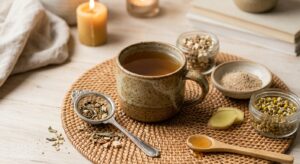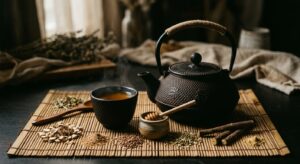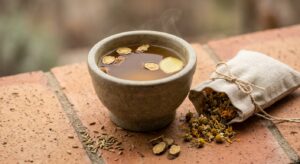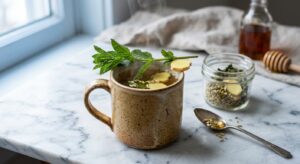
Long before pharmaceutical digestive aids lined pharmacy shelves, herbalists across Europe, Asia, and the Middle East turned to a trio of plants that modern science is now validating with impressive consistency: dandelion root, ginger rhizome, and fennel seed. Each herb brings a distinct mechanism to the table, and together they form one of the most functionally complete digestive teas you can brew at home. Dandelion root has been used in Traditional Chinese Medicine and European folk herbalism for centuries as a liver tonic and cholagogue, meaning it actively stimulates the flow of bile from the gallbladder into the small intestine, the single most important step in fat digestion. Without adequate bile, dietary fats cannot be broken down into absorbable fatty acids, leaving you feeling heavy, bloated, and sluggish after meals.
Ginger’s role in this blend is equally ancient and equally well-documented. Used in Ayurvedic medicine as a foundational digestive herb for over 3,000 years, ginger accelerates gastric emptying, reduces nausea, and inhibits the prostaglandins responsible for gut cramping. Its warming pungency signals the digestive system to prepare for incoming food, increasing the secretion of digestive enzymes and gastric juices. Fennel seed rounds out the formula beautifully, acting as a carminative that relaxes the smooth muscle of the intestinal wall, releasing trapped gas and easing the intestinal tension that often accompanies fat-heavy meals. In Mediterranean and South Asian culinary traditions, fennel seeds are routinely chewed after large meals precisely for this reason.
What makes this tea particularly special is its layered sensory experience. The earthy bitterness of dandelion root, the fiery warmth of ginger, and the cool, anise-like sweetness of fennel create a flavor profile that feels medicinal in the best possible sense: purposeful, grounding, and deeply satisfying. Whether you drink it 20 minutes before a rich meal to prime your digestive system, or sip it slowly in the hour after eating, this blend works with your body’s own chemistry to make fat digestion smoother, faster, and far more comfortable.
2
cups
Ingredients
- 2 tspdried roasted dandelion root (chopped)
- 1 tspfresh ginger root, thinly sliced (or 0.5 tsp dried)
- 1 tspfennel seeds, lightly crushed
- 500 mlfiltered water
- —raw honey or maple syrup to taste (optional)
- —a squeeze of fresh lemon juice (optional, enhances bile-stimulating effect)
How to Brew
Click on an item below to shop for the recommended items for this recipe on Amazon.
As an Amazon Associate, we earn from qualifying purchases.
- Combine the chopped dandelion root and sliced ginger in a small saucepan. Add 500 ml of cold filtered water.
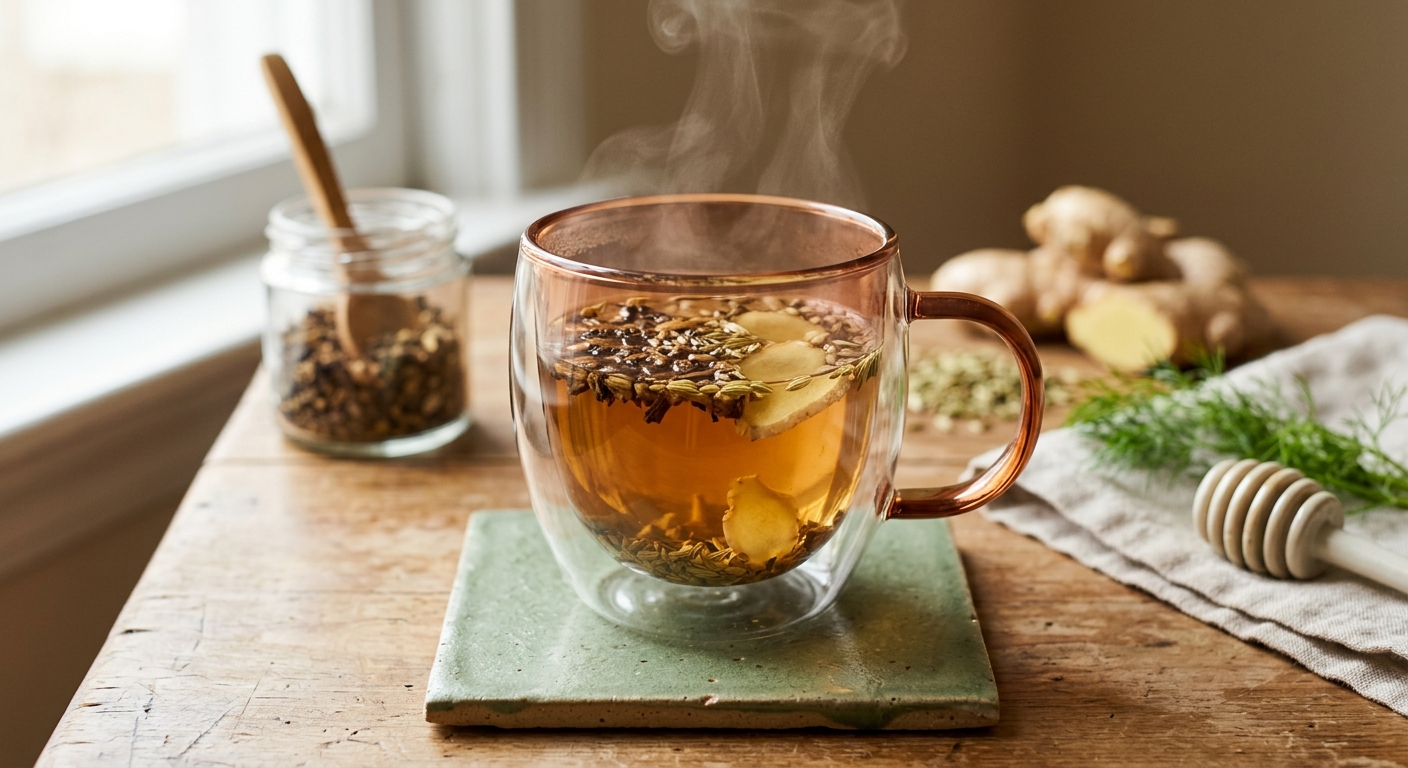
- Bring the mixture to a gentle simmer over medium heat. Once simmering, reduce the heat to low and simmer uncovered for 8 to 10 minutes. The liquid will deepen to a rich amber as the root compounds extract.
- Remove the saucepan from the heat. Add the lightly crushed fennel seeds immediately. Cover the saucepan with a lid to trap the volatile aromatic oils and steep for an additional 5 minutes.
- Strain the tea through a fine mesh strainer into two warmed mugs, pressing the herbs gently to extract the remaining liquid.
- Add a squeeze of fresh lemon juice if using, then sweeten lightly with honey or maple syrup to balance the bitterness. Drink warm, ideally 20 minutes before a meal or within 30 minutes after eating.
- Lightly crush the fennel seeds using a mortar and pestle or the back of a spoon to open them without fully grinding them. Slice fresh ginger into thin coins.
- Combine the chopped dandelion root, ginger slices, and crushed fennel seeds in a clean glass jar. Pour 500 ml of cold filtered water over the herbs.
- Stir briefly to ensure all herbs are submerged. Leave the jar uncovered at room temperature for 1 hour to allow initial extraction to begin, then seal with a lid and transfer to the refrigerator.
- After 12 to 14 hours (overnight works perfectly), strain the cold brew through a fine mesh strainer into a clean jar or pitcher, pressing the herbs firmly to extract maximum liquid.
- Serve over ice in tall glasses. Add a slice of fresh lemon and a drizzle of honey if desired. The cold brew keeps well in the refrigerator for up to 48 hours. Shake or stir before each serving.
- Double the herb quantities: use 4 tsp dandelion root, 2 tsp sliced fresh ginger, and 2 tsp lightly crushed fennel seeds. Combine with 500 ml of cold filtered water in a small saucepan. The reduced final volume will be approximately 200 to 250 ml of concentrated liquid.
- Bring to a gentle simmer over medium heat. Reduce heat to low, cover partially, and simmer for 18 to 20 minutes until the liquid has reduced by roughly half and the color is a deep, dark amber.
- Remove from heat, add a 1 cm strip of fresh lemon peel (yellow part only, no pith) for brightness, cover fully, and steep for a further 5 minutes.
- Strain through a fine mesh strainer lined with a piece of muslin cloth or a coffee filter into a clean glass jar. Press the herbs firmly to extract all remaining liquid. Discard the spent herbs.
- Allow the concentrate to cool to room temperature before sealing the jar. Refrigerate for up to 5 days. To use as a shot, pour 60 to 90 ml and drink straight before meals. To use as a diluted tea, mix 1 part concentrate with 3 parts hot water or sparkling water and add honey to taste.
Health Benefits
Dandelion root’s bitter sesquiterpene lactones act as cholagogues, stimulating the liver to produce bile and the gallbladder to release it into the small intestine. Adequate bile is essential for emulsifying dietary fats so they can be absorbed as fatty acids, and studies have confirmed that dandelion root extract significantly increases bile flow within 30 minutes of consumption.
6-Gingerol and shogaol in ginger have been shown in multiple randomized controlled trials to accelerate gastric emptying, the rate at which food moves from the stomach into the small intestine. This reduces the sensation of fullness, post-meal heaviness, and nausea that often accompany rich or fatty meals.
Fennel seed’s primary volatile compound, anethole, exerts a direct antispasmodic effect on the smooth muscle of the intestinal wall, reducing the cramping and tension that trap gas. Clinical studies in functional dyspepsia patients have found fennel-containing preparations significantly reduce bloating scores compared to placebo.
Dandelion root has been shown in preclinical studies to upregulate Phase I and Phase II liver detoxification enzymes, supporting the liver’s ability to process and eliminate fat-soluble toxins, metabolic byproducts, and excess lipids. This indirectly improves digestion by reducing the metabolic burden on the liver.
Dandelion root is one of the richest dietary sources of inulin, a prebiotic fiber that selectively nourishes Lactobacillus and Bifidobacterium species in the colon. A healthy microbiome is increasingly linked to better fat metabolism, reduced intestinal permeability, and lower systemic inflammation.
🧪 Key Bioactive Compounds
The Science Behind Dandelion Root
The science behind this fat digestion blend begins in the liver, where bile is synthesized from cholesterol and stored in the gallbladder. Bile acids are the body’s primary emulsifiers: without them, the fat-digesting enzyme pancreatic lipase cannot access and break down triglycerides into absorbable monoglycerides and fatty acids. Dandelion root’s bitter sesquiterpene lactones, primarily taraxacin and taraxacerin, directly stimulate choleresis (bile production in the liver) and cholagogue activity (bile release from the gallbladder). A 2011 study published in Evidence-Based Complementary and Alternative Medicine confirmed that dandelion root extract significantly increased bile flow in animal models, validating centuries of traditional use as a liver and gallbladder tonic. The herb’s inulin content adds a second layer of digestive support by serving as a prebiotic substrate for beneficial colonic bacteria, improving gut flora composition and short-chain fatty acid production.
Ginger’s digestive mechanism is well-characterized in the clinical literature. A 2008 double-blind, randomized, placebo-controlled trial published in the European Journal of Gastroenterology and Hepatology found that ginger supplementation significantly accelerated gastric emptying in healthy volunteers compared to placebo. The active compounds responsible, primarily 6-gingerol in fresh ginger and shogaol in dried or heated ginger, exert their effects via the 5-HT3 serotonin receptor pathway and by modulating prostaglandin synthesis, reducing the inflammatory signaling responsible for gut cramping, nausea, and delayed gastric motility. Shogaol, which forms when ginger is dried or simmered, is considered more potent than gingerol for anti-inflammatory gut applications, which is one reason the decoction-style hot brew in this recipe is particularly effective.
Fennel seed’s carminative action is attributed predominantly to its essential oil fraction, which is rich in anethole (50 to 80% of the volatile oil) and fenchone. Anethole has been shown in in vitro studies to relax isolated smooth muscle preparations from the gastrointestinal tract, inhibiting the muscular contractions that cause cramping and trap intestinal gas. A 2016 clinical study in the journal Complementary Medicine Research found that a fennel seed oil emulsion significantly reduced colic symptoms and intestinal gas in infants, providing mechanistic support for its traditional use across cultures as a post-meal carminative. Together, these three herbs address fat digestion from three distinct physiological angles: bile secretion, gastric motility, and intestinal smooth muscle relaxation, creating a synergistic blend that is greater than the sum of its individual parts.
Brewing Tips
- For the strongest fat-digestion benefit, drink the hot brew 20 minutes before a meal to prime bile flow before food arrives in the small intestine, rather than waiting until after eating.
- Lightly roasting your dandelion root in a dry pan for 3 to 4 minutes before brewing deepens the flavor, reduces bitterness, and increases the solubility of inulin, making the tea richer and more approachable.
- Store the cold brew concentrate in individual 90 ml portions in small glass bottles so you can grab a digestive shot quickly before meals without measuring each time.
- Always crush fennel seeds just before brewing rather than grinding them in advance. Pre-ground fennel loses its volatile anethole content rapidly, significantly reducing both the flavor and the carminative effect.
- If the bitterness of dandelion root is too pronounced for your palate, add a thin slice of fresh apple or a small piece of licorice root to the brew. Both add natural sweetness that balances the bitter notes without masking the herb’s medicinal compounds.