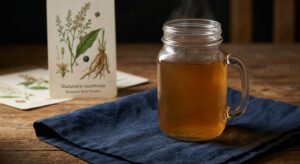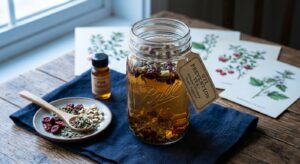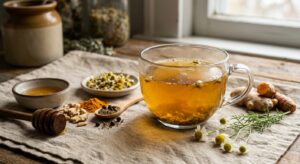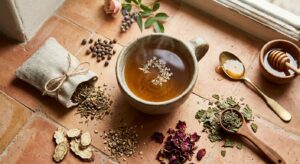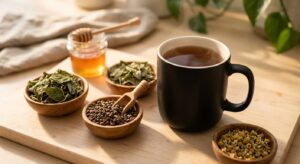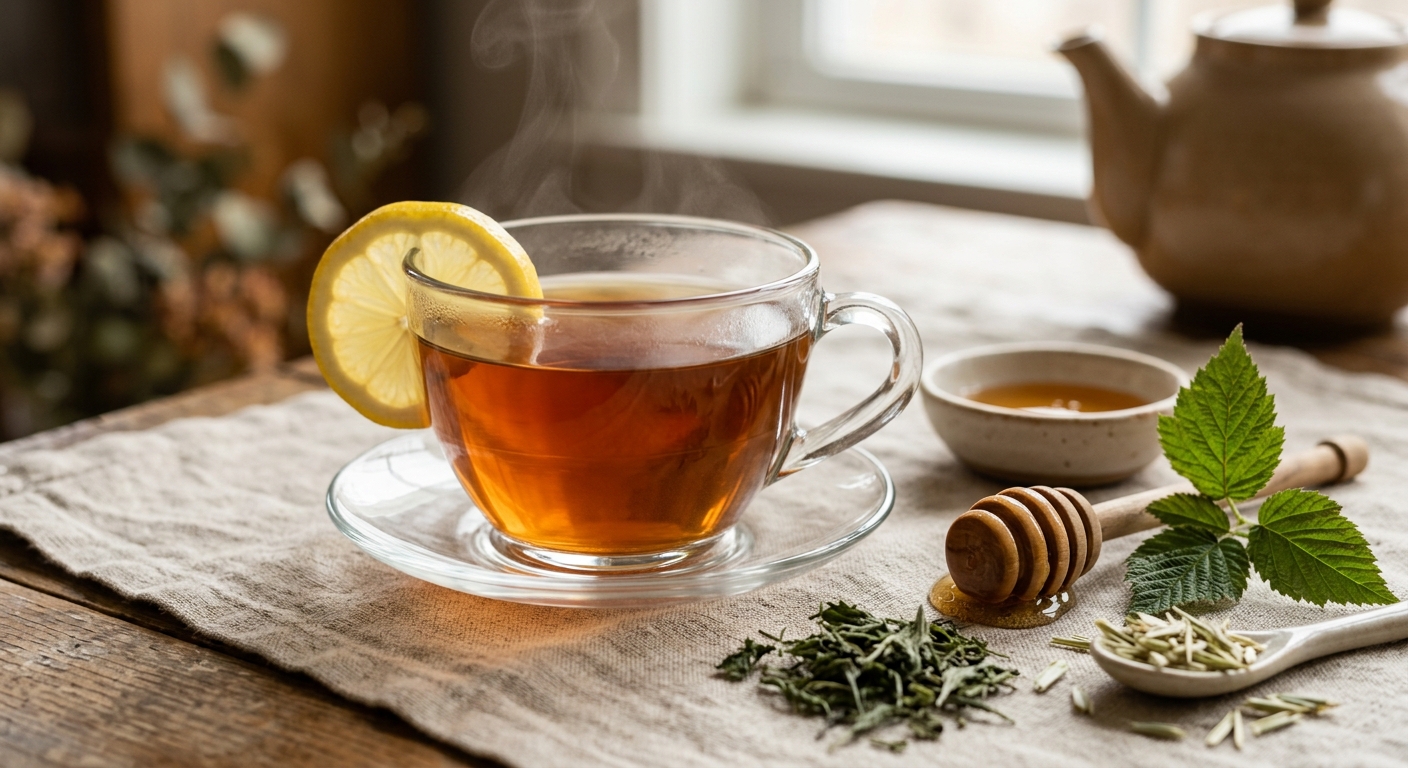
The second trimester is often called the golden window of pregnancy: morning sickness has typically eased, energy begins to return, and the body is fully committed to the extraordinary work of growing a new life. For centuries, midwives and herbalists across Europe, the Americas, and Asia have reached for a small handful of deeply nourishing plants to support women during this pivotal stage. Red raspberry leaf, stinging nettle, and oatstraw form the classic trinity of midpregnancy herbal support, each bringing a distinct nutritional and toning action that complements the others beautifully.
Red raspberry leaf has been used in European folk medicine since at least the sixteenth century as a uterine tonic and pregnancy herb. Nettle leaf, one of the most nutritionally dense plants on earth, has been a staple in traditional herbalism from Ancient Greece to Ayurveda, prized for its remarkable iron, calcium, and magnesium content. Oatstraw, the dried green tops of the oat plant, has long been prescribed in Western botanical medicine as a nervine and mineral tonic, soothing frayed nerves and replenishing the minerals that a growing baby draws so readily from a mother’s reserves. Together, these three herbs create a tea that is as practical as it is pleasurable.
What sets this blend apart from generic prenatal herbal teas is its specificity to the second trimester. The toning and mineral-loading actions of these herbs are most appropriate and most beneficial once the first trimester has passed and the uterus and placenta are fully established. The flavor is earthy, subtly grassy, and gently sweet, easy to sip throughout the day whether served warm in the morning or cold over ice on a summer afternoon. This is herbal tea as genuine nourishment, not merely ritual.
2
cups
Ingredients
- 2 tspdried red raspberry leaf
- 1 tspdried nettle leaf
- 1 tspdried oatstraw
- 480 mlwater (95°C / 203°F)
- —raw honey or a few drops of liquid stevia to taste (optional)
- —a slice of fresh lemon (optional)
How to Brew
Click on an item below to shop for the recommended items for this recipe on Amazon.
As an Amazon Associate, we earn from qualifying purchases.
- Heat filtered water to approximately 93 to 96°C (200 to 205°F). If using a standard kettle, bring to a full boil and allow it to rest for 30 to 60 seconds before pouring.
- Add 2 teaspoons of dried red raspberry leaf, 1 teaspoon of dried nettle leaf, and 1 teaspoon of dried oatstraw to a tea infuser or a small heatproof teapot. For two servings, double the quantities.
- Pour the hot water over the herbs, fully submerging them. Cover the vessel with a lid or a small saucer to trap the volatile aromatic compounds and prevent heat loss.
- Steep for a minimum of 10 minutes and up to 15 minutes. The longer steep improves mineral extraction significantly without creating bitterness.
- Remove the infuser or strain the herbs through a fine-mesh strainer into a mug. Press the herbs gently with the back of a spoon to extract the last of the liquid.
- Add raw honey or a squeeze of lemon if desired. Sip slowly while warm, ideally in the morning or mid-afternoon.
- Combine 3 teaspoons of dried red raspberry leaf, 1.5 teaspoons of dried nettle leaf, and 1.5 teaspoons of dried oatstraw in a clean glass jar. The slightly higher ratio compensates for the slower, lower-temperature extraction.
- Pour 480 ml of cold, filtered water over the herbs. Do not use boiling or hot water for this method. Room temperature or lightly chilled water is correct.
- Stir gently to ensure all the herbs are fully saturated, then seal the jar with a lid.
- Place the jar in the refrigerator and allow the herbs to steep undisturbed for 8 to 12 hours. Overnight steeping is convenient and produces excellent results.
- In the morning, strain the tea through a fine-mesh strainer or cheesecloth into a clean jar or pitcher, pressing the herbs lightly to extract the full volume.
- Serve over ice or drink chilled straight from the jar. Cold brew keeps well in the refrigerator for up to 24 hours. Add a thin slice of lemon or a small sprig of fresh mint for brightness if desired.
- Bring 1 liter of filtered water to a full boil at 100°C (212°F). A large heatproof mason jar or French press works perfectly for this method.
- Add 4 teaspoons of dried red raspberry leaf, 2 teaspoons of dried nettle leaf, and 2 teaspoons of dried oatstraw to the jar. This is a larger batch designed for the day.
- Pour the boiling water directly over the herbs, filling the jar to the top. The boiling temperature is intentional for this method because it drives mineral extraction more fully from the plant cell walls.
- Seal the jar tightly with a lid or press the plunger of the French press halfway down to submerge the herbs without sealing them off. Wrap the jar in a clean towel to retain heat during the early stage of steeping.
- Allow the infusion to steep at room temperature for a minimum of 4 hours, or up to 8 hours for maximum mineral extraction. The liquid will deepen to a rich amber-green.
- Strain through a fine-mesh strainer or cheesecloth, pressing the herbs firmly. The infusion may be served warm by reheating gently (do not boil), or chilled over ice. Drink 2 to 3 cups throughout the day, storing the remainder sealed in the refrigerator and consuming within 24 to 36 hours.
Health Benefits
Red raspberry leaf has been used for centuries as a uterine tonic. The alkaloid fragarine is thought to tone the smooth muscle of the uterus, and preliminary clinical evidence and long-standing midwifery practice support its use from the second trimester onward to prepare the uterus for labor.
Nettle leaf is exceptionally rich in non-heme iron and also contains vitamin C, which aids in its absorption. Iron demands increase substantially in the second trimester as blood volume expands and fetal iron stores begin to build, making nettle a practical dietary ally.
The combination of nettle, red raspberry leaf, and oatstraw delivers meaningful dietary amounts of calcium, magnesium, and silica in a bioavailable form. These minerals are drawn heavily from maternal reserves to support fetal bone, nerve, and connective tissue development.
Oatstraw is a well-regarded nervine tonic in Western herbal medicine, traditionally used to nourish a stressed or depleted nervous system. Its saponins and B-vitamin content are associated with reduced anxiety and improved sleep quality, addressing two of the most common concerns of the second trimester.
Quercetin and other flavonoids present across all three herbs offer meaningful antioxidant activity, helping to reduce oxidative stress that naturally increases during pregnancy. This supports maternal vascular health and healthy placental function.
🧪 Key Bioactive Compounds
The Science Behind Red Raspberry Leaf
The nutritional science behind this blend is grounded in the exceptional mineral density of these three herbs. A 2011 analysis of nettle leaf (Urtica dioica) confirmed iron concentrations of up to 41 mg per 100 g of dried herb, alongside significant calcium (481 mg), magnesium (57 mg), and vitamin C (333 mg per 100 g), the latter being critical for enhancing non-heme iron absorption. The long nourishing infusion method is specifically designed to maximize extraction of these water-soluble minerals, and studies on mineral bioavailability from aqueous herbal extracts confirm that extended steeping times of four hours or more significantly increase the mineral yield compared to standard five-minute infusions.
Red raspberry leaf (Rubus idaeus) contains the alkaloid fragarine, which has been the subject of both traditional use and modern inquiry. A landmark Australian randomized controlled trial published in the Journal of Midwifery and Women’s Health (2001) found that women who consumed red raspberry leaf tablets from 32 weeks gestation had a shorter second stage of labor and a lower rate of forceps deliveries, lending clinical credibility to the traditional uterine-toning narrative. The mechanism is believed to involve fragarine modulating the contractility of smooth uterine muscle, promoting coordinated rather than excessive contractions. This is why its use is reserved for the second and third trimesters, when the uterus is prepared to respond to this toning stimulus appropriately.
Oatstraw (Avena sativa, the green tops) is supported by a growing body of research into its nervine and cognitive-supportive properties. The steroidal saponins avenacosides A and B are thought to support the integrity of myelin sheaths and modulate cholinergic activity in the brain, offering a gentle anxiolytic and attention-enhancing effect without sedation. A 2011 study published in the Journal of Alternative and Complementary Medicine found that oat herb extract significantly improved cognitive performance and mood in older adults, reinforcing its traditional classification as a nervous system restorative. For pregnant women managing the physical and emotional demands of the second trimester, these properties make oatstraw a quietly powerful addition to a daily nourishing tea.
Brewing Tips
- Make a large batch using the long nourishing infusion method each evening and refrigerate it so you have a ready supply of cold or gently reheated tea throughout the following day, making consistent daily consumption easy.
- Source your herbs from certified organic suppliers and verify that your oatstraw is processed in a gluten-free facility if you have any gluten sensitivity. Herb quality varies enormously and freshness directly affects both flavor and mineral yield.
- Keep a simple journal noting how you feel each week you drink the tea consistently. Many women report improved energy levels, reduced leg cramps, and better sleep quality within two to three weeks of daily use, which reinforces the habit beautifully.