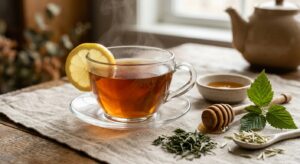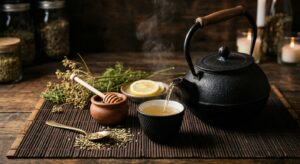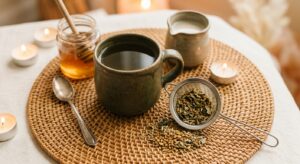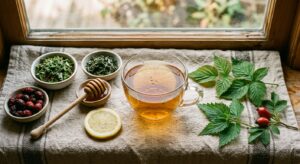
Modern life asks a great deal of the female body. Between fluctuating hormones, chronic stress, disrupted sleep, and the relentless demands of daily life, the adrenal glands, those small walnut-shaped organs that sit atop each kidney, often bear the heaviest load. When they become overtaxed, the result is a pattern of symptoms that many women know intimately: bone-deep fatigue that coffee cannot touch, a wired-but-tired feeling at night, afternoon energy crashes, and a resilience that seems to have quietly slipped away. Herbal traditions from Ayurveda, Traditional Chinese Medicine, and Western herbalism have long recognized this pattern and responded with a category of plants known as adaptogens, herbs that help the body resist and recover from stress.
This Adrenal Support Women’s Tea brings together three of the most respected adaptogenic and restorative herbs in plant medicine. Ashwagandha (Withania somnifera), a cornerstone of Ayurvedic practice for over 3,000 years, is prized for its ability to lower cortisol and rebuild vitality in those experiencing burnout. Holy basil, or tulsi (Ocimum tenuiflorum), is revered in India as a sacred plant and a daily tonic for mind and spirit, offering a gentle nervine quality that calms the stress response without causing drowsiness. Licorice root (Glycyrrhiza glabra) ties the blend together with its naturally sweet flavor and its well-documented ability to support healthy cortisol metabolism and buffer the adrenals during periods of prolonged stress.
What sets this blend apart from a generic stress tea is its synergy. Each herb addresses a different facet of adrenal fatigue: ashwagandha rebuilds the foundation, tulsi soothes the nervous system in real time, and licorice root extends and modulates cortisol availability at the cellular level. The result is a tea that tastes grounding and slightly sweet, earthy with warm herbal undertones, and that works best when consumed consistently as part of a morning or midday ritual. Think of it less as a quick fix and more as a daily conversation with your own resilience.
2
cups
Ingredients
- 1 tspashwagandha root powder or cut root
- 1 tspdried tulsi (holy basil) leaves
- 0.5 tsplicorice root (cut and sifted)
- 480 mlwater (95°C / 203°F)
- —raw honey or coconut sugar to taste (optional)
- —splash of warm oat or almond milk (optional, enhances the earthy, grounding character)
How to Brew
Click on an item below to shop for the recommended items for this recipe on Amazon.
As an Amazon Associate, we earn from qualifying purchases.
- Combine the ashwagandha root and licorice root with 480 ml of cold filtered water in a small saucepan. Bring to a gentle simmer over medium-low heat, not a rolling boil. Once simmering, reduce the heat and continue simmering uncovered for 10 to 12 minutes, allowing the water to reduce slightly and deepen in color.
- Remove the saucepan from the heat. Add the dried tulsi leaves directly to the hot liquid. Cover the saucepan with a lid to trap the volatile aromatic oils. Allow the tulsi to infuse for 3 to 5 minutes off the heat.
- Pour the tea through a fine mesh strainer into your mug, pressing gently on the plant material to extract all liquid. Discard the spent herbs.
- Taste the tea before adding sweetener. Licorice root provides considerable natural sweetness on its own. If desired, stir in a small amount of raw honey once the tea has cooled slightly below 60°C to preserve its beneficial enzymes.
- Optionally, add a small splash of warm oat or almond milk to round out the earthy edges of the ashwagandha. Sip slowly as a morning grounding ritual or as a midday restorative.
- Add the ashwagandha root, licorice root, and tulsi leaves to a clean glass jar. Use slightly more of each herb than you would for hot brewing: 1.5 tsp ashwagandha, 1.5 tsp tulsi, and 0.75 tsp licorice root per 480 ml of water, as cold water extracts less efficiently.
- Pour 480 ml of cool filtered water over the herbs. Stir briefly to ensure all plant material is submerged. Place a lid or cover on the jar.
- Allow the jar to sit at room temperature for 1 hour to begin the infusion, then transfer to the refrigerator. Leave to infuse for a minimum of 8 hours or up to 12 hours overnight.
- The next morning, strain the tea through a fine mesh strainer or nut milk bag into a glass or jar, pressing the herbs to release all liquid. Discard the spent plant material.
- Taste before sweetening. The cold brew will be noticeably smoother and sweeter than the hot version. Serve over ice or drink chilled straight from the jar. A squeeze of fresh lemon brightens the flavor and complements the earthy tones beautifully.
- Scale the recipe to make a concentrated batch: use 4 tsp ashwagandha root, 4 tsp tulsi, and 2 tsp licorice root per 480 ml of water. The goal is a 4x concentrated liquid that you will dilute before drinking.
- Combine the ashwagandha root and licorice root with the 480 ml of filtered water in a medium saucepan. Bring to a gentle simmer over medium heat. Reduce the heat to low and simmer uncovered for 25 to 30 minutes, stirring occasionally. The liquid will reduce and darken significantly.
- Remove from heat and add all the tulsi leaves. Cover and infuse for 5 minutes. Strain the concentrate through a fine mesh strainer into a clean glass jar with a tight-fitting lid, pressing the herbs firmly to extract every drop.
- Allow the concentrate to cool to room temperature before sealing the jar. Store in the refrigerator for up to 7 days. Label the jar with the preparation date.
- To serve, add 60 ml of concentrate to a mug and top with 180 ml of hot water or warm oat milk. Adjust the ratio to taste. Sweeten with raw honey if desired, and add a pinch of cinnamon or cardamom for a warming chai-like variation.
Health Benefits
Ashwagandha’s withanolides have been shown in multiple double-blind, placebo-controlled clinical trials to significantly reduce serum cortisol levels in chronically stressed adults. By calming an overactive hypothalamic-pituitary-adrenal axis, this blend helps break the cycle of cortisol dysregulation that underlies adrenal fatigue.
Unlike caffeine, which forces the adrenals to produce more adrenaline, adaptogens like ashwagandha and tulsi help the body generate energy more efficiently at the cellular level by improving mitochondrial function and reducing oxidative stress. Regular use is associated with improved endurance and reduced fatigue in clinical settings.
The adrenal glands play a significant role in producing precursor hormones such as DHEA, which influences estrogen and progesterone balance, particularly during perimenopause. Ashwagandha has been shown in a 2021 study published in the Journal of Ethnopharmacology to support FSH and LH balance and improve climacteric symptoms in women.
Tulsi is classified as both an adaptogen and a nervine, meaning it directly soothes an overactivated nervous system. Studies have found that regular tulsi consumption significantly reduces anxiety, stress, and depression scores while improving cognitive function and social behavior.
Chronic stress drives systemic inflammation through elevated cortisol and cytokine activity, which in turn worsens adrenal fatigue. The combined anti-inflammatory activity of withanolides, eugenol, and glycyrrhizin in this blend addresses inflammation at multiple pathways simultaneously, helping to restore the body’s baseline resilience.
🧪 Key Bioactive Compounds
The Science Behind Ashwagandha
The scientific basis for this blend centers on the hypothalamic-pituitary-adrenal (HPA) axis, the body’s central stress response system. When the brain perceives a threat, the hypothalamus signals the pituitary gland, which triggers the adrenal glands to release cortisol. In healthy cycles, cortisol rises in the morning and falls through the day. But in chronically stressed women, this rhythm becomes disrupted, leading to either persistently elevated cortisol or a flattened, depleted cortisol curve. Ashwagandha’s withanolides have been demonstrated in multiple randomized controlled trials to normalize this curve by modulating the sensitivity of cortisol receptors and reducing the upstream signaling that drives excess cortisol production. A landmark 2012 study in the Indian Journal of Psychological Medicine found a 27.9 percent reduction in serum cortisol in the ashwagandha group compared to placebo after 60 days of supplementation.
Licorice root’s primary active compound, glycyrrhizin, acts through a distinct but complementary mechanism. The enzyme 11-beta-hydroxysteroid dehydrogenase type 2 (11β-HSD2) normally converts active cortisol into inactive cortisone in peripheral tissues. Glycyrrhizin inhibits this enzyme, effectively prolonging the availability of endogenous cortisol in tissues that have been depleted by chronic stress. This is particularly relevant for women experiencing the low-cortisol pattern of adrenal fatigue, where the body has essentially run out of the capacity to produce adequate amounts. Rather than adding external cortisol, licorice root helps conserve what the body already makes, a more elegant and body-aligned approach.
Tulsi’s contribution operates on a third axis: the nervous system itself. Its volatile oils, including eugenol and various terpenes, have been shown to reduce the activity of corticosterone (the rodent equivalent of cortisol) and to modulate neurotransmitter levels including serotonin, dopamine, and acetylcholine. A 2012 human clinical study published in the Journal of Ayurveda and Integrative Medicine found that 300 mg of holy basil extract daily significantly improved scores for stress, sexual problems, sleep quality, forgetfulness, and exhaustion. When all three herbs are consumed together, their mechanisms form a triangle of support: ashwagandha recalibrates the stress response at its source, licorice root preserves the adrenal hormones that remain, and tulsi calms the neurological hyperactivation that perpetuates the cycle.
Brewing Tips
- Use ashwagandha root powder if you want faster extraction and a creamier texture, or use cut root if you prefer a cleaner, less heavy mouthfeel. Both are equally effective when simmered properly.
- Drink this tea consistently for at least 4 to 6 weeks before evaluating its effects. Adaptogens are not acute remedies. They build their action gradually over weeks of daily use, much like nutritional supplements.
- If the earthiness of ashwagandha is too strong for your palate, brewing with warm oat milk instead of water significantly mellows the flavor and adds a naturally creamy texture that many people find much more enjoyable.