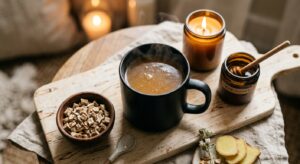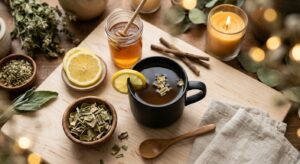
Long before modern gastroenterology, healers across Europe, North America, and Asia were reaching for demulcent roots and warming spices to soothe troubled digestive systems. Marshmallow root (Althaea officinalis) has been used in Western herbal medicine for over 2,000 years, prized for the thick, slippery mucilage it releases when steeped in water. Slippery elm (Ulmus rubra) was a staple of Native American medicine, used to comfort inflamed tissues and support recovery from illness. Ginger (Zingiber officinale) rounds out this trio with thousands of years of use in Ayurvedic and Traditional Chinese Medicine as a digestive stimulant and anti-nausea remedy. Together, these three herbs form one of the most complete gut-support formulas in the herbal world.
What makes this blend so effective is the elegant division of labor between its ingredients. Marshmallow root and slippery elm both produce mucilaginous polysaccharides that physically coat the mucosal lining of the esophagus, stomach, and intestines, providing a protective barrier against irritation. This makes the tea particularly valuable for people dealing with acid reflux, gastritis, leaky gut, or irritable bowel syndrome. Ginger contributes a warming, carminative energy that stimulates digestive enzymes, relieves gas and bloating, and keeps things moving without overstimulating. The result is a tea that simultaneously soothes and activates the digestive system.
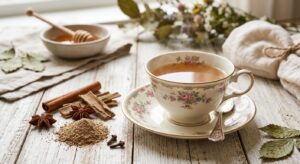
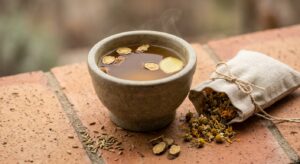
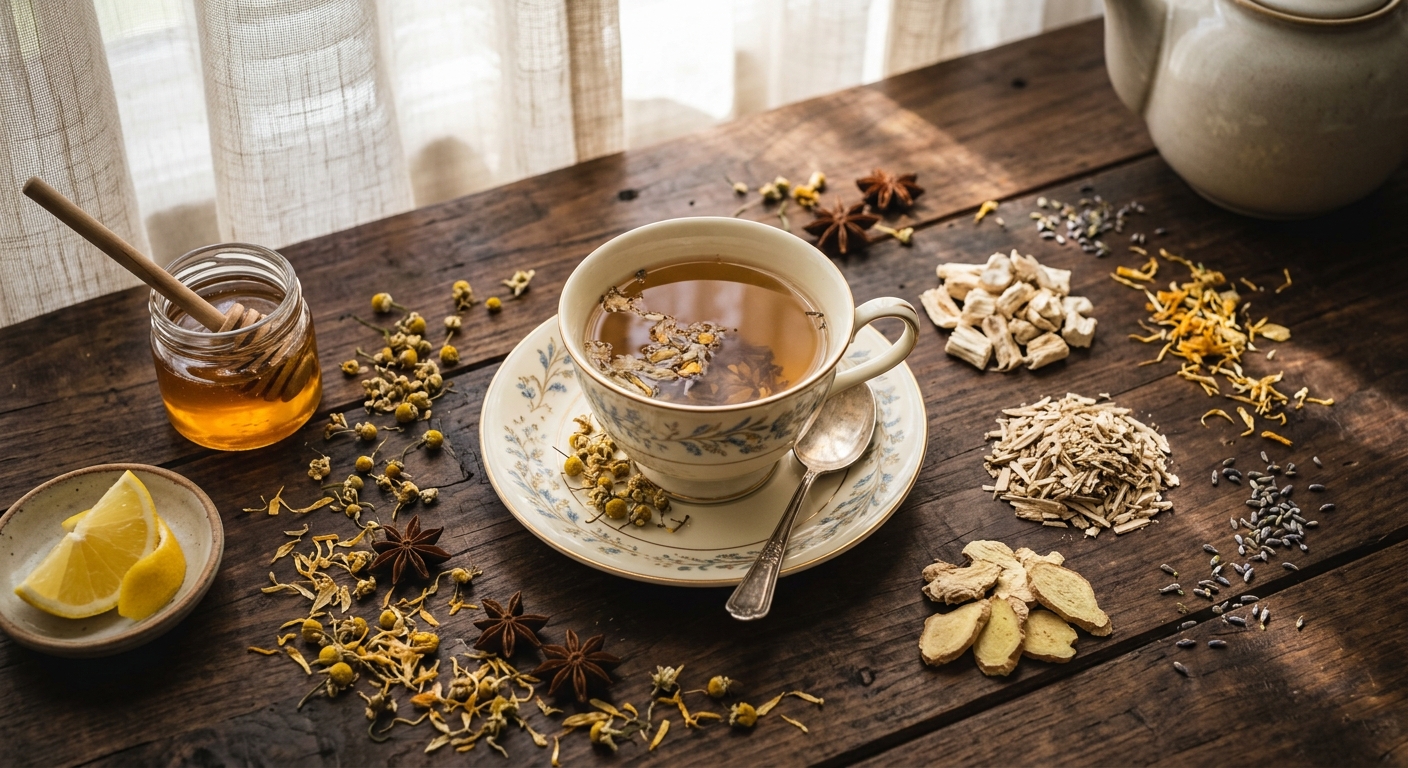
The sensory experience is as grounding as the benefits. Marshmallow root and slippery elm lend the brew a silky, almost velvety mouthfeel that is unlike any ordinary herbal tea. Ginger adds a gentle warmth and spice that keeps the blend from feeling heavy. The color is a warm, pale amber, and the aroma is earthy and subtly sweet, with a clean root-cellar quality. This is a tea meant to be sipped slowly, ideally between meals or at the first sign of digestive discomfort, as part of a conscious ritual of caring for your gut.
2
cups
Ingredients
- 2 tspdried marshmallow root
- 1 tspslippery elm bark powder or cut bark
- 1 tspdried ginger root or 3 to 4 slices fresh ginger
- 500 mlwater (85°C / 185°F)
- —raw honey to taste (optional)
- —a squeeze of fresh lemon (optional)
How to Brew
Click on an item below to shop for the recommended items for this recipe on Amazon.
As an Amazon Associate, we earn from qualifying purchases.
- Heat your water to 85°C (185°F). If you do not have a temperature-controlled kettle, bring water to a full boil and allow it to rest uncovered for 3 to 4 minutes before using.
- Add the marshmallow root and slippery elm to your tea infuser or place them directly into a small teapot. These herbs benefit from a little room to expand and release their mucilage, so avoid tightly packing the infuser.
- Pour the hot water over the herbs and cover immediately with a lid or small plate to trap the volatile aromatic compounds from the ginger. Covering also helps maintain temperature throughout the steep.
- Add the dried or fresh ginger slices directly to the pot or infuser along with the other herbs. If using fresh ginger, lightly crush the slices first with the back of a spoon to release more of the gingerols.
- Steep for 10 to 15 minutes. The longer the steep, the more mucilage is released from the marshmallow and slippery elm, and the silkier the mouthfeel will be. Stir once halfway through.
- Strain into your mug and notice the slightly viscous, almost broth-like quality of the liquid. Sweeten with raw honey if desired and sip slowly between meals or at the first sign of digestive discomfort.
- Measure out 2 teaspoons of dried marshmallow root and 1 teaspoon of slippery elm bark into a clean glass jar. For this cold brew method, omit the ginger or use only a small pinch of dried ginger powder, as raw ginger cold-brews very slowly and may produce a bitter, unpleasant note over many hours.
- Pour 500 ml of cold, filtered water directly over the herbs. Do not use hot water. The goal is a slow, cold extraction that maximizes polysaccharide release without heat.
- Stir the mixture gently with a long spoon to ensure all the herb material is fully submerged. Place a lid or cover loosely over the jar.
- Allow the jar to sit at room temperature for the first 1 to 2 hours, then transfer it to the refrigerator. Let it steep for a total of 8 to 12 hours, ideally overnight.
- In the morning, strain the liquid through a fine mesh strainer or a piece of cheesecloth. You will notice the tea has a noticeably thicker, more viscous consistency than a hot-brewed version. This is the sign of a successful mucilage extraction.
- Drink the cold brew straight from the refrigerator or allow it to come to room temperature. If you prefer warming spice, stir in a small amount of freshly grated ginger or a drop of ginger juice before drinking. Consume within 24 hours and store covered in the refrigerator.
- Place 4 to 5 slices of fresh ginger root (or 1.5 teaspoons of dried ginger root pieces) in a small saucepan with 600 ml of cold water. Using more water than the standard recipe compensates for evaporation during simmering.
- Bring the ginger and water to a full boil over medium-high heat, then immediately reduce to a gentle simmer. Let the ginger decoct uncovered for 15 to 20 minutes. The liquid will reduce slightly and take on a deep golden color with a strong, spicy aroma.
- Remove the saucepan from the heat entirely and allow the temperature to drop for 3 to 4 minutes. You want the liquid to fall to approximately 85°C (185°F) before adding the delicate demulcent herbs.
- Add the marshmallow root and slippery elm directly to the hot ginger decoction in the saucepan. Stir gently to combine, then cover the pan with a lid and allow the herbs to infuse off the heat for 10 minutes.
- Strain the finished decoction through a fine mesh strainer into your mug, pressing the herb material gently with the back of a spoon to extract any remaining liquid. Discard the spent herbs.
- Taste the brew. It will be noticeably more spicy and warming than the hot brew method. Stir in raw honey to balance the heat if desired. Sip slowly after a meal to ease bloating and gas, or before a meal to prime digestive enzyme activity.
Health Benefits
The mucilaginous polysaccharides from marshmallow root and slippery elm form a physical protective layer over irritated mucosal tissue, reducing symptoms of gastritis, acid reflux, and leaky gut. A 2010 pilot study found marshmallow root syrup significantly reduced symptoms of gastric and esophageal irritation.
Ginger has robust clinical support for anti-nausea effects across multiple contexts including pregnancy-related nausea, post-operative nausea, and chemotherapy-induced nausea. Its active compounds, especially 6-gingerol and 6-shogaol, accelerate gastric emptying and regulate the serotonin receptors that govern gut movement.
All three herbs in this blend contribute anti-inflammatory activity in the gut. Ginger inhibits COX-2 enzymes similarly to NSAIDs but without gastric side effects, while quercetin in marshmallow root stabilizes gut immune cells and reduces inflammatory signaling associated with IBS and inflammatory bowel conditions.
The arabinogalactans in slippery elm function as a prebiotic fiber, selectively feeding beneficial Lactobacillus and Bifidobacterium strains. Preliminary research suggests this can increase the production of short-chain fatty acids, which nourish colonocytes and support gut barrier integrity.
Ginger is a well-established carminative, meaning it relaxes the smooth muscle of the gastrointestinal tract and helps expel trapped gas. Combined with the anti-spasmodic properties of marshmallow root, this blend may provide meaningful relief from functional bloating and cramping associated with IBS and general indigestion.
🧪 Key Bioactive Compounds
The Science Behind Marshmallow Root
The gut-healing power of this blend rests on two distinct but complementary mechanisms: physical mucosal protection and biochemical anti-inflammation. Marshmallow root and slippery elm both contain high concentrations of mucilaginous polysaccharides, complex carbohydrate chains that become viscous and gel-like when hydrated. When consumed, these gels adhere to the mucous membranes lining the digestive tract, effectively forming a secondary protective barrier. For people whose natural mucosal layer has been compromised by acid, NSAIDs, infection, or chronic stress, this temporary coating can allow the underlying tissue to recover. Research published in the journal Complementary Medicine Research demonstrated that marshmallow root extract significantly reduced the severity of esophageal and gastric irritation, validating centuries of traditional use.
Ginger’s contributions to this formula are well-documented in modern pharmacology. Its primary phenolic compound, 6-gingerol, inhibits the cyclooxygenase (COX) and lipoxygenase (LOX) pathways, the same inflammatory cascades targeted by anti-inflammatory drugs, without the gastric irritation those drugs often cause. This makes ginger uniquely compatible with the demulcent herbs in this blend. Ginger also activates the transient receptor potential vanilloid 1 (TRPV1) receptors in the gut, which modulate pain perception and smooth muscle activity. A 2015 meta-analysis in the European Journal of Nutrition confirmed that ginger supplementation significantly accelerated gastric emptying in healthy adults, supporting its traditional use for bloating and post-meal discomfort.
Perhaps the most compelling emerging science concerns the prebiotic role of slippery elm. Its arabinogalactans, a type of soluble fiber, resist digestion in the upper gut and arrive intact in the colon where they serve as a substrate for beneficial bacterial fermentation. Studies on arabinogalactans from related plant sources show consistent increases in populations of Lactobacillus and Bifidobacterium species, along with elevated production of butyrate, a short-chain fatty acid that is the primary energy source for colonocytes (the cells lining the colon). Butyrate also plays a critical role in maintaining tight junctions between intestinal cells, directly addressing the increased intestinal permeability commonly referred to as leaky gut. This means slippery elm is not just soothing the gut passively but actively rebuilding its microbial and structural foundation.
Brewing Tips
- For maximum mucilage extraction, always cover your cup or teapot immediately after pouring the water. Allowing steam to escape also allows volatile protective compounds to dissipate.
- If you are using slippery elm powder rather than cut bark, whisk it into a small amount of cold water first to form a smooth paste before adding the hot water. This prevents clumping and ensures even distribution throughout the tea.
- Drink this blend on an empty stomach or between meals rather than immediately with food. The mucilaginous coating effect is most potent when the herbs can contact the gut lining directly without competing with a large meal for surface area.