Pulsatilla, known by the evocative common name pasque flower or windflower, has drifted through centuries of herbal lore like the silken seed heads it sends spinning on the breeze. Native to the chalk grasslands of Europe and the open prairies of North America, Pulsatilla vulgaris and its close relative Pulsatilla patens were valued by medieval herbalists, Eclectic physicians of the 19th century, and indigenous healers alike. The plant’s nodding purple blooms, appearing at the cusp of winter and spring, earned it associations with transition, surrender, and the gentle releasing of tension. Herbalists who observed its drooping posture read in it a symbol of yielding, and true to that signature, it became one of the most relied-upon herbs for states of nervous exhaustion, weeping anxiety, and restless sleeplessness.
In traditional European herbalism and homeopathic practice, Pulsatilla was specifically indicated for individuals who felt emotionally overwhelmed, prone to tearfulness, and unable to settle the mind at night. The Eclectic physicians of 19th-century America documented its use extensively, describing it as a calming agent for conditions aggravated by grief, nervous excitement, and reproductive tension. Native American nations, particularly on the northern Great Plains, used the fresh plant topically and in small ceremonial preparations, respecting its potency and handling it with care. This dual heritage of European nervine use and indigenous reverence underscores just how wide and cross-cultural Pulsatilla’s reputation as a plant of calm has been.
What makes Pulsatilla particularly special in the realm of sleep and relaxation teas is the specificity of its traditional indications. It is not simply a generalized sedative like valerian. Instead, it speaks to a particular emotional texture: the person who lies awake because their mind is churning with worry or grief, who feels emotionally labile and overstimulated. Brewed as a gentle tea from carefully dried plant material, Pulsatilla offers a subtle, almost contemplative quieting. Its flavor is mildly bitter and faintly herbaceous, grounding in its simplicity, and it pairs beautifully with softer floral herbs to round out both its taste and its effect.
2
cups
Ingredients
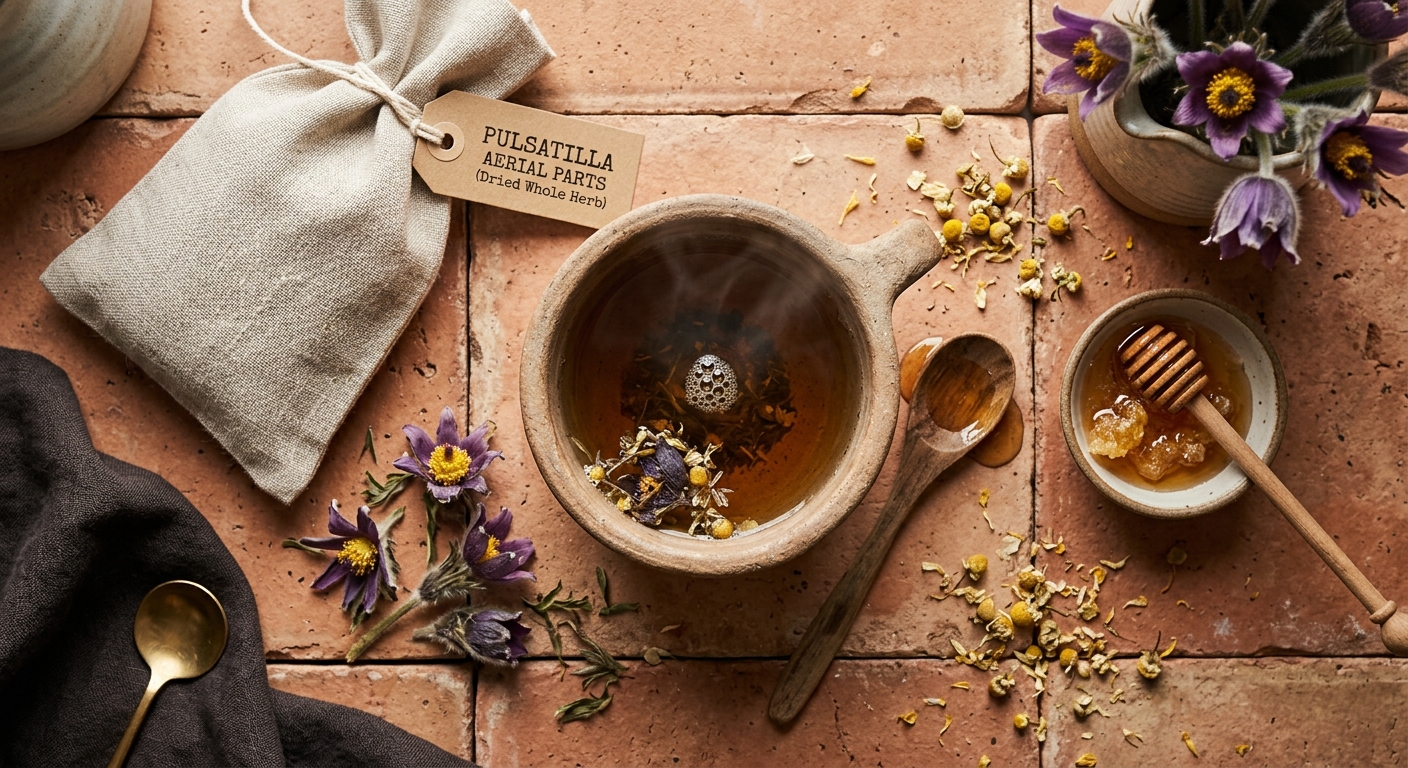
- 1 tspdried Pulsatilla aerial parts (dried whole herb, not fresh)
- 240 mlwater (85°C / 185°F)
- —raw honey or a small amount of dried chamomile to soften bitterness (optional)
How to Brew
Click on an item below to shop for the recommended items for this recipe on Amazon.
As an Amazon Associate, we earn from qualifying purchases.
- Heat filtered water to 85°C (185°F). Avoid a rolling boil, as excessive heat can degrade the delicate glycoside compounds and intensify the bitter notes unpleasantly.
- Measure 1 level teaspoon of dried Pulsatilla aerial parts per 240 ml of water and place them in a warmed ceramic teapot or directly into an infuser-fitted mug. Do not pack tightly; allow the dried material to expand freely.
- Pour the hot water gently over the dried herb, covering it fully. Place a small saucer or lid over the mug to trap the aromatic steam and prevent volatile compounds from escaping.
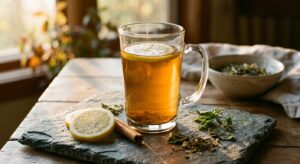
- Steep for 5 to 8 minutes. Taste at the 5-minute mark. The brew should be pale amber with a mild, clean bitterness. If you prefer a lighter flavor, remove the infuser at 5 minutes.
- Strain thoroughly and pour into a clean mug. Sweeten lightly with raw honey if desired, or add a pinch of dried chamomile flowers to the infuser alongside the Pulsatilla to soften the bitterness and add a gentle floral note.
- Drink slowly in a quiet setting approximately 30 to 45 minutes before bedtime for best effect on sleep and nervous tension.
- Measure 1 teaspoon of dried Pulsatilla aerial parts per 240 ml of cold, filtered water. For a two-serving batch, use 2 teaspoons of herb in 480 ml of water.
- Combine the dried herb and cold water in a clean glass jar with a tight-fitting lid. Stir gently to make sure the herb is fully submerged and not floating on the surface.
- Seal the jar and leave it at room temperature for the first 1 to 2 hours to allow the initial extraction to begin, then transfer it to the refrigerator.
- Allow the tea to cold steep for a total of 8 to 10 hours, ideally overnight. Unlike hot brewing, the extended cold extraction gradually draws out the calming compounds without overextractig tannins or sharp bitter notes.
- Strain the finished brew through a fine mesh strainer or cheesecloth into a clean glass. The cold-brewed Pulsatilla will appear very pale gold and taste noticeably softer and more delicate than the hot version.
- Serve chilled or at room temperature. Add a small drizzle of honey or a few drops of lavender extract if desired. Consume within 24 hours and keep refrigerated.
- Prepare your blend in a small bowl before brewing: combine 1 teaspoon dried Pulsatilla, 1 teaspoon dried passionflower herb, and 1 teaspoon dried linden blossom per two servings (approximately 480 ml of water). Mix gently to distribute evenly.
- Heat filtered water to 85°C (185°F). Use a thermometer or an electric kettle with temperature control. This temperature protects the delicate flavonoid content of all three herbs.
- Place the blended herbs into a teapot with a built-in strainer or a generously sized tea infuser. The blend needs room to expand; a cramped infuser will restrict extraction and result in a weak, uneven brew.
- Pour the heated water evenly over the herbs and immediately cover the teapot or mug with a lid to retain warmth and aromatic oils. Steep for 7 to 10 minutes.
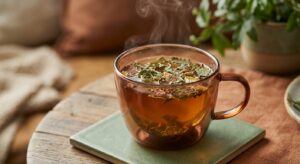
- After steeping, stir once gently before straining. The finished blend should pour as a warm golden amber with a complex aroma that layers Pulsatilla’s dry grassiness with the honeyed floral sweetness of linden and the faintly grassy, almost woody depth of passionflower.
- Serve in a warmed mug, sweetened lightly with honey if preferred. This blend is best enjoyed as part of a deliberate evening wind-down routine, ideally 30 to 60 minutes before sleep.
Health Benefits
Pulsatilla’s anemonin content acts as a gentle nervine sedative, calming an overactive nervous system and reducing the mental restlessness that most commonly prevents sleep onset. Traditional Eclectic herbalists specifically recommended it for sleeplessness arising from nervous exhaustion or grief.
The herb’s antispasmodic and nervine compounds help reduce excitability in the central and peripheral nervous systems. Pulsatilla has a long history of use for anxiety states characterized by emotional sensitivity, tearfulness, and an inability to mentally unwind.
Anemonin exhibits antispasmodic activity on smooth muscle tissue, which is why Pulsatilla was historically used for tension headaches, menstrual cramps, and gastrointestinal cramping associated with nervous states. This relaxing effect on muscular tension compounds its overall calming action.
Traditional herbalism and Eclectic medicine both documented Pulsatilla’s specific affinity for the female reproductive system, particularly for easing emotional volatility, irritability, and sleeplessness associated with premenstrual or menopausal hormonal changes. While modern clinical trials are limited, its use in this context spans several centuries across multiple herbal traditions.
Compounds including oleanolic acid and triterpenoid saponins contribute a background anti-inflammatory effect that may help calm physical tension and discomfort that interferes with relaxation, particularly in conditions involving pelvic or musculoskeletal inflammation.
🧪 Key Bioactive Compounds
The Science Behind Pulsatilla
The pharmacological activity of Pulsatilla tea centers on its primary active compound, anemonin, a bicyclic lactone formed during the drying process from its precursor ranunculin. When the fresh plant is dried or processed with heat, an enzymatic reaction converts ranunculin first into the highly irritant protoanemonin and then into the far more stable and therapeutically useful anemonin. It is this conversion that renders dried Pulsatilla safe for internal use. Anemonin has demonstrated antispasmodic activity in preclinical studies, acting on smooth muscle tissue to reduce involuntary tension and cramping. This mechanism aligns well with the herb’s traditional applications for nervous tension, muscle spasm, and the physical holding patterns that accompany anxiety states.
The triterpenoid saponins found in Pulsatilla, including compounds structurally related to oleanolic acid, contribute additional anti-inflammatory signaling by modulating prostaglandin pathways and reducing the production of pro-inflammatory cytokines. This may explain why the herb was effective in traditional practice for conditions involving both physical inflammation and nervous system dysregulation, where the two processes are often interconnected. The flavonoid fraction, which includes anthocyanin pigments such as delphinidin responsible for the plant’s vivid purple color, adds antioxidant activity that may protect neuronal tissue from oxidative stress, a factor increasingly recognized as relevant to anxiety disorders and disrupted sleep architecture.
While large-scale human clinical trials specifically on Pulsatilla tea as a sleep or anxiety remedy are not yet available, the herb has been extensively studied within the context of traditional Chinese medicine, where closely related species such as Pulsatilla chinensis have been evaluated for anti-inflammatory, antimicrobial, and neuroprotective properties. The convergence of historical ethnobotanical use across European, American Eclectic, and East Asian medical traditions, combined with the known pharmacological mechanisms of its key compounds, provides a credible evidence framework for its nervine and sleep-supporting applications. Current herbal research continues to build this picture, with growing interest in plant-derived antispasmodics and flavonoid-rich nervines as alternatives to pharmaceutical sleep aids.
Brewing Tips
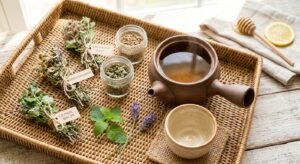
- Always verify that your Pulsatilla is correctly dried and sourced from a reputable herbal supplier. The color should be a dull silvery-green to grey-green, and it should carry a faint, dry herbaceous scent with no musty or sharp chemical odor.
- Keep your water temperature below 90°C (194°F) when brewing. Overheating can degrade the delicate lactone compounds and significantly increase the bitter astringency, making the tea unpleasant and harder to balance.
- Use a covered mug or teapot during steeping. The aromatic volatile compounds in Pulsatilla are few but meaningful; trapping the steam for the duration of the steep helps preserve a fuller, more rounded flavor and retains more of the beneficial constituents in the liquid rather than losing them to evaporation.