Few herbs carry the weight of history, legend, and luxury that saffron does. Harvested by hand from the delicate purple blooms of Crocus sativus, each thread is a dried stigma plucked at dawn before the sun can fade its volatile aromatic compounds. It takes roughly 75,000 flowers to produce a single pound of saffron, which explains why this spice has been worth more than gold by weight throughout much of recorded history. Persian royalty steeped saffron in warm water to calm nerves before sleep. Egyptian physicians prescribed it for melancholy. Cleopatra reportedly bathed in saffron-infused milk for its skin-illuminating properties. When you brew a cup of saffron tea, you are participating in a ritual that stretches back more than 3,500 years.
In traditional Persian medicine, saffron was classified as a mufarreh, literally a gladdening agent, a substance believed to open the heart and dispel sadness. Ayurvedic practitioners used it to balance all three doshas and regarded it as a rasayana, a rejuvenating tonic for the mind and body. In ancient Greece and Rome, saffron threads were scattered on theater floors and woven into garlands to create an atmosphere of joy and celebration. These cultural threads point to a consistent observation across vastly different civilizations: saffron does something profound to human mood and the nervous system. Contemporary clinical science is now beginning to explain exactly why.
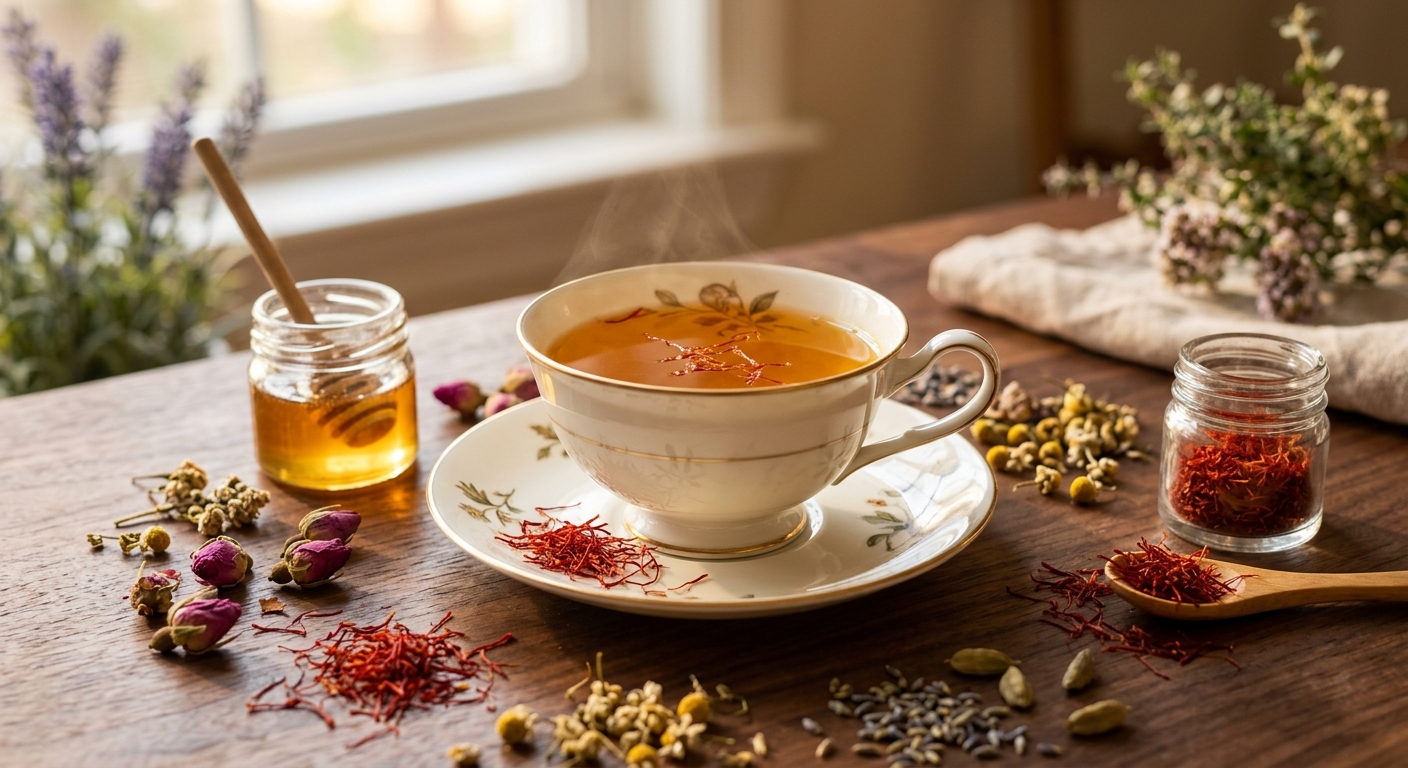
What makes saffron tea so remarkable as a sleep and relaxation remedy is its elegant combination of bioactive compounds that work on serotonin pathways, GABA receptors, and oxidative stress simultaneously. Unlike sedative herbs that simply dull the nervous system, saffron appears to gently recalibrate mood and promote the kind of calm alertness in the evening that naturally gives way to deep, restorative sleep. The brew itself is an experience for the senses: a warm amber-gold liquid with a honeyed, subtly earthy aroma and a flavor that is softly floral, faintly metallic, and unlike anything else in the herbal world. A single cup before bed can feel like a quiet, ceremonial act of self-care.
2
cups
Ingredients
- 20 threadshigh-quality saffron (loosely crumbled)
- 480 mlwater (85°C / 185°F)
- —1 tsp raw honey or a few drops of rose water (optional)
- —a small pinch of ground cardamom (optional)
How to Brew
Click on an item below to shop for the recommended items for this recipe on Amazon.
As an Amazon Associate, we earn from qualifying purchases.
- Lightly crush 20 saffron threads between your fingertips or in a small mortar and pestle. This breaks the threads open and dramatically increases the release of crocin (color), safranal (aroma), and picrocrocin (flavor) into the water.
- Heat your water to 80 to 90°C (176 to 194°F). If you do not have a temperature-controlled kettle, bring water to a full boil and let it rest uncovered for 3 to 4 minutes before using.
- Place the crushed saffron threads directly into a warmed teapot or heatproof glass mug. Pour the heated water over the threads and stir once gently to ensure all threads are submerged.
- Cover the vessel with a small saucer or lid to trap the volatile aromatic compounds and steep for 10 to 15 minutes. The liquid will bloom into a rich amber-gold color as crocin fully releases.
- Do not strain if you enjoy the full sensory experience. If preferred, pour through a fine mesh strainer into your drinking cup. Stir in honey or rose water if using, and sip slowly in the hour before bed.
- Crush 30 saffron threads lightly in a mortar and pestle or between your fingers. Cold brewing requires a slightly higher quantity of saffron than hot brewing to achieve the same depth of color and potency.
- Add the crushed threads to a clean glass jar or pitcher along with 500 ml of cold, filtered water. Stir briefly to distribute the threads evenly throughout the water.
- Leave the jar at room temperature for 30 minutes to allow the initial bloom of crocin to begin, then seal the jar tightly and transfer it to the refrigerator.
- Steep in the refrigerator for 8 to 12 hours, or overnight. The liquid will develop a strikingly vivid amber-orange color and a clean, sweet floral fragrance.
- When ready, strain through a fine mesh strainer into a glass over ice or warm gently in a small saucepan over very low heat for a few minutes before drinking. Sweeten lightly with honey or agave syrup if desired.
- Gently warm 400 ml of whole dairy milk or full-fat oat milk in a small saucepan over low to medium-low heat. Do not boil. Target a temperature of 65 to 70°C (149 to 158°F), just below a simmer, where the milk is steaming gently and beginning to form small bubbles at the edges.
- While the milk is warming, lightly crush 20 to 25 saffron threads in a mortar and pestle with a small pinch of sugar. The sugar acts as an abrasive to help fully break down the threads and accelerate pigment release.
- Add the crushed saffron mixture to the warm milk along with an optional pinch of ground cardamom or a small strip of orange peel. Stir gently to combine.
- Reduce heat to the lowest possible setting and allow the saffron to infuse in the warm milk for 12 to 15 minutes, stirring occasionally. The milk will gradually take on a beautiful golden hue.
- Remove from heat and strain through a fine mesh strainer into a warmed mug. Sweeten with a teaspoon of honey, stirring until dissolved. Drink 30 to 45 minutes before bedtime for maximum relaxation benefit.
Health Benefits
Crocetin and safranal have both demonstrated the ability to reduce sleep onset latency and increase time spent in deep, restorative sleep stages in human clinical trials. A landmark 2020 study published in Nutrients found that 28 mg of saffron extract daily for four weeks significantly improved sleep quality scores compared to placebo in adults with self-reported poor sleep.
Multiple randomized controlled trials, including a notable meta-analysis published in the Journal of Integrative Medicine, have found saffron supplementation to be significantly more effective than placebo and comparable to low-dose antidepressants such as fluoxetine and imipramine for mild to moderate depression. Crocin and safranal inhibit serotonin reuptake, effectively acting as natural serotonergic agents.
Safranal binds to GABA-A receptors in the brain, producing a mild anxiolytic effect similar in mechanism, though much gentler in intensity, to benzodiazepine compounds. Regular consumption of saffron tea has been associated with measurable reductions in perceived stress and anxiety in several small clinical studies.
Crocin and crocetin are powerful antioxidants that can cross the blood-brain barrier and protect neurons from oxidative damage. Animal and in vitro studies suggest these compounds may slow cognitive decline and protect against neurodegenerative processes, offering long-term brain health benefits alongside the immediate relaxation effects.
A randomized trial published in the British Journal of Obstetrics and Gynaecology found that 30 mg of saffron daily significantly reduced PMS symptoms, including irritability, mood swings, and sleep disturbance, in women of reproductive age. The serotonergic activity of saffron’s compounds is believed to be the primary mechanism.
🧪 Key Bioactive Compounds
The Science Behind Saffron
The pharmacological activity of saffron tea centers on four primary bioactive compounds: crocin, crocetin, safranal, and picrocrocin, each contributing distinct effects on the nervous system. Crocin, responsible for saffron’s vivid golden color, is a water-soluble carotenoid glycoside that inhibits the reuptake of serotonin, dopamine, and norepinephrine in synaptic clefts, producing effects that closely parallel the mechanism of modern antidepressant medications. This is why multiple clinical trials have found saffron supplementation to be statistically comparable to low-dose fluoxetine (Prozac) for mild to moderate depression, a finding that has been replicated across independent research groups in Iran, Australia, and Europe. Crocetin, the aglycone form of crocin, is fat-soluble and crosses the blood-brain barrier more readily, which is one of the reasons the traditional milk-based preparation may offer enhanced neurological benefits.
Safranal, the primary volatile compound responsible for saffron’s distinctive aroma, exerts its relaxation and sleep-promoting effects via a different mechanism: direct interaction with GABA-A receptors, the same receptors targeted by benzodiazepines and many sedative drugs. By binding to these receptors, safranal reduces neuronal excitability and produces a measurable anxiolytic and mild sedative effect. A pivotal animal study demonstrated that safranal increased total sleep time and reduced sleep onset latency at physiologically relevant concentrations, while a 2020 human clinical trial using 28 mg of saffron extract daily confirmed statistically significant improvements in sleep efficiency, total sleep time, and reductions in nighttime awakenings after just four weeks of use. Dimethylcrocetin, a lesser-studied apocarotenoid derivative in saffron, has also shown promise in promoting deeper slow-wave sleep in human participants.
Beyond the neurological effects, saffron’s carotenoid compounds are exceptionally potent antioxidants. Crocin and crocetin neutralize reactive oxygen species in neural tissue, protecting neurons from oxidative damage associated with aging, stress, and chronic inflammation. This neuroprotective quality means that regular saffron tea consumption may offer cumulative long-term benefits for cognitive function and resilience against neurodegenerative processes, in addition to its immediate evening relaxation effects. It is worth noting that the bioavailability of these compounds from a properly prepared tea, especially when brewed below 90°C and consumed with a small amount of healthy fat or milk, compares favorably with many standardized extracts used in clinical research, making saffron tea a genuinely therapeutic preparation rather than simply a dilute symbolic gesture toward the spice’s medicinal legacy.
Brewing Tips
- Always crush or gently grind saffron threads before steeping. Whole intact threads release only a fraction of their color, aroma, and active compounds compared to lightly crushed threads, which break open the stigma tissue and dramatically accelerate extraction.
- Store saffron in an airtight glass container away from light, heat, and moisture. Exposure to light degrades safranal rapidly, dulling both the aroma and the therapeutic potency within weeks. Properly stored saffron retains full potency for up to two years.
- Choose deep red saffron threads with minimal or no yellow style attached. The red portion contains the highest concentrations of crocin and safranal. Pale or mostly yellow saffron is often a sign of lower quality or adulteration and will produce a weaker brew with less therapeutic benefit.