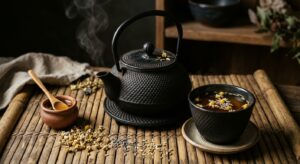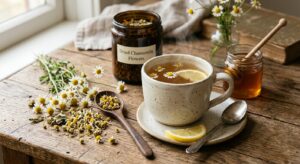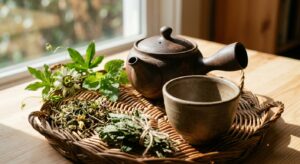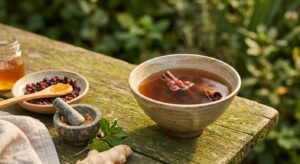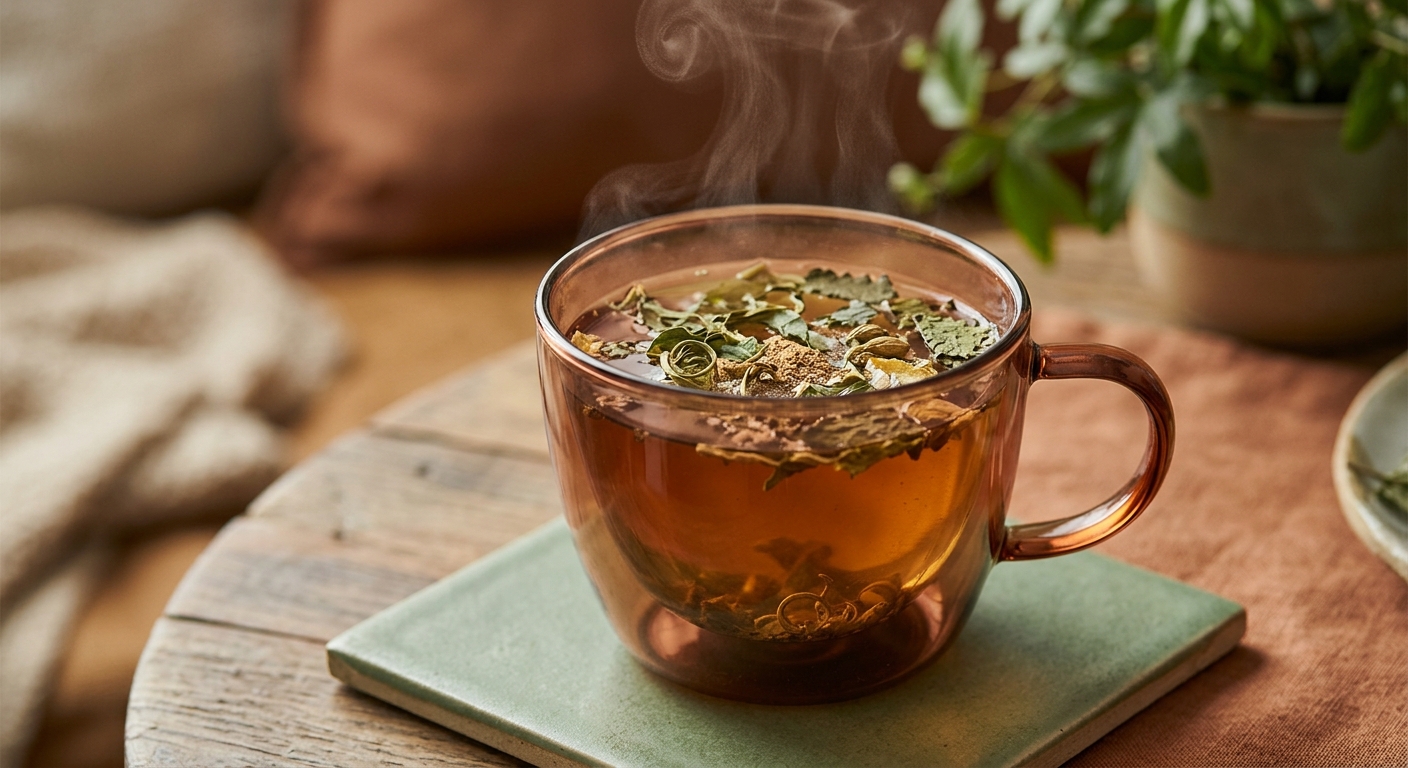
When the day refuses to let you go, cortisol is usually the culprit. This primary stress hormone, designed to keep you alert and responsive during moments of danger, often lingers long after the workday ends, keeping your nervous system in a low-grade state of activation that makes genuine rest feel out of reach. For centuries, plant medicine traditions across Ayurveda, European herbalism, and Native American healing have reached for specific botanicals to interrupt this cycle and gently coax the body back into a state of ease. This cortisol-reducing evening tea draws on that deep well of wisdom.
The blend centers on three powerhouse herbs: ashwagandha root, revered in Ayurvedic medicine for over 3,000 years as a premier adaptogen and nervine tonic; passionflower, used by indigenous peoples of the Americas and later adopted by European herbalists in the 17th century as a remedy for nervous restlessness and insomnia; and lemon balm, a Mediterranean herb that has appeared in medical literature since at least the time of Paracelsus for its ability to calm the mind without dulling the senses. Together, they form a blend that works on multiple biological pathways to quiet the stress response.
What makes this tea exceptional is the synergy between its ingredients. Ashwagandha works at the hormonal level, modulating the hypothalamic-pituitary-adrenal (HPA) axis that governs cortisol release. Passionflower acts on GABA receptors in the brain, the same receptors targeted by many pharmaceutical sleep aids, but with far gentler and non-habit-forming effects. Lemon balm inhibits the enzyme that breaks down GABA, amplifying and extending the calming signal. The result is a tea that does not simply mask tension but addresses some of its underlying chemistry, making it a genuinely functional evening ritual rather than a placebo comfort.
2
cups
Ingredients
- 1 tspashwagandha root powder or finely ground dried root
- 1.5 tspdried passionflower herb (leaves and stems)
- 1.5 tspdried lemon balm leaves
- 480 mlwater (95°C / 203°F)
- —raw honey or maple syrup to taste (optional)
- —a small pinch of ground cardamom (optional, enhances ashwagandha’s earthiness)
How to Brew
Click on an item below to shop for the recommended items for this recipe on Amazon.
As an Amazon Associate, we earn from qualifying purchases.
- Bring filtered water to 95°C (203°F). If you do not have a temperature-controlled kettle, bring water to a full boil and allow it to rest for 60 to 90 seconds before pouring.
- Add the ashwagandha root powder, dried passionflower, and dried lemon balm to a tea infuser or small teapot. If using ashwagandha powder, a fine-mesh infuser or reusable tea bag is recommended to contain the fine particles.
- Pour the hot water over the herbs and cover your mug or teapot immediately with a lid or small saucer. This step is critical because lemon balm and passionflower contain volatile aromatic compounds that evaporate quickly in open air, and covering the vessel traps them back into the liquid.
- Steep for 10 to 15 minutes. Taste at 10 minutes for a lighter, more floral cup, or extend to 15 minutes for a deeper, more earthy brew with maximum ashwagandha extraction.
- Remove the infuser, stir in honey or maple syrup if desired, and add a pinch of cardamom to complement the earthy ashwagandha base. Sip slowly in a dim, screen-free environment for best effect.
- Combine the ashwagandha root powder, dried passionflower, and dried lemon balm in a glass jar. Use slightly increased quantities: 1.5 teaspoons of ashwagandha and 2 teaspoons each of passionflower and lemon balm per 480 ml of water to account for the lower extraction efficiency of cold water.
- Pour room-temperature filtered water over the herbs. Stir gently to ensure the ashwagandha powder is fully dispersed and not clumping at the bottom.
- Cover the jar loosely and let it sit at room temperature for 30 minutes to begin the initial extraction, then seal and transfer to the refrigerator.
- Steep in the refrigerator for a minimum of 8 hours, or overnight for optimal extraction. The cold, slow process draws out the polysaccharides and lighter volatile compounds from lemon balm and passionflower without the bitterness that comes with high heat.
- Strain the tea through a fine-mesh sieve lined with cheesecloth to remove all plant material and ashwagandha powder. Pour over a glass of ice or serve chilled. Sweeten with liquid honey if desired, as it dissolves more easily in cold liquid than solid sweeteners.
- Combine the ashwagandha root powder with 480 ml of your choice of milk (whole dairy milk, oat milk, or full-fat coconut milk all work well) in a small saucepan. Add a pinch of cardamom and, if desired, a small pinch of black pepper to further enhance ashwagandha absorption.
- Warm the mixture over medium-low heat, stirring frequently, until it reaches a gentle simmer at approximately 85 to 90°C (185 to 194°F). Do not allow it to boil vigorously, as this can scorch the milk and degrade heat-sensitive nutrients.
- Reduce the heat to its lowest setting and simmer gently for 15 to 20 minutes, stirring every few minutes. The liquid will deepen in color to a warm golden-amber. This extended, low-heat simmering draws out the fat-soluble withanolides into the milk fats.
- Remove the saucepan from the heat. Add the dried passionflower and dried lemon balm directly to the hot milk decoction and cover the saucepan with a lid.
- Steep the passionflower and lemon balm in the hot ashwagandha milk for 7 to 10 minutes off the heat. This off-heat infusion is gentler, preserving the volatile GABA-modulating compounds in passionflower and the rosmarinic acid in lemon balm that would degrade at a sustained boil.
- Strain the finished decoction through a fine-mesh sieve into a mug, pressing the herbs gently to extract all liquid. Stir in raw honey to taste and drink warm, ideally 30 to 45 minutes before bed.
Health Benefits
Multiple double-blind, placebo-controlled clinical trials have demonstrated that ashwagandha root extract supplementation significantly reduces serum cortisol levels, with one landmark 2012 study in the Indian Journal of Psychological Medicine showing a 27.9% reduction in cortisol compared to placebo over 60 days. The withanolides in ashwagandha appear to normalize HPA axis signaling, reducing the chronic over-activation that keeps evening cortisol elevated.
Both passionflower and lemon balm have demonstrated anxiolytic effects in human clinical trials. A 2011 double-blind crossover study found that a single dose of lemon balm extract significantly reduced anxiety and improved mood in healthy volunteers under a laboratory stress challenge, while passionflower has been shown in trials to match the effectiveness of low-dose oxazepam for generalized anxiety without the side effects.
The GABA-modulating effects of passionflower’s vitexin compounds directly promote the neurological transition into sleep by quieting excitatory brain activity. A 2011 randomized controlled trial in Phytotherapy Research found that passionflower tea significantly improved sleep quality scores compared to placebo, with participants reporting feeling more rested upon waking.
Ashwagandha functions as a true adaptogen, meaning its effects are regulatory rather than simply stimulating or sedating. Regular consumption has been shown to reduce fatigue, improve stress tolerance, and support the adrenal glands in producing a more proportionate, balanced cortisol response to daily stressors rather than the exaggerated spikes common in chronically stressed individuals.
Unlike pharmaceutical sleep aids or even high-dose valerian, this blend at evening doses calms the mind without inducing next-day grogginess. The combination of lemon balm’s GABA transaminase inhibition and passionflower’s GABA receptor binding creates a soft, grounded mental quietness that eases the transition to sleep while allowing the user to remain clear-headed through the early evening.
🧪 Key Bioactive Compounds
The Science Behind Ashwagandha
The science behind this evening blend begins with ashwagandha’s withanolides, a family of steroidal lactones unique to the Withania somnifera plant. These compounds interact with the hypothalamic-pituitary-adrenal (HPA) axis, the central command system governing cortisol production. Under chronic stress, the HPA axis becomes dysregulated, producing cortisol at inappropriate times, including the evening hours when levels should naturally be declining. Withanolides, particularly Withaferin A, appear to downregulate stress signaling at multiple points along this axis, including reducing the expression of heat shock protein 90 (Hsp90), a molecular chaperone that influences glucocorticoid receptor sensitivity. The practical result, borne out in several randomized controlled trials, is a measurable and meaningful reduction in circulating cortisol across the day, with the most dramatic improvements seen in individuals who start with the highest stress burden.
Passionflower’s calming mechanism is more direct. The flavonoid glycosides vitexin and isovitexin, along with the alkaloid harmane found in small concentrations in some passionflower species, appear to act as partial agonists at GABA-A receptors. GABA (gamma-aminobutyric acid) is the brain’s primary inhibitory neurotransmitter, responsible for reducing neuronal excitability and creating the biochemical conditions for relaxation and sleep. Pharmaceutical anxiolytics like benzodiazepines work through this same receptor system but with far stronger binding affinity and significant dependency risk. Passionflower compounds engage GABA-A receptors more gently and at different binding sites, producing anxiolysis without the muscle relaxation, cognitive impairment, or tolerance development associated with pharmaceutical agents. This selective and gentle receptor interaction is precisely what makes it suitable as a regular evening herb rather than a crisis intervention.
Lemon balm adds an elegant second layer to GABA support through a different biochemical route. Rosmarinic acid, its most studied active compound, inhibits GABA transaminase, the enzyme responsible for degrading GABA after it has fulfilled its inhibitory function. By slowing GABA breakdown, lemon balm effectively extends the duration of the calming signal already initiated by passionflower, creating a synergistic effect that is greater than either herb alone. A 2014 study published in Nutrients found that lemon balm extract significantly reduced anxiety and insomnia in a stressed population over 15 days, with 42% of participants reporting reduced insomnia and 18% reporting improved mood. When combined with ashwagandha’s upstream hormonal regulation and passionflower’s receptor-level GABA activation, the three herbs address the stress-to-sleeplessness cascade at multiple biological checkpoints simultaneously.
Brewing Tips
- Store dried passionflower and lemon balm in airtight glass jars away from light and heat, as their volatile aromatic compounds degrade quickly when exposed to air. Fresh herb will make a noticeably more fragrant and effective cup than herbs that have been sitting open in a warm cupboard.
- Always cover your mug or teapot while steeping this blend. Lemon balm in particular loses a significant portion of its calming volatile oils to steam evaporation if steeped in an uncovered vessel, which is one of the most common reasons people find herbal teas less effective than expected.
- For maximum cortisol-lowering benefit from ashwagandha, consistency matters more than any single cup. Clinical studies showing significant cortisol reduction used daily supplementation over 30 to 60 days. Incorporating this tea as a nightly ritual over several weeks will yield more profound results than occasional use.
- If you find the earthy, slightly chalky flavor of ashwagandha powder off-putting at first, start with half a teaspoon and gradually increase over a week as your palate adjusts. The decoction method prepared in coconut or oat milk is the most approachable entry point for ashwagandha newcomers due to its naturally creamier, more comforting texture.