Endometriosis affects an estimated 190 million people worldwide, yet it remains one of the most underdiagnosed and undertreated conditions in women’s health. Characterized by endometrial-like tissue growing outside the uterus, it brings chronic pelvic pain, inflammation, and hormonal disruption that can profoundly affect quality of life. Long before modern medicine named this condition, herbalists across cultures turned to the same plants that appear in this blend, using raspberry leaf, ginger, chamomile, and cramp bark to ease menstrual suffering and restore a sense of bodily harmony.
This support tea is not a cure, and it makes no claim to be one. What it offers is something quieter and just as valuable: a warm ritual of self-care rooted in plants with genuine anti-inflammatory, antispasmodic, and phytoestrogenic properties. Raspberry leaf has been used in European and Native American traditions for centuries to tone the uterus and ease cramping. Ginger root carries a rich history in Ayurvedic and Traditional Chinese Medicine as a warming, circulation-promoting anti-inflammatory. Cramp bark, true to its name, has been documented in North American herbal traditions as a reliable muscle relaxant for uterine spasms. Together with the gentle nervine properties of chamomile, these herbs form a blend that addresses endometriosis from several complementary angles.
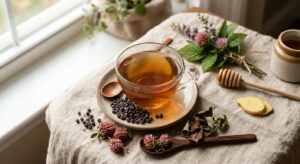
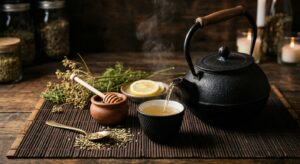
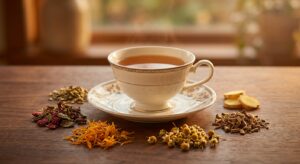
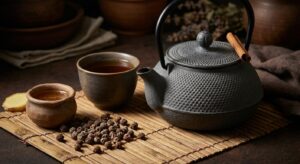
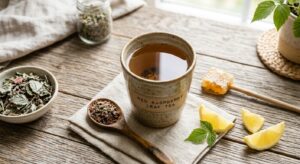
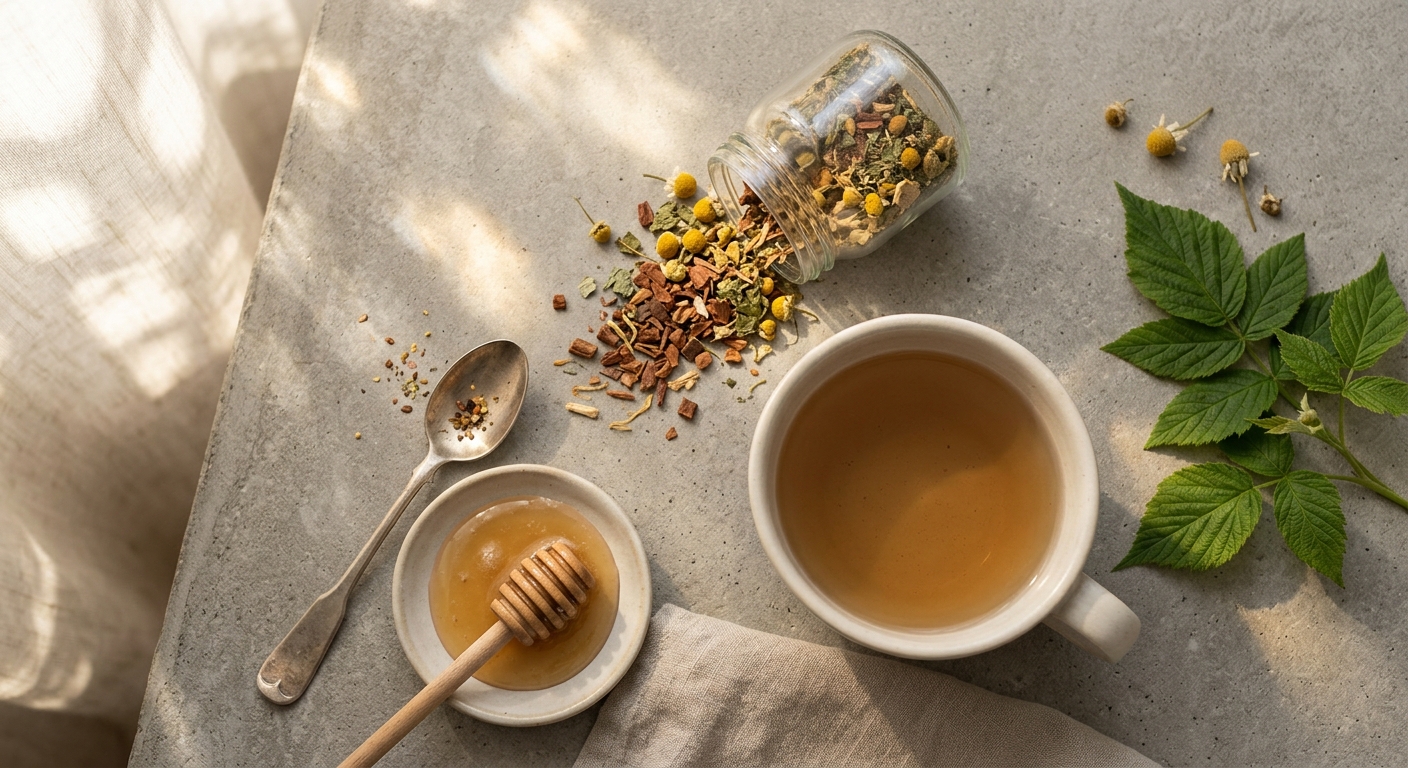
The sensory experience of this tea is part of its medicine. The spicy warmth of ginger meets the grassy sweetness of raspberry leaf, softened by chamomile’s apple-like floral notes and the faintly bitter earthiness of cramp bark. It smells like a garden in late summer and tastes like something that genuinely wants to help. Whether you sip it during a flare, as part of a daily hormonal support routine, or simply in the quiet before bed, this blend invites you to slow down and tend to yourself with intention.
2
cups
Ingredients
- 2 tspdried red raspberry leaf
- 1 tspdried chamomile flowers
- 1 tspfreshly grated or dried ginger root
- 1 tspdried cramp bark (coarsely ground)
- 480 mlwater (95°C / 203°F)
- —raw honey or maple syrup to taste (optional)
- —a squeeze of fresh lemon (optional)
How to Brew
Click on an item below to shop for the recommended items for this recipe on Amazon.
As an Amazon Associate, we earn from qualifying purchases.
- Heat filtered water to 95°C (203°F). If you do not have a temperature-controlled kettle, bring water to a full boil and allow it to rest for 60 to 90 seconds before pouring.
- If using whole dried cramp bark pieces, coarsely grind them with a mortar and pestle to increase surface area and improve extraction. Add the cramp bark to your infuser or teapot first.
- Add the dried raspberry leaf, chamomile flowers, and ginger root to the infuser alongside the cramp bark. Use a generously sized infuser or a teapot with a built-in strainer to give the herbs room to fully unfurl and release their compounds.
- Pour the hot water over the herbs and cover the mug or teapot with a lid or small saucer. Covering is essential to trap the volatile aromatic oils, particularly those in chamomile and ginger, which would otherwise escape with the steam.
- Steep for 10 to 15 minutes. For a lighter flavor and gentler effect, remove at 10 minutes. For maximum therapeutic extraction of the cramp bark and raspberry leaf tannins, steep the full 15 minutes.
- Strain the herbs thoroughly, pressing gently with the back of a spoon to release remaining liquid. Sweeten with raw honey or maple syrup if desired, and add a squeeze of fresh lemon to brighten the flavor and aid iron absorption from the raspberry leaf.
- Combine the full ingredient quantities into a clean glass jar: 2 tsp dried raspberry leaf, 1 tsp chamomile flowers, 1 tsp dried or freshly sliced ginger root, and 1 tsp coarsely ground cramp bark. For cold brew, slice fresh ginger thinly rather than grating it to prevent the brew from becoming too fibrous to strain cleanly.
- Pour 480 ml of cold, filtered water over the herbs. Do not use hot water. Stir gently with a long spoon to ensure all the dry herbs are fully submerged and not floating on the surface.
- Seal the jar with a lid and allow it to sit at room temperature for 1 hour. This brief room-temperature phase helps begin extraction before refrigerating, especially important for the denser cramp bark.
- Transfer the jar to the refrigerator and allow it to steep for a further 7 to 11 hours, or overnight for convenience. The cold temperature slows extraction, producing a gentler, sweeter infusion with reduced bitterness from the raspberry leaf tannins.
- When ready to serve, strain the herbs through a fine mesh strainer lined with cheesecloth for the cleanest result. Press the herbs gently. Serve over ice, or allow the strained tea to come to cool room temperature if preferred. Sweeten with a small amount of honey dissolved in warm water (a simple syrup) to ensure it blends evenly into the cold liquid.
- Add the coarsely ground cramp bark and sliced or grated ginger root to a small stainless steel or ceramic saucepan. Pour 600 ml of cold, filtered water over them. Starting in cold water and bringing the temperature up gradually draws out more of the bark’s resinous compounds than adding bark to already-boiling water.
- Bring the water to a full boil over medium-high heat, then immediately reduce the heat to a low simmer. The water should be gently bubbling, not rolling. Simmer uncovered for 15 minutes, allowing the volume to reduce slightly and the cramp bark and ginger to fully decoct.
- After 15 minutes of simmering, remove the saucepan from heat. Add the dried raspberry leaf and chamomile flowers directly to the hot liquid in the saucepan. These more delicate herbs must not be boiled, as high heat degrades their volatile oils and flavonoid content.
- Cover the saucepan with a lid and allow the raspberry leaf and chamomile to steep off the heat for an additional 8 to 10 minutes. This two-stage approach extracts maximum benefit from the robust bark while protecting the delicate flower and leaf compounds.
- Strain the finished decoction through a fine mesh strainer into a mug or heatproof pitcher, pressing the herbs firmly to extract all liquid. The yield will be slightly reduced due to evaporation during simmering. If the flavor is too concentrated, dilute with a small amount of hot water. Sweeten as desired and sip slowly while warm.
Health Benefits
The combination of viopudial from cramp bark and fragarine from raspberry leaf works synergistically on uterine smooth muscle, reducing spasm intensity and duration. A 2016 study published in the Journal of Midwifery and Women’s Health found red raspberry leaf preparations effective in reducing dysmenorrhea severity in participants with uterine complaints.
Ginger’s 6-gingerol and 6-shogaol directly inhibit cyclooxygenase and lipoxygenase enzymes, which are responsible for producing the prostaglandins that drive the inflammation central to endometriosis. Clinical trials have demonstrated that ginger supplementation significantly reduces dysmenorrhea pain comparable in some studies to ibuprofen.
Red raspberry leaf contains phytoestrogens, plant compounds that bind weakly to estrogen receptors and may help modulate estrogen dominance, a key hormonal driver of endometriosis progression. Apigenin in chamomile has also shown anti-estrogenic effects in cell studies, suggesting a complementary mechanism for hormonal support.
Chronic pelvic pain conditions like endometriosis frequently sensitize the central nervous system, amplifying pain perception over time. Chamomile’s apigenin and chamomile’s general nervine properties help downregulate this stress response, and regular consumption has been shown in clinical trials to reduce anxiety and improve sleep quality in people with anxiety disorders.
Endometriotic lesions generate significant oxidative stress in the pelvic environment. Raspberry leaf’s ellagic acid, chamomile’s flavonoids, and ginger’s polyphenols collectively provide a broad-spectrum antioxidant effect that may help reduce cellular damage in affected tissues, complementing the anti-inflammatory action of the blend.
🧪 Key Bioactive Compounds
The Science Behind Red Raspberry Leaf
The science behind this endometriosis support blend converges on three interlocking mechanisms: inflammation modulation, smooth muscle antispasmodic activity, and hormonal signaling. Endometriosis is fundamentally an inflammatory and estrogen-dependent condition. Ectopic endometrial lesions produce prostaglandins, particularly prostaglandin E2, which drives both local inflammation and systemic pain sensitization. Ginger’s principal bioactives, including 6-gingerol and 6-shogaol, inhibit the cyclooxygenase-2 (COX-2) enzyme, the same target as ibuprofen and other NSAIDs, while also suppressing leukotriene production through lipoxygenase inhibition. A randomized controlled trial published in Phytotherapy Research (2014) found that ginger capsules were statistically comparable to ibuprofen in reducing pain intensity in primary dysmenorrhea, suggesting genuine pharmacological relevance to endometriosis-related pain.
Cramp bark’s contribution centers on its iridoid compound viopudial and the coumarin scopoletin, both of which have demonstrated direct relaxant effects on smooth muscle tissue in pharmacological models. Smooth muscle spasm is a significant component of endometriosis-associated pelvic pain, as the uterus and surrounding structures respond to prostaglandin stimulation with intense, sustained contractions. By acting on calcium channel pathways and autonomic nerve signaling in smooth muscle, these compounds offer a mechanism of relief that is distinct from and complementary to the anti-inflammatory pathway. Red raspberry leaf’s fragarine alkaloid is proposed to work by a similar mechanism, though clinical trial evidence remains limited and much of the evidence base for raspberry leaf is observational and traditional in nature.
The hormonal dimension of this blend is perhaps the most nuanced and scientifically developing area. Endometriosis is classified as an estrogen-dependent condition, meaning that elevated or dysregulated estrogen drives lesion growth and symptom severity. Phytoestrogens in raspberry leaf interact weakly with estrogen receptors, potentially competing with endogenous estrogen and producing a mild modulatory effect, particularly relevant in cases of relative estrogen dominance. Chamomile’s apigenin has demonstrated anti-estrogenic activity in in vitro studies by inhibiting aromatase, an enzyme that converts androgens to estrogen in peripheral tissues. While this mechanism has not yet been demonstrated in large-scale clinical trials specific to endometriosis, the convergence of traditional use, mechanistic plausibility, and early laboratory evidence supports the inclusion of these herbs in a thoughtful, integrative support protocol.
Brewing Tips
- Prepare a large batch using the decoction method at the beginning of the week, strain it, and refrigerate it in a sealed glass jar for up to four days. Reheat gently by the cup as needed so you always have support tea ready during a flare without having to prepare it from scratch when you are already in pain.
- Track your cycle and begin drinking one to two cups of this blend daily in the five to seven days before your expected period. Proactive use builds the anti-inflammatory and antispasmodic compounds in your system ahead of the prostaglandin surge that triggers cramping, rather than playing catch-up once pain has already established itself.
- Source your cramp bark from a reputable herbal apothecary and confirm it is Viburnum opulus rather than a mislabeled substitute. Quality and botanical accuracy matter significantly with bark-based herbs, as drying conditions, age, and species identity all affect the concentration of active compounds. Freshly dried bark within the last 12 months is noticeably more potent than older stock.