Leaky gut syndrome, or increased intestinal permeability, has emerged as one of the most discussed topics in integrative medicine over the past two decades. The condition occurs when the tight junctions between intestinal epithelial cells become compromised, allowing undigested food particles, toxins, and bacteria to cross into the bloodstream. While conventional medicine continues to debate its clinical classification, traditional herbalism has long recognized the gut as the seat of overall health, and plant medicine has centuries of practical wisdom for soothing, sealing, and restoring digestive tissues. This herbal tea draws on that tradition, combining some of the most trusted gut-healing botanicals in the Western and Ayurvedic pharmacopoeias.
Slippery elm bark has been used by Indigenous North American peoples for hundreds of years as both a food and a medicine, valued for its ability to coat inflamed mucous membranes throughout the digestive tract. Marshmallow root, a staple of European folk medicine since ancient Greece, shares this mucilaginous quality and has been prescribed by herbalists from Dioscorides to the Eclectic physicians of the 19th century for gastritis, intestinal inflammation, and irritable bowel conditions. Licorice root, prized in Chinese, Ayurvedic, and Mediterranean traditions alike, brings powerful anti-inflammatory and adaptogenic properties to the blend, while also acting as a natural sweetener and synergist that enhances the action of companion herbs.
What makes this particular combination so effective for gut repair is the convergence of three distinct mechanisms: mucilage formation, which physically coats and protects the gut lining; anti-inflammatory phytochemistry, which calms the chronic low-grade inflammation that perpetuates intestinal damage; and prebiotic fiber compounds that feed beneficial bacteria and support the microbiome environment necessary for long-term repair. Whether you are managing a diagnosed condition, recovering from a course of antibiotics, or simply seeking to support digestive resilience, this tea offers a gentle, time-honored approach to restoring gut health from the inside out.
2
cups
Ingredients
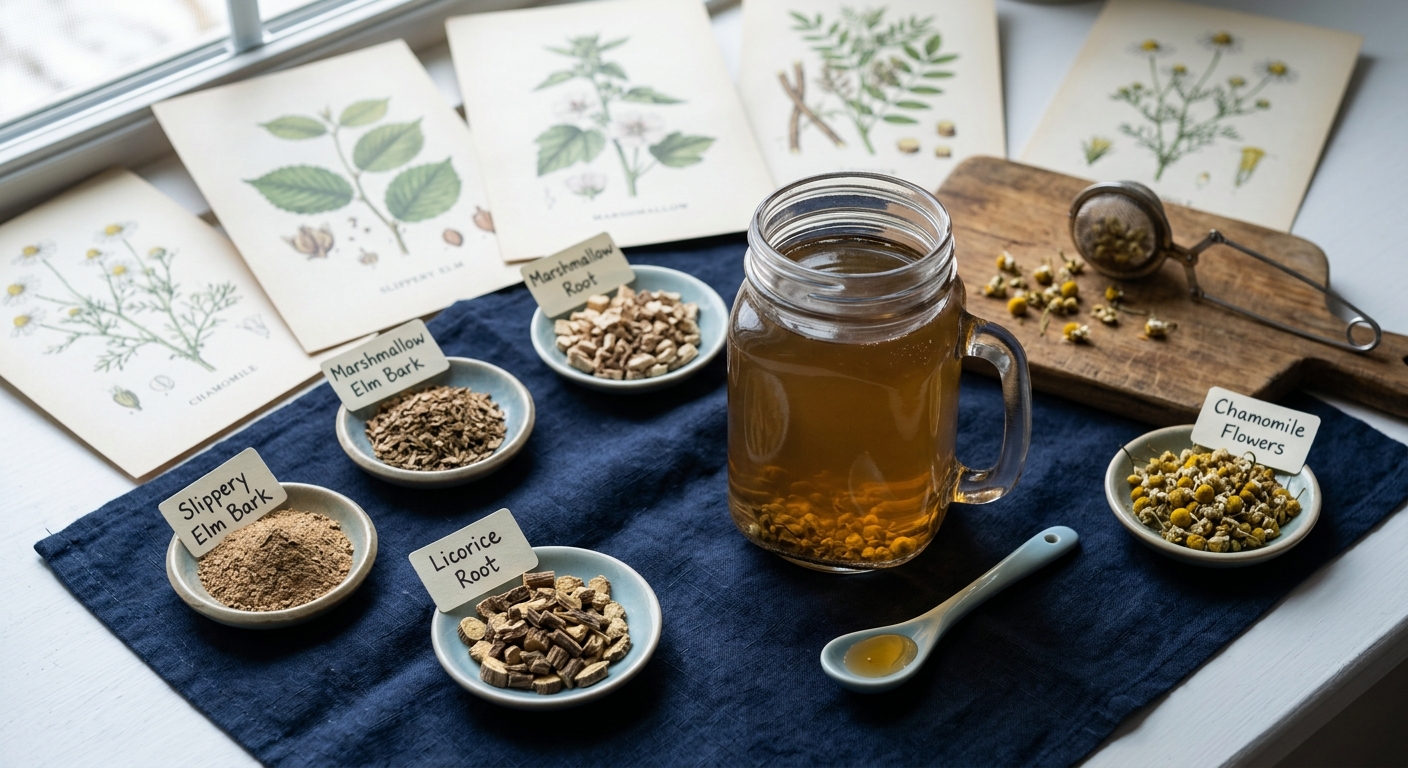
- 1 tspslippery elm bark powder or cut and sifted bark
- 1 tspdried marshmallow root (cut and sifted)
- 0.5 tspdried licorice root (cut and sifted)
- 0.5 tspdried chamomile flowers
- 480 mlwater (85°C / 185°F)
- —raw honey to taste (optional)
- —a slice of fresh ginger (optional, for added anti-inflammatory support)
How to Brew
Click on an item below to shop for the recommended items for this recipe on Amazon.
As an Amazon Associate, we earn from qualifying purchases.
- Heat filtered water to 85°C (185°F). If you do not have a temperature-controlled kettle, bring water to a boil and allow it to cool for 4 to 5 minutes before pouring.
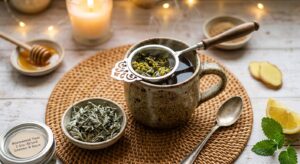
- Combine the slippery elm bark, marshmallow root, licorice root, and chamomile flowers in a tea infuser, muslin bag, or directly into a small saucepan. If using slippery elm powder, a fine mesh strainer or muslin bag is essential to prevent a gritty sediment.
- Pour the heated water over the herbs and cover the vessel immediately with a lid or a small plate to trap the volatile aromatic compounds released by chamomile and licorice.
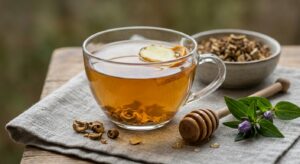
- Steep for 10 to 15 minutes, stirring gently at the midpoint. The longer steep time allows the mucilaginous compounds to fully hydrate and disperse into the liquid, giving the tea its characteristic silky texture.
- Strain thoroughly using a fine mesh strainer. If using powdered slippery elm, strain twice or pass through a muslin cloth to remove fine particles.
- Taste and add raw honey if desired. Sip slowly and mindfully, ideally 20 to 30 minutes before a meal or on an empty stomach to maximize the coating action along the full length of the digestive tract.
- Combine all dry herbs – slippery elm bark, marshmallow root, licorice root, and chamomile – in a clean glass jar. Use slightly higher quantities than the hot brew: increase marshmallow root to 1.5 teaspoons per 480 ml of water to take full advantage of the cold extraction.
- Pour room-temperature filtered water over the herbs. Do not use hot water at any point in this method, as the goal is a slow, cold extraction that preserves the most delicate polysaccharide chains intact.
- Stir the mixture gently with a long spoon to ensure all herb material is submerged and in contact with the water. Place a lid or cover on the jar.
- Allow the jar to sit at room temperature for 1 hour to begin the extraction, then transfer to the refrigerator and leave overnight for a total of 8 to 12 hours.
- The next morning, strain the tea through a fine mesh strainer lined with a muslin cloth, pressing the herb material gently to extract the maximum gel content. The resulting liquid will be noticeably more viscous and silky than a hot brew.
- Serve chilled or allow to come to room temperature before drinking. This cold brew is excellent consumed first thing in the morning on an empty stomach. Store any remaining tea in the refrigerator for up to 24 hours, shaking or stirring before each serving as the mucilage may settle.
- Place the slippery elm bark, marshmallow root, and licorice root into a small stainless steel or ceramic saucepan. Add 600 ml of cold filtered water per serving batch (the extra volume accounts for evaporation during simmering). Add chamomile at a separate stage, not during the decoction.
- Bring the water and root herbs to a very gentle simmer over low to medium-low heat, targeting 85 to 90°C (185 to 194°F). Avoid a vigorous rolling boil, which can destroy mucilaginous compounds and make the licorice root excessively bitter.
- Maintain this gentle simmer with the lid slightly ajar for 20 to 25 minutes, stirring occasionally. You will notice the liquid gradually deepening in color and taking on a slightly thicker, more viscous consistency as the mucilage releases from the root material.
- Remove the saucepan from the heat after 20 to 25 minutes. Add the dried chamomile flowers directly to the hot decoction at this stage and place the lid on firmly. Allow the chamomile to infuse in the residual heat for an additional 5 minutes. This protects chamomile’s more delicate volatile oils from evaporating during the boil.
- Strain the decoction through a fine mesh strainer, pressing the plant material firmly with the back of a spoon to capture all of the thick, gel-rich liquid. For the clearest result, double-strain through muslin.
- Allow to cool slightly to drinking temperature (around 60°C / 140°F) before serving. This concentrated decoction can also be cooled and diluted 1:1 with cold water for an iced version, or stored in the refrigerator for up to 48 hours and reheated gently before each use.
Health Benefits
The mucilaginous polysaccharides from slippery elm and marshmallow root form a physical protective gel layer over inflamed intestinal epithelium, reducing direct irritant contact and creating the conditions needed for cellular repair. A 2010 study published in the Journal of Alternative and Complementary Medicine found slippery elm significantly improved symptoms in patients with inflammatory bowel conditions, supporting its traditional use as a mucosal protectant.
Glycyrrhizin from licorice root and apigenin from chamomile work through complementary anti-inflammatory pathways, suppressing the overactive immune responses and inflammatory cytokines (including TNF-alpha and IL-6) that are commonly elevated in conditions associated with increased intestinal permeability. Deglycyrrhizinated licorice (DGL) has been specifically studied for its ability to reduce gastric and intestinal inflammation without the blood pressure side effects of whole glycyrrhizin.
The prebiotic fibers and pectin in slippery elm serve as fermentable substrates for beneficial bacteria, helping to restore microbial diversity that is frequently depleted in leaky gut conditions. A diverse, robust microbiome produces short-chain fatty acids (SCFAs) like butyrate, which directly nourish colonocytes and strengthen the tight junctions that define a healthy, intact gut barrier.
Chamomile’s antispasmodic action, primarily delivered by apigenin and chamazulene, relaxes smooth muscle throughout the gastrointestinal tract, easing the cramping, gas, and bloating that frequently accompany gut permeability issues. Licorice root compounds further inhibit gastric acid secretion, providing relief from reflux-related discomfort that often co-exists with intestinal permeability.
Marshmallow root contains both mucilaginous polysaccharides and flavonoids including kaempferol and quercetin that reduce oxidative stress on the gut lining. Research published in Complementary Medicine Research (2017) found that a standardized marshmallow root extract significantly improved symptoms of dry, irritated mucous membranes, a mechanism directly applicable to the compromised mucosal surfaces seen in leaky gut conditions.
🧪 Key Bioactive Compounds
The Science Behind Slippery Elm Bark
The science behind this leaky gut blend centers on the concept of intestinal permeability, specifically the structural integrity of tight junction proteins such as claudin, occludin, and zonula occludens-1 (ZO-1) that bind adjacent intestinal epithelial cells together. When these proteins are disrupted by chronic inflammation, dysbiosis, alcohol, NSAIDs, or psychological stress, the paracellular pathway opens and allows macromolecules to pass into systemic circulation. The mucilaginous polysaccharides in slippery elm and marshmallow root do not cross the epithelium; instead they adhere to the mucosal surface and form a protective hydrocolloid layer that reduces the direct contact between luminal irritants and the compromised epithelial surface, buying time for cellular repair mechanisms to operate. This is an ancient form of pharmaceutical rationale that modern bioadhesive drug delivery science has since formalized.
Glycyrrhizin and its metabolite glycyrrhetic acid from licorice root have been the subject of substantial pharmacological research. These compounds inhibit 11-beta-hydroxysteroid dehydrogenase, the enzyme that converts cortisol to its inactive form, producing a mild corticosteroid-like anti-inflammatory effect. More relevant to gut repair, glabridin and other licorice isoflavonoids have been shown in vitro to inhibit the NF-kB inflammatory transcription factor, reducing the production of pro-inflammatory cytokines including interleukin-1 beta, tumor necrosis factor alpha, and interleukin-6. These are precisely the cytokines that perpetuate tight junction protein degradation in conditions of chronic intestinal inflammation. Licorice also stimulates the secretion of gastric mucus, adding another layer of physical protection to complement the mucilage from slippery elm and marshmallow.
Chamomile’s contribution operates through two primary phytochemicals: apigenin, a flavone that binds to benzodiazepine receptors and reduces the stress-mediated cortisol responses that worsen gut permeability, and chamazulene, which inhibits leukotriene B4 synthesis and exerts direct antispasmodic effects on intestinal smooth muscle by blocking calcium channel activity. The prebiotic fiber content of slippery elm bark completes the mechanistic picture by providing fermentable substrates for Lactobacillus and Bifidobacterium species, whose fermentation byproducts, particularly butyrate, directly upregulate the gene expression of tight junction proteins. Together these compounds operate across multiple biological pathways simultaneously, which is precisely why traditional herbalism favored multi-herb formulas for complex conditions like gut permeability long before the concept of synergistic polypharmacy entered the scientific literature.
Brewing Tips
- Drink this tea on an empty stomach, ideally 20 to 30 minutes before your first meal of the day, to allow the mucilaginous compounds to coat the full length of the digestive tract without competing with food for contact with the mucosal surface.
- If using slippery elm in powder form, whisk it first into a small amount of cold water to form a smooth paste before adding hot water; this prevents clumping and ensures a silky, even texture throughout the tea.
- For a more targeted gut repair protocol, drink one cup in the morning before breakfast and a second cup in the evening at least two hours after your last meal, continuing consistently for a minimum of four to six weeks before evaluating results, as mucosal repair is a gradual, cumulative process.