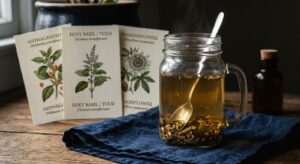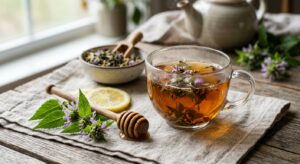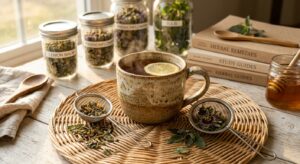
Grief is one of the most universal and least talked-about human experiences. Whether it arrives as the loss of a loved one, the end of a relationship, or the quiet mourning of a life unlived, it settles into the body as a physical weight. For centuries, herbalists across cultures have turned to specific plants to companion people through sorrow. Rose petals were strewn at funerals in ancient Rome and Persia as symbols of love continuing beyond death. Hawthorn was honored in Celtic tradition as a tree of the heart, planted at sacred thresholds between the living and the dead. Lemon balm, known to medieval monks as the “gladdening herb,” was cultivated in monastery gardens specifically to ease melancholy and nervous exhaustion.
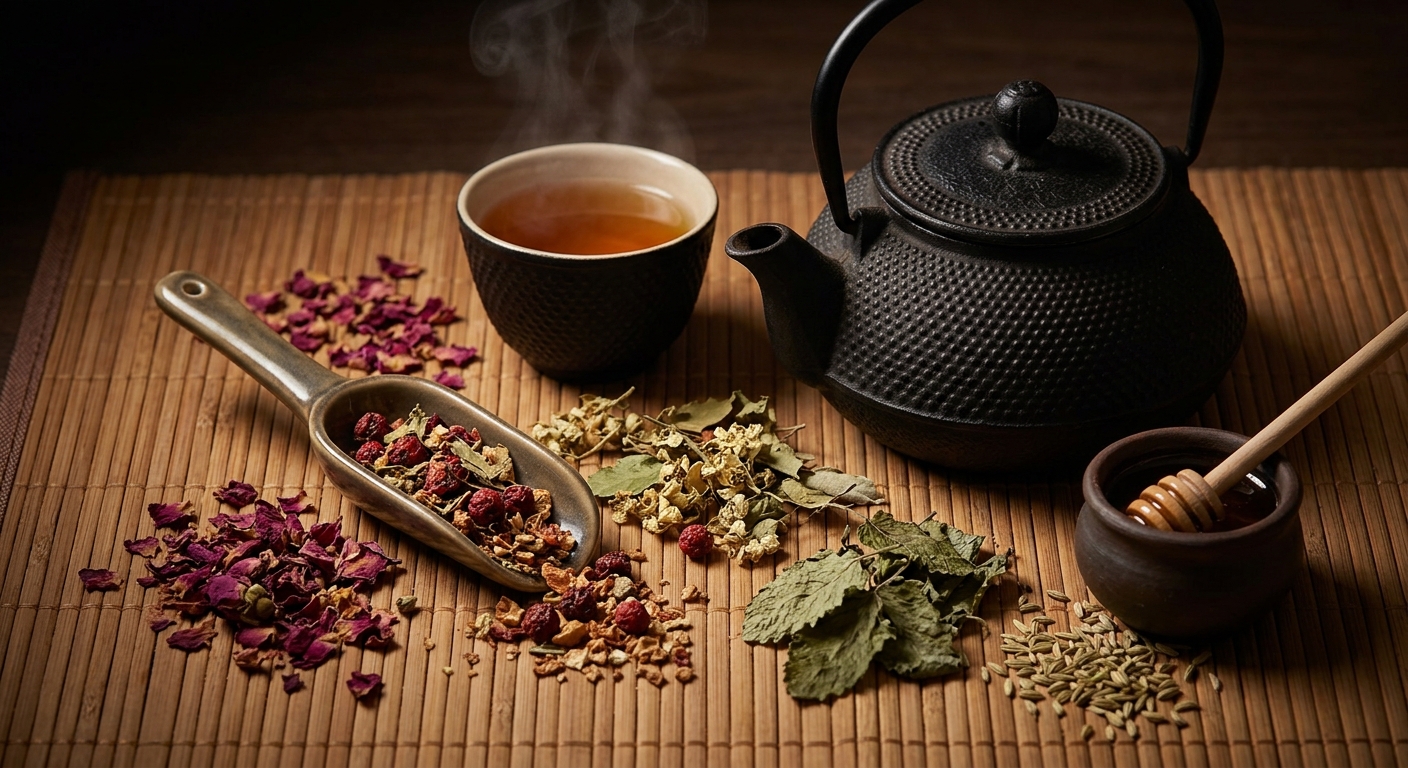
This grief support blend combines three botanicals with a long history of heart and nervous system affinity. Rose (Rosa damascena) works gently on the emotional body, offering comfort and opening a softness in the chest that grief so often closes. Hawthorn berry and flower (Crataegus monogyna) is perhaps the most physically oriented of the three, traditionally used to support cardiac function and ease the very real chest tightness that accompanies deep sorrow. Lemon balm (Melissa officinalis) rounds the blend with its nervine and anxiolytic actions, quieting the mind’s restless circling and inviting the body into gentler rest.
What makes this tea remarkable is not any single compound but the way these three plants work together. The blend is not sedating or numbing. It does not promise to make grief go away. Instead, it offers what grief truly needs: presence, softness, and a quiet companion for the long, slow work of the heart. Brew a cup when the weight feels heaviest, or as a ritual morning drink to begin each day with intention and tenderness.
2
cups
Ingredients
- 2 tspdried rose petals (Rosa damascena or Rosa centifolia)
- 1.5 tspdried hawthorn berries, lightly crushed
- 1 tspdried hawthorn flowers and leaves
- 1.5 tspdried lemon balm leaves (Melissa officinalis)
- 480 mlwater (90°C / 194°F)
- —raw honey or rose syrup to taste (optional)
- —a small pinch of dried lavender (optional, for added calm)
How to Brew
Click on an item below to shop for the recommended items for this recipe on Amazon.
As an Amazon Associate, we earn from qualifying purchases.
- Heat your water to 88 to 92°C (190 to 198°F). If you do not have a temperature-controlled kettle, bring water to a boil and let it rest off the heat for 2 to 3 minutes before pouring.
- Lightly crush the dried hawthorn berries using the back of a spoon or a mortar and pestle to open the surface and allow better extraction of their flavonoids and proanthocyanidins.
- Combine the crushed hawthorn berries, hawthorn flowers and leaves, rose petals, and lemon balm in a tea infuser, muslin bag, or teapot strainer. If using a teapot, add all herbs directly and strain when pouring.
- Pour the hot water over the herbs, cover immediately with a lid or a small plate to trap the aromatic volatile oils inside the cup. This step is especially important for rose and lemon balm.
- Steep for 7 to 10 minutes. Taste at 7 minutes. A longer steep will draw more of the hawthorn’s slightly tart, earthy depth and deepen the heart-supportive flavonoid content.
- Remove the infuser or strain through a fine mesh strainer into your cup. Stir in raw honey or rose syrup if desired. Hold the cup in both hands before drinking and let the warmth and aroma be part of the medicine.
- Measure out double the standard herb quantities per serving since cold water extracts more slowly and less efficiently than hot water. Use 4 tsp dried rose petals, 3 tsp crushed hawthorn berries and flowers combined, and 3 tsp lemon balm per 480 ml of cold filtered water.
- Place the herbs directly into a glass jar or cold brew pitcher. Pour cold filtered water over the herbs. Do not use warm or hot water. The cold extraction preserves a distinct, lighter floral and citrus-forward profile compared to hot brewing.
- Stir gently with a long spoon to ensure all herbs are submerged. Cover the jar with a lid or a piece of cloth secured with a rubber band to allow slight airflow while keeping the brew clean.
- Let the jar sit at room temperature for 30 minutes to allow the initial infusion to begin, then transfer to the refrigerator and steep for 8 to 12 hours or overnight.
- Strain through a fine mesh strainer lined with cheesecloth or a coffee filter into a clean glass. This double-straining step is important for cold brew as the slow steep can leave more fine herb particles in the liquid.
- Serve over ice or chilled in a glass. Add a small slice of fresh lemon or a few fresh rose petals for garnish. Sweeten with rose syrup or a few drops of liquid honey stirred in while still at room temperature for better incorporation.
- Measure 3 tablespoons of total herbs per 480 ml of water, using a ratio of roughly 2 parts rose petals to 1 part hawthorn berries (lightly crushed) to 1 part lemon balm. This is three times the standard single-serving amount to create a concentrated base.
- Heat 480 ml of water to 88 to 92°C (190 to 198°F). Combine all herbs in a teapot or small saucepan. Pour the hot water over the herbs, cover tightly, and steep for 15 to 20 minutes.
- Strain through a fine mesh strainer, pressing the herbs gently with the back of a spoon to extract the remaining liquid. The resulting concentrate will be a deep rose-amber color with a full, layered aroma.
- Allow the concentrate to cool to room temperature, then transfer to a clean glass jar with a tight-fitting lid. Store in the refrigerator for up to 5 days.
- To serve hot: combine 60 to 80 ml of concentrate with 160 to 180 ml of hot water or warm oat milk. Stir in honey to taste. To serve iced: pour 80 ml of concentrate over a glass of ice and top with cold water or chilled coconut water for a gentle, hydrating grief tonic.
Health Benefits
Rose petals have a centuries-long reputation as a cardiac and emotional nervine. Modern research on rose aromatic compounds such as geraniol and 2-phenylethanol shows measurable reductions in salivary cortisol and perceived anxiety, supporting the traditional use of rose as a heart-opening botanical for grief and sorrow.
Grief is not just emotional. Studies document elevated rates of cardiac events following bereavement, a phenomenon sometimes called broken heart syndrome. Hawthorn’s OPCs and vitexin have strong clinical evidence for improving cardiac output, reducing hypertension, and modulating the sympathetic nervous system overactivation that physical and emotional stress triggers.
Lemon balm has been studied in multiple randomized controlled trials and shown to significantly reduce anxiety and improve mood, particularly in combination with other calming herbs. Its rosmarinic acid content inhibits GABA transaminase, raising calming neurotransmitter levels in the brain without causing drowsiness.
Grief commonly disrupts sleep. The combined mild sedative actions of lemon balm’s apigenin and the nervous system calming of rose have been shown to improve sleep onset and reduce nighttime waking, without the dependency risk associated with pharmaceutical sleep aids.
Chronic grief elevates cortisol, contributing to immune suppression, fatigue, and cardiovascular strain. The polyphenol-rich profile of all three herbs in this blend contributes antioxidant and adaptogenic-adjacent support, helping the body manage the prolonged stress physiology of bereavement more gently.
🧪 Key Bioactive Compounds
The Science Behind Rose Petals
The science behind this grief support blend operates across several interconnected physiological systems. Lemon balm’s most studied active compound, rosmarinic acid, works by inhibiting GABA transaminase, the enzyme responsible for breaking down gamma-aminobutyric acid in the brain. GABA is the nervous system’s primary inhibitory neurotransmitter. When its breakdown is slowed, calmer, less reactive neural signaling results, which translates experientially into reduced anxiety, less mental circling, and a greater capacity to simply be present with difficult emotions. Multiple randomized controlled trials, including a notable 2014 study published in Nutrients, have confirmed lemon balm’s anxiolytic and mood-enhancing effects in human subjects.
Hawthorn’s therapeutic action is particularly relevant to grief because grief is so physically cardiac in nature. The flavone C-glycoside vitexin and the proanthocyanidin complexes found in hawthorn berries, leaves, and flowers have been extensively studied for their effects on the cardiovascular system. They work through several mechanisms: improving mitochondrial energy production in cardiac muscle cells, inhibiting the phosphodiesterase enzyme to improve coronary blood flow, and modulating the autonomic nervous system balance between sympathetic activation (the stress state) and parasympathetic restoration (the rest and digest state). A comprehensive Cochrane review of hawthorn for chronic heart failure found statistically significant improvements in exercise tolerance and reductions in fatigue, both of which map onto the physical exhaustion of grief.
Rose petals contribute to this blend primarily through their aromatic volatile compounds, particularly geraniol, citronellol, and 2-phenylethanol. Inhalation and oral ingestion studies on rose essential oil and rose water have documented measurable reductions in salivary cortisol, decreases in respiratory rate, and improvements in self-reported emotional state. The olfactory pathway is the most direct sensory route to the limbic system, the brain’s emotional processing center, which is why the aroma of rose has such an immediate and felt quality of comfort. Rose also contains apigenin, a flavonoid shared with chamomile and lemon balm, which binds to benzodiazepine receptor sites on GABA-A receptors with a gentle, non-dependency-forming action. Together, these three plants create a brew that works on neurotransmitter balance, cardiovascular tone, cortisol regulation, and the olfactory-limbic pathway simultaneously, offering the body multiple gentle entry points into a more supported state.
Brewing Tips
- Source your rose petals carefully. Only use food-grade, certified organic or spray-free petals. Most commercial roses sold in florists are treated with pesticides that are not safe for consumption. Culinary-grade Rosa damascena or Rosa centifolia petals from a reputable herb supplier are the right choice.
- Crush the hawthorn berries just before brewing rather than in advance. The seeds inside hawthorn berries contain amygdalin, a compound that, in very large quantities, can be problematic. Crushing and briefly steeping as directed is the traditional and safe preparation method, but avoid grinding the seeds to a fine powder or consuming very large quantities of the berries.
- Make this tea a ritual, not just a remedy. Grief benefits enormously from small ceremonies of self-care. Set aside a specific time each day for your cup, perhaps in the morning before the day begins its demands, or in the evening as a transition into gentler, quieter hours. The act of preparing the tea with attention is itself part of the healing.