Uterine fibroids affect an estimated 70 to 80 percent of women by the age of 50, making them one of the most common gynecological conditions worldwide. While fibroids are typically benign, the heavy bleeding, pelvic pressure, and hormonal disruption they cause can significantly impact quality of life. For centuries, women across diverse cultures have turned to specific medicinal herbs to ease these symptoms, drawing on traditions rooted in Ayurveda, Traditional Chinese Medicine, and Western herbalism. Today, a growing body of research is beginning to validate what generations of herbalists have long observed.
At the heart of this blend is red raspberry leaf, revered in European and Native American folk medicine as a premier uterine tonic. Its high tannin content helps tone the uterine muscles, while its rich mineral profile supports healthy blood production, an important consideration given the heavy menstrual bleeding fibroids often cause. Alongside it, vitex agnus-castus (also called chaste tree berry) works on the pituitary gland to gently regulate the luteinizing hormone and progesterone levels that, when imbalanced, may encourage fibroid growth. Dandelion root rounds out the trio by supporting liver detoxification, the liver being the primary organ responsible for metabolizing excess estrogen.
This is not a quick-fix tea. Hormonal herbs like vitex require consistent, long-term use over several menstrual cycles to show meaningful effects, and they work best as part of a broader wellness approach that includes a low-estrogen diet, stress management, and open communication with your healthcare provider. Think of this blend as a daily ritual of support, a warm, grounding cup that works quietly and persistently in the background of your healing journey.
2
cups
Ingredients
- 2 tspdried red raspberry leaf
- 1 tspdried vitex (chaste tree) berries, lightly crushed
- 1 tspdried dandelion root, chopped
- 500 mlwater (95°C / 203°F)
- —raw honey or blackstrap molasses to taste (optional)
- —a slice of fresh ginger (optional, for added anti-inflammatory support)
How to Brew
Click on an item below to shop for the recommended items for this recipe on Amazon.
As an Amazon Associate, we earn from qualifying purchases.
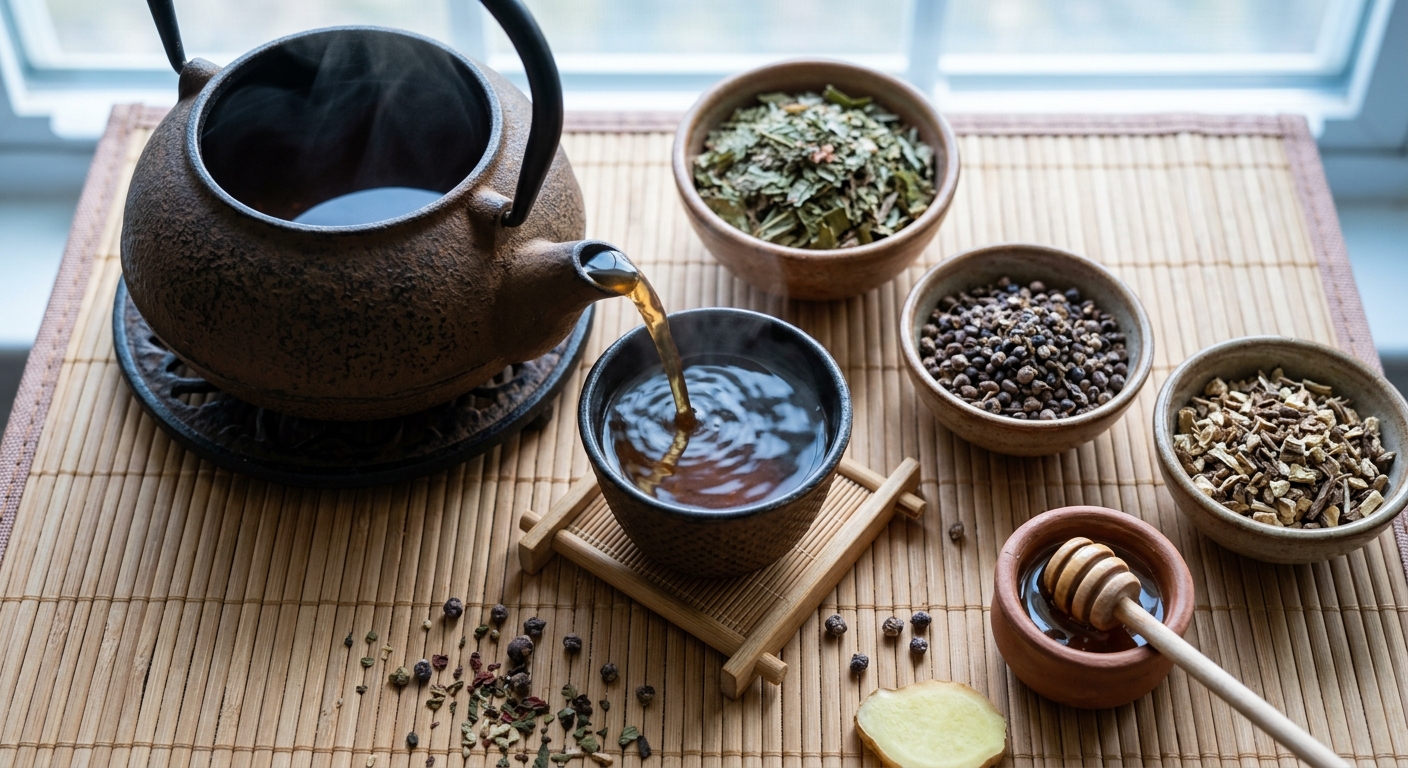
- Bring 500 ml of filtered water to 95°C (203°F). Avoid a full rolling boil, as extreme heat can degrade some of the delicate flavonoids in red raspberry leaf.
- If using whole vitex berries, place them in a small mortar and lightly crush them with a pestle to break the outer shell and expose the aromatic interior. This step meaningfully improves extraction.
- Combine the red raspberry leaf, crushed vitex berries, and dandelion root in a teapot, French press, or large tea infuser. If using fresh ginger, add one to two thin slices at this stage.
- Pour the hot water over the herbs, making sure all plant material is fully submerged. Cover with a lid or small plate to trap volatile aromatic compounds and maintain temperature.
- Steep for 10 to 15 minutes. For a stronger medicinal effect, aim for the full 15 minutes. For a lighter, more pleasant everyday cup, 10 minutes is sufficient.
- Strain thoroughly into your mug, pressing the herb bundle gently to extract remaining liquid. Sweeten with raw honey or a small spoonful of blackstrap molasses, which also provides a useful dose of iron.
- Measure out 2 teaspoons of dried red raspberry leaf, 1 teaspoon of lightly crushed vitex berries, and 1 teaspoon of dandelion root. Place all herbs directly into a clean glass jar with a tight-fitting lid.
- Pour 500 ml of cold, filtered water over the herbs. Stir gently with a long spoon to ensure all plant material is fully saturated and no dry clusters remain floating on the surface.
- Seal the jar and let it sit at room temperature for 30 minutes to begin the initial extraction, then transfer to the refrigerator.
- Steep in the refrigerator for a minimum of 8 hours, or up to 12 hours overnight. The slow, cool extraction draws out tannins and water-soluble minerals from the raspberry leaf more gently than hot water, producing a smoother, less astringent result.
- Remove from the refrigerator and strain through a fine mesh strainer or cheesecloth into a glass or pitcher, pressing the herbs to extract all remaining liquid.
- Serve over ice. Add a squeeze of fresh lemon juice or a drizzle of honey if desired. Consume within 24 hours and keep refrigerated.
- Combine 500 ml of cold filtered water with the crushed vitex berries and chopped dandelion root directly in a small saucepan. Do not add the red raspberry leaf at this stage, as prolonged boiling will damage its delicate tannins and flavonoids.
- Bring the water to a gentle simmer over medium heat, then reduce to a low simmer. Maintain a consistent low simmer for 20 to 25 minutes, allowing the harder root and berry material to fully release their bioactive compounds. The liquid will reduce slightly and deepen in color.
- Remove the saucepan from the heat. Immediately add the red raspberry leaf directly to the hot decoction liquid in the pot. Cover tightly with a lid to trap the aromatic steam.
- Allow the raspberry leaf to infuse in the residual heat of the decoction for an additional 10 minutes without returning to the heat source.
- Strain the full decoction through a fine mesh strainer or cheesecloth into a mug or teapot, pressing all plant material firmly to recover every drop of the concentrated liquid.
- Taste before sweetening. The decoction will be noticeably more potent and slightly more bitter than the hot brew. A small spoonful of blackstrap molasses works particularly well here, complementing the earthy depth while adding iron and magnesium.
Health Benefits
Estrogen dominance, a state in which estrogen levels are disproportionately high relative to progesterone, is strongly associated with fibroid development and growth. Vitex works indirectly by stimulating progesterone production and suppressing excess prolactin via the pituitary gland, while dandelion root supports hepatic estrogen clearance. Several clinical studies, including a 2013 randomized trial published in Phytomedicine, found that vitex significantly improved progesterone levels and reduced PMS severity compared to placebo.
Heavy periods are among the most debilitating symptoms of uterine fibroids. Red raspberry leaf contains high concentrations of tannins that act as astringents on uterine smooth muscle tissue, toning the uterine lining and helping to reduce excessive menstrual flow. Its significant iron and folate content also supports the replenishment of red blood cells lost through chronic heavy bleeding.
Red raspberry leaf contains fragrine, an alkaloid historically studied for its antispasmodic effects on smooth muscle, including the uterus. While human clinical trials remain limited, its long tradition of use as a uterine antispasmodic in Western herbalism is supported by in vitro research showing relaxant effects on uterine muscle tissue at specific concentrations, suggesting it may ease the intense cramping that fibroids often worsen.
The liver is the primary site for estrogen conjugation and deactivation. A sluggish liver allows estrogens to recirculate in the bloodstream at higher levels than the body can healthily manage. Dandelion root’s bitter compounds and inulin content stimulate bile flow and improve gut microbiome composition, both of which directly enhance the body’s capacity to process and excrete used hormones through the digestive tract.
Chronic low-grade inflammation in the uterine environment is increasingly recognized as a contributor to fibroid persistence and symptom severity. The quercetin and kaempferol present in this blend inhibit key pro-inflammatory enzymes including cyclooxygenase-2 (COX-2), while dandelion’s taraxacin compounds reduce inflammatory cytokine activity. Regular consumption may help dampen the inflammatory microenvironment that allows fibroid tissue to thrive.
🧪 Key Bioactive Compounds
The Science Behind Red Raspberry Leaf
The scientific case for this herbal blend centers on its multi-pronged approach to the hormonal and inflammatory drivers of fibroid growth. Uterine fibroids are estrogen-dependent tumors, meaning they grow in response to estrogen stimulation and typically shrink after menopause when estrogen levels naturally decline. The primary strategy of this blend is to address the upstream causes of estrogen excess rather than targeting the fibroids directly. Vitex achieves this through its iridoid glycosides, particularly agnuside, which act on D2 dopamine receptors in the pituitary gland to suppress prolactin release and subtly shift the hormonal balance toward progesterone. A 2017 meta-analysis in the Journal of Alternative and Complementary Medicine reviewed multiple randomized controlled trials and found vitex extract significantly more effective than placebo for improving luteal phase deficiency and reducing PMS symptoms, conditions that, like fibroids, are strongly linked to progesterone insufficiency.
Dandelion root’s contribution operates at the level of estrogen clearance rather than production. The liver processes estrogens through a two-phase detoxification process: phase I hydroxylation and phase II conjugation, after which estrogen metabolites are excreted via the bile into the digestive tract. Here, a healthy gut microbiome is critical. Bacterial beta-glucuronidase enzymes produced by dysbiotic gut flora can deconjugate estrogen metabolites, allowing them to be reabsorbed into circulation. Dandelion root’s inulin content selectively feeds beneficial bacteria that produce beta-glucuronidase inhibitors, effectively reducing this estrogen recycling loop. Its bitter sesquiterpene lactones also stimulate bile production, improving the efficiency of the liver’s estrogen packaging and excretion process.
Red raspberry leaf contributes through its rich polyphenolic tannin content, specifically ellagitannins and gallotannins, which have a documented astringent affinity for smooth muscle and mucosal tissue. While large-scale clinical trials in the context of fibroids are still lacking, a foundational in vitro study published in the Journal of Reproduction and Fertility demonstrated dose-dependent relaxant and tonic effects of raspberry leaf extract on isolated uterine tissue, supporting its traditional use as a uterine normalizer. Combined with its high concentration of quercetin and kaempferol, both of which have demonstrated anti-proliferative effects on leiomyoma (fibroid) cell lines in laboratory settings, red raspberry leaf brings both symptomatic relief and potential growth-modulating activity to this blend.
Brewing Tips
- Consistency is everything with this blend. Vitex in particular requires at minimum two to three full menstrual cycles of daily use before hormonal shifts become perceptible. Commit to one cup per day for at least 90 days before evaluating its effects.
- Time your daily cup strategically. Many herbalists recommend taking vitex-containing preparations in the morning, as this aligns with the natural circadian rhythm of pituitary hormone release. Drinking this tea first thing in the morning on an empty stomach may improve absorption of the active iridoid compounds.
- Sourcing quality matters significantly with this blend. Look for vitex berries that have been standardized to 0.5 percent agnuside content, and choose organically grown red raspberry leaf to avoid pesticide residues on a herb you will be consuming daily over months. Reputable bulk herb suppliers who provide certificates of analysis for their botanicals are worth the additional investment.