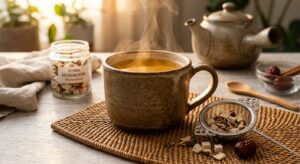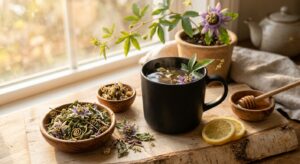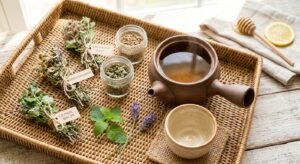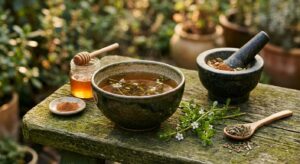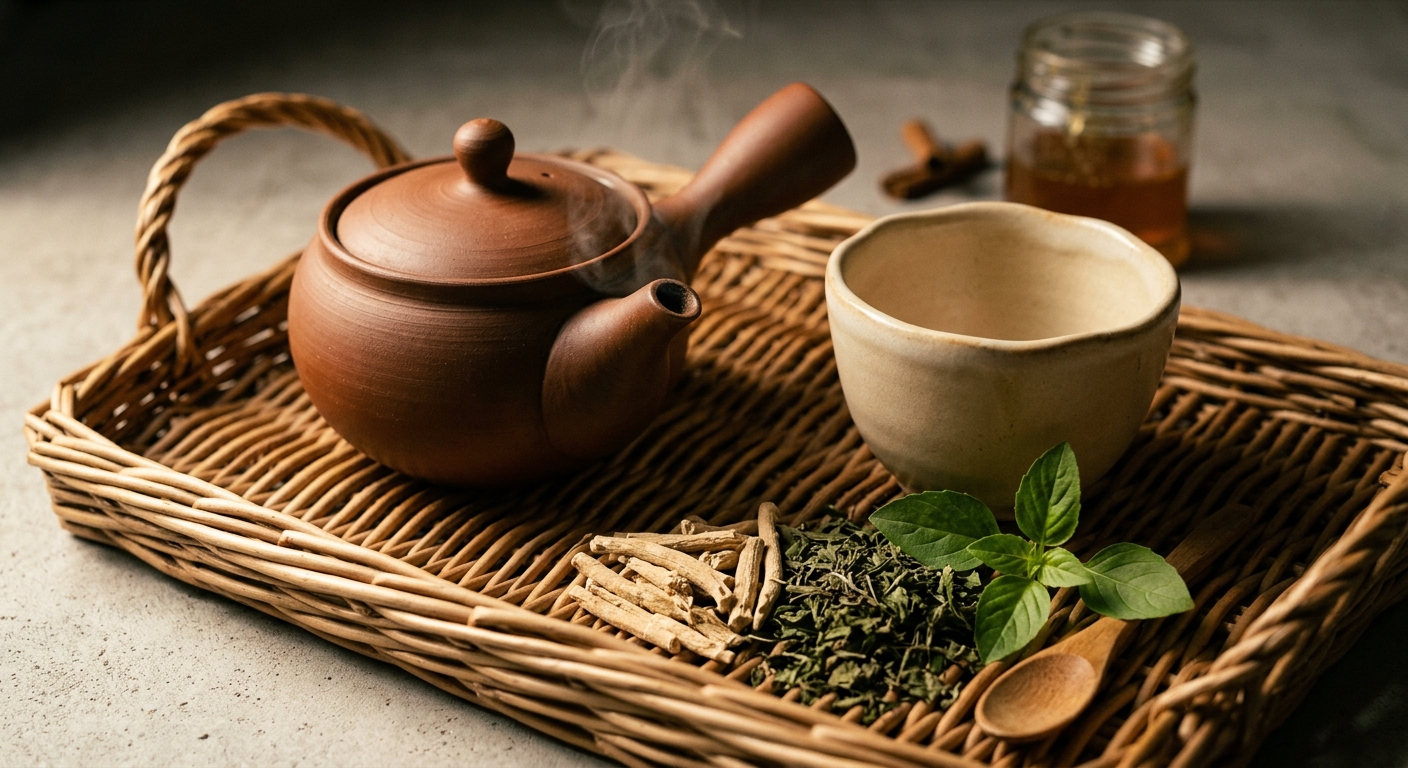
Few herbal pairings carry the depth of history and clinical respect that ashwagandha and holy basil share. Ashwagandha (Withania somnifera), whose Sanskrit name translates roughly to “smell of horse” and implies the strength and vitality it was believed to confer, has been a cornerstone of Ayurvedic medicine for over 3,000 years. Traditionally prescribed by Ayurvedic physicians to restore depleted energy, sharpen the mind, and calm an overactive nervous system, it was considered a rasayana, meaning a rejuvenating tonic meant to promote longevity and resilience. Its companion in this blend, holy basil (Ocimum tenuiflorum), known in India as Tulsi, is perhaps the most sacred plant in the Hindu tradition, often grown in temple courtyards and household gardens as both a spiritual offering and a living medicine cabinet.
What makes this pairing so compelling is not merely tradition but the way these two herbs complement each other on a biochemical level. Ashwagandha works primarily through its withanolide compounds, which modulate the hypothalamic-pituitary-adrenal (HPA) axis to lower cortisol output and buffer the body against chronic stress. Holy basil contributes its own suite of adaptogens including eugenol, rosmarinic acid, and ocimumosides, which reduce stress hormones, support the immune system, and provide a gentle uplifting clarity that prevents the blend from feeling heavy or sedating in an unpleasant way. Together, they create a tea that calms without numbing and grounds without dulling.
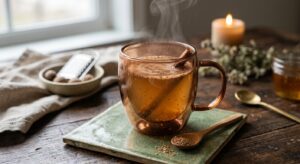
The sensory experience of this tea is warm and complex. Ashwagandha root brings an earthy, slightly bitter, and faintly horse-radish-like undertone that is mellowed beautifully by holy basil’s aromatic clove-like warmth, peppery brightness, and subtle sweetness. The result is a cup that feels grounding and ceremonial, something to sip slowly in the hour before bed or during a mindful afternoon pause. A touch of honey and a splash of warm oat milk can round out the earthiness and transform it into something that feels almost like a wellness latte.
2
cups
Ingredients
- 1 tspashwagandha root powder (or 1.5 tsp dried root pieces)
- 1.5 tspdried holy basil (Tulsi) leaf
- 480 mlwater (95°C / 203°F)
- —raw honey to taste (optional)
- —warm oat milk or whole milk to taste (optional)
- —pinch of cinnamon (optional, enhances warmth and palatability)
How to Brew
Click on an item below to shop for the recommended items for this recipe on Amazon.
As an Amazon Associate, we earn from qualifying purchases.
- Bring 480 ml of filtered water to just below a full boil, around 93 to 96°C (200 to 205°F). Ashwagandha root is woody and dense, so it needs near-boiling water to release its withanolides and other active compounds effectively.
- Add 1 tsp of ashwagandha root powder or 1.5 tsp of dried root pieces to a small saucepan or heatproof teapot. Add the 1.5 tsp of dried holy basil leaf on top.
- Pour the hot water over the herbs and cover immediately with a lid or small plate to trap the volatile aromatic oils from the holy basil. Let the blend steep for 10 minutes for powder or up to 15 minutes for root pieces.
- Strain through a fine mesh strainer or cheesecloth into your mug, pressing gently on the spent herbs to extract all liquid. Ashwagandha powder can pass through a standard infuser, so a fine strainer is important.
- Taste the tea as-is before adding anything. If the earthiness feels too strong, stir in raw honey to soften the bitterness. For a richer, more latte-like experience, add a splash of warm oat milk or whole milk and a small pinch of cinnamon. Sip slowly in the 30 to 60 minutes before bed.
- Measure 1.5 tsp of ashwagandha root powder or 2 tsp of dried root pieces into a clean glass jar along with 2 tsp of dried holy basil leaf. The slightly higher herb ratio compensates for the slower cold-water extraction.
- Pour 480 ml of cool, filtered water (room temperature, around 20 to 22°C / 68 to 72°F) over the herbs. Stir gently with a long spoon to ensure the powder is dispersed and not clumping at the bottom.
- Seal the jar and allow it to sit at room temperature for 1 to 2 hours to begin extraction, then transfer to the refrigerator and steep overnight, or for at least 10 hours and up to 14 hours.
- When ready to serve, strain well through a fine mesh strainer lined with cheesecloth, as ashwagandha powder can cloud the liquid and create a gritty texture if not filtered thoroughly. Press the herb solids to recover all liquid.
- Serve over ice in a tall glass. The cold brew has a noticeably softer, less bitter flavor than the hot version, with the holy basil’s herbal brightness coming forward. Sweeten with a small drizzle of honey dissolved in a teaspoon of warm water before adding, as honey does not dissolve easily in cold liquid.
- Add 1.5 tsp of ashwagandha root powder or 2 tsp of dried root pieces to a small saucepan. Pour in 600 ml of cold filtered water, slightly more than the final serving volume, as some water will evaporate during simmering.
- Place the saucepan over medium heat and bring to a gentle boil, then immediately reduce the heat to a low simmer. You want small bubbles, not a rolling boil, to avoid destroying heat-sensitive compounds.
- Simmer uncovered or with the lid slightly ajar for 20 to 25 minutes, stirring occasionally. You will notice the liquid deepening in color to a rich amber-brown and reducing in volume by roughly 15 to 20 percent.
- Remove from heat and add the 1.5 tsp of dried holy basil leaf directly to the hot decoction. Cover with a lid and allow the holy basil to infuse off-heat for 5 minutes. Do not simmer the holy basil, as prolonged heat will destroy its delicate volatile oils and aromatic compounds.
- Strain the decoction through a fine mesh strainer or cheesecloth into two mugs. The resulting liquid will be significantly more concentrated and richer in color than a standard hot brew. Add honey and a pinch of cinnamon or cardamom to balance the intensity, and consider diluting with a small amount of warm milk if desired. This preparation is particularly well-suited for evenings when deeper relaxation or sleep support is the goal.
Health Benefits
Ashwagandha contains triethylene glycol, a compound identified in a 2017 study published in PLOS ONE as the primary sleep-inducing component in the herb. Clinical trials have shown that standardized ashwagandha extract significantly improves sleep onset latency, total sleep time, and sleep quality scores in adults with insomnia.
Multiple randomized controlled trials have confirmed that ashwagandha supplementation reduces serum cortisol levels by 14 to 32 percent compared to placebo. Holy basil’s ocimumosides further normalize corticosterone, making this blend a dual-pathway approach to HPA axis regulation.
Both herbs demonstrate anxiolytic effects through GABA-related mechanisms. Rosmarinic acid in holy basil inhibits GABA transaminase, while withanolides in ashwagandha appear to directly modulate GABA-A receptors, producing a calming effect without the grogginess associated with pharmaceutical sedatives.
Holy basil is rich in eugenol, ursolic acid, and beta-caryophyllene, all of which possess immunomodulatory and antimicrobial properties. Ashwagandha has been shown to increase natural killer cell activity and improve markers of immune function in chronically stressed individuals, making this blend valuable during high-demand periods.
The sitoindosides in ashwagandha support acetylcholine synthesis and protect neurons from stress-induced oxidative damage. A 2017 double-blind trial found that ashwagandha root extract significantly improved immediate and general memory, executive function, and processing speed after 8 weeks of daily use.
🧪 Key Bioactive Compounds
The Science Behind Ashwagandha
The adaptogenic effects of ashwagandha are primarily attributed to its withanolide family of steroidal lactones, of which over 40 have been identified in the plant’s root. The most studied, Withaferin A and Withanolide D, work through multiple overlapping pathways. They suppress the stress-sensing NF-kB signaling cascade, reduce the expression of heat shock proteins involved in the cortisol stress response, and appear to modulate GABAergic neurotransmission by binding to or sensitizing GABA-A receptors. This multi-pronged mechanism explains why ashwagandha produces observable effects on both the physiological stress response (measurable cortisol reduction) and the psychological experience of anxiety (reduced worry, improved mood) simultaneously. A particularly significant finding came from a 2021 study published in Medicine, which confirmed that 600 mg of ashwagandha root extract daily for 8 weeks produced statistically significant reductions in perceived stress, cortisol, blood pressure, and fasting blood glucose compared to placebo.
Holy basil operates through a complementary set of biochemical actions. Its most pharmacologically active constituents, eugenol, rosmarinic acid, and the flavonoid glycosides ocimumosides A and B, each contribute distinct benefits. Rosmarinic acid has been shown to inhibit GABA transaminase, the enzyme responsible for breaking down GABA in the synapse, thereby extending the availability of this inhibitory neurotransmitter and producing measurable anxiolytic effects. Eugenol functions as a selective COX-2 inhibitor, reducing neuroinflammation that can contribute to anxiety and disrupted sleep architecture. The ocimumosides normalize elevated corticosterone and blood sugar during stress via hypothalamic regulation, providing a complementary top-down approach to the more peripheral mechanism of ashwagandha’s withanolides.
When these two herbs are combined in a tea, their bioactive compounds act synergistically across the HPA axis stress cascade and the GABAergic sleep-wake system. Ashwagandha lowers the upstream output of cortisol at the adrenal level, while holy basil helps normalize the hypothalamic signaling that initiates that cortisol response in the first place. Meanwhile, both herbs independently support GABA availability through different enzymatic pathways, producing a compounding calming effect that is gentler and more balanced than either herb delivers alone. The tea form, while delivering lower concentrations than standardized extracts used in clinical trials, still provides meaningful amounts of these compounds with consistent daily use, particularly when prepared via decoction, which maximizes extraction of the root’s dense withanolide content.
Brewing Tips
- If you find ashwagandha’s earthy bitterness too pronounced, try toasting the root powder in a dry pan over low heat for 60 to 90 seconds before brewing. This caramelizes some of the bitter compounds and adds a pleasant nutty warmth to the flavor.
- For consistent adaptogenic benefits, both ashwagandha and holy basil work best when consumed regularly over several weeks rather than occasionally. Consider preparing a larger batch of the cold brew concentrate (doubling the herb ratio) and storing it in the refrigerator for up to 3 days to make daily brewing easier.
- Source matters significantly with ashwagandha. Look for root-only powder or root pieces from reputable suppliers, as some commercial products use leaf and stem material, which contains much lower concentrations of the beneficial withanolides. KSM-66 and Sensoril are two standardized root extract tradenames that indicate reliable withanolide concentration.