Long before digestive enzyme supplements lined pharmacy shelves, herbalists across Asia, Europe, and the Americas were reaching for a familiar trio of plants to ease the discomfort that follows a heavy, protein-rich meal. Ginger root has been used in Ayurvedic and Traditional Chinese Medicine for over 2,000 years as a carminative and digestive stimulant, prized for its ability to warm the stomach and encourage the secretion of digestive juices. Fennel seed, a staple of Mediterranean folk medicine, was traditionally given to relieve gas and cramping after meals, while dandelion root was brewed by European herbalists as a bitter tonic to stimulate bile flow and liver function. Together, these three herbs form a thoughtful, evidence-supported blend aimed at one of digestion’s most demanding tasks: breaking down dietary protein.
Protein digestion is a multi-stage process that begins in the stomach with hydrochloric acid and pepsin, continues in the small intestine with pancreatic proteases, and depends on adequate bile flow to process the fats that accompany most protein-rich foods. When any one of these stages lags, the result is familiar: a feeling of heaviness, uncomfortable fullness, gas, and bloating. The herbs in this blend work synergistically to address several of those stages at once. Ginger promotes gastric motility and has been shown to stimulate protease activity, fennel relaxes smooth muscle in the intestinal tract to reduce gas and cramping, and dandelion root acts as a cholagogue, stimulating bile production in the liver and its release from the gallbladder.
This tea carries a bold, layered flavor that matches its functional character. The spicy warmth of ginger forms the backbone, softened by the sweet anise notes of fennel and grounded by the pleasantly bitter earthiness of roasted dandelion root. It is the kind of cup that feels medicinal in the best sense of the word, warming you from the inside out while quietly getting to work. Enjoyed 15 to 30 minutes before a meal or within an hour after one, this blend can become one of the most practical and satisfying rituals in your herbal toolkit.
2
cups
Ingredients
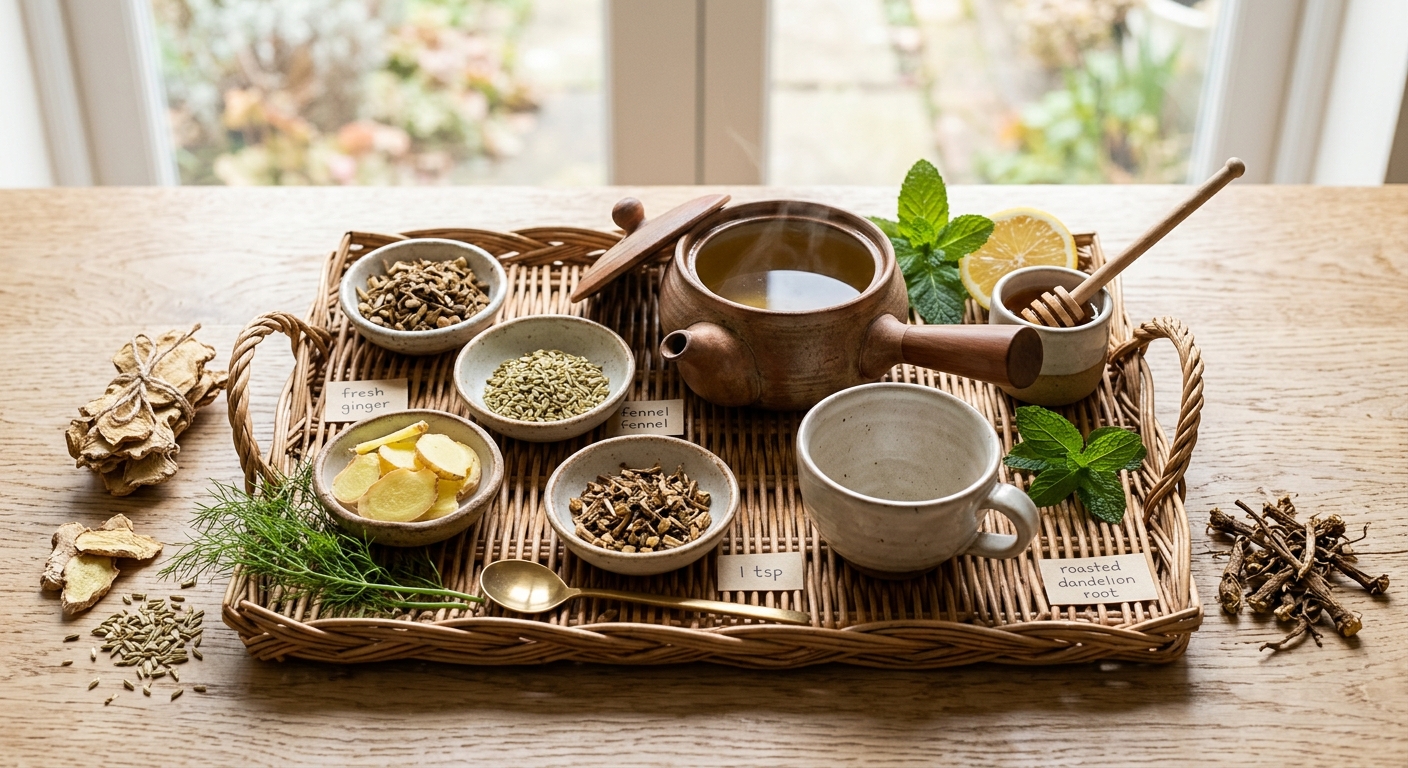
- 2 tspfresh ginger root, thinly sliced (or 1 tsp dried)
- 1 tspfennel seeds, lightly crushed
- 1 tsproasted dandelion root, chopped
- 500 mlwater (95°C / 203°F for hot brew)
- —raw honey or a slice of lemon to taste (optional)
How to Brew
Click on an item below to shop for the recommended items for this recipe on Amazon.
As an Amazon Associate, we earn from qualifying purchases.
- Add 500 ml of cold water to a small saucepan. Add the sliced ginger root and chopped dandelion root directly to the water.
- Bring the water to a gentle boil over medium heat, then reduce to a low simmer. Simmer the roots for 8 to 10 minutes with the lid on to preserve volatile oils.
- After 8 minutes, add the crushed fennel seeds to the simmering pot. Replace the lid and continue simmering for a further 3 to 5 minutes.
- Remove the pan from heat and allow the blend to rest for 2 minutes. This allows the temperature to drop slightly and the fennel’s aromatic compounds to infuse gently without burning off.
- Pour the liquid through a fine mesh strainer into two warmed mugs. Discard the spent herbs.
- Add a slice of lemon or a small amount of raw honey if desired. Drink while warm, ideally 15 to 30 minutes before a protein-rich meal or within one hour of eating.
- Combine 2 tsp sliced fresh ginger, 1 tsp lightly crushed fennel seeds, and 1 tsp chopped dandelion root in a clean glass jar.
- Pour 500 ml of cold, filtered water over the herbs. Stir gently with a spoon to ensure the herbs are fully submerged.
- Seal the jar with a lid or cover tightly with reusable wrap. Leave at room temperature for 1 hour to allow initial extraction, then transfer to the refrigerator.
- Steep overnight for a total of 10 to 12 hours. The dandelion root and ginger will gradually release their compounds into the cold water, producing a clear, lightly golden infusion.
- Strain the liquid through a fine mesh strainer or cheesecloth into a clean bottle or pitcher. Press the herbs gently to release remaining liquid.
- Serve over ice in tall glasses. Add a squeeze of fresh lemon juice to brighten the flavor. Store any remaining tea in the refrigerator and consume within 48 hours.
- Use double the standard herb quantities: 4 tsp fresh ginger slices, 2 tsp crushed fennel seeds, and 2 tsp chopped dandelion root. Add these to a small saucepan with 500 ml of cold water.
- Bring to a full boil over medium-high heat, then reduce to a steady low simmer. Simmer uncovered for 20 to 25 minutes, allowing the liquid to reduce by approximately one third. You should be left with roughly 300 to 350 ml of concentrated liquid.
- In the final 5 minutes of simmering, press the softened ginger slices with the back of a spoon against the side of the pan to release additional juice and volatile compounds.
- Remove from heat and cool for 5 minutes. Strain through a fine mesh strainer lined with cheesecloth into a clean glass measuring jug, pressing the herbs firmly.
- If desired, stir in 1 tablespoon of raw apple cider vinegar while still warm. This adds acetic acid, which further supports stomach acid production and acts as a natural preservative.
- Transfer the concentrate to a small glass bottle with a lid. To serve, dilute 60 to 80 ml of concentrate in 180 ml of warm water. Drink one serving 20 minutes before a high-protein meal.
Health Benefits
Ginger has been shown in multiple studies to enhance the activity of pancreatic lipase and protease enzymes, which directly break down fats and proteins in the small intestine. A 2015 study in the European Journal of Pharmacology confirmed that 6-gingerol stimulates gastric enzyme output, making this blend particularly effective before high-protein meals.
Fennel seed is one of the most well-studied carminative herbs in European phytotherapy, with clinical trials demonstrating its ability to reduce intestinal gas production and ease cramping. Anethole and fenchone relax the smooth muscle lining of the gut, allowing trapped gas to move and dissipate more comfortably.
Dandelion root acts as a cholagogue, a substance that stimulates the liver to produce bile and encourages the gallbladder to release it into the small intestine. Bile is essential for emulsifying dietary fats, which in turn allows fat-soluble vitamins from protein-rich foods like meat and eggs to be properly absorbed.
Slow gastric emptying, a condition called gastroparesis in its clinical form, is a common cause of post-meal discomfort and a sense of prolonged fullness. Clinical research has shown that ginger accelerates gastric emptying in healthy adults, with one controlled trial finding that 1.2 grams of ginger reduced gastric emptying time by 25 percent.
Inulin from dandelion root is a well-characterized prebiotic fiber that selectively feeds beneficial bacteria in the colon, particularly Lactobacillus and Bifidobacterium species. A balanced gut microbiome contributes to more consistent digestive function, reduced inflammation, and better tolerance of high-protein diets over time.
🧪 Key Bioactive Compounds
The Science Behind Ginger Root
The science behind this protein digestion blend centers on its ability to intervene at multiple stages of the digestive cascade simultaneously. Ginger’s phenolic compounds, particularly 6-gingerol and its heat-converted form 6-shogaol, have been shown in peer-reviewed research to exert a prokinetic effect on the stomach, meaning they accelerate the muscular contractions that move food through the digestive tract. A randomized controlled trial published in the European Journal of Gastroenterology and Hepatology found that participants who consumed ginger before a meal showed significantly faster gastric emptying compared to a placebo group. Crucially for protein digestion, ginger also appears to enhance the secretion of trypsin and chymotrypsin, two proteolytic enzymes produced by the pancreas that are responsible for cleaving peptide bonds in partially digested proteins in the small intestine.
Fennel’s contribution to the blend is primarily through its volatile oil fraction, dominated by anethole and fenchone. These compounds act as smooth muscle relaxants in the gastrointestinal tract, a mechanism supported by in vitro and animal studies showing that fennel extracts reduce spontaneous muscle contractions in intestinal tissue. In practical terms, this means less cramping, less gas pressure, and more comfortable passage of digesta. Fennel has also demonstrated mild antimicrobial properties against certain gas-producing gut bacteria, which may explain part of its traditional reputation as a flatulence remedy in Mediterranean and Middle Eastern folk medicine. A 2016 systematic review in the Journal of Ethnopharmacology confirmed its traditional use as a carminative is well-supported by available evidence.
Dandelion root brings a distinct and complementary mechanism to the blend through its bitter sesquiterpene lactones, taraxacin and taraxacerin. These compounds activate bitter taste receptors not only on the tongue but also in the gastrointestinal tract itself, triggering a reflexive increase in the secretion of digestive juices from the stomach, pancreas, and liver. The liver response is particularly significant: dandelion root has been classified as a cholagogue and choleretic herb, meaning it both increases bile production in liver cells and stimulates the gallbladder to release stored bile into the duodenum. Since bile is essential for emulsifying the dietary fats that accompany nearly every protein-rich food, this mechanism directly improves the absorption of fat-soluble nutrients such as vitamins A, D, E, and K from meals containing meat, fish, eggs, or legumes. Dandelion’s inulin content adds a further long-term benefit by supporting a diverse and stable gut microbiome, which increasingly appears to influence overall digestive efficiency and immune regulation.
Brewing Tips
- Crush the fennel seeds with a mortar and pestle just before brewing, rather than using pre-ground fennel. Freshly crushed seeds release significantly more volatile aroma compounds, including anethole, making the tea noticeably more fragrant and therapeutically potent.
- For the strongest digestive effect, drink this tea 15 to 20 minutes before a high-protein meal rather than after. Pre-stimulating bile secretion and enzyme production means your digestive system is primed and ready when the protein arrives, reducing the likelihood of post-meal discomfort.
- Use fresh ginger root rather than dried whenever possible for the hot brew and concentrate methods. Fresh ginger is richer in 6-gingerol, while dried ginger skews toward shogaols. Both are beneficial, but fresh ginger produces a brighter, more pungent flavor and a stronger prokinetic effect for meal preparation.