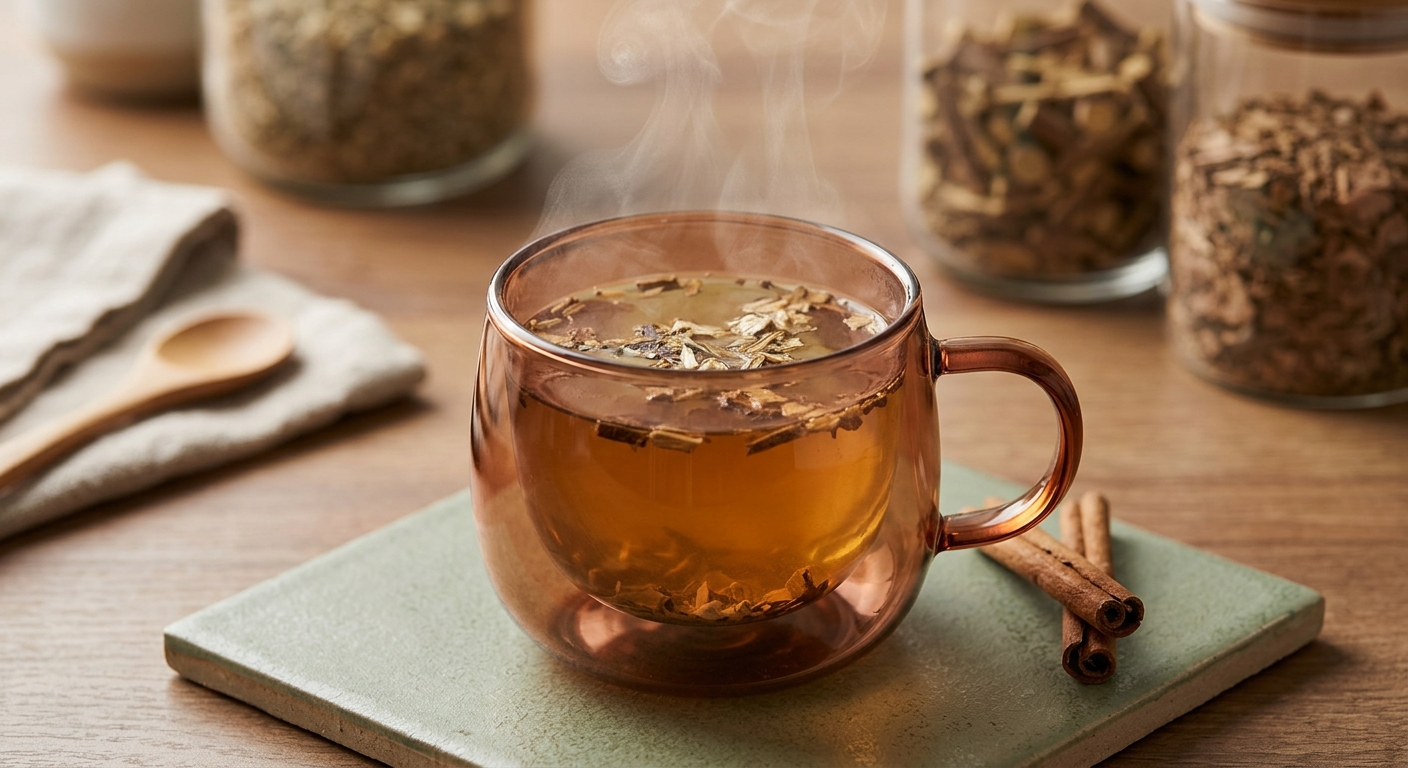
Antibiotics are one of modern medicine’s greatest achievements, but they come at a cost to the gut. A single course of broad-spectrum antibiotics can wipe out hundreds of bacterial species in the microbiome, leaving the intestinal lining inflamed, permeable, and vulnerable to opportunistic microbes like Clostridioides difficile and Candida. For centuries before pharmaceutical intervention, herbalists from North American Indigenous traditions, European folk medicine, and Ayurveda independently arrived at the same group of plants to heal a wounded digestive tract: mucilaginous, demulcent roots and barks that coat, soothe, and feed the gut from within.
This Post-Antibiotic Gut Restore Tea draws on three of the most well-studied demulcent herbs available: slippery elm (Ulmus rubra), marshmallow root (Althaea officinalis), and licorice root (Glycyrrhiza glabra). Slippery elm’s inner bark has been used by the Cherokee and Iroquois peoples for generations as a food and medicine for digestive complaints. Marshmallow root appears in ancient Egyptian, Greek, and Arabic medical texts as a remedy for inflammation of the mucous membranes. Licorice root, revered in Traditional Chinese Medicine as the great harmonizer, has been prescribed for stomach ulcers and intestinal inflammation for over 3,000 years. Together they form a tea that is less a stimulating beverage and more a medicinal meal for a healing gut.
What makes this blend particularly suited to post-antibiotic recovery is its prebiotic potential alongside its demulcent action. The mucilaginous polysaccharides in slippery elm and marshmallow root are fermentable fibers that surviving beneficial bacteria, such as Lactobacillus and Bifidobacterium species, can metabolize into short-chain fatty acids. This means the tea does not just soothe the lining; it actively feeds the organisms you want to rebuild. Licorice root’s glycyrrhizin and flavonoids add antimicrobial pressure against pathogens while supporting the mucosal immune barrier, making every warm cup a targeted intervention for a gut that has been through a war.
2
cups
Ingredients
- 2 tspslippery elm inner bark powder or cut-and-sifted bark
- 2 tspdried marshmallow root (cut and sifted)
- 1 tspdried licorice root (cut and sifted)
- 500 mlwater (filtered)
- —a pinch of ground cinnamon (optional, adds warmth and antimicrobial support)
- —raw honey to taste (optional, preferably Manuka for extra antimicrobial benefit)
How to Brew
Click on an item below to shop for the recommended items for this recipe on Amazon.
As an Amazon Associate, we earn from qualifying purchases.
- Measure 500 ml of filtered water into a small saucepan. Add the marshmallow root and licorice root directly to the cold water. Place over medium-low heat and bring slowly to a gentle simmer (small bubbles breaking the surface, around 88 to 90°C). Allow the roots to simmer uncovered for 10 minutes. This gentle decoction draws out the deep-root constituents including glycyrrhizin, inulin, and mucilaginous starches.
- After 10 minutes, remove the saucepan from heat. Add the slippery elm bark powder or cut bark directly to the hot liquid. If using powder, whisk immediately and vigorously to prevent clumping. Cover the saucepan with a lid or plate to trap volatile aromatic compounds.
- Allow the blend to steep covered for an additional 8 to 10 minutes off the heat. The liquid will thicken noticeably, particularly if you used slippery elm powder. This viscosity is the mucilage at work and is a sign of a well-made batch.
- Strain through a fine-mesh strainer lined with cheesecloth into two mugs, pressing the spent herb mass gently to extract all liquid. The tea will be silky and slightly syrupy in texture. Add a pinch of cinnamon and raw honey if desired. Drink warm, ideally 30 minutes before a meal or just before bed.
- Place the marshmallow root, licorice root, and slippery elm bark (use cut-and-sifted bark rather than powder for cold brew, as powder becomes extremely difficult to strain after long cold steeping) into a clean glass jar with a lid. Pour 500 ml of room-temperature filtered water over the herbs.
- Stir gently with a long spoon to ensure all the herb material is submerged. Place a small plate on top of any floating herb pieces to keep them below the waterline. Seal the jar loosely and leave at room temperature for the first 2 hours to allow initial extraction to begin.
- After 2 hours, transfer the sealed jar to the refrigerator. Allow to steep for a further 6 to 10 hours, or overnight. The liquid will become noticeably silkier and more viscous as the cold water slowly draws out the polysaccharide mucilage.
- Strain through a fine-mesh strainer lined with two layers of cheesecloth, pressing very gently on the herbs. Over-pressing can force fine plant particles through the cloth. Pour the strained liquid into two glasses over ice or drink at refrigerator temperature. Add a thin slice of fresh ginger for a cooling digestive kick. Cold brew keeps refrigerated for up to 48 hours.
- If the texture feels too thick or gel-like, dilute with a small amount of cold filtered water. This is simply a high-mucilage batch and is therapeutically beneficial, not a flaw.
- Double the herb quantities: use 4 tsp slippery elm bark, 4 tsp marshmallow root, and 2 tsp licorice root. Combine all herbs with 750 ml of cold filtered water in a medium saucepan. Allow to soak cold for 20 minutes before applying any heat. This cold-soak pre-extraction pulls out mucilage before heat is introduced.
- Place the saucepan over medium-low heat. Bring very slowly to a gentle simmer, stirring occasionally. Never allow a full rolling boil. Maintain a gentle simmer with the lid slightly ajar and allow the liquid to reduce by approximately half over 25 to 30 minutes. The goal is 350 to 400 ml of finished liquid from 750 ml starting water.
- Remove from heat and allow to cool slightly for 5 minutes, then strain through a fine-mesh strainer lined with cheesecloth into a clean glass measuring jug. Press the herb mass firmly this time, as you want maximum yield from the concentrate. Discard the spent herbs.
- While still warm, stir in 2 tablespoons of raw honey or Manuka honey until fully dissolved. The honey acts as a mild preservative and adds prebiotic fructooligosaccharides. Pour the concentrate into a sterilized amber glass bottle or small mason jar.
- Store refrigerated for up to 7 days. To serve, stir 1 to 2 tablespoons of concentrate into 200 to 250 ml of warm (not boiling) water or warm oat milk. Drink 2 to 3 times daily with meals during the post-antibiotic recovery period.
Health Benefits
The mucilaginous polysaccharides from slippery elm and marshmallow root physically coat the intestinal epithelium, reducing permeability and inflammation caused by antibiotic-disrupted microbiota. Research on slippery elm in inflammatory bowel conditions has shown significant improvements in bowel habit and gut permeability markers.
The arabinogalactans in marshmallow root and the pectin in slippery elm are fermentable fibers that serve as food for surviving Lactobacillus and Bifidobacterium colonies. A 2010 study published in the European Journal of Clinical Nutrition found arabinogalactan supplementation significantly increased populations of beneficial gut bacteria within two weeks.
Glycyrrhizin from licorice root inhibits the NF-kB inflammatory pathway, one of the primary drivers of gut inflammation following microbial disruption. Combined with the flavonoids in all three herbs, this blend provides multi-pathway anti-inflammatory activity specifically relevant to antibiotic-damaged gut tissue.
Licorice root’s compounds stimulate goblet cells in the intestinal lining to increase mucin secretion, rebuilding the protective mucus layer that antibiotics often deplete. A thicker mucus layer is the gut’s first line of defense against pathogens and irritants, and its restoration is a critical step in post-antibiotic recovery.
Nausea, cramping, bloating, and loose stools are common side effects of antibiotic use, driven by both the drugs themselves and microbiome disruption. The demulcent and antispasmodic properties of this three-herb blend act on both the cause (inflammation, permeability) and the symptoms (smooth muscle cramping, irritation), offering measurable relief within the first few days of use.
🧪 Key Bioactive Compounds
The Science Behind Slippery Elm
The gut lining is a single layer of epithelial cells separated from the intestinal contents by a mucus barrier produced by specialized goblet cells. Antibiotics disrupt this system in two interconnected ways: they alter microbial signaling that regulates goblet cell activity, thinning the protective mucus layer, and they trigger low-grade intestinal inflammation that increases epithelial permeability, a state commonly referred to as ‘leaky gut.’ The mucilaginous polysaccharides in slippery elm (Ulmus rubra) and marshmallow root (Althaea officinalis) address the immediate physical consequence of this disruption by forming a hydrophilic gel on contact with the aqueous environment of the gut lumen. This gel mimics and supplements the thinned mucus layer, physically protecting the epithelium while the body’s own repair mechanisms, primarily driven by butyrate-producing bacteria and growth factors like epidermal growth factor, work to restore barrier integrity.
The prebiotic dimension of this tea is equally important and often overlooked. Arabinogalactans, a class of long-chain polysaccharides found abundantly in marshmallow root, pass through the stomach and small intestine largely intact and reach the colon, where they are selectively fermented by beneficial bacterial species including Lactobacillus acidophilus, Bifidobacterium longum, and Faecalibacterium prausnitzii. These bacteria produce short-chain fatty acids, particularly butyrate, as fermentation byproducts. Butyrate is the primary energy source for colonocytes (colon lining cells) and is a potent regulator of the tight junction proteins that hold intestinal epithelial cells together. Low butyrate production, an almost universal consequence of post-antibiotic microbiome disruption, is directly linked to increased intestinal permeability. By feeding butyrate-producing bacteria, the arabinogalactans in this tea help restore the very mechanism that rebuilds the gut barrier from the inside.
Licorice root’s primary bioactive compound, glycyrrhizin, contributes a third mechanism: modulation of the mucosal immune system. The gut-associated lymphoid tissue (GALT) is the largest immune organ in the body and is heavily dependent on a healthy microbiome for appropriate calibration. Post-antibiotic dysbiosis frequently leads to a state of low-grade immune activation in the gut wall, perpetuating inflammation even after the antibiotic course ends. Glycyrrhizin inhibits the enzyme 11-beta-hydroxysteroid dehydrogenase, potentiating the anti-inflammatory activity of endogenous cortisol, and it directly suppresses the NF-kB pathway, reducing the production of pro-inflammatory cytokines including interleukin-6 and tumor necrosis factor-alpha in intestinal tissues. This layered pharmacology makes the combination of slippery elm, marshmallow root, and licorice root a genuinely synergistic formula rather than simply three mildly soothing herbs in the same cup.
Brewing Tips
- Begin drinking this tea on the last day of your antibiotic course rather than waiting until after it ends. The mucilage will not interfere with the antibiotics if you take the tea at least two hours after your dose, and starting early gives the prebiotic compounds more time to work before beneficial bacteria populations have declined to their lowest point.
- Use cut-and-sifted herb forms rather than powders for any method that requires straining; powders produce a far more viscous liquid that is difficult to strain cleanly and can result in a gritty texture. Reserve slippery elm powder for the hot brew method only, where whisking ensures smooth incorporation.
- The slightly thick, gel-like texture of this tea is not a defect but a sign of effective mucilage extraction. If the texture is unfamiliar or unpleasant, dilute with additional warm water rather than reducing steep time, as shorter steeping extracts fewer of the therapeutic polysaccharides that make this blend effective.