Long before chai became a fixture on coffee shop menus, it was brewed in clay pots across the Indian subcontinent as a daily ritual of nourishment and connection. The word ‘chai’ simply means tea in Hindi, but ‘masala chai’ refers to the spiced preparation that has roots in Ayurvedic medicine stretching back over 5,000 years. Ancient Ayurvedic texts describe many of its key spices, including cardamom, ginger, and clove, as powerful rasayanas – substances that revitalize the body and calm the mind. Each family and region in India has its own treasured recipe, passed down through generations, making masala chai one of the most personal and culturally rich beverages in the world.
What makes this blend particularly well suited to stress relief is not any single ingredient, but the synergy of the whole. Black tea provides a gentle caffeine lift balanced by its naturally occurring L-theanine, which prevents the jittery edge often associated with coffee. The spices, particularly cardamom and ashwagandha when included, interact with cortisol pathways and the nervous system in ways that modern research is only beginning to fully understand. Ginger calms the gut, which is deeply connected to mood through the gut-brain axis, while cinnamon steadies blood sugar spikes that can trigger anxiety. The ritual of preparing and sipping a warm cup is itself a form of mindfulness.
This guide focuses on a calming masala chai variation, leaning into cardamom and ginger while keeping the black pepper subtle. The result is a tea that is warming, deeply aromatic, mildly spicy, and genuinely grounding. Whether you brew it on the stovetop in the traditional Indian style or steep it cold for a summer afternoon, this is a cup that meets you where you are and brings you home to your senses.
2
cups
Ingredients
- 2 tsploose-leaf Assam or Darjeeling black tea
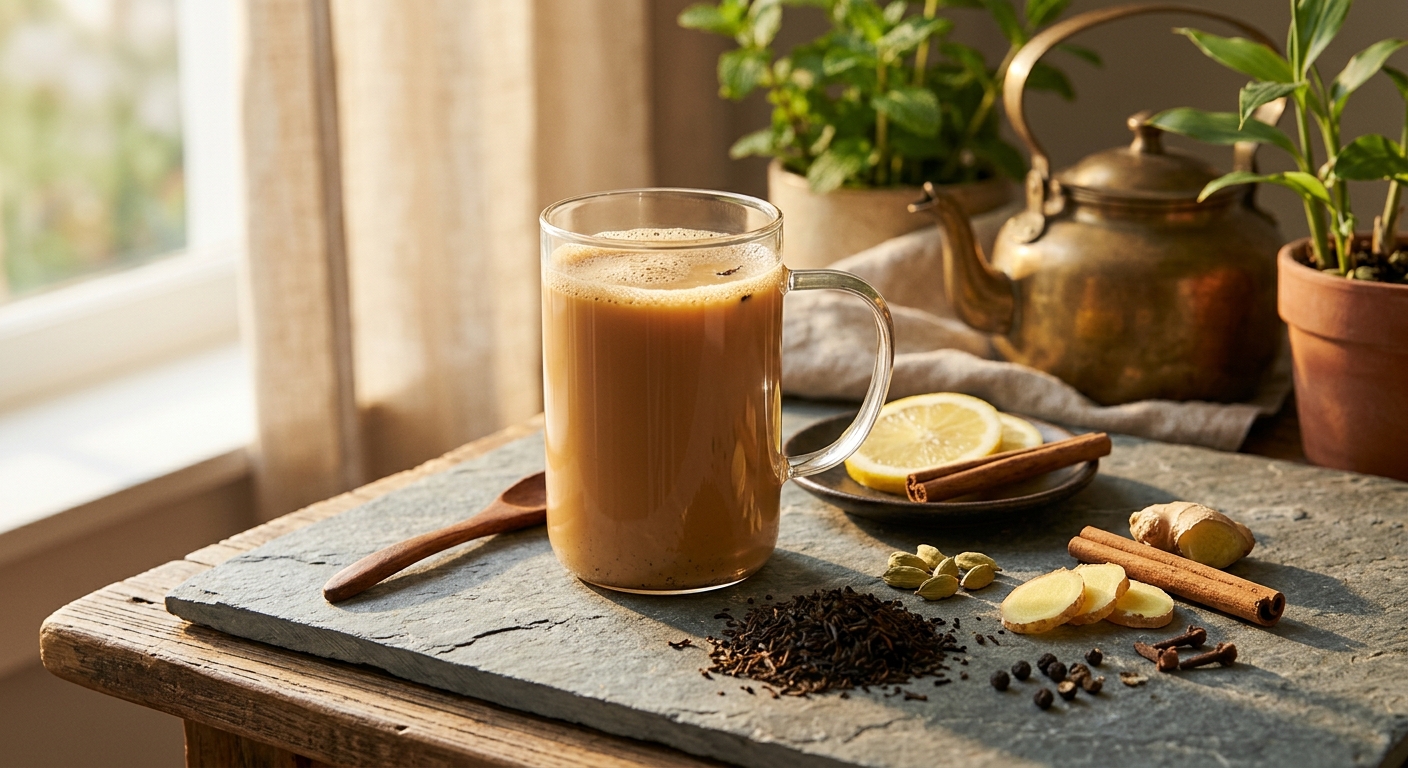
- 6 podsgreen cardamom, lightly crushed
- 1 inchfresh ginger root, sliced thin
- 1 stickcinnamon (Ceylon preferred)
- 4 wholecloves
- 6 wholeblack peppercorns, cracked
- 240 mlfiltered water
- 240 mlwhole milk or oat milk
- —jaggery, coconut sugar, or raw honey to taste (optional)
How to Brew
Click on an item below to shop for the recommended items for this recipe on Amazon.
As an Amazon Associate, we earn from qualifying purchases.
- Add 240 ml of cold filtered water to a small saucepan. Add the crushed cardamom pods, sliced ginger, cinnamon stick, cloves, and cracked black peppercorns. Bring to a full boil over medium-high heat.
- Once boiling, reduce the heat to low and simmer the spices uncovered for 5 to 7 minutes. The liquid will reduce slightly and turn a warm golden color. This step is essential for releasing the volatile oils from whole spices.
- Add the loose-leaf black tea to the simmering spiced water. Stir gently and continue to simmer for 2 to 3 minutes, no longer, to avoid bitterness from over-extraction of the tea tannins.
- Pour in 240 ml of whole milk or oat milk. Raise the heat to medium and bring the mixture just to the edge of a boil, watching carefully. As the foam rises, reduce the heat immediately. Repeat this rise-and-reduce process once more for a richer, creamier texture.
- Remove from heat and strain through a fine mesh strainer into two warmed mugs. Sweeten with jaggery or raw honey if desired. Sip slowly and let the warmth settle.
- In a large glass jar, combine the loose-leaf black tea, crushed cardamom pods, sliced ginger, cinnamon stick, cloves, and cracked peppercorns. Do not use heat at any stage – the cold water slowly draws out flavor without agitating the tannins.
- Pour 480 ml of cold filtered water over the tea and spices. Stir briefly to ensure all the dry ingredients are submerged. Do not add milk at this stage, as dairy can separate and sour during long cold steeping.
- Cover the jar with a lid or plastic wrap and leave it at room temperature for 1 hour to begin the extraction, then transfer to the refrigerator. Steep for a total of 8 to 12 hours (overnight is ideal).
- When ready, strain the cold brew through a fine mesh strainer or cheesecloth into a pitcher, pressing the spices gently to extract all liquid. The concentrate will be smooth and richly spiced.
- Serve over ice in tall glasses and top with chilled milk or a frothed oat milk for a creamy finish. Sweeten with simple syrup or liquid honey, as granulated sugar does not dissolve well in cold liquid.
- Combine 480 ml of filtered water with a doubled batch of spices: 12 crushed cardamom pods, 2 inches of sliced fresh ginger, 2 cinnamon sticks, 8 cloves, and 12 cracked peppercorns in a medium saucepan. Bring to a boil over medium-high heat.
- Reduce heat to a steady simmer and cook uncovered for 10 minutes, allowing the water to reduce by roughly one-quarter. The liquid should be deeply amber and intensely fragrant. Add 4 teaspoons of loose-leaf black tea and continue simmering for 3 to 4 minutes.
- Remove from heat and steep off the burner for an additional 5 minutes to deepen the spice and tea integration without scorching.
- Strain the concentrate through a fine mesh strainer into a heat-safe glass jar or bottle, pressing the spices firmly. Add your sweetener of choice now while the concentrate is still hot, stirring until fully dissolved. This locks sweetness into the base evenly.
- Allow the concentrate to cool to room temperature before sealing and refrigerating. It will keep for up to 5 days. To serve, warm equal parts concentrate and milk in a saucepan or microwave, or pour over ice for an iced chai. Shake the jar before each use.
Health Benefits
The combination of L-theanine from black tea and cardamom’s 1,8-cineole has been shown in clinical studies to lower salivary cortisol and reduce subjective feelings of stress. Regular black tea consumption was associated with significantly lower post-stress cortisol levels in a 2007 University College London trial.
L-theanine in black tea promotes alpha brain wave activity, the same relaxed-yet-alert state associated with meditation. When combined with the moderate caffeine content of Assam tea, this produces a smoother, anxiety-free focus than coffee provides.
Ginger’s 6-gingerol compound reduces gastrointestinal inflammation and eases nausea, both of which are common physical expressions of anxiety. The gut-brain axis means calming the digestive system directly signals safety to the nervous system.
Cinnamon’s cinnamaldehyde improves insulin sensitivity and slows the absorption of glucose into the bloodstream. Rapid blood sugar fluctuations are a well-documented trigger for anxiety and irritability, making cinnamon a functional addition beyond its flavor.
Cloves, black pepper (via piperine), and ginger all reduce systemic inflammation through different molecular pathways. Chronic low-grade inflammation is increasingly linked to mood disorders including anxiety and depression, and these spices collectively address multiple inflammatory mechanisms simultaneously.
🧪 Key Bioactive Compounds
The Science Behind Masala Chai Spice Blend
The calming power of masala chai is a story of elegant biochemical teamwork. Black tea’s L-theanine, an amino acid not found in significant amounts in any food other than tea and certain mushrooms, is the anchor of the blend’s anxiolytic profile. L-theanine crosses the blood-brain barrier and directly modulates GABA-A receptors, the same receptors targeted by benzodiazepine medications, though with far gentler and non-habit-forming effects. It simultaneously boosts alpha brain wave activity, producing the alert-but-relaxed mental state that practitioners of meditation describe as effortless presence. A 2019 randomized controlled trial published in Nutrients found that 200 mg of L-theanine significantly reduced stress responses and improved sleep quality in healthy adults.
The spices in masala chai contribute a sophisticated layer of stress-modulating chemistry. Cardamom contains 1,8-cineole, a monoterpene that inhibits acetylcholinesterase activity and has demonstrated cortisol-lowering effects in animal and in-vitro studies. Ginger’s 6-gingerol reduces the production of pro-inflammatory cytokines including TNF-alpha and IL-6, which are chronically elevated in individuals with anxiety disorders and depression. Eugenol from cloves acts as a natural COX-2 inhibitor, reducing the same inflammatory cascade targeted by common anti-inflammatory drugs, but through a gentler food-based mechanism. Piperine from black pepper enhances the bioavailability of all these compounds by inhibiting drug-metabolizing enzymes in the gut, meaning the spices are better absorbed together than apart.
Cinnamon’s role is particularly relevant to the modern stress experience. Chronic psychological stress dysregulates blood glucose regulation, and unstable blood sugar directly triggers sympathetic nervous system activation, the fight-or-flight response. Cinnamaldehyde improves insulin receptor sensitivity at the cellular level, blunting these glucose spikes and helping maintain the metabolic stability that underlies a calm mood. Theaflavins, the polyphenols formed during black tea oxidation, add a further layer of antioxidant protection against the oxidative damage that stress hormones inflict on brain tissue over time. Together these compounds make masala chai far more than a comforting tradition: it is a precisely calibrated botanical protocol for the stressed modern nervous system.
Brewing Tips
- Always crush cardamom pods rather than grinding them before adding to the water. Whole pods release their oils slowly and evenly during simmering, while pre-ground cardamom can turn bitter quickly under heat.
- Use fresh ginger rather than dried ginger powder whenever possible. Fresh ginger is higher in 6-gingerol, the calming gut-active compound, while dried ginger converts more gingerol to shogaol, which has a sharper, more pungent flavor profile.
- To make an evening version safe for those avoiding caffeine, swap the black tea for rooibos, which has a similar malty depth and naturally zero caffeine, while also providing its own antioxidant flavonoids including aspalathin and nothofagin.