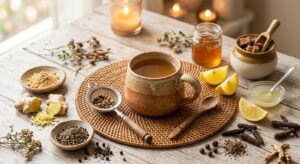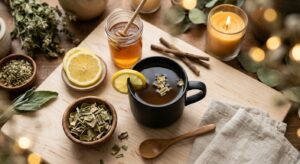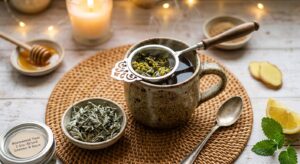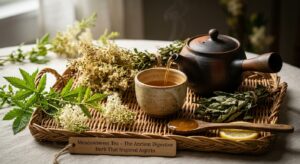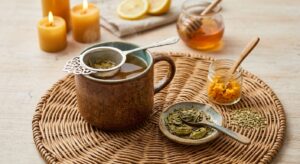
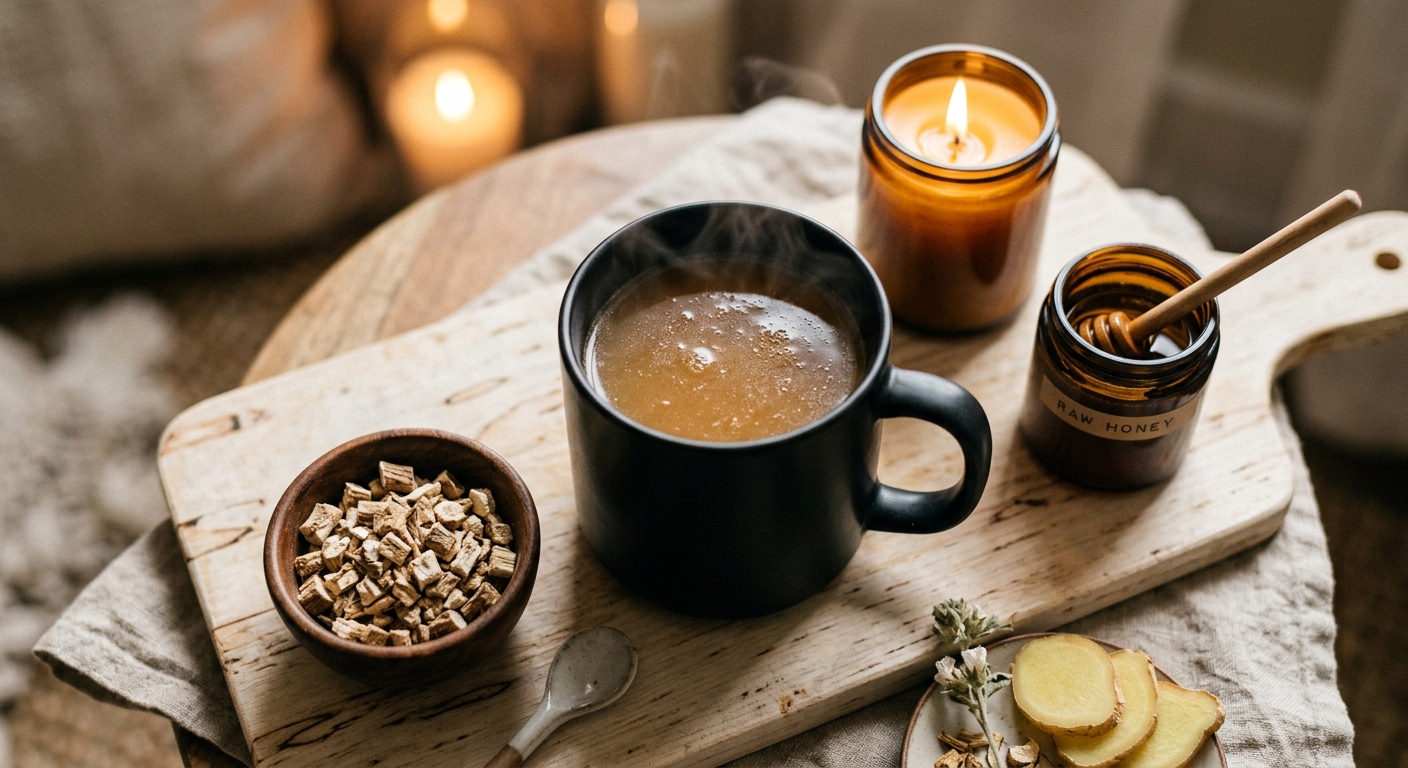
Long before marshmallow became a campfire confection, the root of Althaea officinalis was a revered medicine across ancient Egypt, Greece, and Rome. The name itself derives from the Greek word altho, meaning “to heal,” and the plant has earned that name many times over across thousands of years of documented use. Egyptian physicians mixed the root with honey and grains to create medicinal lozenges for sore throats, while Greek physician Dioscorides praised it for its ability to calm inflammation in the gut and lungs. The original marshmallow candy, popularized in nineteenth-century France, was made by whipping the root’s thick, gel-like sap with sugar, a tribute to just how potently mucilaginous this plant truly is.
What sets marshmallow root apart from most herbal teas is its remarkable concentration of mucilage, a class of complex polysaccharides that dissolve in water to form a viscous, gel-like liquid. This gel physically coats the mucous membranes lining the mouth, esophagus, stomach, and intestines, providing a protective barrier that reduces friction, soothes irritation, and supports the gut’s own healing processes. For people dealing with leaky gut, gastritis, acid reflux, irritable bowel syndrome, or inflammatory bowel conditions, this coating action can offer meaningful, tangible relief. The tea has a distinctly silky, almost slippery mouthfeel that makes it immediately clear something therapeutically different is happening.
Traditional herbalists across European, Middle Eastern, and Ayurvedic traditions classified marshmallow root as a demulcent, emollient, and vulnerary herb, meaning it soothes mucous membranes, softens tissues, and supports wound healing. Today, its traditional reputation is being validated by modern research into its polysaccharide content, anti-inflammatory phenolic acids, and prebiotic potential. Brewed correctly, marshmallow root tea is one of the gentlest yet most effective herbal preparations for the entire digestive system, and its mild, subtly sweet, almost earthy flavor makes it a pleasure to drink daily.
2
cups
Ingredients
- 2 tbspdried marshmallow root (cut and sifted)
- 480 mlwater (80°C / 176°F)
- —raw honey to taste (optional)
- —a thin slice of fresh ginger (optional, for warmth)
How to Brew
Click on an item below to shop for the recommended items for this recipe on Amazon.
As an Amazon Associate, we earn from qualifying purchases.
- Heat filtered water to 75 to 85°C (167 to 185°F). If you do not have a temperature-controlled kettle, bring water to a boil and let it rest uncovered for 5 to 6 minutes before using.
- Place 1 tablespoon of dried marshmallow root per cup into a tea infuser, muslin bag, or directly into a heatproof teapot. Marshmallow root releases best when it has room to expand, so a larger infuser or loose-in-pot method is preferred.
- Pour the heated water over the root and cover the vessel immediately with a lid or small plate to trap the volatile aromatics and retain heat throughout the steep.
- Steep for 8 to 10 minutes. You will notice the liquid thickening slightly and taking on a soft golden color as the mucilage extracts into the water.
- Strain carefully through a fine-mesh strainer. The liquid may feel slightly slippery between your fingers, which is a sign the mucilage has extracted well.
- Sweeten lightly with raw honey if desired, or add a slice of fresh ginger for a warming counterpoint to the root’s mild sweetness. Sip slowly while warm.
- Measure 2 tablespoons of dried marshmallow root per 480 ml of filtered water at room temperature. Cold brewing benefits from a slightly higher herb-to-water ratio than hot brewing because extraction is slower.
- Combine the marshmallow root and room-temperature water in a clean glass jar. Do not use warm or hot water, as cold extraction is specifically what protects and maximizes the delicate mucilage polysaccharides.
- Stir briefly to make sure all the root is submerged, then seal the jar with a lid. Leave at room temperature for the first 1 to 2 hours, then transfer to the refrigerator.
- Infuse for a total of 6 to 12 hours. Overnight preparation works beautifully and is the most practical approach. The longer it steeps, the thicker and more viscous the liquid becomes.
- Strain through a fine-mesh strainer or cheesecloth, pressing the spent root gently to extract the remaining gel. The resulting liquid will be noticeably more silky and thick than a hot-brewed version.
- Serve cold over ice, or warm gently on the stovetop over very low heat to below 80°C (176°F) without boiling. Store unused cold brew in the refrigerator for up to 48 hours.
- Combine 1.5 tablespoons of dried marshmallow root, 1 teaspoon of licorice root (or fennel seeds), and 720 ml of cold filtered water in a small stainless steel or ceramic saucepan.
- Place the saucepan over medium-low heat and bring the water up slowly to a very gentle simmer, around 85 to 90°C (185 to 194°F). Watch the pot carefully and adjust heat to prevent a rolling boil, which would damage the marshmallow mucilage.
- Maintain a gentle, barely bubbling simmer for 20 to 25 minutes, stirring once or twice. You will see the liquid reduce slightly and deepen in color as the harder herbs release their compounds.
- Remove the saucepan from heat, cover tightly with a lid, and allow the blend to rest off the heat for a further 10 minutes. This covered resting period allows the marshmallow root’s mucilage to continue extracting gently in the residual warmth.
- Strain the decoction through a fine-mesh strainer into a heatproof jug or directly into mugs. The liquid will be noticeably darker and more complex in flavor than a single-herb infusion.
- Taste and adjust with a small amount of raw honey if needed. This blend makes approximately 2 to 3 servings and is particularly effective when sipped slowly before or after meals to support digestive comfort.
Health Benefits
The mucilage in marshmallow root forms a protective gel layer over the stomach and esophageal lining, reducing irritation caused by excess stomach acid. Clinical and traditional evidence both support its use as a demulcent for gastric inflammation and reflux discomfort.
Marshmallow root polysaccharides have shown an ability to reduce intestinal permeability in preliminary research, suggesting they may help reinforce the gut lining. This makes the root a valued herb in protocols addressing leaky gut syndrome and food sensitivities.
The anti-inflammatory and antispasmodic compounds in marshmallow root, including scopoletin and quercetin, help reduce cramping, bloating, and mucosal irritation associated with IBS. Its mucilage also lubricates the intestinal walls, easing the passage of stool.
The pectin and arabinogalactan polysaccharides in marshmallow root function as fermentable fibers that selectively feed beneficial gut bacteria such as Lactobacillus and Bifidobacterium species. A well-nourished microbiome is central to long-term digestive and immune health.
Marshmallow root’s combination of mucilage coating, antioxidant phenolic acids, and anti-inflammatory flavonoids makes it a supportive herb for conditions like Crohn’s disease and ulcerative colitis. While it is not a replacement for medical treatment, it has a long history of use as a complementary soothing agent in these conditions.
🧪 Key Bioactive Compounds
The Science Behind Marshmallow Root
The therapeutic power of marshmallow root lies almost entirely in its exceptional mucilage content, which can make up as much as 35 percent of the dry root’s weight. Mucilage is composed of complex, branching polysaccharides including arabinogalactans and glucuronoarabinoxylans. When these molecules come into contact with water, they hydrate and swell into a viscous, slippery gel. This gel is not digested or absorbed in the upper gastrointestinal tract. Instead, it travels along the mucous membranes of the mouth, throat, esophagus, stomach, and small intestine, forming a transient but protective physical coating that reduces friction, buffers against acid and irritants, and creates an environment conducive to tissue repair. This mechanism is elegantly simple and does not require systemic absorption to produce local therapeutic benefit.
Beyond its purely physical coating action, marshmallow root contains bioactive flavonoids including quercetin and kaempferol, which inhibit inflammatory signaling pathways such as the NF-kB pathway and suppress the release of pro-inflammatory cytokines and histamine. Phenolic acids including caffeic acid and ferulic acid contribute antioxidant activity that helps neutralize reactive oxygen species generated during intestinal inflammation. A 2013 study published in the journal Complementary Medicine Research found that a syrup preparation containing marshmallow root extract significantly reduced symptoms of throat and stomach irritation, supporting its traditional use as a mucosal soothing agent. Research into its polysaccharide fractions has also demonstrated immunomodulatory properties, suggesting the root may help regulate, rather than simply suppress, inflammatory immune responses in the gut.
Perhaps the most exciting emerging area of marshmallow root research is its prebiotic potential. The arabinogalactan and pectin fractions of the root resist digestion in the small intestine and pass intact into the colon, where they serve as a fermentable substrate for beneficial bacteria including Lactobacillus and Bifidobacterium species. This prebiotic activity positions marshmallow root not just as a symptomatic remedy for gut discomfort, but as a functional food that actively supports the diversity and resilience of the gut microbiome. Extraction temperature matters significantly here: cold water infusions have been shown to preserve a higher molecular weight and greater quantity of intact mucilage polysaccharides compared to hot water preparations, which is why the cold infusion method is particularly valued for therapeutic use.
Brewing Tips
- Always use cooler water (below 85°C / 185°F) for hot brewing. Boiling water partially breaks down marshmallow’s delicate mucilage polysaccharides, reducing the gel content and the tea’s soothing potency.
- Source cut-and-sifted marshmallow root rather than powdered for infusion. Powder can pass through most infusers and create a difficult-to-strain, overly thick preparation. Cut root allows good mucilage extraction while remaining easy to strain.
- If using marshmallow root tea therapeutically for gut healing, drink it between meals rather than with food. This gives the mucilage unobstructed contact time with the stomach and intestinal lining before food dilutes and disrupts the gel layer.