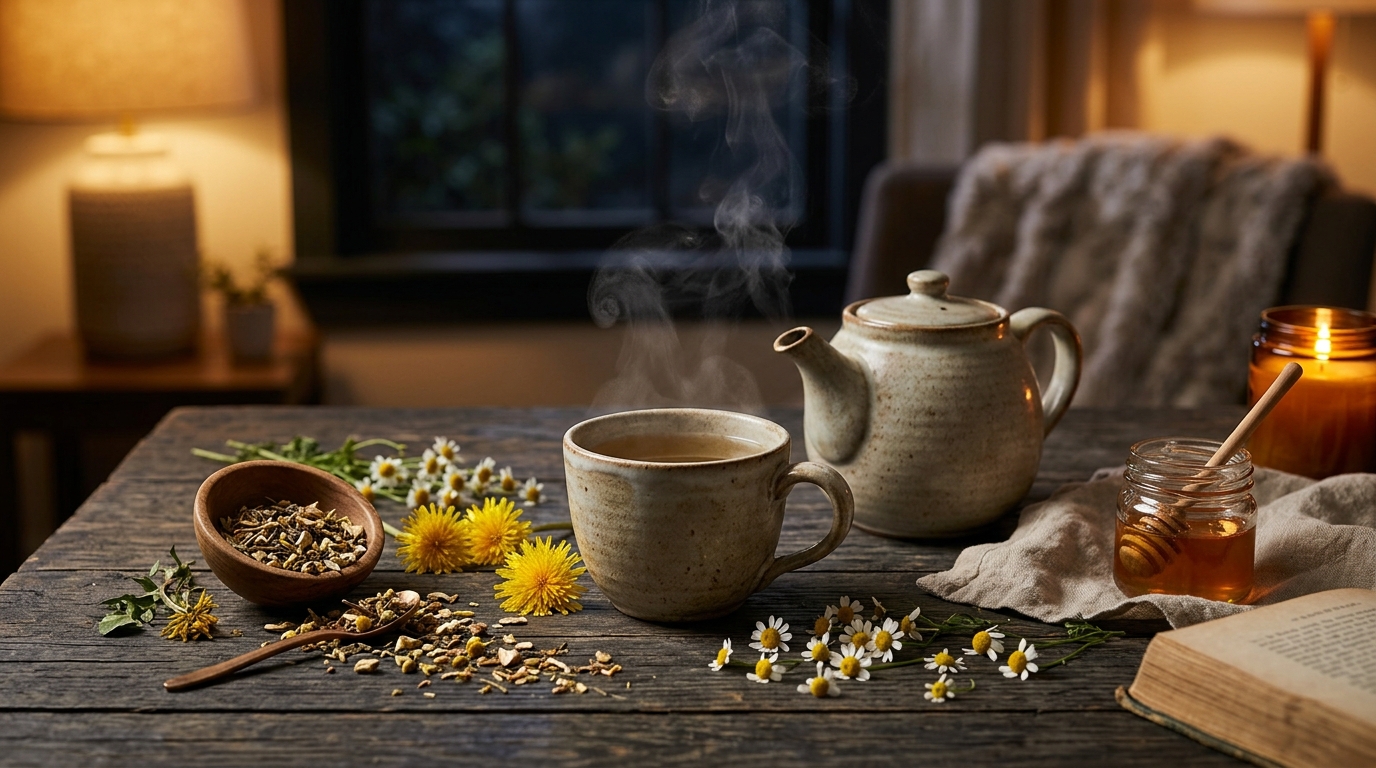
Chamomile has been steeped for bedtime for thousands of years. Ancient Egyptians dedicated it to their sun god, Greek physicians like Dioscorides recommended it for fevers and digestive complaints, and in Germany it earned the nickname alles zutraut, meaning ‘capable of anything.’ Its small daisy-like flowers carry a honeyed, apple-like fragrance that has made it the most recognizable bedtime tea in the Western world.
Dandelion, often dismissed as a lawn weed, has an equally long record in folk medicine. Medieval European herbalists, Traditional Chinese Medicine practitioners, and Native American healers all used the root as a digestive bitter and liver tonic. Roasted dandelion root has a deep, coffee-like warmth with a gentle bitterness that wakes up digestive secretions, which is exactly what you want after a heavy meal.
Together, the two plants form a thoughtful pairing. Chamomile softens the nervous system and relaxes the smooth muscle of the gut, while dandelion root nudges bile flow and digestion along. The result is a cup that serves two evening goals at once: settling the stomach and easing the mind toward sleep.
2
cups
Ingredients
- 2 tbspdried chamomile flowers
- 2 tsproasted dandelion root, cut and sifted
- 480 mlfiltered water
- —raw honey to taste (optional)
- —a thin slice of fresh ginger (optional)
How to Brew
Click on an item below to shop for the recommended items for this recipe on Amazon.
As an Amazon Associate, we earn from qualifying purchases.
- Bring filtered water to a full boil, then let it rest for about one minute so it settles near 95°C (203°F). Water that is too violent can make chamomile taste harsh and grassy.
- Combine the chamomile flowers and roasted dandelion root in a teapot or directly in an infuser basket. Use about 1 tablespoon of chamomile and 1 teaspoon of dandelion root per 240 ml cup.
- Pour the hot water over the herbs, making sure the flowers are fully submerged and moving freely.
- Cover immediately with a lid or saucer and steep for 6 to 8 minutes. Dandelion root is dense and needs the extra time to release its roasted flavor and bitter compounds.
- Strain into your mug, pressing the infuser lightly against the side to extract the last of the liquid.
- Stir in a small spoonful of raw honey if you like, and sip slowly about 30 to 60 minutes before bed.
- Place 2 tablespoons of chamomile flowers and 2 teaspoons of roasted dandelion root into a clean glass jar or pitcher.
- Add 480 ml of cool filtered water and stir gently so all of the herbs are wet and no dry clumps float on top.
- Seal the jar and refrigerate for 8 to 12 hours. Do not exceed 12 hours, as chamomile can turn slightly grassy and the root can taste flat.
- Strain through a fine mesh sieve into a fresh glass, discarding the spent herbs.
- Serve over ice, or pour into a mug and warm very gently on the stove to just below a simmer if you want a mild evening cup without any hot-steeped bitterness.
- Keep leftovers refrigerated and drink within 48 hours for the best flavor and freshness.
- Add 2 teaspoons of roasted dandelion root and 480 ml of cold filtered water to a small saucepan.
- Bring to a gentle boil, then reduce the heat, cover, and simmer for 10 minutes. The water will darken to a deep brown and smell rich and toasty.
- Remove the pan from the heat and let it stand for about one minute, so the temperature drops just below boiling.
- Add 2 tablespoons of chamomile flowers directly to the hot decoction, cover the pan, and steep for 5 minutes.
- Strain through a fine sieve into two mugs. The tea will be darker and more full-bodied than the simple hot brew.
- Finish with a thin slice of fresh ginger or a spoonful of honey, which pairs beautifully with the deeper roasted flavor.
Health Benefits
Apigenin in chamomile interacts with GABA receptors, and small clinical trials have linked regular chamomile intake with improved subjective sleep quality, particularly in people with mild sleep complaints.
Chamomile’s bisabolol and flavonoids relax intestinal smooth muscle, and its traditional use as a carminative is supported by animal and preliminary human research.
Dandelion root’s bitter compounds trigger the bitter taste response, which reflexively increases saliva, gastric juice, and bile flow, aiding the breakdown of fats and proteins.
The inulin in dandelion root acts as a prebiotic fiber, supporting the growth of beneficial microbes, although the amount in a single cup of tea is modest.
A 2016 clinical trial on chamomile extract found reductions in generalized anxiety symptoms, and the ritual of a warm evening cup adds its own calming behavioral benefit.
🧪 Key Bioactive Compounds
The Science Behind Chamomile
The sleep-supporting reputation of chamomile rests largely on apigenin, a flavonoid that binds to GABA-A receptors in the brain. GABA is the main inhibitory neurotransmitter in the nervous system, and enhancing its activity tends to produce calm and drowsiness. Apigenin appears to act far more gently than pharmaceutical sedatives, which fits chamomile’s long record as a mild, accessible bedtime herb. Clinical results are modest but encouraging, with studies noting improvements in perceived sleep quality and reductions in anxiety scores.
For digestion, chamomile’s alpha-bisabolol and flavonoids have antispasmodic and anti-inflammatory effects on the gut. This helps explain its centuries-old use for cramping, gas, and nervous stomachs, where tension and digestion are closely linked through the gut-brain axis. Dandelion root contributes a different mechanism: its bitter sesquiterpene lactones, such as taraxacin, activate bitter taste receptors, which prompts the release of digestive juices and encourages bile flow from the liver and gallbladder.
Dandelion root is also one of the richest plant sources of inulin, a prebiotic fiber that selectively feeds beneficial gut bacteria. While a single cup of tea delivers only a small amount, the water-soluble inulin and polyphenols do extract into the brew, and regular consumption may contribute to a more supportive gut environment. Much of the evidence for dandelion comes from traditional use and laboratory or animal studies, so it is best viewed as a gentle supportive herb rather than a treatment.
Brewing Tips
- Buy whole chamomile flowers rather than finely powdered tea bag dust. Whole flowers retain far more of their volatile oils and taste noticeably sweeter.
- Choose roasted dandelion root for a coffee-like warmth, and unroasted for a lighter, more herbal and bitter profile.
- Drink this blend 30 to 60 minutes before bed so you have time to unwind without needing a late-night bathroom trip, since dandelion has a mild diuretic effect.
- Store both herbs in airtight, opaque containers away from heat and light, and use chamomile within a year for the best aroma.