Passionflower (Passiflora incarnata) is a climbing vine native to the southeastern United States, and its extraordinary blooms earned it a place in both Indigenous medicine and European herbalism. Native American peoples, including the Cherokee, used the plant for wounds and as a calming remedy. Spanish explorers took it back to Europe in the 1500s, where its intricate flower was read as a symbol of the Passion of Christ, which is how the plant got its name. By the 19th century, passionflower was a staple in Western herbal practice for restlessness, nervous tension, and sleeplessness.
Ashwagandha (Withania somnifera) comes from a very different tradition. For over three thousand years, Ayurvedic practitioners have prized its root as a rasayana, a rejuvenating tonic meant to build resilience and vitality. Its Sanskrit name loosely translates to the smell of a horse, a nod to both its pungent, earthy aroma and the strength it was said to bestow. Modern herbalists classify it as an adaptogen, a plant that helps the body respond more steadily to physical and emotional stress.
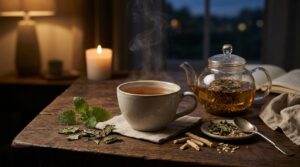
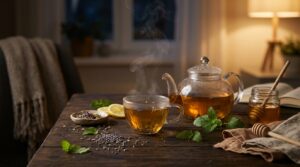
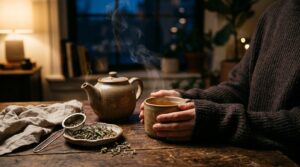
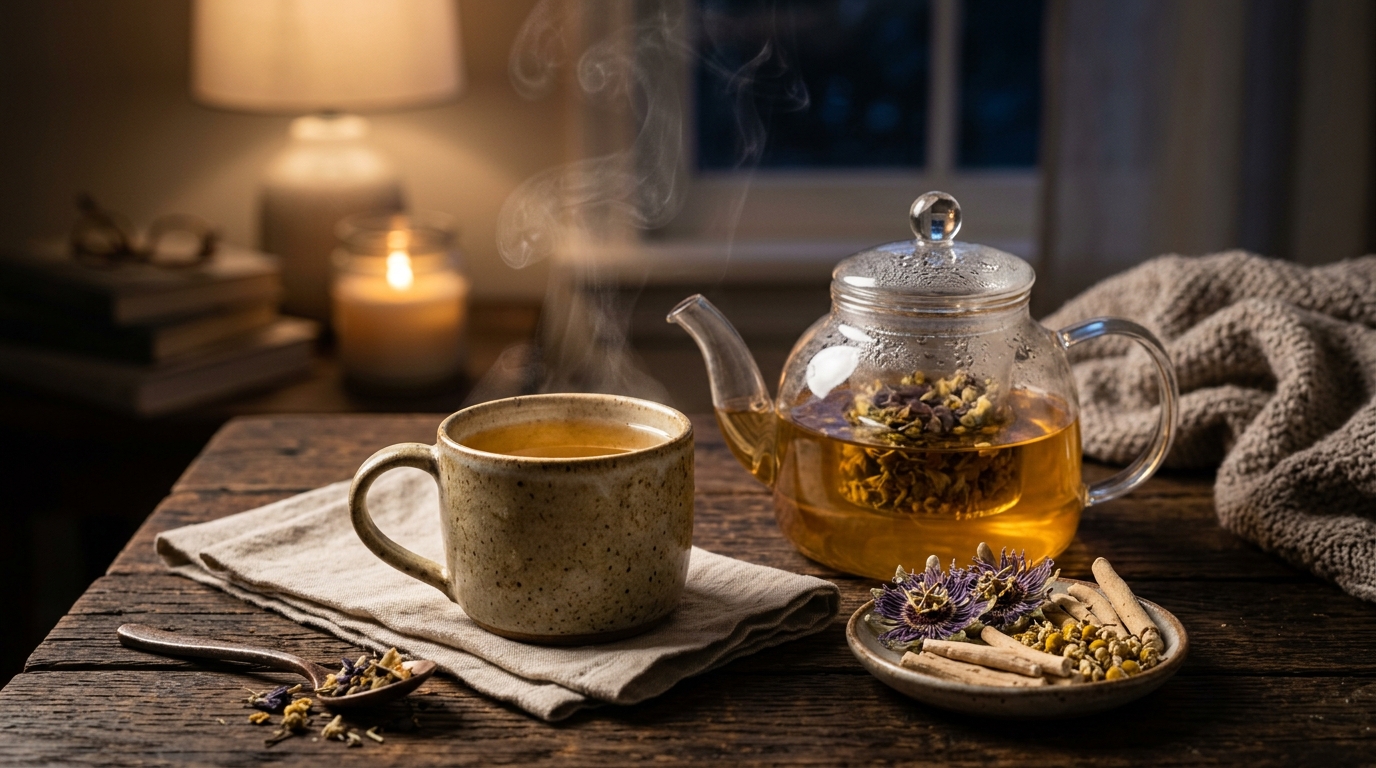
Combined into an evening tea, the two herbs complement each other well. Passionflower brings a light, grassy, slightly floral calm, while roasted ashwagandha root adds a warm, malty, almost chai-like depth. Brewing them together creates a deliberate ritual: a few quiet minutes of steeping, sipping, and winding down that signals to your nervous system that the day is done.
2
cups
Ingredients
- 2 tspdried passionflower leaf and flower (cut and sifted)
- 1 tspdried ashwagandha root, coarsely cut
- 480 mlfiltered water
- 1 tspdried lemon balm (optional, for brightness)
- —raw honey or maple syrup to taste (optional)
- —a small pinch of cinnamon (optional)
How to Brew
Click on an item below to shop for the recommended items for this recipe on Amazon.
As an Amazon Associate, we earn from qualifying purchases.
- Measure the passionflower and ashwagandha root into a teapot or a large mug fitted with a fine-mesh infuser. If you are using lemon balm or cinnamon, add them now.
- Heat filtered water until it reaches a full boil, then let it rest for about 30 seconds so it settles near 95°C (203°F). Ashwagandha root benefits from hot water, and passionflower tolerates it well.
- Pour the hot water over the herbs and immediately cover with a lid or small saucer to keep the aromatics from escaping.
- Steep for 10 to 12 minutes. The longer window gives the dense root pieces time to release their flavor and gives the passionflower time to turn the water golden. Go toward 12 minutes if you want a stronger, more medicinal cup.
- Strain the tea into your favorite mug, pressing gently on the herbs to extract the last of the liquid.
- Stir in honey or maple syrup if desired. Sip slowly, ideally 30 to 60 minutes before bed, away from screens and bright light.
- Combine 4 teaspoons of passionflower and 2 teaspoons of ashwagandha root in a clean glass jar. Add the lemon balm here if using.
- Pour in 1 liter of cool filtered water and stir once with a clean spoon to submerge the herbs.
- Seal the jar and leave it on the counter for 1 hour, then transfer to the refrigerator to steep for 8 to 12 hours. The initial counter time helps the root begin to hydrate.
- Strain the tea through a fine-mesh sieve or a nut-milk bag into a second jar or pitcher, discarding the spent herbs.
- Serve over ice, or pour a glass and enjoy it chilled straight from the fridge. Sweeten lightly with honey, which dissolves more easily if stirred in while the tea is still at room temperature.
- Store any leftovers in the refrigerator and drink within 48 hours for the best flavor and freshness.
- Add the ashwagandha root to a small saucepan with 500 ml of cold filtered water. Starting with cold water lets the root hydrate gradually as it heats.
- Bring the water to a boil, then reduce the heat to the lowest setting so it barely simmers. Cover partially and simmer gently for 15 minutes. The liquid will darken and take on a deep, earthy aroma.
- Remove the pan from the heat and add the passionflower, plus any lemon balm or cinnamon. Adding the delicate leaf and flower off the heat protects its volatile compounds from overcooking.
- Cover the pan and let everything steep for 5 minutes.
- Strain through a fine-mesh sieve into two mugs, pressing the root pieces to release any remaining liquid.
- Sweeten with honey, maple syrup, or a splash of warm milk or oat milk for a creamy, golden-latte style evening drink.
Health Benefits
Several randomized controlled trials have found that standardized ashwagandha root extract lowers self-reported stress and serum cortisol compared with placebo. Drinking it as a tea delivers a gentler, less concentrated dose than extracts, but the traditional use is consistent with these findings.
Passionflower has been studied for mild anxiety, with some trials finding it comparable to certain conventional options for short-term use. Its flavonoids are thought to modulate GABA activity, which promotes a sense of calm without heavy sedation.
Both herbs have been linked to improvements in sleep. Ashwagandha has shown benefits for sleep onset and quality in adults with insomnia or high stress, and passionflower tea improved subjective sleep quality in a small human trial.
Beyond the plant chemistry, the act of slowly brewing and sipping a warm drink at a consistent time each evening is a recognized behavioral cue that helps the body transition toward rest.
As an adaptogen, ashwagandha is traditionally used to help the body stay balanced under ongoing physical and mental demands, which is why it pairs naturally with a calming nervine like passionflower.
🧪 Key Bioactive Compounds
The Science Behind Passionflower
The two herbs work through different but complementary pathways. Ashwagandha’s key actives, the withanolides, are steroidal lactones that appear to influence the hypothalamic-pituitary-adrenal (HPA) axis, the body’s central stress-response system. In several placebo-controlled trials, adults taking standardized ashwagandha root extract for 6 to 8 weeks showed meaningful reductions in perceived stress scores and in morning cortisol compared with control groups. Some research also suggests a modest effect on sleep quality, particularly in people with elevated stress.
Passionflower’s effects are attributed largely to its flavonoids, including vitexin, isovitexin, and apigenin, along with trace alkaloids. Laboratory and animal studies suggest these compounds interact with GABA-A receptors, the same inhibitory neurotransmitter system targeted by many calming medications, but far more gently. Small human studies have found that passionflower reduced preoperative anxiety and improved sleep quality scores, although sample sizes are modest and more research is needed.
It is worth being honest about the limits of the evidence. Most clinical trials use concentrated, standardized extracts rather than tea, so the dose in a cup of this blend is lower and the effects likely more subtle. Water extracts of ashwagandha root also contain fewer of the fat-soluble withanolides than some commercial preparations, which is one reason simmering the root as a decoction can be worthwhile. Think of this tea as a supportive evening practice rather than a substitute for medical care for diagnosed anxiety or sleep disorders.
Brewing Tips
- Drink this tea 30 to 60 minutes before bed so the calming effects have time to build, and pair it with dim lighting and a screen-free routine.
- Choose cut-and-sifted ashwagandha root rather than fine powder for tea, since powder turns gritty and muddy in the cup.
- Always cover your cup while the passionflower steeps to keep its delicate aromatic compounds from drifting away.
- Start with a single cup in the evening and notice how you feel before making it a nightly habit, especially if you are new to ashwagandha.
- Store both herbs in airtight, opaque containers away from heat and light, and use them within a year for the best flavor and potency.