Walk into almost any traditional restaurant across India, the Mediterranean, or the Middle East and you will find a small bowl of seeds waiting by the door. In India, it is mukhwas, a roasted fennel and anise seed mix chewed after the meal. In Italy, finocchio seeds follow a heavy dinner. In Egypt and Turkey, anise infusions close the evening. These habits are not just about fresh breath. They are folk digestive medicine, refined over centuries.
Anise (Pimpinella anisum) and fennel (Foeniculum vulgare) are both members of the Apiaceae family, the same botanical clan as parsley, dill, and caraway. Both seeds owe their sweet, licorice-like character to the same dominant compound, anethole, which is roughly 13 times sweeter than sugar. Ancient Roman physicians prescribed anise after feasts, and the Greek physician Dioscorides recommended fennel seed for digestive discomfort and to support nursing mothers. Medieval monasteries grew both herbs in their physic gardens.
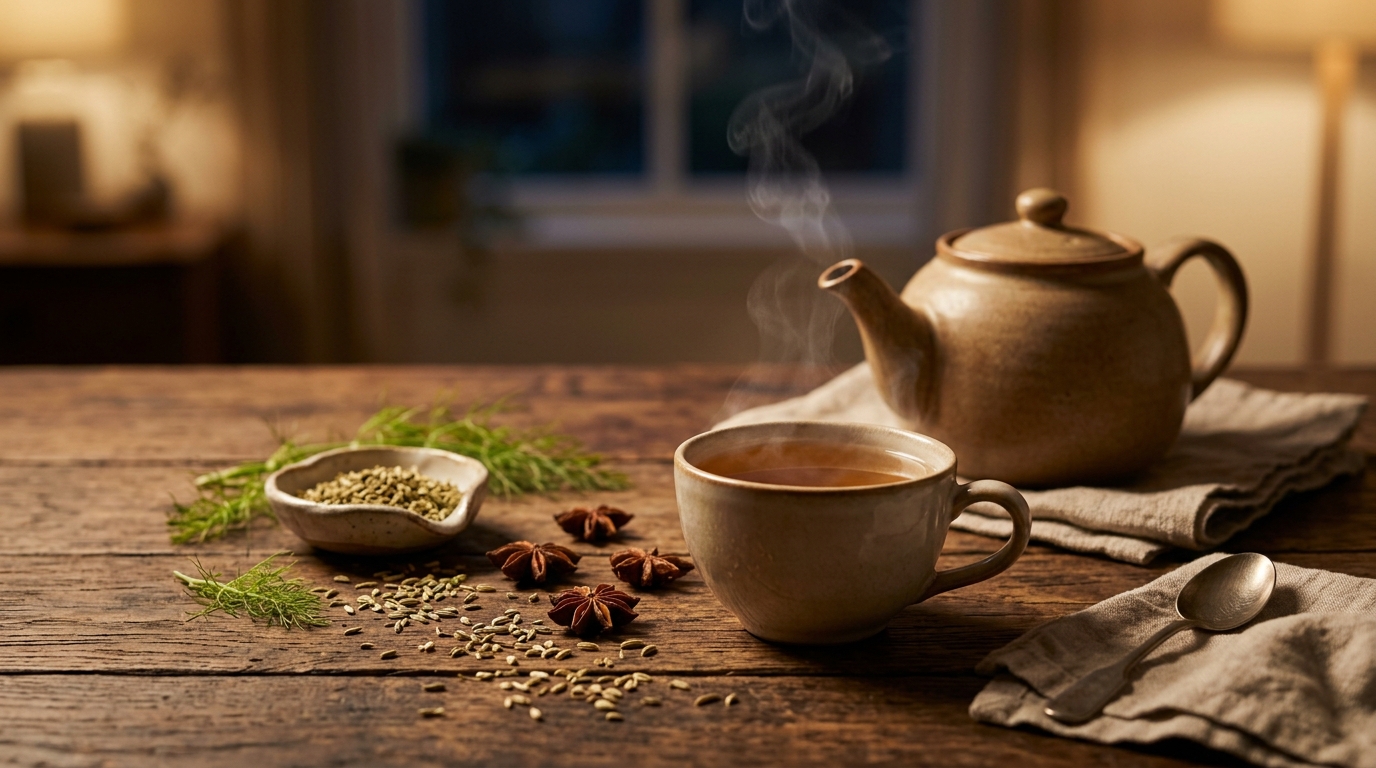
Brewed together, the two seeds create a layered cup. Anise brings a bright, sharp sweetness, while fennel adds a rounder, slightly earthy and warm character. The result is a caffeine-free evening tea that feels like dessert without any sugar, making it a natural final note for the day.
2
cups
Ingredients
- 1 tspwhole anise seeds
- 1 tspwhole fennel seeds
- 480 mlwater (95°C / 203°F)
- —a thin slice of fresh ginger (optional)
- —raw honey to taste (optional, usually not needed)
How to Brew
Click on an item below to shop for the recommended items for this recipe on Amazon.
As an Amazon Associate, we earn from qualifying purchases.
- Measure 1 teaspoon of anise seeds and 1 teaspoon of fennel seeds into a small dry mortar or onto a cutting board. Gently crush the seeds with a pestle or the flat side of a knife, just enough to crack the outer husk without turning them to powder. This exposes the oil glands inside.
- Bring fresh water to a near boil, then let it rest for 30 seconds so it settles at roughly 95°C (203°F). Fully boiling water can drive off some of the delicate aromatics.
- Place the crushed seeds in a teapot or mug with a tea infuser. Pour the hot water over them, then immediately cover with a lid or saucer to trap the steam and volatile oils.
- Steep for 10 to 12 minutes. Seeds are dense and need longer than leaves or flowers. The tea will turn a pale gold and the aroma will bloom noticeably when you lift the lid.
- Strain into cups. Sip slowly, 20 to 30 minutes after dinner. Add a thin slice of ginger during steeping if you want extra digestive warmth, but honey is rarely needed because the seeds are naturally sweet.
- Lightly crush 2 teaspoons of anise seeds and 2 teaspoons of fennel seeds as for a hot brew. Because cold water extracts more slowly, slightly more seed per liter is needed.
- Place the crushed seeds in a clean glass jar and add 1 liter of cold, filtered water. Stir once so all the seeds are wet, then seal with a lid.
- Refrigerate for 8 to 10 hours, or overnight. Give the jar a gentle shake once or twice if you remember. Do not exceed 12 hours, as the tea can start to taste flat or slightly bitter.
- Strain through a fine mesh sieve or a cloth-lined strainer to remove all seed fragments. The liquid will be very pale, almost clear, with a clean licorice sweetness.
- Serve chilled over a few ice cubes, with a lemon wheel if desired. Store in the fridge and drink within 48 hours.
- Coarsely crush 1 teaspoon of anise seeds and 1 teaspoon of fennel seeds. Add them to a small saucepan with 300 ml of cold water. Starting with cold water lets the seeds warm gradually and release their oils evenly.
- Bring the pot slowly to a bare simmer over medium-low heat. You should see small bubbles at the edges but never a rolling boil. Aggressive boiling will drive off the aromatic compounds.
- Reduce the heat to low, cover the pot with a lid, and simmer gently for 8 minutes. The kitchen will fill with a sweet, licorice-like scent.
- Remove the pot from the heat and let it rest, still covered, for 5 minutes so the flavors settle and the liquid cools slightly.
- Strain through a fine sieve into a mug. The resulting tea is deeper in color and noticeably more intense than the hot brew, with a pronounced sweetness and a warming finish. Sip slowly.
Health Benefits
Anethole and fenchone act as carminatives, relaxing smooth muscle in the intestinal wall and helping trapped gas move through. Fennel seed has a long record of use for infant colic and adult bloating, and small clinical studies support its effect on functional digestive complaints.
The antispasmodic action of the seed oils can reduce cramping and the feeling of fullness after a rich meal. Both herbs may also gently stimulate digestive secretions.
Fennel has been studied for mild constipation relief and for improving gut motility, likely through its muscle-relaxing and mild stimulating effects on the intestinal tract.
Anise has a long traditional use as an expectorant, and anethole appears to help loosen mucus. A warm cup before bed can be comforting when there is a lingering cough or chest tightness.
The flavonoids and phenolic acids in both seeds show antioxidant activity in laboratory studies, which may complement their traditional digestive uses.
🧪 Key Bioactive Compounds
The Science Behind Fennel
The signature flavor and most of the digestive action of this tea come from trans-anethole, a volatile oil that makes up 80 to 90 percent of anise essential oil and a large share of fennel’s. Anethole is a smooth muscle relaxant. In laboratory and animal models, it reduces spasm in the intestinal wall, which is the mechanism behind the traditional claim that these seeds ease cramping and help gas pass. Its sweetness is also notable, about 13 times that of sucrose, which explains why the tea tastes sweet without any added sugar.
Fennel contributes additional compounds, notably fenchone and limonene, which add to the carminative effect and offer mild antimicrobial activity. Small human trials have examined fennel for infantile colic, menstrual cramping, and functional bloating, with generally encouraging but modest results. Anise has been studied for functional dyspepsia and for its expectorant properties, though the quality of evidence varies and larger trials are still needed.
It is worth remembering that much of the data comes from concentrated essential oils or extracts, not a cup of tea. A steeped infusion delivers a gentler dose, which suits the traditional role of these seeds as a mild, daily digestive aid. Crushing the seeds right before brewing matters because the oil sits in tiny canals inside the seed and is released only when the husk is broken. Covering the cup traps those volatile oils, which is why the lid is not optional if you want the full effect.
Brewing Tips
- Buy whole seeds rather than pre-ground. Whole seeds keep their volatile oils for up to two years in an airtight jar, while ground seed loses its aroma within weeks.
- Toast the seeds in a dry pan over low heat for 30 to 60 seconds before crushing. This deepens the flavor and gives the tea a nutty, almost caramelized sweetness.
- Use more fennel than anise if you find anise too sharp. A ratio of 2 parts fennel to 1 part anise makes a softer, rounder tea that is easier for licorice skeptics.
- Do not confuse true anise seed with star anise. They taste similar but come from unrelated plants, and star anise is far more potent and used differently.