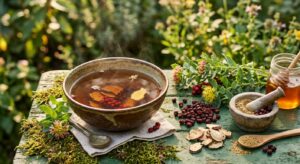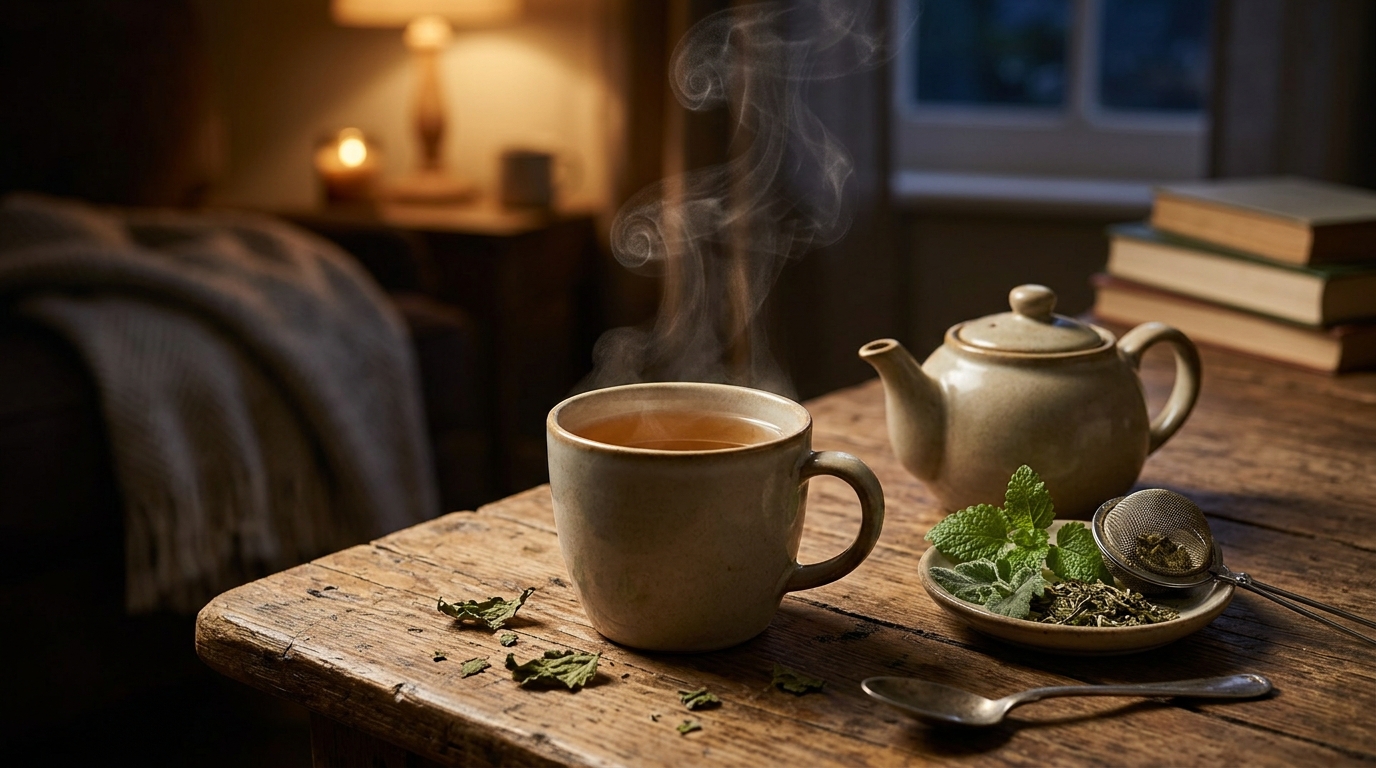
Lemon balm (Melissa officinalis) has been valued as a calming herb for over two thousand years. Greek physicians such as Dioscorides recommended it for melancholy and digestive complaints, and medieval monks brewed it into the famous Carmelite water, a tonic said to lift the spirits and settle the nerves. The genus name Melissa means honeybee in Greek, a nod to how bees swarm around its small, pale flowers. Gardeners have long planted it near hives for exactly that reason.
Catnip (Nepeta cataria) is better known for sending house cats into a blissful frenzy, but herbalists have used it for centuries in a very different way for people. Dried catnip leaves were a common European cottage remedy for restlessness, colic, and stubborn evening wakefulness, and the tea was a staple of the nursery long before chamomile became the household default. In humans, the effect is not stimulating at all. It is mildly sedating, gently carminative, and quietly soothing.
Combined, these two mint family cousins make a remarkably well-rounded evening cup. Lemon balm brings a bright, lemony top note and a reputation for easing nervous tension and tight shoulders. Catnip adds a deeper, slightly musty-minty body and a more sleepy quality. If you have been reaching for the same chamomile tea every night and want something with a little more character, this is a beautiful place to go next.
2
cups
Ingredients
- 2 tbspdried lemon balm leaf
- 1 tbspdried catnip leaf and flower
- 480 mlwater (90°C / 194°F)
- —raw honey to taste (optional)
- —thin lemon slice to garnish (optional)
How to Brew
Click on an item below to shop for the recommended items for this recipe on Amazon.
As an Amazon Associate, we earn from qualifying purchases.
- Bring fresh water to a boil, then let it rest for about 2 minutes so it cools to roughly 90°C (194°F). Water that is fully boiling can drive off the delicate lemony oils in lemon balm and leave the tea tasting flat and grassy.
- Place the dried lemon balm and catnip in a teapot or large mug. Crush the leaves lightly between your fingers as you add them to wake up the aroma and expose more surface area to the water.
- Pour the hot water over the herbs and immediately cover the vessel with a saucer, lid, or small plate to trap the volatile oils.
- Steep for 7 to 10 minutes. Closer to 7 gives a lighter, more lemony cup. Closer to 10 draws out more of the catnip and gives a deeper, slightly more sedative tea.
- Strain into your cup, pressing the herbs gently against the strainer to release the last of the liquid.
- Stir in a little honey if you like, and sip slowly about 30 to 60 minutes before bed.
- Combine 3 tablespoons of dried lemon balm and 1 tablespoon of dried catnip in a clean glass jar. Use slightly more herb than for hot brewing, because cold water extracts more slowly.
- Add 1 liter of cold, filtered water and stir gently so all the leaves are submerged. Do not crush the herbs for this method, as whole leaves give a cleaner flavor.
- Seal the jar and refrigerate for 8 to 12 hours, or overnight. There is no need to keep it covered in any special way, but a tight lid prevents the tea from absorbing fridge odors.
- Strain the tea through a fine mesh strainer or a coffee filter into a clean pitcher, discarding the spent herbs.
- Serve over a few ice cubes with a slice of lemon or a sprig of fresh lemon balm. Drink within 2 days, as cold brewed herbal teas do not keep as long as hot ones.
- Make a double-strength base by placing 3 tablespoons of dried lemon balm and 1.5 tablespoons of dried catnip in a teapot with 480 ml of 90°C (194°F) water. This is stronger than the hot brew because the ice will dilute it.
- Cover and steep for 10 minutes, then strain the tea into a heatproof pitcher.
- While the tea is still warm, stir in 1 to 2 teaspoons of raw honey and the juice of half a lemon until fully dissolved. Honey dissolves much more easily in warm liquid than in cold.
- Let the pitcher cool on the counter for about 20 minutes, then refrigerate until fully chilled, about 1 hour.
- Fill two tall glasses with ice, pour the chilled tea over the top, and garnish with lemon slices and a few fresh lemon balm leaves if you have them.
Health Benefits
Lemon balm extracts have been shown in small human trials to improve calmness and reduce self-reported anxiety, likely via effects on GABA signaling. Catnip’s traditional use as a mild sedative complements this soothing action.
Lemon balm has been studied alongside valerian and other calming herbs for sleep quality, with modest positive results. Catnip tea has a long history of use for restlessness and difficulty falling asleep, though clinical research in humans is limited.
Both herbs are traditional carminatives, meaning they help ease gas, bloating, and cramping. This is especially helpful when stress shows up as an upset stomach in the evening.
Several small studies suggest lemon balm can improve mood and cognitive performance during periods of mental strain. Many people find it relaxing without causing the heavy drowsiness of stronger sedative herbs.
Catnip has long been used in folk medicine to ease menstrual cramping and the tension that accompanies it, while lemon balm’s antispasmodic properties may provide additional relief.
🧪 Key Bioactive Compounds
The Science Behind Lemon Balm
Lemon balm’s calming reputation has some of the most interesting science behind it among common herbal teas. Its main phenolic compound, rosmarinic acid, has been shown in laboratory studies to inhibit GABA transaminase, the enzyme that breaks down GABA. GABA is the brain’s primary inhibitory neurotransmitter, and keeping more of it available is the same general pathway targeted by many prescription anti-anxiety medications, though at a far gentler level. In small human trials, standardized lemon balm extracts have improved mood and calmness and reduced stress-related symptoms, though most studies use concentrated extracts rather than tea, so effects from a cup may be milder.
Catnip’s action in humans is less thoroughly studied, but its primary iridoid compound, nepetalactone, is chemically related to the valepotriates found in valerian root, another well-known calming herb. This structural similarity helps explain why catnip has been used traditionally as a mild sedative and nerve relaxant. In cats, nepetalactone binds to receptors in the nose that trigger a euphoric response. In humans, the effect appears to be quite different: relaxing and antispasmodic rather than stimulating.
Both herbs also contain volatile oils such as citronellal, caryophyllene, and citral that act on the digestive tract. These compounds relax smooth muscle, which is why lemon balm and catnip are both traditional remedies for stress-related stomach upset. Because the gut and brain are closely linked through the vagus nerve, easing digestive tension can itself contribute to a sense of calm. More human research is needed, but the combination of traditional use and early mechanistic studies makes this a thoughtful and well-supported evening blend.
Brewing Tips
- Always cover your cup or teapot while steeping. The calming volatile oils in both herbs evaporate quickly with the steam.
- Use fresh lemon balm if you grow it: double the amount of dried herb called for in the recipe and lightly bruise the leaves before steeping.
- Store dried herbs in airtight glass jars away from light and heat, and replace them after about a year. Lemon balm in particular loses its lemony aroma quickly as it ages.
- Start with one cup in the evening and see how you respond before making this a nightly habit, especially if you are sensitive to sedative herbs.