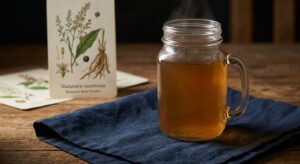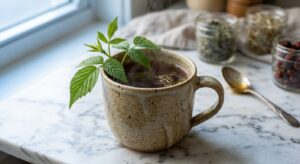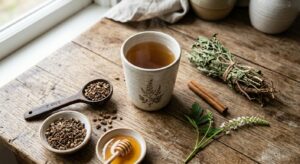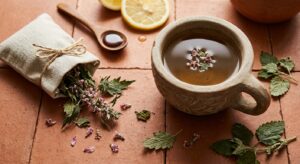
Spearmint (Mentha spicata) has been brewed for thousands of years, from ancient Greek and Roman households that scattered it in bathwater and banquet halls to Middle Eastern tea ceremonies where its bright, sweet coolness is a sign of hospitality. Unlike its sharper cousin peppermint, spearmint is gentler and rounder, with a lingering sweetness that makes it a favorite for daily drinking. In traditional herbal practice it has long been a women’s herb, and modern research has begun to explore why.
Lavender (Lavandula angustifolia) carries an equally long history. The Romans used it to scent their baths (the name comes from the Latin lavare, to wash), and medieval European households tucked sachets of it beneath pillows to invite peaceful sleep. Today, lavender is one of the most studied calming botanicals, with research on its aroma and its oral preparations showing benefits for anxiety and sleep quality.
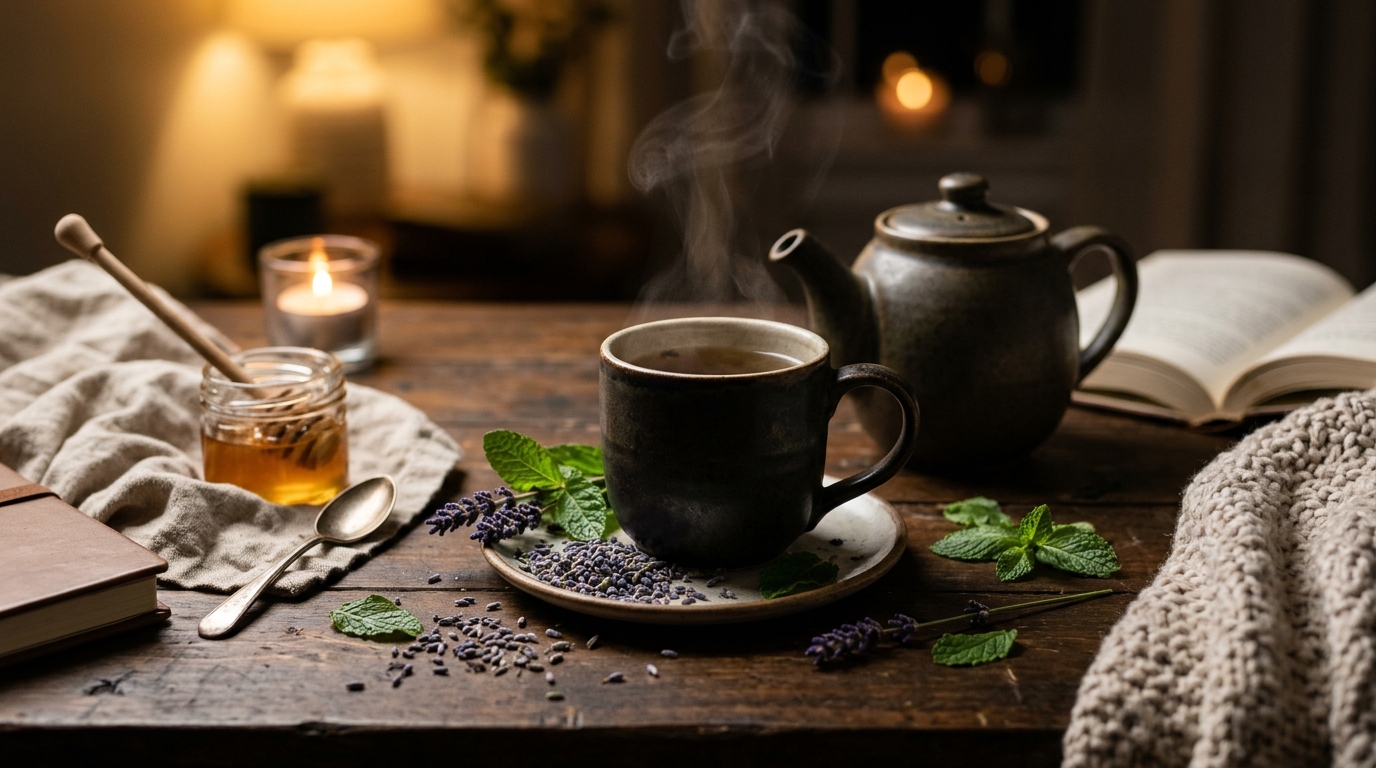
Together, these two herbs make a beautifully balanced evening cup. Spearmint brings cooling freshness and a reputation for supporting healthy hormone balance, while lavender adds a soft floral depth and a deeply relaxing quality. Sipped an hour before bed, this tea becomes a small ritual: a signal to the nervous system that the day is done and rest is coming.
2
cups
Ingredients
- 2 tspdried spearmint leaves
- 1 tspdried culinary lavender buds
- 480 mlwater (90°C / 194°F)
- —raw honey to taste (optional)
- —thin lemon slice (optional)
How to Brew
Click on an item below to shop for the recommended items for this recipe on Amazon.
As an Amazon Associate, we earn from qualifying purchases.
- Measure the dried spearmint and lavender into a teapot or a large mug fitted with a mesh infuser, using roughly two parts spearmint to one part lavender.
- Heat fresh water until just steaming, about 90°C (194°F). Let a boiled kettle rest for 2 minutes rather than pouring it fully boiling, since scalding water drives off the delicate volatile oils in both herbs.
- Pour the hot water over the herbs and cover the vessel immediately with a saucer or lid. Covering traps the aromatic oils in the cup instead of letting them escape with the steam.
- Steep for 5 to 7 minutes. Taste at 5 minutes, and remove the infuser as soon as the floral note feels balanced against the mint.
- Strain, then sweeten lightly with raw honey if desired. Sip slowly about an hour before bed, ideally somewhere dimly lit and quiet.
- Combine 2 tablespoons of dried spearmint and 1 tablespoon of dried lavender in a clean glass jar or pitcher. Use a slightly higher herb ratio than hot brewing because cold water extracts more slowly.
- Add 1 liter of cold, filtered water and stir gently so every leaf is submerged. Seal the jar with a lid.
- Refrigerate for 8 to 12 hours, or overnight. Avoid steeping beyond 12 hours, as the mint can begin to taste grassy.
- Strain through a fine mesh sieve or a coffee filter to remove all plant material, pressing lightly on the herbs to release the last of the liquid.
- Serve over ice with a lemon slice or a few fresh mint leaves. Store the finished tea in the refrigerator and drink within 2 days.
- Place 4 teaspoons of dried spearmint and 2 teaspoons of dried lavender in a heatproof measuring jug or teapot.
- Pour 240 ml of water just off the boil (about 95°C / 203°F) over the herbs. This small volume of water creates a strong concentrate.
- Cover and steep for 10 minutes. The slightly longer time and hotter water pull out more of the minty menthol notes and flavonoids needed to hold up against ice.
- Strain the concentrate directly over a tall glass filled with ice, then top with 240 ml of cold water or sparkling water.
- Stir in honey or a splash of lemon juice while the concentrate is still warm so it dissolves fully, then garnish with a mint sprig and a few lavender buds.
Health Benefits
Small human studies on spearmint tea in women with elevated androgens, including those with PCOS, have shown reductions in free testosterone over 30 days. The research is promising but limited in size, so it should be viewed as supportive rather than a treatment.
Lavender’s linalool and linalyl acetate have been shown in clinical trials to reduce anxiety symptoms, and some studies suggest an effect comparable to mild anxiolytic support. Sipping the tea also engages the calming effect of its aroma.
Several trials show lavender can improve subjective sleep quality and reduce nighttime waking, particularly when used as part of a consistent wind-down routine. The warm ritual of the tea itself reinforces the body’s sleep cues.
Spearmint’s carvone has a gentle antispasmodic action on the digestive tract, helping ease gas, bloating, and the cramping that can accompany the premenstrual phase. It is milder than peppermint and less likely to trigger heartburn.
The combined relaxing effect of lavender’s aromatic compounds and the warmth of the tea helps release physical tension carried in the shoulders and jaw, making it easier to settle in for the night.
🧪 Key Bioactive Compounds
The Science Behind Spearmint
The two herbs in this blend act through different but complementary pathways. Spearmint’s signature compound, carvone, gives the leaf its sweet, cool aroma and acts as a mild smooth-muscle relaxant in the gut. More notably for women’s health, spearmint tea has been examined in small clinical studies for its effect on hormone levels. In a frequently cited trial, women with hirsutism who drank spearmint tea twice daily for five days during the follicular phase showed reduced free and total testosterone, along with modest increases in luteinizing hormone and follicle-stimulating hormone. A later 30-day study in women with PCOS reported similar reductions in free testosterone. These results are encouraging, though the trials were small and short, so larger studies are needed.
Lavender’s calming reputation rests on firmer ground. Its two dominant constituents, linalool and linalyl acetate, appear to interact with the brain’s inhibitory GABA system and to dampen excitatory glutamate signaling, which together promote a sense of calm. Clinical trials of standardized lavender oil preparations have shown reductions in anxiety scores, and other studies link lavender to better sleep quality. While most research uses concentrated oils or aromatherapy rather than tea, the aromatic compounds are also present in the steam and infusion of the brewed flowers, which explains the immediate relaxing quality of the cup.
Both herbs also supply antioxidant polyphenols. Spearmint contributes rosmarinic acid and luteolin, while lavender adds its own flavonoids and phenolic acids. These compounds help neutralize free radicals and support a healthy inflammatory response, which may matter for the hormonal fluctuations and stress that disrupt sleep. As with most herbal teas, the effects are gentle and cumulative, best experienced as part of a regular evening routine rather than as a quick fix.
Brewing Tips
- Choose culinary-grade lavender buds sold for food and tea, since ornamental or fragrance-grade lavender may be treated with chemicals and is often too strong.
- Start with half a teaspoon of lavender if you are new to it. You can always increase the amount, but too much turns the tea soapy.
- Drink the tea about 60 minutes before bed so you are relaxed by bedtime without waking to use the bathroom.
- Store dried herbs in airtight, opaque jars away from light and heat. Spearmint and lavender both lose their aromatic oils within about a year.
- Pair the tea with a screen-free routine such as light stretching or journaling to amplify the wind-down effect.