Long before echinacea filled the shelves of health food stores, the Plains nations of North America were using the purple coneflower as a wide-ranging remedy. The Lakota, Cheyenne, and Comanche, among others, prepared the root and aerial parts for sore throats, toothaches, infections, and snakebite. By the late 1800s, settlers and physicians known as Eclectics had adopted it, and echinacea became one of the most popular medicinal plants in America before antibiotics took center stage. Today it is still among the most researched herbs for the common cold.
Elderberry has an equally rich past. The European black elder, Sambucus nigra, was called the ‘medicine chest’ of country folk, with its flowers, bark, and berries all earning a place in the home apothecary. Hippocrates is said to have praised the tree, and by the Middle Ages its dark berries were simmered into syrups, wines, and cordials taken through the cold and flu season. Folklore held that an elder tree near the doorway guarded the household, and the berries certainly guarded many winter evenings.
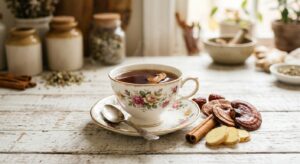
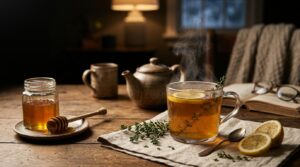
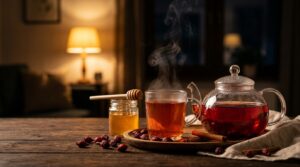
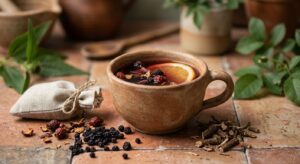
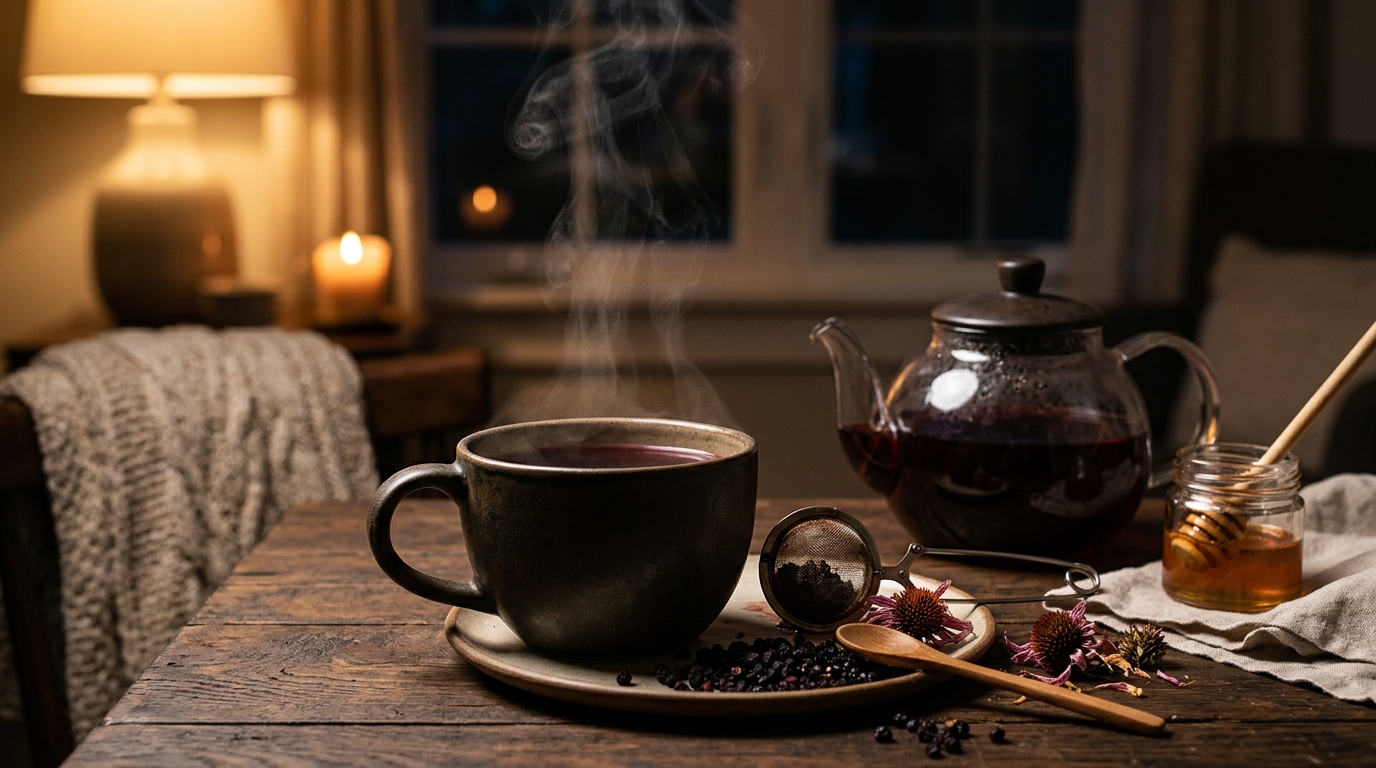
Brewed together, the two herbs make a lovely evening ritual. Echinacea brings an earthy, slightly numbing character, while dried elderberries lend deep color and a tart, wine-like fruitiness. The result is a warming, ruby-purple cup that tastes like autumn and feels like care. Because neither herb is stimulating, it works well as an evening tea, a gentle way to wind down while giving your body a little extra support during cold and flu season.
2
cups
Ingredients
- 2 tspdried echinacea root and aerial parts (purpurea)
- 2 tbspdried elderberries (fully ripe, cooked-through)
- 1 tspdried orange peel
- 1 pinchground cinnamon or one small cinnamon stick
- 480 mlwater (95°C / 203°F)
- —raw honey to taste (optional)
- —fresh lemon wedge (optional)
How to Brew
Click on an item below to shop for the recommended items for this recipe on Amazon.
As an Amazon Associate, we earn from qualifying purchases.
- Measure the echinacea, elderberries, orange peel, and cinnamon into a teapot or large mug with a built-in infuser. Lightly crush the elderberries with the back of a spoon to help release their color and flavor.
- Bring fresh water to a boil, then let it rest for about 30 seconds so it falls to roughly 95°C (203°F). Pour it over the herbs, using about 240 ml per serving.
- Cover immediately with a lid or small saucer to trap the volatile aromatics and the steam. Set a timer for 10 to 15 minutes, longer steeping gives a deeper color and stronger earthy tingle.
- Strain through a fine mesh strainer into your cups, gently pressing the berries to extract their juice.
- Stir in raw honey and a squeeze of lemon if you like. Sip slowly while the tea is still warm, ideally one to two hours before bed.
- Place the elderberries in a small pot with 120 ml of water. Simmer gently for 10 minutes, then remove from the heat and let cool completely. This step makes the berries safe to use in a cold infusion.
- Add the echinacea, orange peel, and cinnamon to a large glass jar. Pour in the cooled elderberry liquid along with the softened berries, then top up with about 360 ml of cold, filtered water.
- Stir well, seal the jar, and refrigerate for 8 to 10 hours or overnight. The slow, cold extraction pulls out the fruity notes and softens echinacea’s earthy tingle.
- Strain through a fine mesh strainer or a cheesecloth-lined sieve, pressing gently on the berries.
- Serve over ice with a lemon wedge, or enjoy chilled straight from the jar. It keeps well for up to 2 days in the refrigerator.
- Combine the echinacea, elderberries, and cinnamon stick in a small saucepan with 480 ml of cold water. Starting with cold water helps draw out the root’s constituents gradually.
- Bring the pot slowly to a gentle simmer over medium-low heat. Do not let it reach a rolling boil, which can drive off delicate aromatic compounds.
- Reduce the heat, partially cover, and simmer for 15 minutes, stirring occasionally. The liquid will reduce slightly and turn a deep, inky purple.
- Remove from the heat, add the orange peel, cover fully, and let rest for 10 minutes so the citrus oils infuse without turning bitter.
- Strain through a fine mesh strainer, pressing the berries to extract every drop. Sweeten with honey while still hot and drink warm. Leftover decoction can be refrigerated for up to 2 days and gently reheated.
Health Benefits
Echinacea’s alkamides, polysaccharides, and cichoric acid appear to modulate immune cell activity, and several trials and meta-analyses suggest it may modestly reduce the likelihood and duration of colds, though results vary by preparation.
Small clinical studies on elderberry extract have found shorter duration of upper respiratory symptoms, likely linked to its anthocyanins and flavonoids, which show antiviral activity in laboratory research.
Elderberries are among the most anthocyanin-rich fruits, and these pigments help neutralize free radicals and reduce oxidative stress that accompanies illness.
A warm, honey-sweetened cup coats irritated tissue, while echinacea’s mild numbing tingle and elderberry’s astringency may provide temporary comfort.
Neither herb is caffeinated, so this tea fits naturally into a calming bedtime routine, and the ritual of a warm cup itself encourages rest when your body needs it most.
🧪 Key Bioactive Compounds
The Science Behind Echinacea
Echinacea’s immune effects are attributed to a team of compounds rather than a single active ingredient. The alkamides, which create that signature tongue tingle, interact with cannabinoid type 2 receptors found on immune cells, and laboratory studies show they can influence the release of inflammatory messengers called cytokines. Meanwhile, the polysaccharides and phenolic acids like cichoric acid appear to activate macrophages, the white blood cells that engulf pathogens. A large meta-analysis of clinical trials suggested echinacea may reduce the risk of catching a cold, though study quality and preparation types differ widely, which is why results in the literature are mixed.
Elderberry’s strength lies in its remarkable anthocyanin content. Cyanidin-3-glucoside and related pigments give the fruit its near-black color and act as powerful antioxidants. In test-tube studies, elderberry extracts have been shown to interfere with the ability of influenza viruses to attach to and enter host cells. A small number of randomized trials, including one in air travelers, reported shorter and milder respiratory symptoms in participants taking elderberry. While promising, these studies are limited in size, and elderberry is best viewed as a supportive aid rather than a cure.
Combining the two makes sense from a traditional and a practical standpoint. Echinacea is thought to influence the early immune response, while elderberry contributes antioxidants and possible antiviral activity. Brewing them hot extracts both the water-soluble anthocyanins and polysaccharides effectively, while the alkamides, which dissolve better in alcohol, come through more modestly in tea. That is why a longer steep or a decoction can give a noticeably stronger cup.
Brewing Tips
- Choose Echinacea purpurea from a reputable supplier, and look for tea blends that include the root as well as the aerial parts for a fuller range of compounds.
- Always simmer or steep dried elderberries in hot water, and never use raw berries, stems, or leaves.
- Start sipping at the very first sign of a scratchy throat, as echinacea is traditionally taken early rather than after a cold is fully established.
- Store dried herbs in airtight glass jars away from light and heat, and use within a year for best potency.
- Pair with extra rest and fluids, since a warm tea is a complement to sleep and hydration, not a replacement.