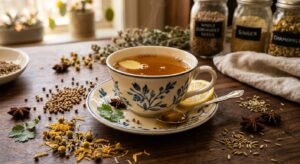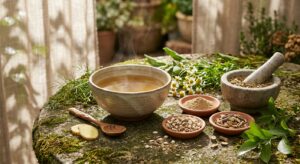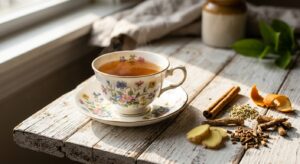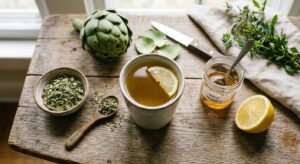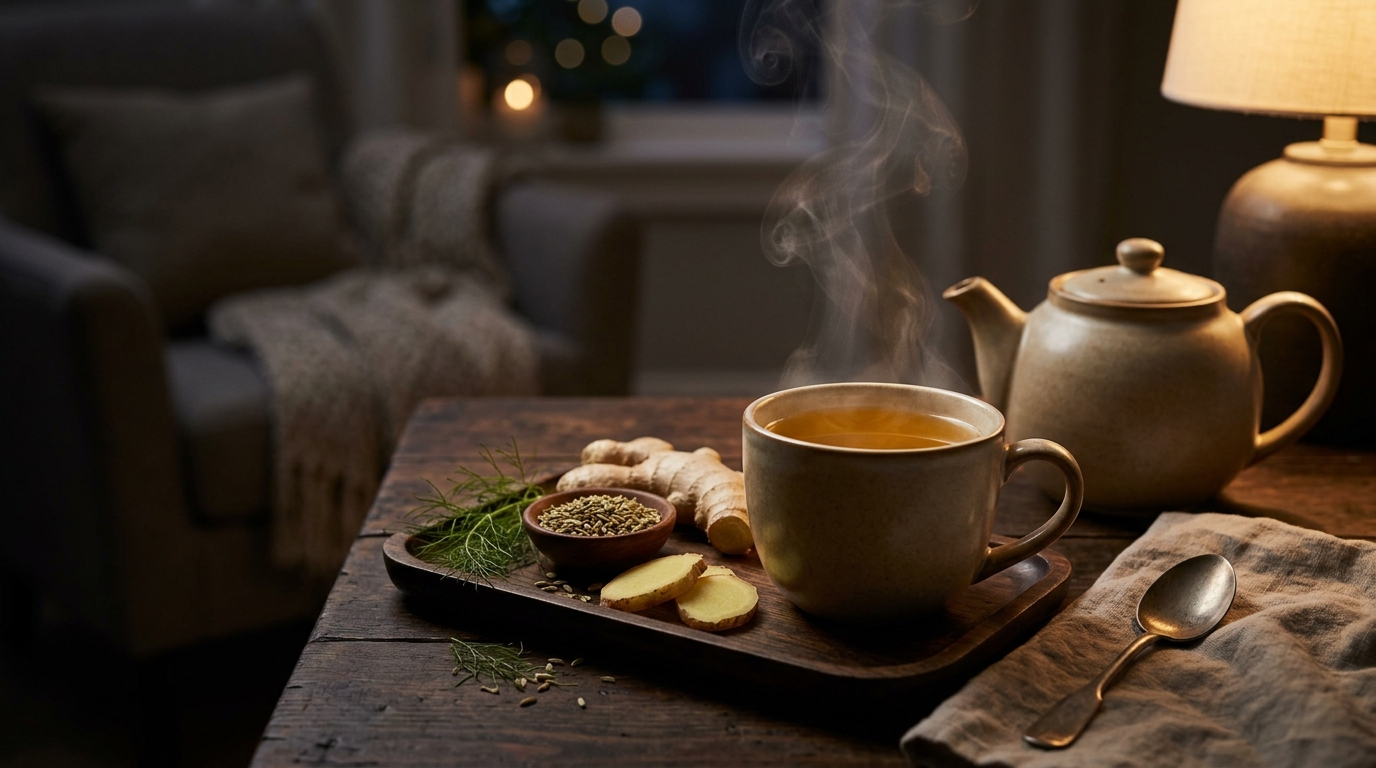
In India, restaurants have long offered a small bowl of roasted fennel seeds at the door as guests leave, a practice known as mukhwas. Chewing a pinch of the seeds freshens the breath and settles the stomach, a quiet ritual that reaches back centuries. In ancient Greece and Rome, fennel (Foeniculum vulgare) was prized as a digestive aid and a symbol of success, while Mediterranean grandmothers still steep the seeds for colicky babies and overindulgent adults alike.
Ginger (Zingiber officinale) has an equally storied history. Native to Southeast Asia, the rhizome has been a cornerstone of Ayurvedic and Traditional Chinese Medicine for more than two thousand years, used to stimulate appetite, warm the digestive fire, and calm nausea. Medieval European traders carried it along the spice routes, and it became so valued that a pound of ginger was once priced at roughly the cost of a sheep.
Brought together, the two herbs create a balanced evening ritual. Ginger brings bright, peppery warmth that gets the digestive system moving, while fennel contributes a gentle sweetness and a cooling, antispasmodic quality that relaxes the gut. The result is a golden, aromatic cup that feels like a gentle exhale at the end of the day, with no caffeine to interfere with sleep.
2
cups
Ingredients
- 2 tspfennel seeds, lightly crushed
- 2 tbspfresh ginger root, thinly sliced or grated (about 2.5 cm / 1 inch piece)
- 480 mlwater (95°C / 203°F)
- —1 strip of lemon peel (optional)
- —raw honey to taste (optional)
How to Brew
Click on an item below to shop for the recommended items for this recipe on Amazon.
As an Amazon Associate, we earn from qualifying purchases.
- Pour the fennel seeds into a mortar, or onto a cutting board, and crush them lightly with a pestle or the flat side of a knife. You only want them cracked open, not powdered, which releases the aromatic oils while keeping the tea easy to strain.
- Peel the ginger if the skin is thick or dry, then slice it into thin coins or grate it. Grated ginger gives a stronger, spicier cup, while coins give a milder, rounder warmth.
- Place the crushed fennel and ginger into a teapot or large mug, then bring fresh water just to a boil and let it rest for about 30 seconds before pouring 480 ml over the herbs.
- Cover immediately with a lid or small saucer and steep for 10 to 12 minutes. The longer steep is needed to draw the gingerols from the fibrous root and the anethole from the tough seed coat.
- Strain into two cups. Add the lemon peel strip and a little honey if you like, and sip slowly about 20 to 30 minutes after finishing dinner.
- Lightly crush 2 teaspoons of fennel seeds and place them in a clean glass jar. Add 2 tablespoons of finely sliced ginger, cutting the pieces thinner than you would for hot brew since cold water extracts more slowly.
- Pour 480 ml of cool, filtered water over the herbs, stir once to submerge everything, and seal the jar with a lid.
- Refrigerate for 8 to 10 hours, or overnight. There is no need to steep at room temperature first, and the cold slows extraction so the flavor stays smooth and sweet.
- Strain through a fine mesh sieve into a glass or pitcher, pressing the ginger slices gently to release any remaining liquid.
- Serve over ice with a lemon slice, or drink straight from the glass. The cold brew keeps in the refrigerator for up to 48 hours.
- Combine the crushed fennel seeds and sliced ginger in a small saucepan with 600 ml of cold water. Starting with cold water allows the plant material to heat gradually and release its compounds evenly.
- Bring the pot slowly to a boil over medium heat, then reduce to the lowest setting so the water barely bubbles. A rolling boil would drive off the delicate volatile oils in the fennel.
- Partially cover the pot and simmer gently for 15 minutes. The liquid will reduce slightly and turn a deeper golden amber, and the kitchen will fill with a sweet, spicy aroma.
- Remove the pan from the heat, cover fully, and let it rest for 5 minutes so the flavors settle and marry.
- Strain through a fine sieve into warmed mugs. Stir in honey or a squeeze of lemon if desired, and drink while hot.
Health Benefits
Fennel’s anethole acts as an antispasmodic on intestinal smooth muscle, allowing trapped gas to pass more easily. Fennel is one of the best-documented carminative herbs in traditional and modern herbal practice.
Clinical studies suggest ginger accelerates gastric emptying, meaning food moves from the stomach into the intestine faster. This can reduce the sluggish, overly full feeling after a heavy dinner.
Ginger has strong evidence for reducing nausea from various causes, including motion sickness, pregnancy, and post-operative recovery. Sipping a warm cup can settle a queasy stomach.
Both gingerols and fennel’s flavonoids show anti-inflammatory activity in laboratory studies, which may help soothe an irritated digestive tract, though human trials on the combination are limited.
The warmth of the drink and the gentle easing of digestive discomfort make this a natural bedtime-friendly ritual, and it is naturally caffeine free.
🧪 Key Bioactive Compounds
The Science Behind Ginger
The digestive reputation of this tea rests on two well-studied groups of compounds. In ginger, the pungent gingerols and shogaols interact with receptors in the gut, including serotonin and vanilloid receptors, that regulate motility and nausea signaling. Several small clinical trials have found that ginger speeds gastric emptying and improves symptoms of functional dyspepsia, the medical term for chronic indigestion without a clear structural cause.
Fennel works through a different but complementary mechanism. Its essential oil, dominated by trans-anethole and fenchone, has been shown in laboratory and animal studies to relax smooth muscle and reduce spasms in the intestinal wall. This antispasmodic action is what herbalists mean when they call fennel a carminative: it helps the gut relax so that trapped gas can move through. Small trials, including studies on infant colic and adult functional bowel complaints, have produced encouraging though not definitive results.
It is worth noting that much of the evidence comes from concentrated extracts or essential oils rather than tea, and a cup of infusion delivers a lower dose. Still, the long tradition of use and the plausible mechanisms make this a reasonable, low-risk choice for occasional digestive comfort. Steeping the fennel seeds covered and crushing them first helps retain and release the volatile oils that carry much of the benefit.
Brewing Tips
- Always crush the fennel seeds just before brewing. Whole seeds release their oils slowly, while freshly cracked seeds give a noticeably sweeter, more aromatic cup.
- Use fresh ginger rather than powdered whenever possible. Fresh root has a brighter, cleaner flavor and a higher concentration of gingerols, while powdered ginger can taste flat and make the tea cloudy.
- Freeze a knob of ginger and grate it straight from the freezer. It grates more easily, loses less aroma, and keeps for months so you always have some on hand.
- Drink the tea warm rather than piping hot, about 20 to 30 minutes after eating, so it supports digestion without scalding or overstimulating the stomach.
- Make a double batch of the dry fennel and ginger blend with dried ginger pieces for a pantry-friendly version you can scoop into a tea ball on busy evenings.