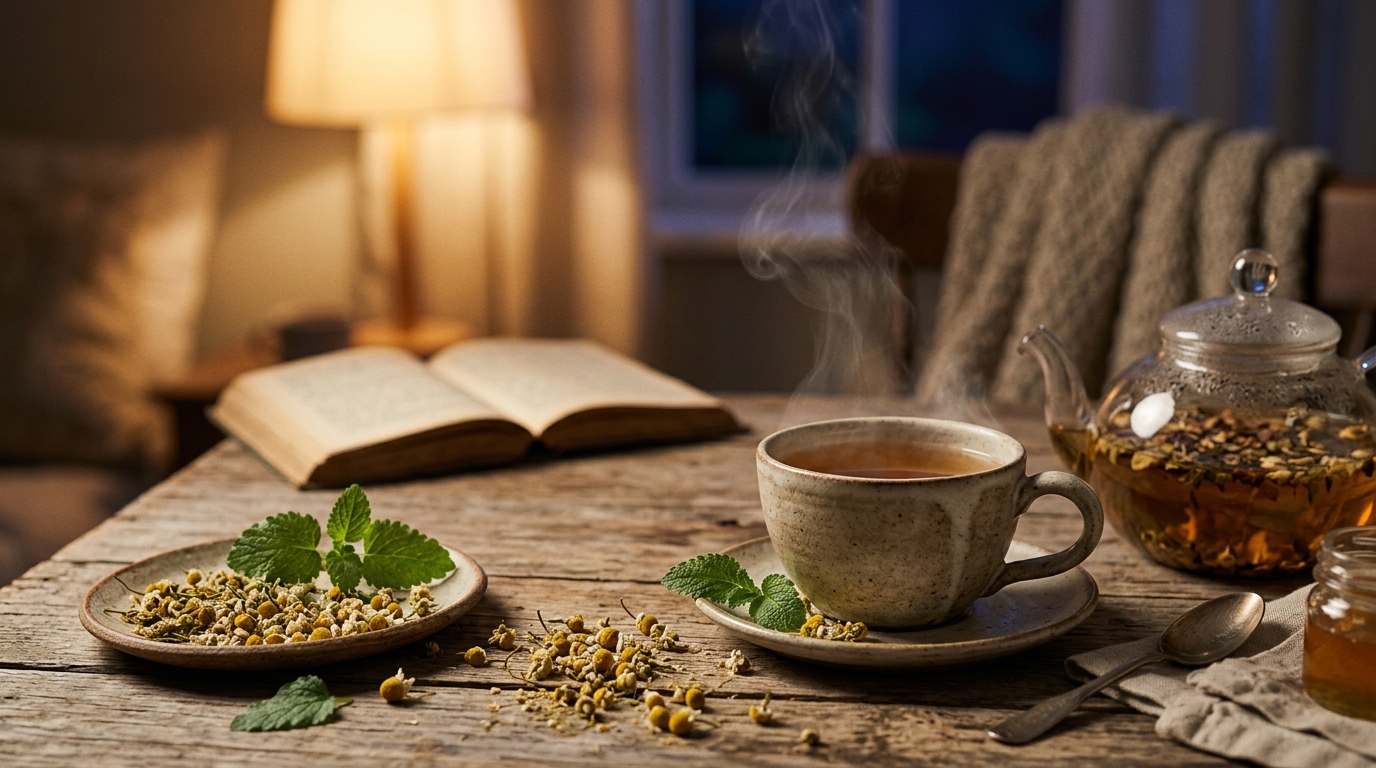
Chamomile (Matricaria chamomilla) has been sipped at bedtime for thousands of years. Ancient Egyptians dedicated it to their sun god, Greek physicians such as Dioscorides recorded its use for fevers and digestive complaints, and generations of European grandmothers kept a tin of dried blossoms beside the stove for fretful children and sleepless adults. Its small, daisy-like flowers give a soft, honeyed cup that has become the world’s most recognized herbal tea for evening calm.
Lemon balm (Melissa officinalis) has an equally long record. Medieval monks cultivated it in monastery gardens, and the 17th-century herbalist Nicholas Culpeper praised it for driving away melancholy and lifting the spirits. The Latin name Melissa means honeybee, and bees do swarm to its tiny white flowers. Crush a leaf between your fingers and you release a clean, lemony scent that feels instantly uplifting without being stimulating.
Blended, the two herbs complement each other in flavor and function. Chamomile brings a round, apple-sweet floral softness and a gentle sedative quality, while lemon balm adds a bright citrus lift and a reputation for easing nervous restlessness and a racing mind. If you are the kind of sleeper who lies down tired but finds your thoughts spinning, this duo is a time-honored place to begin your wind-down ritual.
2
cups
Ingredients
- 2 tbspdried chamomile flowers
- 2 tbspdried lemon balm leaves
- 480 mlwater (95°C / 203°F)
- —raw honey to taste (optional)
- —thin slice of lemon (optional)
How to Brew
Click on an item below to shop for the recommended items for this recipe on Amazon.
As an Amazon Associate, we earn from qualifying purchases.
- Bring fresh, filtered water to a boil, then let it rest for about one minute so it settles near 95°C (203°F). Water straight off a rolling boil can dull lemon balm’s delicate citrus notes.
- Add the dried chamomile flowers and lemon balm leaves to a teapot or a large mug fitted with a tea infuser. Gently crush the lemon balm leaves between your fingers first to wake up their oils.
- Pour the hot water over the herbs, then immediately cover the vessel with a saucer or lid to trap the aromatic vapors.
- Steep for 5 to 8 minutes. Closer to 5 minutes gives a light, floral cup; closer to 8 gives a fuller, more soothing brew with a touch of honeyed bitterness from the chamomile.
- Strain out the herbs, pressing the infuser lightly against the side of the cup to release the last of the liquid.
- Stir in honey and add a thin lemon slice if desired, then sip slowly in a dim, quiet room about 30 to 60 minutes before bed.
- Combine 3 tablespoons of dried chamomile flowers and 3 tablespoons of dried lemon balm leaves in a clean glass jar or pitcher. This is a slightly higher ratio than hot brew to compensate for the gentler extraction.
- Pour 1 liter of cold, filtered water over the herbs and stir once with a long spoon to make sure everything is submerged.
- Cover the jar and place it in the refrigerator for 8 to 12 hours, or overnight. There is no need to stir during steeping.
- Strain through a fine-mesh sieve or a piece of muslin into a clean jar or serving pitcher, discarding the spent herbs.
- Serve over ice or straight from the fridge. Add a squeeze of fresh lemon and a drizzle of honey if you like. Store covered in the refrigerator and drink within 24 hours.
- Place 3 tablespoons of dried chamomile flowers and 3 tablespoons of dried lemon balm leaves into a heatproof glass jar or French press.
- Pour 500 ml of freshly boiled water over the herbs, then seal the jar with its lid or press the French press lid down to the surface without plunging. A tight seal is essential for capturing the volatile oils.
- Let the infusion stand undisturbed for 15 to 20 minutes, allowing it to cool gradually to a comfortably warm drinking temperature.
- Strain thoroughly through a fine-mesh sieve, pressing the herbs gently to extract the remaining liquid.
- Pour into a mug and sweeten with a spoonful of honey. Drink slowly while it is still warm, ideally in the hour before bed, and leave screens in another room.
Health Benefits
Chamomile’s apigenin interacts with GABA receptors to promote relaxation, and clinical trials in older adults and postpartum women have linked chamomile extract to improved sleep quality. Lemon balm adds to this calming effect, and studies suggest it can help ease sleep disturbances linked to nervous tension.
Both herbs have been studied for mild anxiety. Chamomile extract showed reductions in generalized anxiety symptoms in randomized trials, while lemon balm has improved calmness and mood in small controlled studies.
Chamomile has long been used as a carminative and antispasmodic, relaxing smooth muscle in the gut, and lemon balm has a similar traditional reputation for easing bloating and nervous stomach, which can interfere with falling asleep.
Lemon balm has been shown in small studies to improve mood and reduce stress reactivity, making the blend useful for unwinding after a mentally demanding day.
Rosmarinic acid, apigenin, and other polyphenols in the blend neutralize free radicals in laboratory studies, contributing to the tea’s general wellness value.
🧪 Key Bioactive Compounds
The Science Behind Chamomile
The calming reputation of this pairing rests on how its compounds interact with the brain’s main inhibitory messenger, GABA. Chamomile’s flavonoid apigenin has been shown to bind to benzodiazepine sites on GABA-A receptors, nudging the nervous system toward relaxation without the heavy sedation of pharmaceutical sleep aids. Human trials using chamomile extract have reported modest but consistent improvements in anxiety and sleep quality, though most studies use concentrated extracts rather than tea, so the cup should be seen as a gentle, supportive ritual.
Lemon balm works through a complementary route. Laboratory research indicates that rosmarinic acid and the essential oil constituents of Melissa officinalis can inhibit GABA transaminase, the enzyme that breaks down GABA, potentially allowing more of this calming neurotransmitter to remain active. Small clinical studies have found that lemon balm can improve calmness and reduce stress responses, and some trials combining it with valerian or chamomile reported better sleep outcomes than placebo.
Beyond the nervous system, both herbs help the gut. Bisabolol and chamazulene in chamomile have anti-inflammatory and antispasmodic properties, while the volatile oils in lemon balm relax smooth muscle. A settled stomach is an underrated part of good sleep, which is one reason this blend has endured as a traditional evening remedy. As with most herbal research, many studies are small, so the evidence is encouraging rather than conclusive.
Brewing Tips
- Use whole dried chamomile flowers rather than dusty tea-bag fannings. Whole blossoms hold far more of their aromatic oils and deliver a sweeter, more complex cup.
- Always cover your cup while steeping. Lemon balm’s calming volatile oils evaporate quickly, and a simple saucer on top can noticeably improve both flavor and effect.
- Build it into a ritual: drink your tea at the same time each night, 30 to 60 minutes before bed, with dim lighting and no screens. The routine itself becomes a sleep cue for your body.
- Source fresh lemon balm if you can. Growing a pot on a windowsill is easy, and 4 to 6 fresh leaves can replace the dried herb for a brighter, more vivid cup.
- Store dried herbs in airtight, opaque containers away from heat and light, and use within a year for the best flavor and potency.