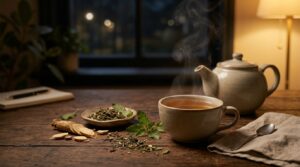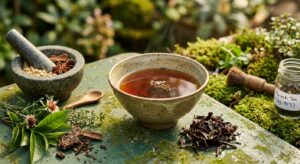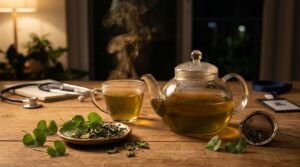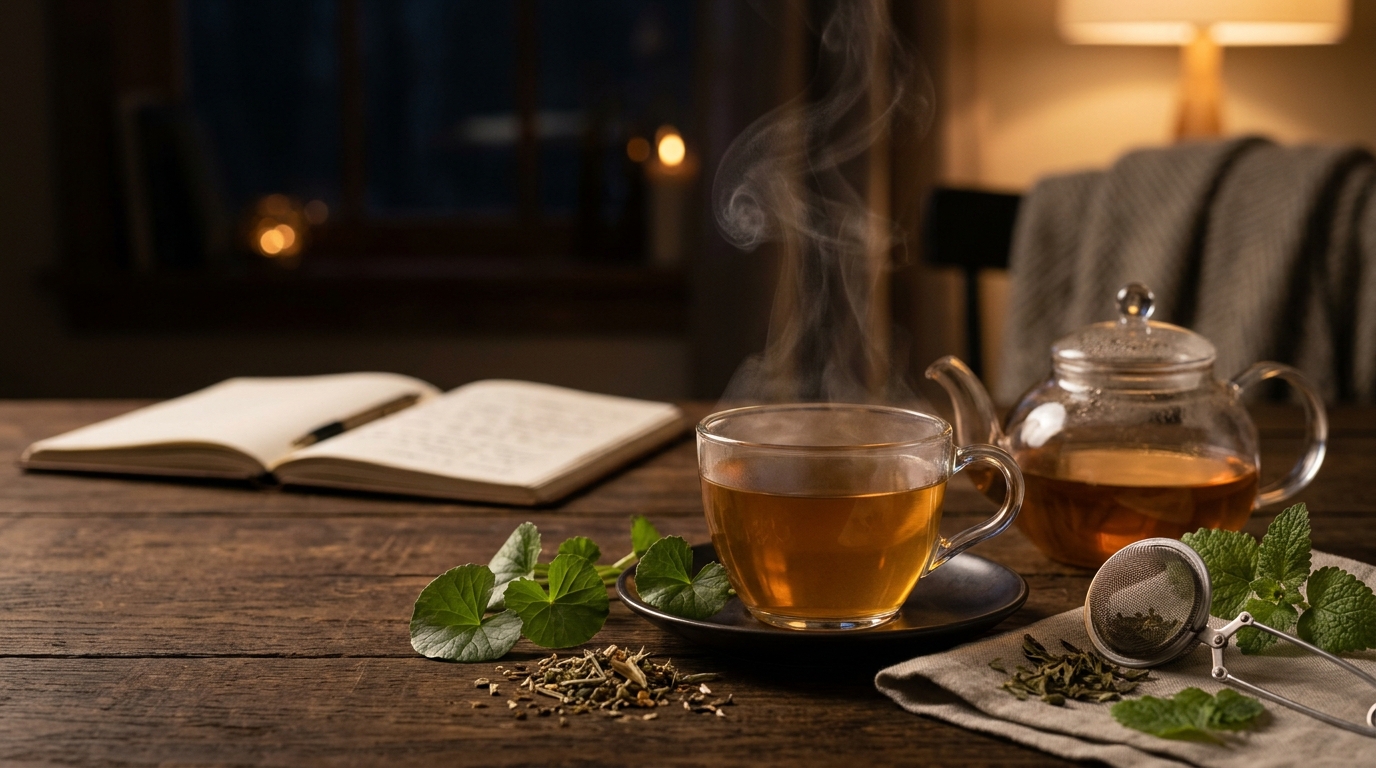
Gotu kola (Centella asiatica) has been prized for centuries across India, China, and Southeast Asia. In Ayurveda it is known as mandukaparni and has long been considered a brain tonic, a herb of the intellect used by scholars and meditators to support memory and mental clarity. A popular piece of folklore claims that elephants, famed for their long memories, feed on the leaves, which is how the plant earned its reputation as a food for the mind. Its leaves are mild, faintly grassy, and gently bitter, and they have been brewed into teas and eaten fresh in salads for generations.
Lemon balm (Melissa officinalis) comes from a very different tradition but arrives at a complementary place. A member of the mint family, it was cultivated by medieval monks and sipped by European herbalists to lift the spirits, ease nervous tension, and calm the stomach. Its bright, lemony fragrance made it a staple of monastery gardens, and old herbals describe it as a remedy that ‘maketh the heart merry.’ Today it is among the most beloved herbs for stress and restlessness.
Together, the two herbs make an unusual and useful evening companion. Gotu kola contributes its traditional association with focus and cognitive support, while lemon balm softens the edges of a busy mind and helps you settle. The result is not a stimulant and not a sedative, but a calm, clear-headed state that suits those hours after dinner when you still have work to do or simply want to unwind with a book. It is a tea for steady attention rather than a burst of energy.
2
cups
Ingredients
- 2 tspdried gotu kola leaf
- 2 tspdried lemon balm leaf
- 480 mlwater (90°C / 194°F)
- —raw honey to taste (optional)
- —fresh lemon slice or peel (optional)
How to Brew
Click on an item below to shop for the recommended items for this recipe on Amazon.
As an Amazon Associate, we earn from qualifying purchases.
- Bring fresh, filtered water to a boil, then let it rest for about 1 minute so it cools to roughly 90 to 95°C (194 to 203°F). Water at a full rolling boil can dull the delicate citrus oils in lemon balm.
- Add 2 teaspoons of dried gotu kola and 2 teaspoons of dried lemon balm to a teapot or large mug fitted with an infuser. Gently crush the lemon balm between your fingers first to wake up its aroma.
- Pour the hot water over the herbs, then immediately cover the vessel with a lid or small plate to trap the aromatic oils.
- Steep for 7 to 10 minutes. Gotu kola benefits from a longer steep to release its triterpenoid compounds, so resist the urge to pull it early.
- Remove the infuser or strain the leaves, stir in honey if you like, and add a thin slice of lemon peel. Sip slowly while the tea is warm.
- Add 3 tablespoons of dried gotu kola and 3 tablespoons of dried lemon balm to a clean 1 liter glass jar. This ratio is slightly stronger than the hot brew because cold water extracts more slowly.
- Pour 1 liter of cool, filtered water over the herbs and stir gently with a long spoon until all the leaves are wet and submerged.
- Seal the jar and let it sit on the counter for 1 hour, then transfer it to the refrigerator to steep for 8 to 12 hours.
- Strain through a fine mesh sieve or a cheesecloth-lined strainer, pressing the herbs lightly to release the last of the liquid.
- Serve over ice with a slice of lemon or a sprig of fresh lemon balm. Keep refrigerated and drink within 2 days for best flavor.
- Heat 480 ml of water to just below boiling, around 95°C (203°F).
- Place 3 tablespoons of dried gotu kola and 3 tablespoons of dried lemon balm in a heatproof pitcher or jar. This makes a deliberately strong, concentrated tea.
- Pour the hot water over the herbs, cover, and steep for 10 minutes to build a robust base that will stand up to ice.
- Strain out the herbs, then stir in honey or a little maple syrup while the concentrate is still warm so it dissolves fully.
- Fill two tall glasses with ice and pour the concentrate over it, topping with a splash of cold water if it tastes too strong. Garnish with lemon wheels and a fresh mint or lemon balm sprig.
Health Benefits
Small human studies suggest lemon balm can improve calmness and attention, while gotu kola has been associated with improved cognitive performance and mood in preliminary trials. Together they offer a relaxed but alert state rather than stimulation.
Lemon balm’s rosmarinic acid interacts with the GABA system, which helps dampen the stress response. Clinical research has shown reduced anxiety and improved mood with standardized lemon balm extracts.
Gotu kola’s triterpenoids have been studied for their ability to support the integrity of blood vessels and improve microcirculation, which may contribute to better blood flow to the brain.
Lemon balm has a long history as a carminative, easing bloating, gas, and nervous stomach. This makes the tea a gentle after-dinner choice.
Both herbs contain polyphenols and flavonoids that help neutralize free radicals, which may support long-term brain and skin health.
🧪 Key Bioactive Compounds
The Science Behind Gotu Kola
The cognitive reputation of gotu kola rests largely on a group of triterpenoid compounds, chiefly asiaticoside, madecassoside, and their aglycone forms. Laboratory and animal studies suggest these compounds may support neuronal health by encouraging dendritic growth and reducing oxidative damage in brain tissue. Human research is more limited, but small trials have reported modest improvements in working memory, alertness, and mood, particularly in older adults and in people under stress. The evidence is promising but still developing, so gotu kola is best viewed as a supportive herb rather than a proven cognitive enhancer.
Lemon balm has a stronger body of clinical evidence for its calming effects. Its rosmarinic acid content appears to inhibit GABA transaminase, the enzyme that breaks down the calming neurotransmitter GABA, which may allow more of it to remain active in the brain. In controlled studies, single doses of lemon balm extract have improved self-rated calmness and, at moderate doses, memory performance and speed of task completion. This pairing of reduced agitation and preserved attention is exactly why it complements gotu kola so well in the evening.
Because neither herb contains caffeine, this blend avoids the sleep disruption that comes with typical focus drinks. Instead, it works through gentler pathways: modulating stress signaling, supporting circulation, and easing nervous tension. The effect is subtle and builds with consistent use, so many people find it most helpful as part of a regular evening ritual rather than a one-off fix.
Brewing Tips
- Crush the dried lemon balm lightly before brewing to release more of its fragrant volatile oils.
- Always cover your cup or teapot while steeping, since lemon balm’s active aromatic compounds evaporate easily with the steam.
- If the gotu kola tastes too bitter, shorten the steep to 6 minutes or add a small spoonful of honey to balance it.
- Drink this tea 30 to 60 minutes before your evening work or reading session so the calming effect has time to settle in.
- Source organic, vividly green dried herbs, since faded brown leaves have lost much of their flavor and potency.