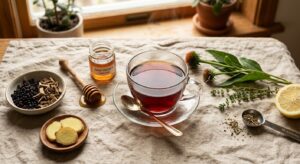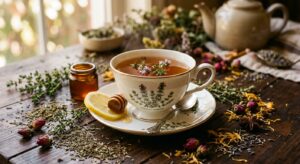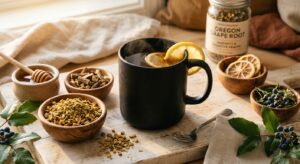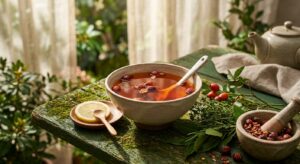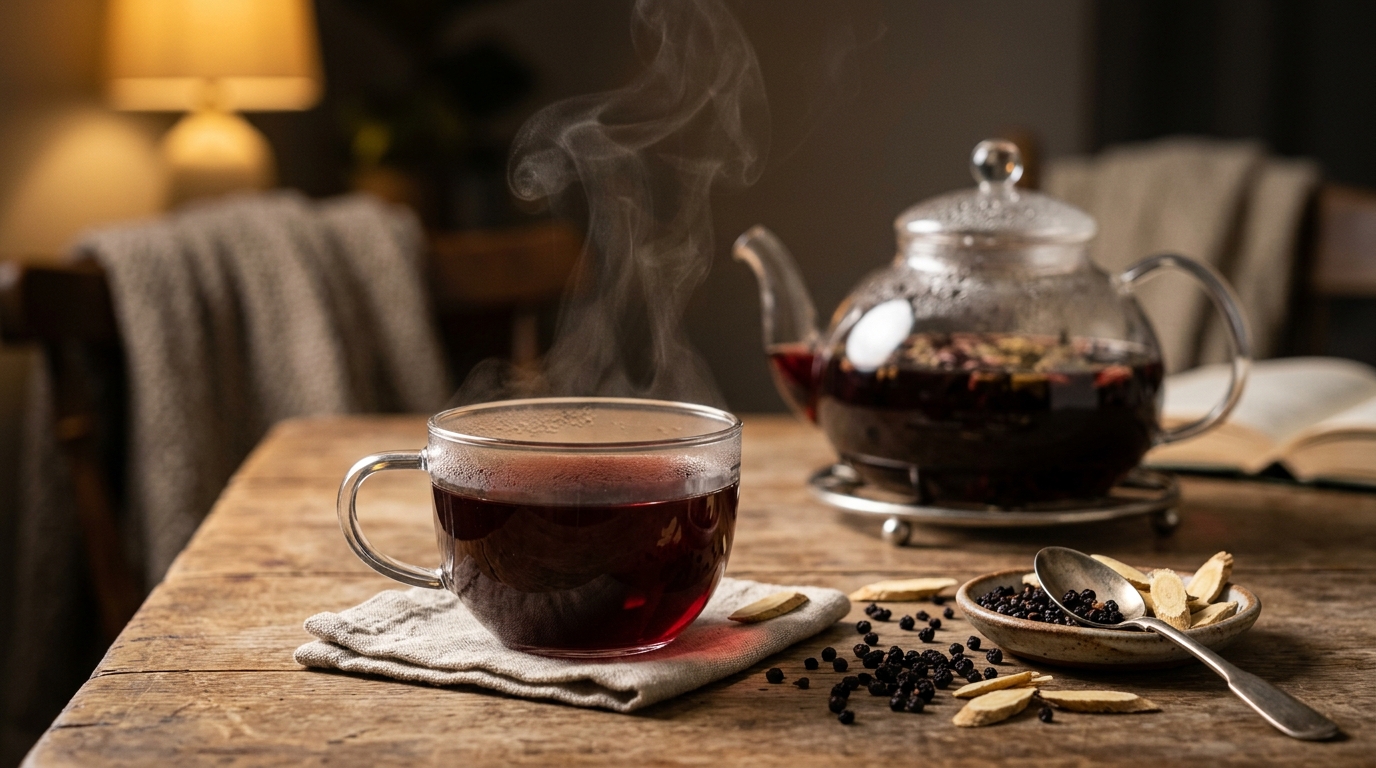
Few herbal pairings tell as clear a story as elderberry and astragalus. Elderberry (Sambucus nigra) has been gathered across Europe for centuries, its dark purple berries cooked into syrups, wines, and winter remedies. Folk herbalists called the elder tree the “medicine chest of the country people,” and the berries were traditionally used when fevers, coughs, and the miseries of influenza-like illness set in. It is the herb you reach for when you feel something coming on.
Astragalus (Astragalus membranaceus, known as huang qi in Chinese) comes from a very different tradition. In Traditional Chinese Medicine, the sliced yellow root has been used for over two thousand years as a qi tonic, a root meant to be taken steadily over weeks and months to strengthen the body’s protective energy, called wei qi. Rather than treating a cold in progress, astragalus is traditionally used to help the body resist the next one. Its flavor is gently sweet, a little beany, and reminiscent of warm hay.
Together they form a thoughtful partnership: elderberry for the acute moment, astragalus for the long game. Brewed as an evening tea, the blend is rich, ruby-brown, and mildly tart-sweet, and it fits naturally into a wind-down routine. Because astragalus is a tough, fibrous root, it needs a longer, gentler extraction than a typical leaf tea, which is why this post includes a simmered decoction alongside the hot and cold methods.
2
cups
Ingredients
- 2 tbspdried elderberries
- 4 tbspdried astragalus root slices
- 1 pinchdried orange peel (optional, for brightness)
- 500 mlwater
- —raw honey to taste (optional, add after cooling slightly)
- —thin slice of fresh ginger (optional, for warmth)
How to Brew
Click on an item below to shop for the recommended items for this recipe on Amazon.
As an Amazon Associate, we earn from qualifying purchases.
- Measure the dried elderberries and astragalus root slices into a small saucepan or heatproof teapot. Add the orange peel and ginger slice now if you are using them.
- Bring the water to a full rolling boil in a kettle, then pour it over the herbs. If using a saucepan, bring the herbs and water to a boil together and let it bubble gently for 2 minutes.
- Cover and steep for 10 to 15 minutes. The longer end of the range pulls more tannin and tartness from the berries and more sweetness from the astragalus.
- Gently press the berries against the strainer with the back of a spoon to release their juice and deepen the color.
- Strain into two mugs. Let the tea cool for a minute or two, then stir in honey if desired. Sip slowly an hour or so before bed.
- Place the dried elderberries in a small saucepan with 120 ml of water and simmer for 5 minutes to heat-treat the berries. Pour the berries and their liquid into a glass jar and let them cool to room temperature.
- Add the astragalus root slices, orange peel, and the remaining 380 ml of cold filtered water to the jar. Stir once.
- Seal the jar and refrigerate for 8 to 12 hours, or overnight. The cold extraction pulls out the root’s natural sweetness while keeping the berry flavor bright and jammy.
- Strain through a fine mesh strainer, pressing lightly on the berries.
- Serve over ice for a refreshing evening drink, or warm a mug of it gently on the stove without boiling. Store leftovers in the refrigerator for up to 3 days.
- Place the astragalus root slices in a small pot with 750 ml of cold water. Bring to a boil, then reduce to the lowest simmer, partially covered.
- Simmer the astragalus alone for 20 minutes, until the water turns a pale golden color and smells sweet and hay-like.
- Add the dried elderberries, orange peel, and ginger. Continue to simmer gently for another 15 to 20 minutes. The liquid will reduce by about a third and turn deep purple.
- Remove from the heat, cover, and let rest for 5 minutes so the flavors settle.
- Strain through a fine mesh strainer, pressing the berries to extract the juice. Drink warm in 250 ml servings, and refrigerate the remainder for up to 3 days, reheating gently.
Health Benefits
Elderberry extracts have been shown in several small clinical trials to shorten the duration and ease the symptoms of upper respiratory infections, likely through antioxidant anthocyanins and effects on viral attachment. The evidence is promising but not definitive.
Astragalus polysaccharides have been shown to stimulate immune cell activity in laboratory and animal research, and the root’s use as a daily tonic in Traditional Chinese Medicine reflects its role in seasonal immune support. Human trials remain limited.
Elderberry is among the richest dietary sources of anthocyanins, while astragalus contributes isoflavones and saponins. Together they offer a broad range of antioxidants that help counter oxidative stress.
Traditional herbal medicine has used both herbs to ease coughs and congestion, and the warm steam and fluids of the tea itself help loosen mucus and comfort an irritated throat.
Sipping a warm, mildly sweet tea before bed supports rest, and quality sleep is itself one of the most important foundations of immune health.
🧪 Key Bioactive Compounds
The Science Behind Elderberry
The pairing works because the two herbs act through different mechanisms and on different timescales. Elderberry is exceptionally rich in anthocyanins, especially cyanidin-3-glucoside, the pigments responsible for its near-black color. In laboratory studies, elderberry extracts have been shown to interfere with the ability of influenza viruses to attach to and enter cells, and to influence the release of inflammatory signaling molecules called cytokines. A handful of small human trials have found that elderberry extract can modestly shorten the duration of cold and flu symptoms, though larger studies are still needed.
Astragalus works more like a slow-building tonic. Its primary active constituents are the astragalus polysaccharides and the saponins known as astragalosides. In cell and animal studies, these compounds appear to modulate the activity of macrophages, natural killer cells, and T lymphocytes, the cells that coordinate immune defense. This lines up with the traditional description of astragalus as strengthening the body’s protective energy, though most of the evidence comes from preclinical research, and well-designed human trials are still relatively scarce.
Extraction also matters. Polysaccharides and saponins are tough to pull from dense root, which is why astragalus has traditionally been simmered as a decoction rather than steeped briefly. Elderberry’s anthocyanins, by contrast, dissolve readily in hot water but are sensitive to prolonged high heat, so combining a gentle long simmer for the root with a shorter exposure for the berries gives the most balanced cup.
Brewing Tips
- Choose dried astragalus root sold as flat, yellowish slices (often called tongue depressors) rather than powder, which turns the tea cloudy and gritty.
- Make a double batch of the decoction on Sunday and reheat single cups through the week for an easy daily immune ritual.
- Use the spent astragalus slices for a second, lighter simmer, as the dense root usually has more to give.
- Start taking the tea at the first sign of a scratchy throat, but save the longer, daily astragalus habit for the cold season rather than year-round.