The ginkgo tree is often called a living fossil. Fossils of near-identical leaves date back more than 200 million years, and a few trees in Hiroshima famously survived the 1945 atomic bombing and sprouted again within months. In China, ginkgo has been cultivated for centuries as a temple tree, and its seeds and leaves appear in traditional materia medica. The fan-shaped leaves, with their distinctive split down the center, have become a symbol of longevity and resilience across East Asia.
Traditional use centered mostly on the seeds, which were used for respiratory complaints. The leaves rose to prominence in the twentieth century, when German and French researchers developed standardized leaf extracts to study circulation and cognition. Today ginkgo leaf is one of the most researched herbs in the world, and it is popular among students, writers, and anyone hoping to keep their mind sharp as the day winds down.
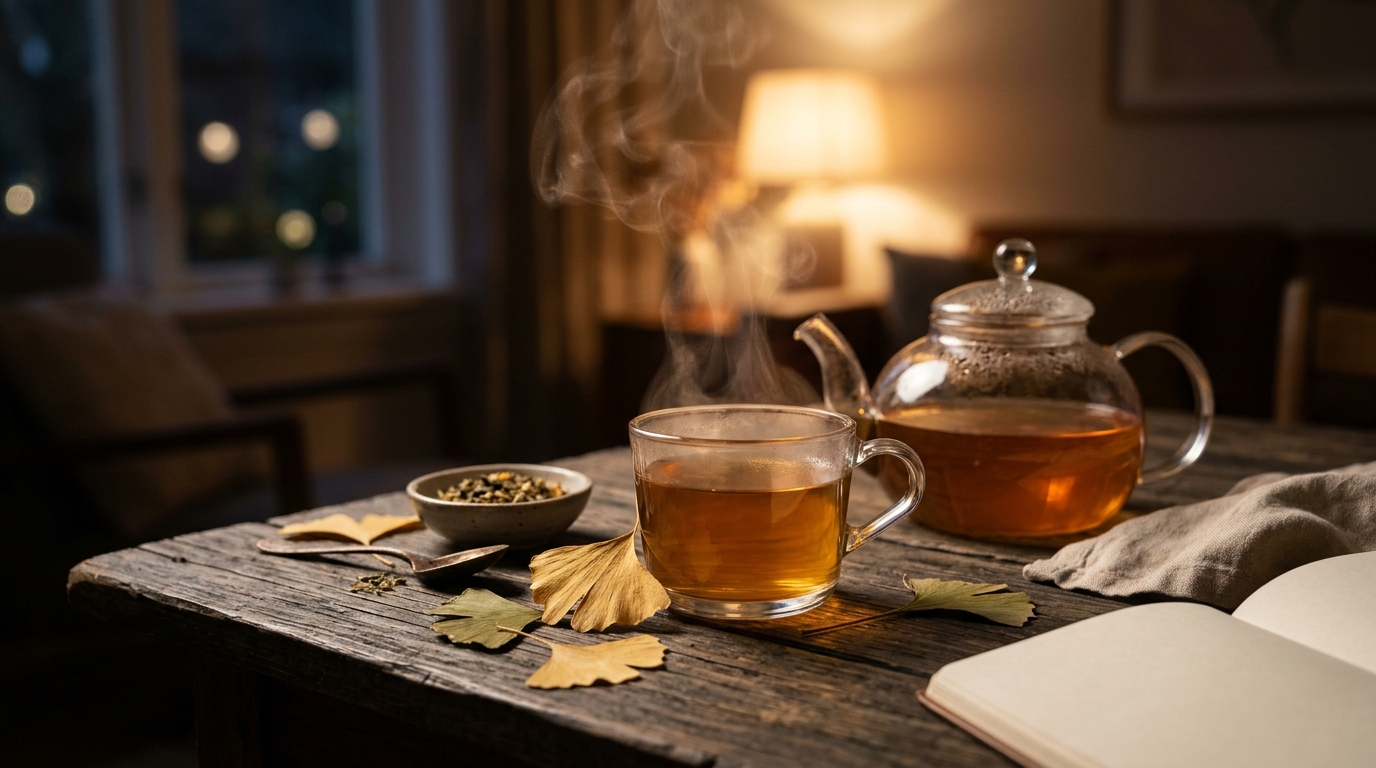
What makes ginkgo especially appealing as an evening tea is what it lacks. There is no caffeine in the leaf, so you can sip a warm cup at 8 PM without worrying about a restless night. The flavor is mellow, hay-like, and slightly woody, with a faint bitterness that rewards a pinch of lemon or a drizzle of honey. It pairs naturally with a quiet desk, a good book, or a last hour of focused work.
2
cups
Ingredients
- 2 tspdried ginkgo biloba leaves (cut and sifted)
- 480 mlfiltered water
- —fresh lemon slice or wedge (optional)
- —raw honey to taste (optional)
How to Brew
Click on an item below to shop for the recommended items for this recipe on Amazon.
As an Amazon Associate, we earn from qualifying purchases.
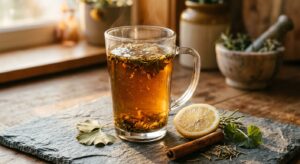
- Bring filtered water to a gentle boil, then let it rest for about 30 seconds to bring it down to roughly 90 to 95°C (194 to 203°F).
- Measure 1 teaspoon of dried ginkgo leaves per 240 ml of water and place them in a tea infuser, teapot filter, or directly in the pot.
- Pour the hot water over the leaves, cover the vessel with a lid or small plate to trap the volatile aromatics, and set a timer for 7 to 10 minutes.
- Strain out the leaves and taste the tea. If it seems too mild, steep the leaves for another 2 minutes rather than adding more leaf.
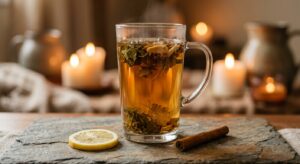
- Add a squeeze of lemon or a small spoonful of honey to soften the natural bitterness, and sip slowly while it is warm.
- Add 2 tablespoons of dried ginkgo leaves to a clean glass jar, using a slightly higher ratio than hot brewing because cold water extracts more slowly.
- Pour in 1 liter of cool filtered water, stir gently with a spoon to wet all the leaves, and seal the jar with its lid.
- Refrigerate for 8 to 12 hours. Overnight works well, but even a long afternoon steep produces a pleasant, lightly flavored tea.
- Strain through a fine mesh sieve into a second jar or pitcher, pressing the leaves lightly to release any remaining liquid.
- Serve chilled over ice with a lemon wheel, or let it sit at room temperature for a few minutes if you prefer a milder chill. Drink within 48 hours.
- Place 1 tablespoon of dried ginkgo leaves and 500 ml of cold filtered water in a small saucepan with a lid.
- Bring the water slowly to a gentle simmer over medium-low heat. Small bubbles should barely break the surface, never a rolling boil.
- Reduce the heat to low, cover, and simmer for 10 minutes, stirring once halfway through to keep the leaves submerged.
- Remove from the heat and let the pot rest, covered, for 5 minutes so the flavors mellow and the tea cools slightly.
- Strain through a fine sieve into a mug. The tea will be deeper in color and more robust than a standard infusion, so sweeten or dilute with a splash of hot water to taste.
Health Benefits
Ginkgolides and flavonoids are thought to improve microcirculation by supporting flexible blood vessels and reducing platelet stickiness. This is one of the best-studied effects of ginkgo leaf extract.
Several clinical trials, mostly using concentrated extracts rather than tea, suggest modest improvements in attention and processing speed. Results are mixed, and tea is considerably gentler than standardized extracts.
Flavonoids like quercetin and kaempferol scavenge free radicals in laboratory studies. Regular consumption of antioxidant-rich plants is associated with healthy aging, though tea strength varies widely.
Because ginkgo leaf contains no caffeine, it offers a warm, ritual-friendly beverage that will not interfere with the body’s natural wind-down. This makes it useful for people who want to stay mentally engaged without stimulants.
🧪 Key Bioactive Compounds
The Science Behind Ginkgo Biloba
Most of the research on ginkgo has focused on a standardized leaf extract known as EGb 761, which concentrates roughly 24 percent flavonoid glycosides and 6 percent terpene lactones. These two groups of compounds work through complementary pathways. Flavonoids such as quercetin, kaempferol, and isorhamnetin act as antioxidants, helping protect cell membranes and blood vessel linings from oxidative damage. Terpene lactones, including ginkgolides A, B, and C and bilobalide, appear to influence blood flow and nerve cell resilience.
Ginkgolide B is a well-characterized antagonist of platelet-activating factor, a signaling molecule involved in clotting and inflammation. By modulating this pathway, ginkgo may help keep tiny blood vessels, including those in the brain, flexible and well perfused. Bilobalide, meanwhile, has shown neuroprotective effects in cell and animal studies, including support for mitochondrial function in neurons. Human trials on memory and attention have produced mixed results, with some showing small benefits in people with mild cognitive complaints and others showing no difference from placebo.
It is important to be honest about what tea can and cannot do. A home-brewed cup of ginkgo leaf contains a much lower and more variable dose of active compounds than a standardized extract, and terpene lactones are less water-soluble than flavonoids. Tea is best viewed as a gentle, enjoyable ritual that offers a mild dose of plant polyphenols rather than a clinical intervention. For many people, the real benefit comes from the calm, intentional pause that a warm evening cup provides.
Brewing Tips
- Choose ginkgo leaves harvested in late summer or early autumn, when flavonoid content is highest, and look for leaves that are still pale green or golden rather than brown and brittle.
- Blend ginkgo with a little peppermint or lemon balm if you find the flavor too earthy on its own. Both are naturally caffeine-free and complement the herb nicely.
- Store dried ginkgo leaves in an airtight, opaque container away from light and heat. They keep their flavor for up to a year.
- Drink ginkgo tea consistently rather than occasionally, since any circulation-supporting effects are generally associated with regular, long-term use.
- Pay attention to how your body responds during the first week, and start with one cup per day before increasing.