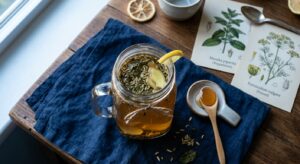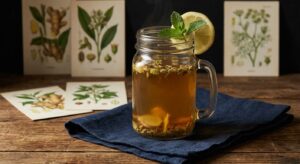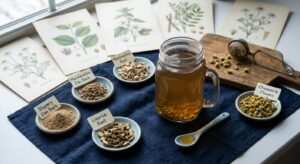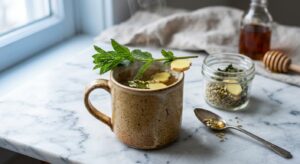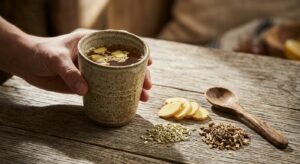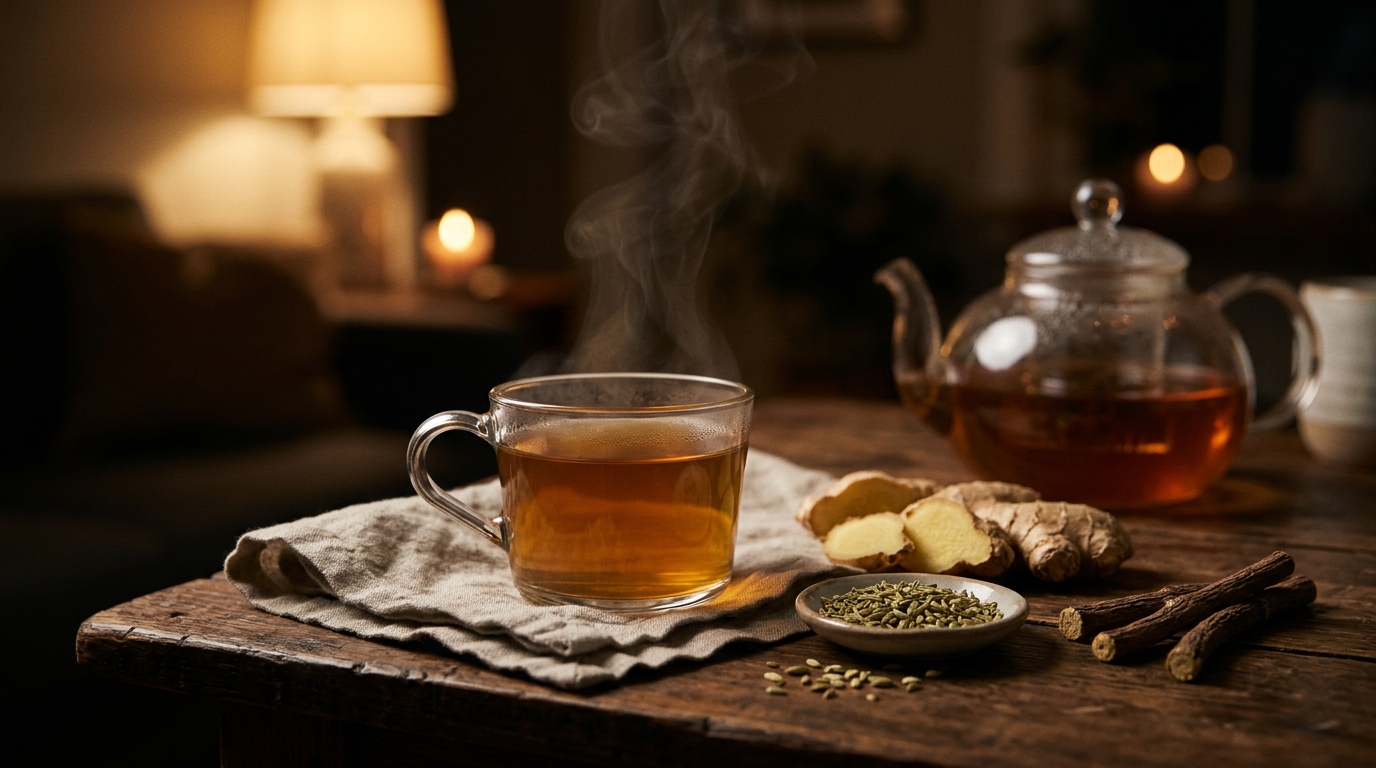
Long before the modern pharmacy, cultures across the world ended their meals with a small cup of something warm, aromatic, and settling. In India, a handful of fennel seeds known as saunf is passed around after dinner and chewed or steeped in water. In the Mediterranean, fennel and licorice were folk remedies for stomach upset and heavy feasts. In China and across Southeast Asia, ginger has been a cornerstone of digestive medicine for over two thousand years, appearing in some of the oldest surviving herbal texts.
This evening tea brings those three traditions into one cup. Ginger offers a bright, peppery warmth that stimulates digestion and eases nausea. Fennel seed contributes a gentle anise sweetness and is traditionally used to relax the gut and release trapped gas. Licorice root rounds everything out with a natural, lingering sweetness and a soothing, coating quality that has made it a staple in digestive formulas from Ayurveda to Traditional Chinese Medicine.
The result is a tea that tastes like dessert but works like a digestif. It contains no caffeine, so it suits late evenings, and the natural sweetness of licorice means you rarely need any added sugar. Think of it as a quiet, fragrant full stop at the end of a good meal.
2
cups
Ingredients
- 2 tspfresh ginger root, thinly sliced or grated (or 1 tsp dried ginger pieces)
- 2 tspfennel seeds, lightly crushed
- 1 tspdried licorice root, cut and sifted
- 480 mlwater (95°C / 203°F)
- —a squeeze of lemon or a small spoon of raw honey (optional)
How to Brew
Click on an item below to shop for the recommended items for this recipe on Amazon.
As an Amazon Associate, we earn from qualifying purchases.
- Slice the fresh ginger into thin coins or grate it coarsely. The more surface area you expose, the more of the warming gingerols will move into the water.
- Lightly crush the fennel seeds with the back of a spoon or a mortar and pestle. Crushing ruptures the seed walls and releases the aromatic volatile oils, especially anethole.
- Place the ginger, fennel, and licorice root into a teapot or a large mug with an infuser.
- Bring fresh water to just under a boil, around 95°C (203°F), and pour it over the herbs.
- Cover the vessel with a saucer or lid right away. Covering traps the volatile fennel oils that would otherwise escape with the steam.
- Steep for 10 to 12 minutes. This is longer than a typical leaf tea because roots and seeds need more time to give up their flavor and compounds.
- Strain into two cups. Taste before adding anything, since licorice usually provides enough sweetness on its own. Add lemon or honey only if you like.
- Slice the ginger into thin coins and lightly crush the fennel seeds. Because cold water extracts more slowly, use slightly more herb than for hot brewing: 3 tsp ginger, 3 tsp fennel, and 1.5 tsp licorice root for 1 liter of water.
- Add the herbs to a clean glass jar or pitcher and pour in 1 liter of cold, filtered water.
- Stir once, seal the jar, and place it in the refrigerator.
- Steep for 8 to 10 hours, or overnight. Avoid going much past 12 hours, as the ginger can turn sharp and slightly bitter.
- Strain through a fine mesh sieve into a clean bottle or glass.
- Serve over ice, or pour a glass and let it come to cool room temperature if you prefer to sip it gently after dinner. Keep the rest refrigerated and drink within 2 days.
- Add 3 tsp sliced fresh ginger and 1.5 tsp licorice root to a small saucepan with 500 ml of cold water. Starting with cold water allows the roots to heat gradually and release their compounds evenly.
- Bring to a boil over medium heat, then reduce immediately to a low, gentle simmer. Keep the lid slightly ajar.
- Simmer for 10 minutes. The water will deepen to amber and the kitchen will smell sharply of ginger.
- Add 2 tsp lightly crushed fennel seeds, cover tightly, and simmer for another 5 minutes. Fennel is added later because its volatile oils are delicate and would be lost with a long boil.
- Remove from the heat and let the pot rest, covered, for 5 minutes to let the flavors settle and marry.
- Strain through a fine sieve into warm mugs. The decoction is stronger and more robust than a standard infusion, so sip slowly.
Health Benefits
Fennel’s anethole and fenchone have a well-documented antispasmodic and carminative effect, relaxing the smooth muscle of the gut so trapped gas can pass. This is the reason fennel seed is eaten after meals in many cultures.
Ginger is among the best-studied herbs for nausea, with clinical trials supporting its use for motion sickness, pregnancy-related nausea, and postoperative queasiness. Gingerols act on both the gut and the brain’s nausea pathways.
Ginger helps the stomach empty more quickly after a meal, which can reduce the heavy, overfull feeling that follows a large dinner. Some small studies have shown improved gastric motility with ginger.
Licorice root contains mucilage-like compounds and flavonoids that have traditionally been used to coat and calm irritated digestive tissue. Research on licorice extracts for dyspepsia has shown promising results.
While not a sedative, the ritual of a warm, caffeine-free, naturally sweet cup after dinner helps signal the body to relax, and a settled stomach supports more comfortable sleep.
🧪 Key Bioactive Compounds
The Science Behind Ginger
Each herb in this blend works on a different part of the digestive process, which is why they pair so well. Ginger’s gingerols and shogaols act on serotonin and other receptors in the gut and on the brain’s vomiting center, which explains both its anti-nausea effect and its ability to speed up gastric emptying. A number of randomized trials have found that ginger helps the stomach move food along more quickly, easing that sluggish, overfull sensation after a large meal.
Fennel seed is a classic carminative, a class of herbs that reduce gas and relax the gut. Its volatile oils, mainly trans-anethole and fenchone, have been shown in laboratory and some human studies to have antispasmodic effects on intestinal smooth muscle. Fennel has also been studied for infant colic and for symptoms of irritable bowel syndrome, with mixed but generally encouraging results.
Licorice root supplies glycyrrhizin, roughly 50 times sweeter than sugar, along with flavonoids such as liquiritin and isoliquiritigenin. These compounds have anti-inflammatory and gastroprotective properties, and deglycyrrhizinated licorice (DGL) extracts are widely used for stomach complaints. The same glycyrrhizin that gives licorice its sweetness is also responsible for its blood-pressure effects at high doses, which is why moderation matters with this herb.
Brewing Tips
- Crush the fennel seeds just before brewing rather than buying them pre-ground. Whole seeds hold their volatile oils far longer and give a noticeably sweeter, fresher aroma.
- Use fresh ginger when you can. Dried ginger is hotter and more pungent, so if you substitute, cut the amount by about half.
- Keep the licorice root to about 1 tsp per two cups. It is strongly sweet and can overpower the blend, and moderation also keeps glycyrrhizin intake low.
- Make a dry blend ahead of time by mixing 2 parts fennel, 1 part dried ginger, and 1 part licorice root in a jar, then use 1 heaped teaspoon per cup for an easy weeknight digestif.