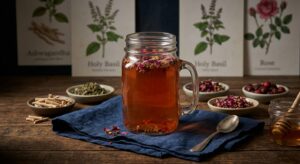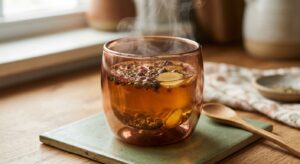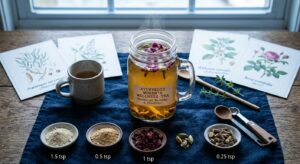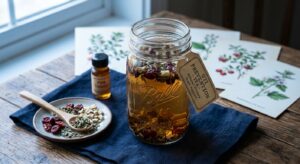
Dong quai (Angelica sinensis) has been called the queen of female herbs in Chinese medicine for well over two thousand years. Its Chinese name, dang gui, is often translated as ‘state of return,’ a nod to its traditional use for restoring balance and replenishing blood after loss or depletion. Records of its use appear in classical texts such as the Shennong Bencao Jing, and it remains one of the most frequently prescribed herbs in traditional formulas for women’s wellness.
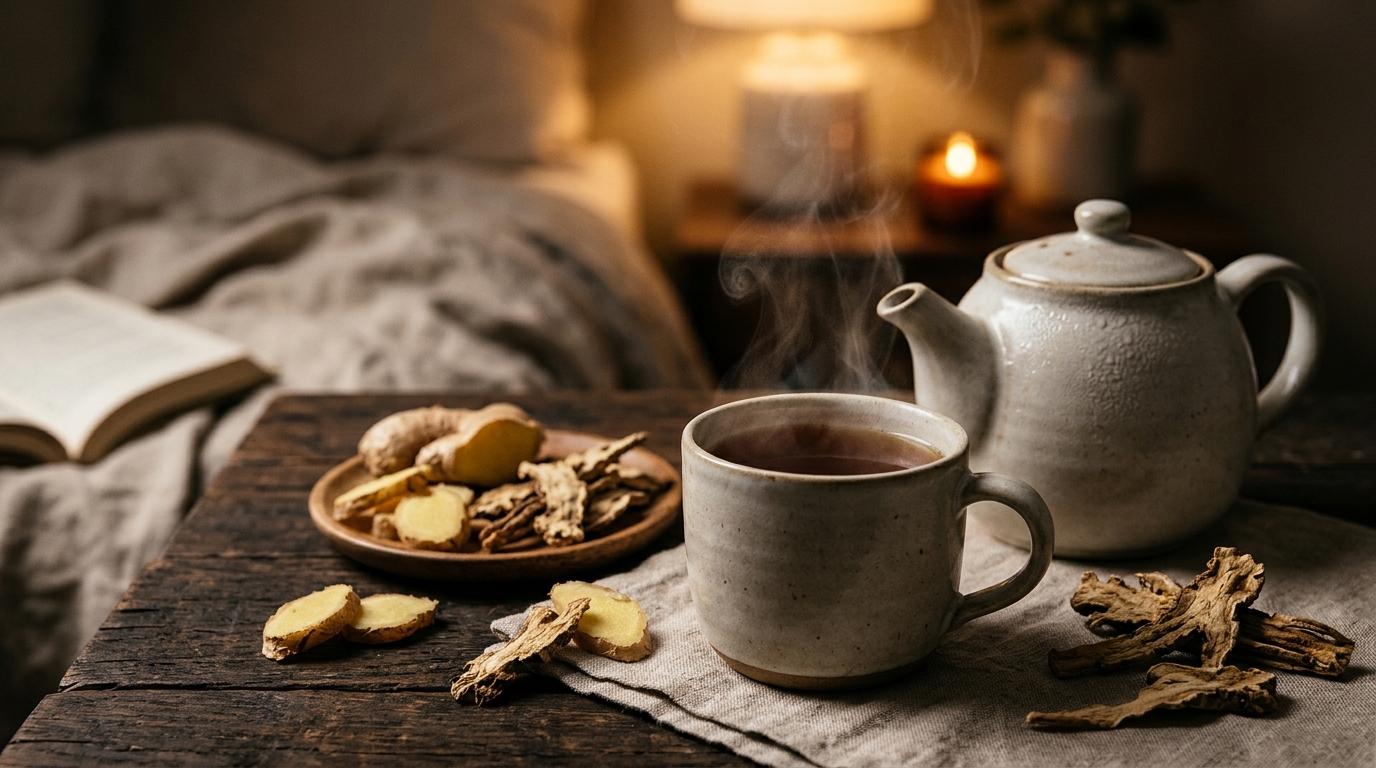
The dried root has a distinctive character: sweet, slightly bitter, and unmistakably aromatic, with notes reminiscent of celery seed, anise, and warm earth. On its own it can be quite assertive, which is exactly why traditional practitioners rarely serve it alone. Ginger (Zingiber officinale) is a natural companion. Its bright, peppery heat softens the root’s bitterness, adds a lively citrus-spice note, and, in the language of traditional medicine, helps move warmth through the body.
Together they make a ritual tea suited to the quiet hours of the evening, especially in the days leading up to and during the menstrual cycle. The cup is warming, lightly sweet, and deeply comforting, the kind of brew you hold in both hands while the day winds down. This guide covers three ways to prepare it, plus the science and the safety notes that matter with a potent herb like dong quai.
2
cups
Ingredients
- 2 tspdried dong quai root slices or pieces
- 1 tbspfresh ginger root, thinly sliced (about 4 to 5 thin coins)
- 480 mlfiltered water
- 1 piecedried jujube date (optional, for gentle sweetness)
- —raw honey or a small piece of rock sugar to taste (optional)
How to Brew
Click on an item below to shop for the recommended items for this recipe on Amazon.
As an Amazon Associate, we earn from qualifying purchases.
- Rinse the dried dong quai root briefly under cool running water to remove any dust, then place it in a teapot or heatproof pitcher along with the sliced fresh ginger.
- Bring the filtered water to a full boil, then let it rest for about 30 seconds so it settles near 95°C (203°F).
- Pour the hot water over the dong quai and ginger. If using, add the jujube date, gently pierced with a knife so it releases its sweetness.
- Cover immediately and steep for 10 to 12 minutes. The liquid should turn a deep golden amber and smell sweet, spicy, and herbal.
- Strain into two mugs, pressing lightly on the roots to extract the last of the liquid.
- Stir in honey or rock sugar if desired, and sip slowly while still hot, ideally an hour or two before bed.
- Rinse the dong quai root and lightly crush or bruise the ginger slices with the flat of a knife to help release their flavor into cool water.
- Place the dong quai, ginger, and optional jujube in a clean glass jar. Pour in 480 ml of cold filtered water and stir once.
- Seal the jar and refrigerate for 8 to 10 hours, or overnight. Do not exceed 12 hours, as the flavor can turn flat and woody.
- Strain through a fine mesh strainer into a clean pitcher or glass, discarding the roots.
- Serve over ice, or gently warm a portion on the stove over low heat for a mild, comforting evening sip without boiling off the delicate aromatics.
- Store any remaining tea in the refrigerator and enjoy within 48 hours for the best taste and freshness.
- Rinse the dong quai root and slice the ginger into thin coins. Place both in a small stainless steel or glass saucepan with 600 ml of cold filtered water.
- Bring the water slowly to a boil over medium heat, then immediately reduce to the lowest heat that maintains a gentle simmer, with tiny bubbles breaking the surface.
- Cover with the lid slightly ajar and simmer for 20 to 25 minutes, until the liquid reduces to roughly 400 to 450 ml and turns a rich, dark amber.
- Add the jujube date during the last 10 minutes of simmering so it softens and sweetens the brew without turning mushy.
- Remove from heat, keep covered, and let the decoction rest for 5 minutes so the flavors meld.
- Strain through a fine mesh strainer into mugs. Because this brew is concentrated, sip it slowly and consider diluting with a splash of hot water if it tastes too strong.
Health Benefits
Dong quai is traditionally used to relieve period cramps, and its ligustilide content has antispasmodic effects on smooth muscle. Ginger has clinical evidence for reducing menstrual pain, with some trials showing results comparable to common over-the-counter pain relievers.
Both herbs are considered warming and circulation-promoting in traditional systems. Coumarins in dong quai and gingerols in ginger may mildly influence blood flow, which can contribute to a feeling of warmth in the hands and feet.
Ginger is one of the best-studied natural remedies for nausea, including cycle-related queasiness. Its gingerols stimulate digestive motility and soothe the stomach lining.
Ferulic acid from dong quai and the gingerols and shogaols from ginger have demonstrated antioxidant and anti-inflammatory activity in laboratory studies, which may support general tissue comfort and recovery.
While not a direct sedative, the practice of sipping a warm, aromatic tea can lower the sense of tension and signal the body to wind down, making this blend a pleasant part of an evening routine.
🧪 Key Bioactive Compounds
The Science Behind Dong Quai
The pharmacology of dong quai centers on a handful of well-characterized compounds. The aromatic phthalides, especially Z-ligustilide, give the root its signature scent and appear to relax smooth muscle in laboratory models, including uterine tissue. This antispasmodic action is the leading explanation for its traditional role in easing menstrual cramping. Ferulic acid, a phenolic antioxidant also found in whole grains, contributes anti-inflammatory and vascular-protective properties, while the root’s polysaccharides have been investigated for their effects on blood cell formation and immune signaling.
It is important to be honest about the evidence. Despite its long history, rigorous human trials on dong quai alone are limited, and results for symptoms such as menopausal hot flashes have been mixed. Much of the supporting research examines it as part of multi-herb formulas, which is how it has traditionally been used. The coumarins in dong quai are pharmacologically active and explain both its circulation-supporting reputation and its interaction risks with anticoagulant drugs.
Ginger offers a stronger clinical evidence base for the symptoms this tea targets. Several randomized trials have found that ginger reduces the severity and duration of menstrual pain, and its effectiveness against nausea is well established. Fresh ginger is rich in gingerols, which convert to the more pungent shogaols with heat, so simmering or hot brewing shifts the profile toward a warmer, spicier effect. Combining the two herbs follows the traditional logic of pairing a blood-nourishing root with a warming, movement-promoting spice, creating a balanced cup that is both comforting and thoughtfully composed.
Brewing Tips
- Choose whole dried dong quai root slices over powder when possible, as they brew cleaner and let you judge quality by aroma. Good root smells sweet and celery-like, not musty.
- Start with a weaker brew, about 1 teaspoon of root, if you are new to dong quai, and increase gradually as you learn how your body responds.
- Drink this tea in the days leading up to and during your cycle rather than daily year-round, as traditional use favors cyclical, purposeful sipping.
- Reuse the simmered roots for a lighter second infusion, since dense dong quai root gives up its flavor slowly and often yields a pleasant second cup.
- Fresh ginger gives a brighter, more lively cup, while dried ginger gives a deeper, slower-building warmth, so choose based on the mood you want.